Artwork
The Vocal Statue - Thebes, 1848
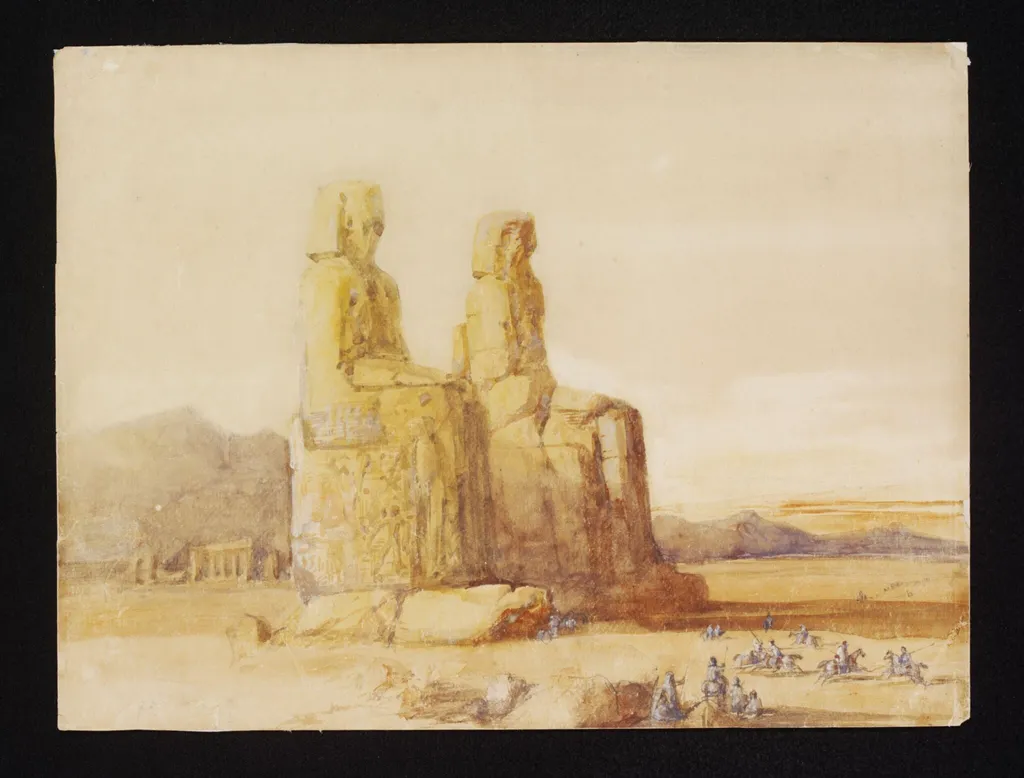
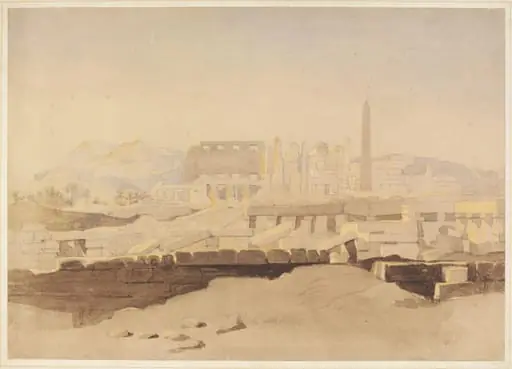
The Vocal Statue - Thebes, 1848 is a watercolor work on paper by the Romanticist artist Unknown. It dates from 1848 and is held in the collection of the Victoria and Albert Museum. This watercolour, dated 1848, records a pair of ancient stone statues near Thebes in Egypt.
About this work
Overview
This watercolour, dated 1848, records a pair of ancient stone statues near Thebes in Egypt.
This watercolour, dated 1848, records a pair of ancient stone statues near Thebes in Egypt. Created during a period of heightened European interest in Egyptian antiquities, the work captures the statues in their desert setting with minimal detail and restrained tones. The attribution to D. H. McKewan and C. Vacher derives from archival records, though the artist’s hand remains uncertain. The piece functions as a topographical sketch rather than a polished composition.
Subject & Meaning
The two colossal figures, their features eroded by time, stand side by side on a natural rock outcrop. Their blank faces and simplified drapery suggest they once represented deities or pharaohs, though their original identities are now lost. The presence of riders in the foreground, small against the monumental forms, underscores the statues’ enduring presence amid changing human activity. The scene evokes quiet contemplation rather than narrative.
Technique & Style
The artist employed loose, fluid watercolour washes to suggest texture and atmosphere. Muted earth tones dominate, with pale ochres and soft greys conveying the arid landscape. Quick brushwork defines the statues’ weathered surfaces and the distant hills, while the riders are rendered as minimal silhouettes. The lack of sharp detail emphasizes mood over precision, aligning with the conventions of travel sketches from the period.
History & Provenance
The work is documented in the Searight Archive, which links it to 19th-century British artists working in Egypt. Its creation coincides with increased archaeological activity and the circulation of illustrated travel accounts. The Victoria and Albert Museum holds related sketches from this era, suggesting the piece was part of a broader visual record compiled by travellers documenting Egypt’s monuments before extensive excavation altered their context.
Context
In 1848, European interest in ancient Egypt was fueled by recent discoveries and the publication of illustrated expedition reports. Artists often accompanied scholars or military personnel, producing sketches as documentary records. This watercolour reflects that tradition: it does not idealize the ruins but observes them as they appeared in situ—worn, isolated, and quietly monumental against the desert expanse.
Legacy
Though not widely exhibited, the work contributes to a body of 19th-century visual documentation that preserves the appearance of Egyptian monuments before modern restoration. Its unembellished style offers insight into how contemporaries perceived ancient sculpture—not as grand relics, but as silent, weathered remnants embedded in a living landscape. It remains a quiet testament to early ethnographic observation.
Artist & collection

 Domestic Scene
 Giacomo and Cardinal Marco, investing Andrea, Abbot of San Zeno, with his Benefice
 The Nymph of Fontainebleau
 Portrait of a Woman
 Madonna and Child with Saints in the Enclosed Garden
 Venus and Minerva
 Family Group of Four on Sofa
 Wall painting from Room H of the Villa of P. Fannius Synistor at Boscoreale
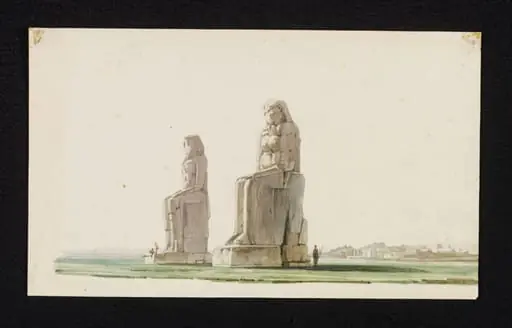 Colosses de memnon a gourna (thébes)
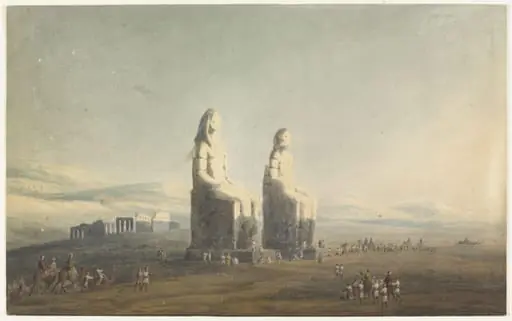 In the Plain of Thebes - Egypt
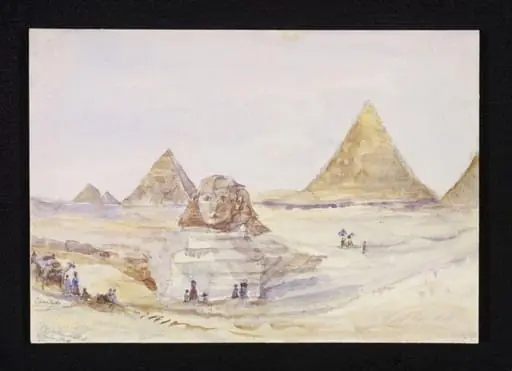 Pyramids and Sphinx
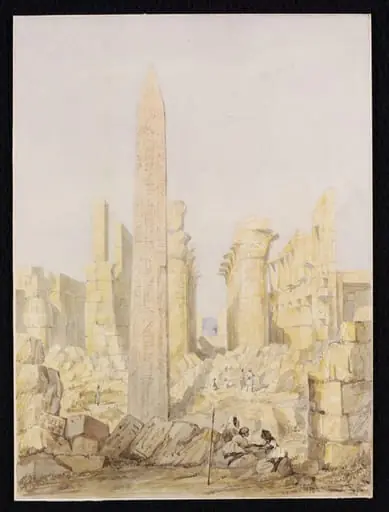 Great Temple. Karnac. Thebes
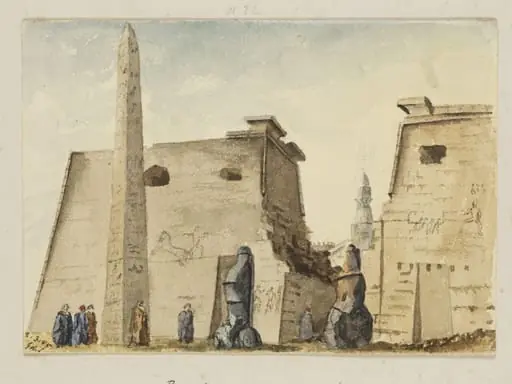 `Propyla of Great Temple. Luxor, Thebaid'
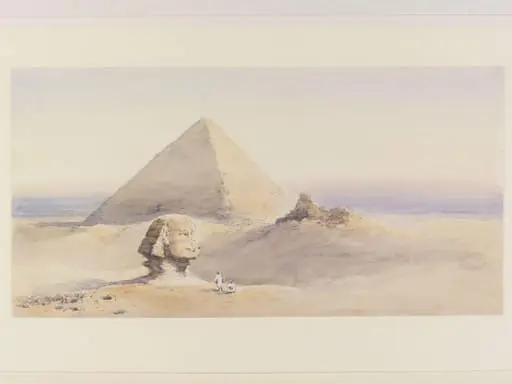 Sphinx & Great Pyramid
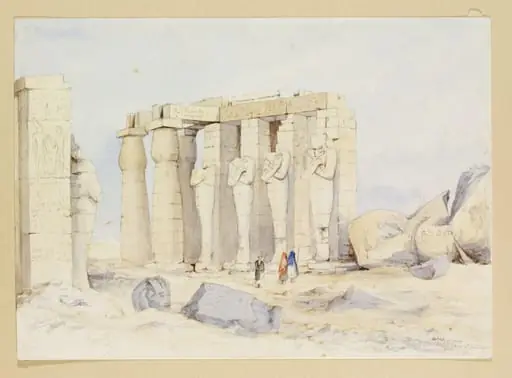 Osiride columns broken statue of Rameses II Memnonium Thebes
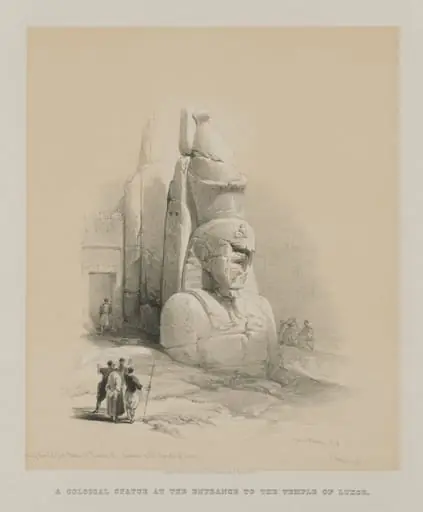 Egypt and Nubia, Volume I: One of Two Colossal Statues of Rameses II. Entrance to the Temple of Luxor
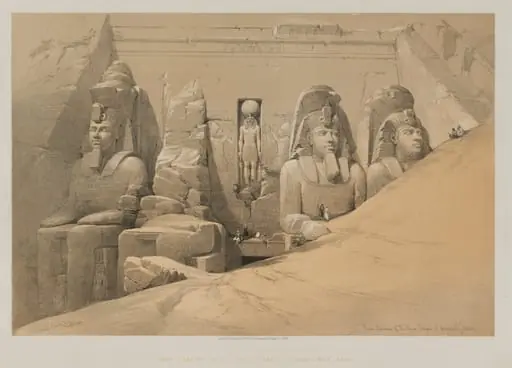 Egypt and Nubia, Volume II: Front Elevation of the Great Temple of Aboo Simbel, Nubia
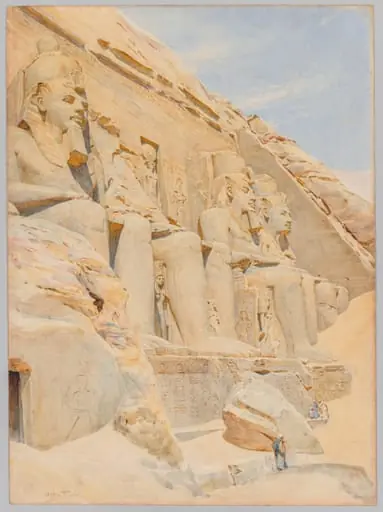 The Great Temple of Abu Simbel
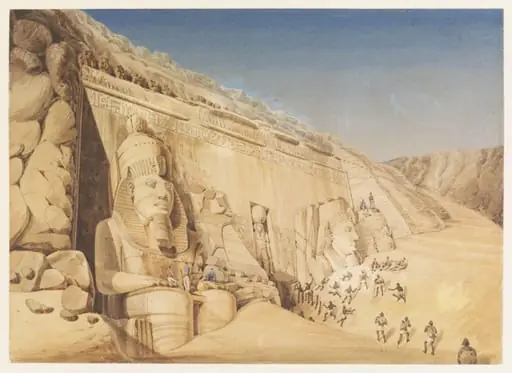 Excavation of the Great Temple of Ramesses II at Abu Simbel
 Temple at Carnak: Thebes