Artwork
Sphinx & Great Pyramid
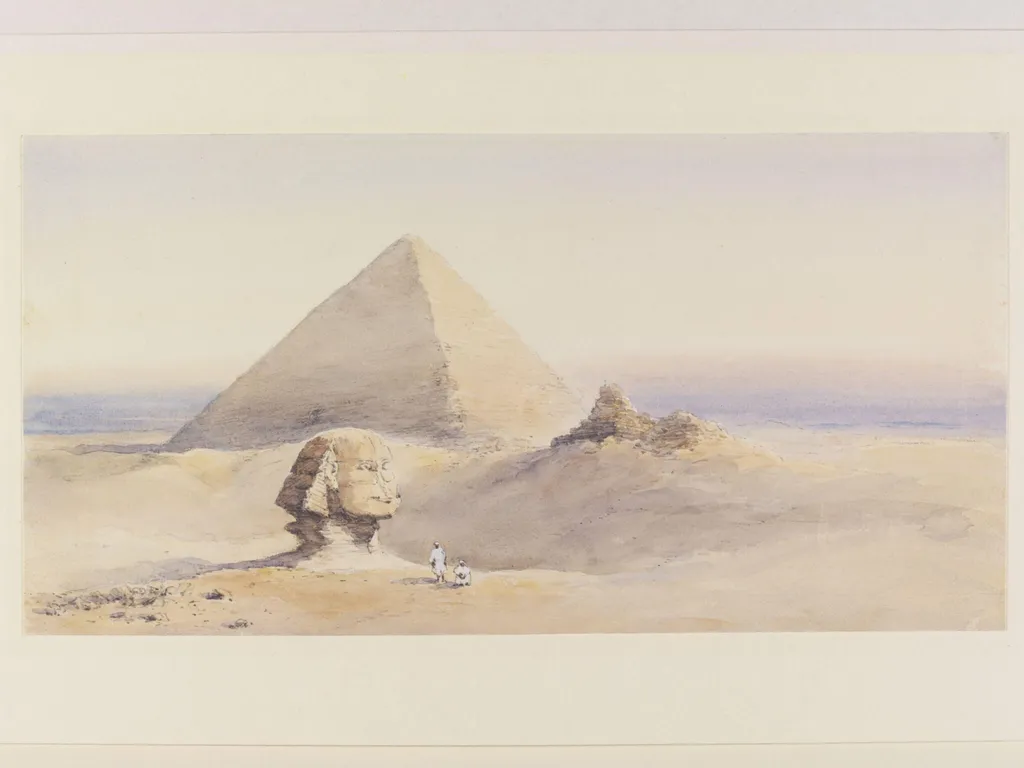
Sphinx & Great Pyramid is a watercolor work on paper by the Orientalist artist Charles John Colville. It dates from 1850 and is held in the collection of the Victoria and Albert Museum.
About this work
Overview
Charles John Colville’s watercolour presents a stark desert scene dominated by the Great Pyramid, with a massive stone sphinx positioned in the foreground. The composition balances the monumental architecture with two diminutive human figures, emphasizing scale and the timeless relationship between ancient monuments and the people who encounter them.
Subject & Meaning
The work juxtaposes the iconic Egyptian sphinx—a hybrid of human intellect and lion strength—with the enduring silhouette of the Great Pyramid, suggesting a dialogue between mythic guardianship and monumental permanence. The tiny observers underscore humanity’s fleeting presence amid these ancient symbols of power and mystery.
Technique & Style
Colville employs a muted palette of soft blues and sandy ochres, using delicate washes to convey atmospheric depth. Light, graduated shading renders the distant pyramid as a hazy silhouette, while the foreground sphinx is rendered with finer detail, creating a sense of spatial recession and calm desert light.
History & Provenance
The watercolour was part of the collection of Lady A. Colville before entering the market. It was auctioned at Sotheby’s King’s in August 1977, where it fetched a modest price of thirty pounds, reflecting its modest market profile at the time.
Artist & collection
Artist
Charles John Colville painted watercolours of Egypt’s landmarks in the late 1800s, when British artists flocked to Cairo to capture the Nile’s monuments.

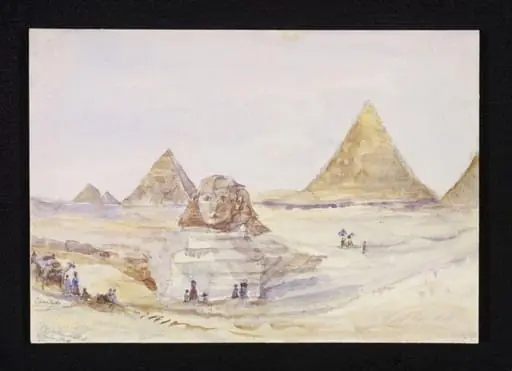
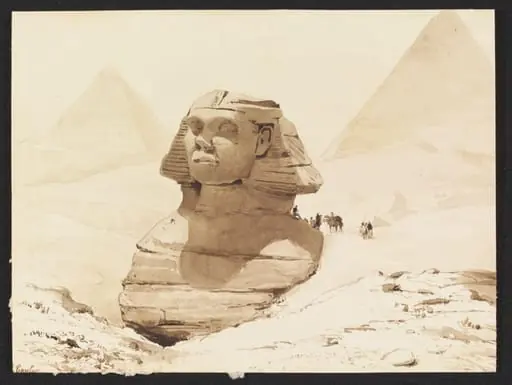
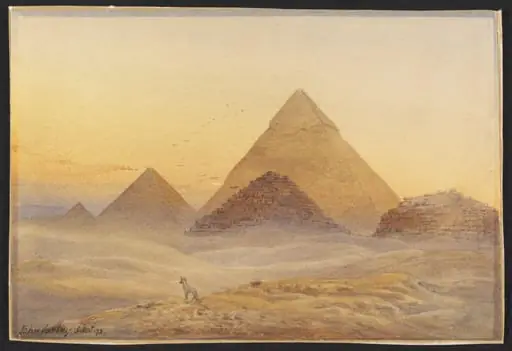
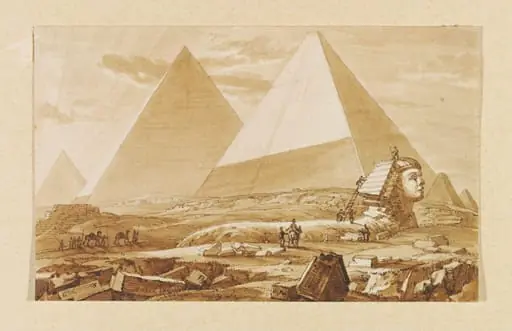
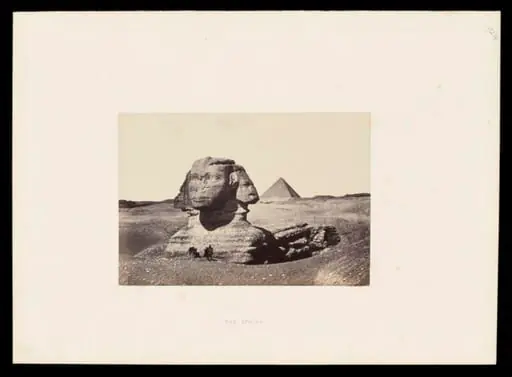
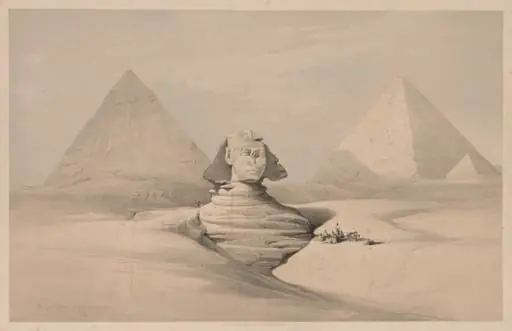
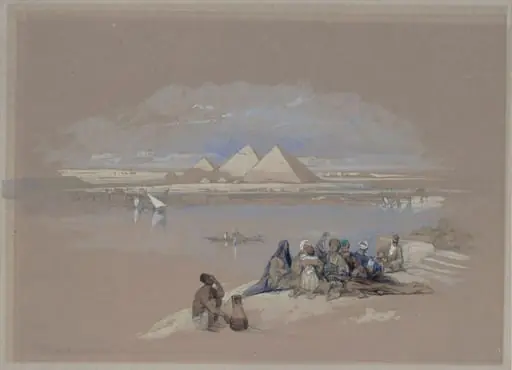
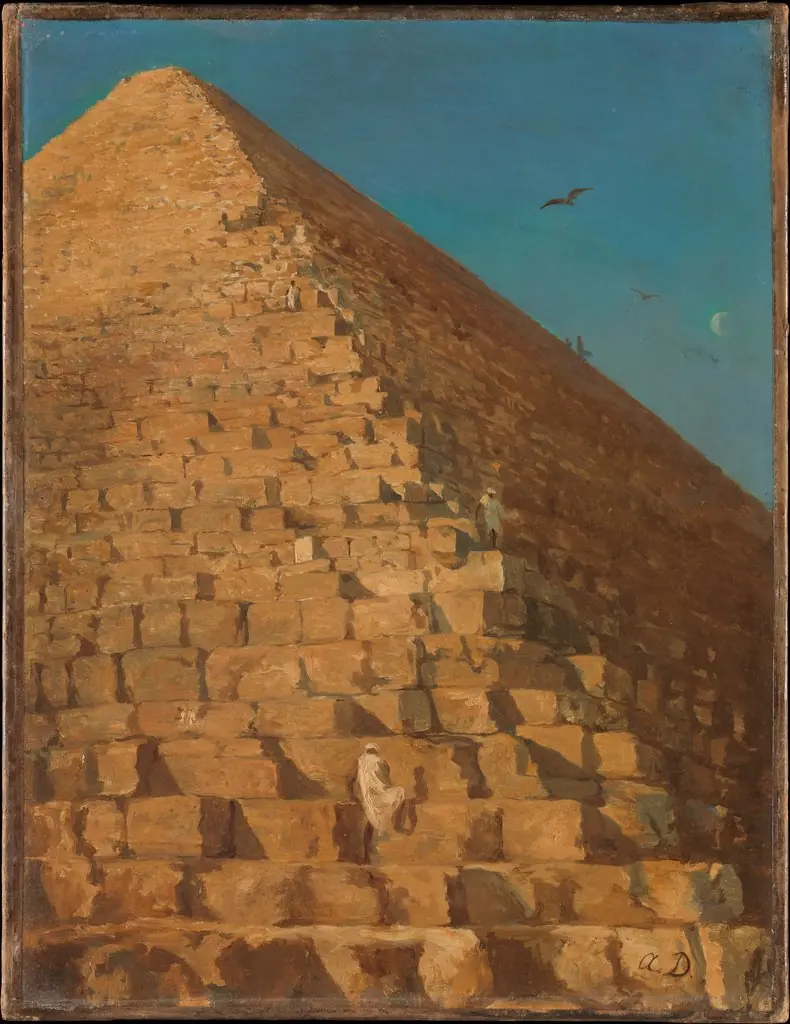
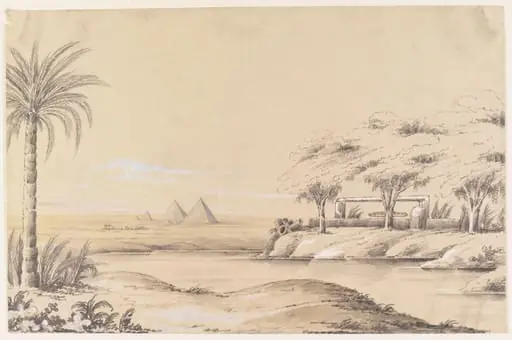
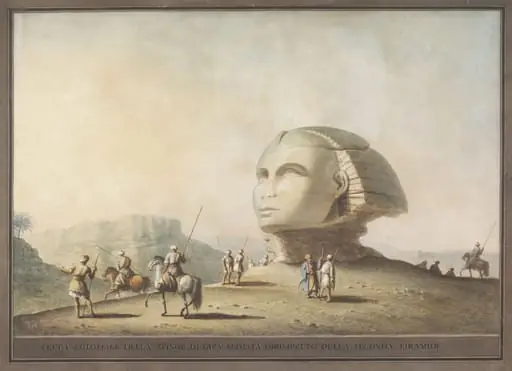
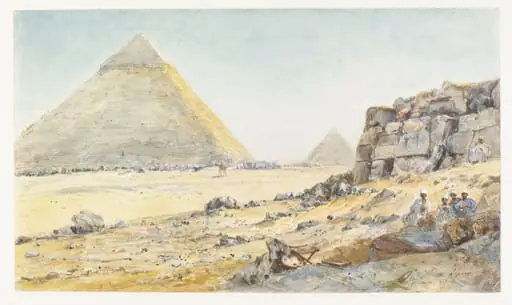 Tombeau de Lipsius. Pyramide. Chefren. 1880-1890
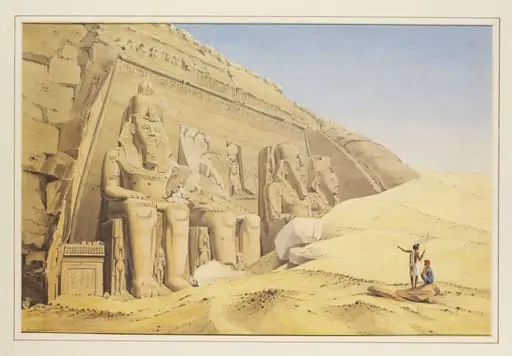 Temple de Ipsamboul
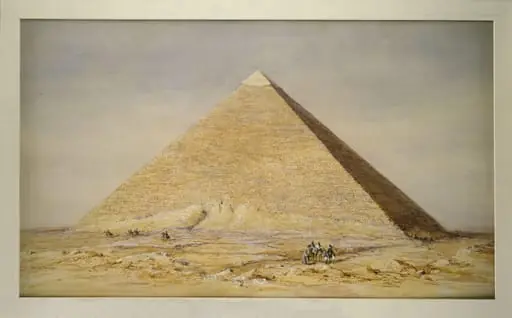 The Second Pyramid, Gizeh
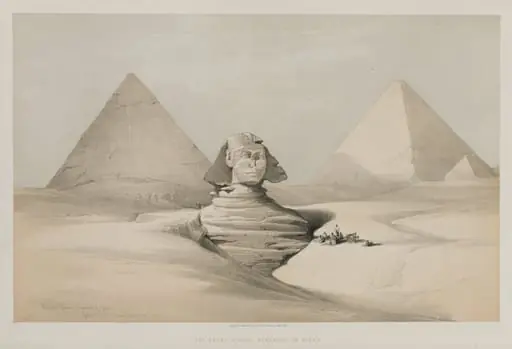 Egypt and Nubia, Volume I: The Great Sphinx, Pyramids of Gezeeh
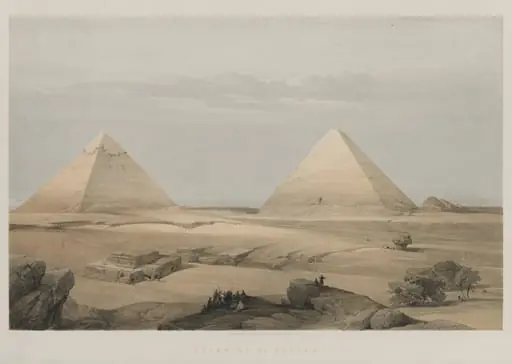 Egypt and Nubia, Volume II: Pyramids of Geezeh
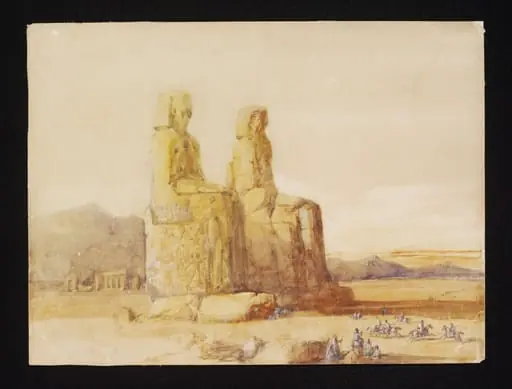 The Vocal Statue - Thebes, 1848
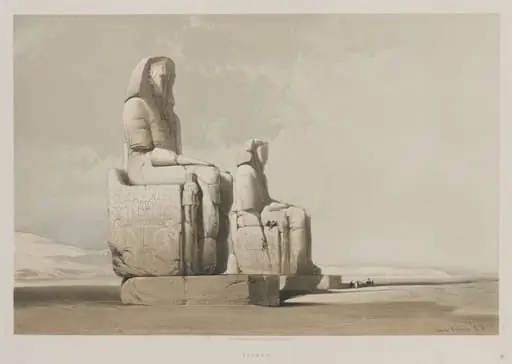 Egypt and Nubia, Volume I: Thebes
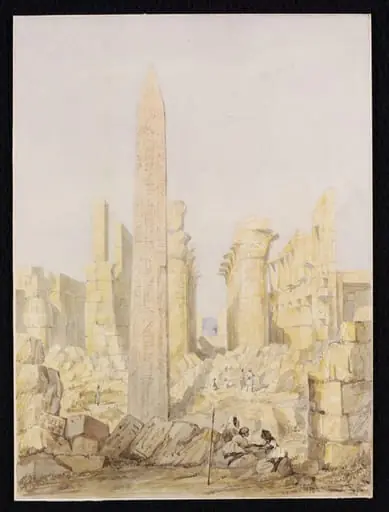 Great Temple. Karnac. Thebes
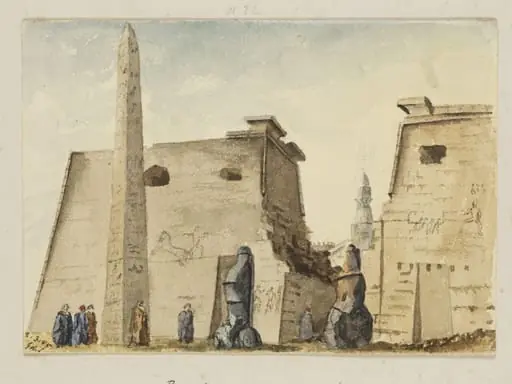 `Propyla of Great Temple. Luxor, Thebaid'