Artwork
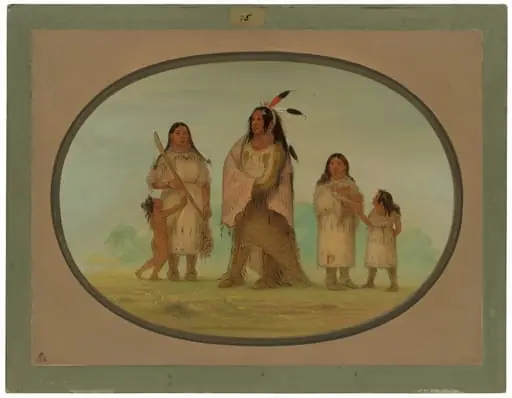
Arapaho Chief, His Wife, and a Warrior
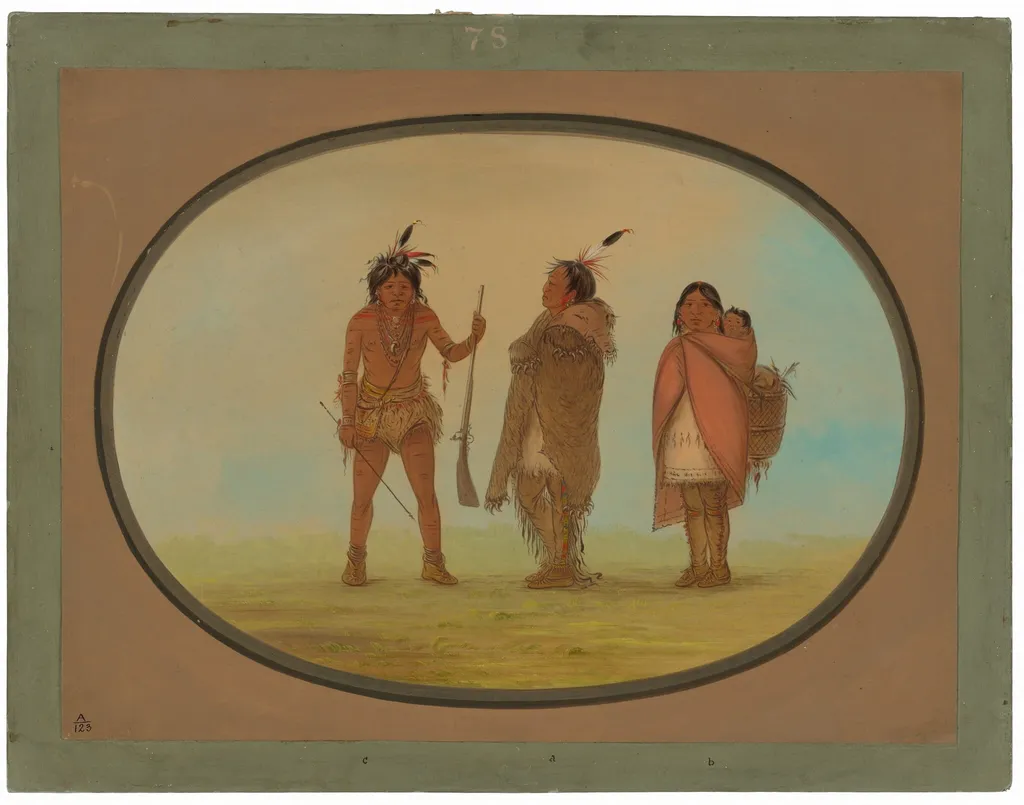
Arapaho Chief, His Wife, and a Warrior is an oil painting by the Impressionist artist George Catlin. It dates from 1865 and is held in the collection of the National Gallery of Art.
About this work
Overview
Arapaho Chief, His Wife, and a Warrior is an 1865 oil painting on card mounted on paperboard, featuring three figures from the Arapaho tribe in a field setting.
Subject & Meaning
The painting portrays a chief, his wife (carrying a baby), and a warrior, each depicted in traditional attire, conveying cultural authenticity through specific clothing and accessories like feathered headdress, bow, and rifles.
Technique & Style
Executed in oil on a card substrate, the work employs a simple, oval-framed composition with a plain background, emphasizing the sitters through focused attention on their figures and attire.
History & Provenance
Created by George Catlin, an American artist and documentarian of Native American life, this piece follows his five journeys to the American West in the 1830s, though painted later in 1865.
Context
Part of Catlin's broader effort to record Plains Indian customs and appearances, contrasting with his earlier work illustrating the Erie Canal in New York.
Legacy
While the painting's direct legacy is not detailed, it contributes to Catlin's overall body of work documenting Native American life, potentially influencing subsequent artistic and ethnographic representations.
Artist & collection

Artist
George Catlin ( KAT-lin; July 26, 1796 – December 23, 1872) was an American lawyer, painter, author, and traveler, who specialized in portraits of Native Americans in the American frontier.

 Bulls Fighting
 Expedition Encamped on a Texas Prairie. April 1686
 An Alligator's Nest
 Mrs. George Catlin (Clara Bartlet Gregory)
 Chief of the Taensa Indians Receiving La Salle. March 20, 1682
 A Small Village - Payaguas Indians
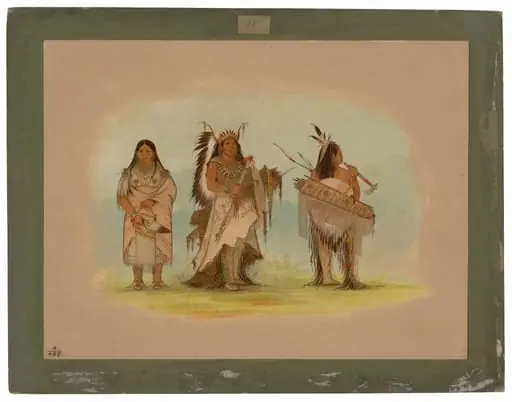 Omaha Chief, His Wife, and a Warrior
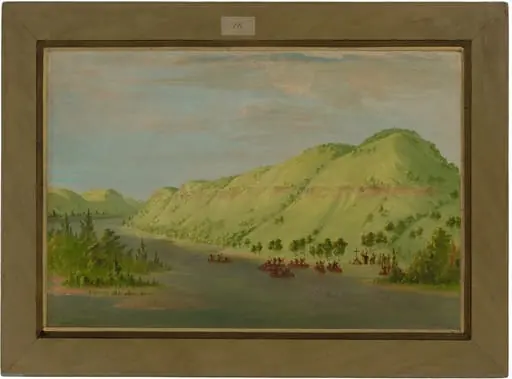 Father Hennepin Leaving the Mississippi to Join La Salle. May 8, 1680
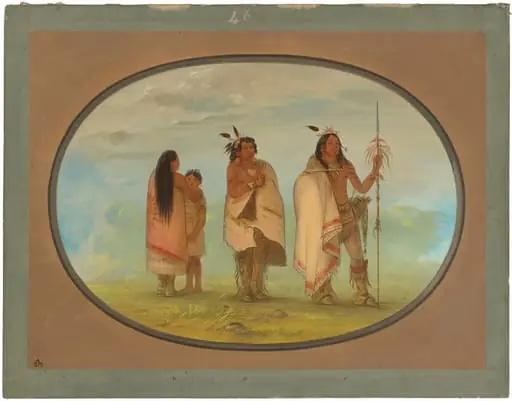 Weeco Chief, His Wife, and a Warrior
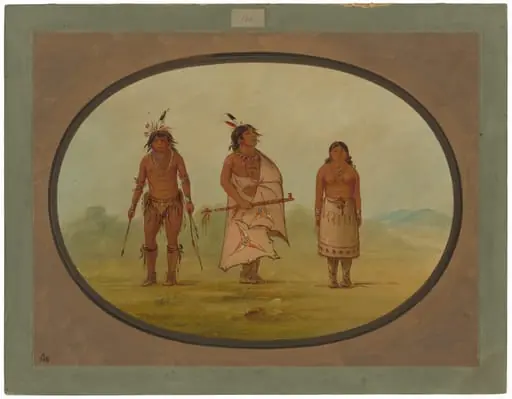 Mohave Chief, a Warrior, and His Wife
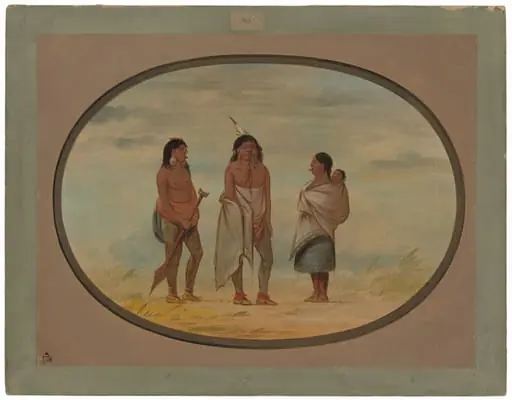 Nayas Indian Chief, His Wife, and a Warrior
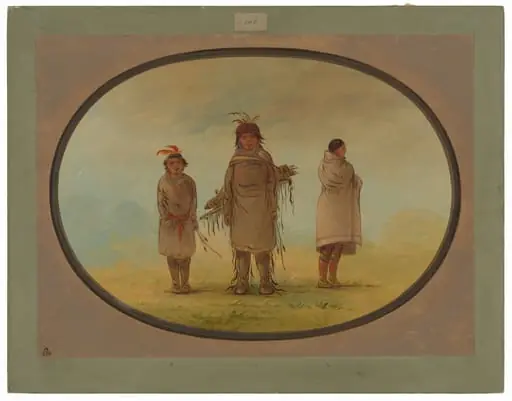 A Stone Warrior, His Wife, and a Boy
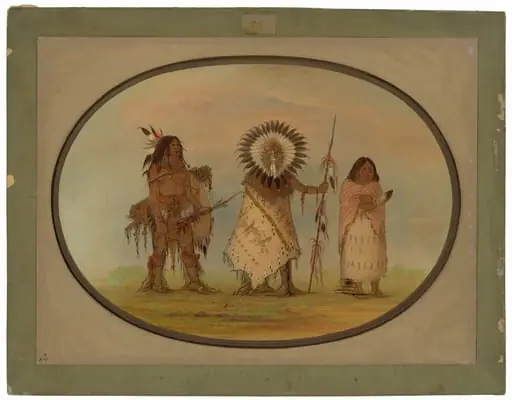 Crow Chief, His Wife, and a Warrior
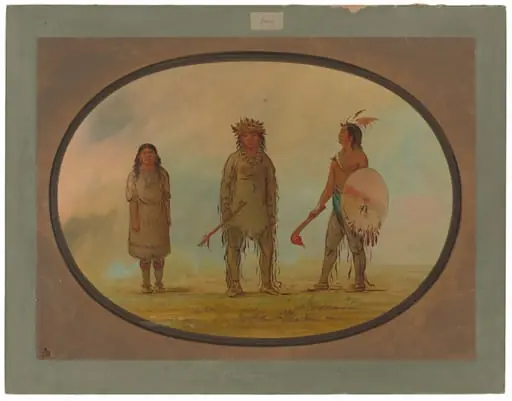 Athapasca Chief, His Wife, and a Warrior
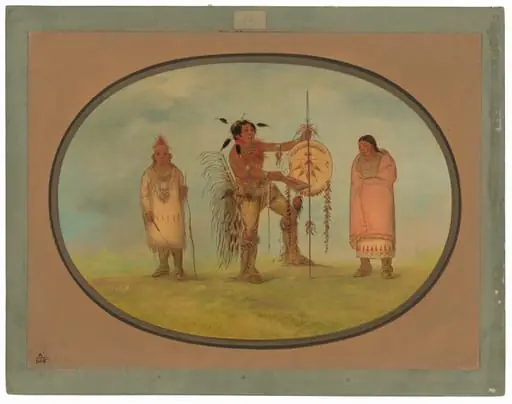 Saukie Warrior, His Wife, and a Boy
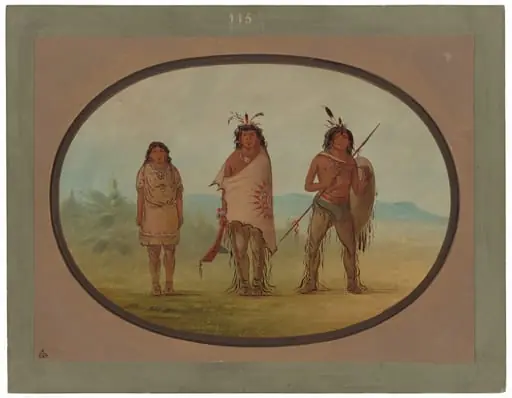 A Yuma Chief, His Daughter, and a Warrior
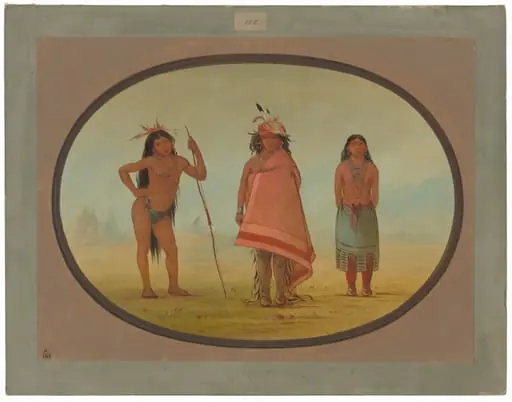 Cochimtee Chief, His Wife, and a Warrior
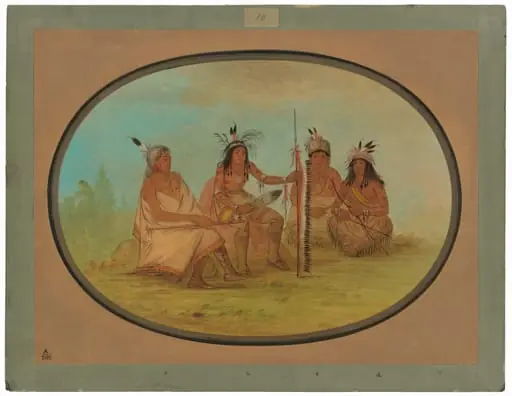 An Aged Ojibbeway Chief and Three Warriors
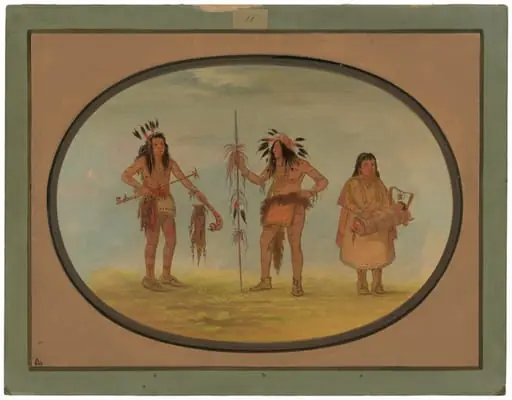 Two Ojibbeway Warriors and a Woman
 Assinneboine Warrior and His Family