Artwork
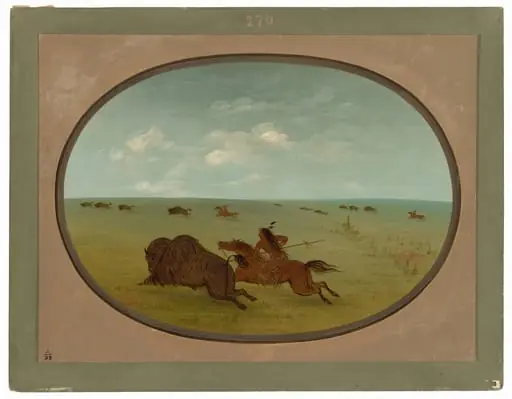
Buffalo Chase
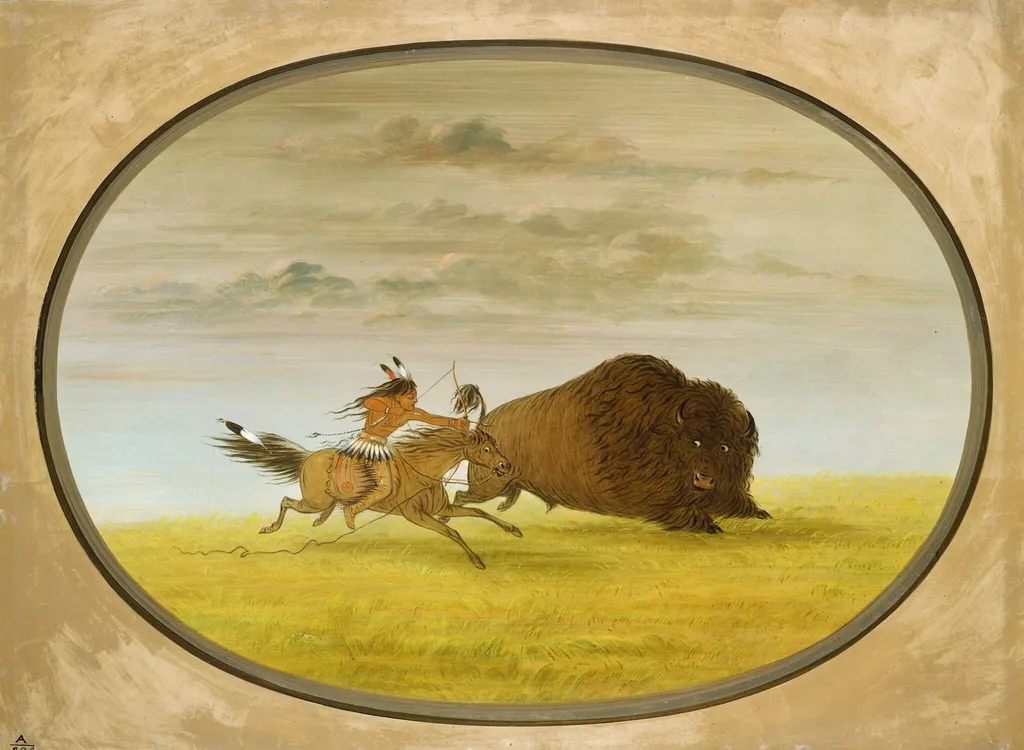
Buffalo Chase is an oil painting by the American Folk Art artist George Catlin. It dates from 1865 and is held in the collection of the National Gallery of Art.
About this work
Overview
Created in 1865, *Buffalo Chase* is an oil painting executed on card that has been mounted to a paperboard support. The work depicts a dynamic encounter on the Great Plains, featuring a mounted Native American hunter pursuing a bison across an open, windswept landscape.
Subject & Meaning
The central figure is a Plains Indian rider, attired in traditional garb and equipped with a bow, poised to strike as the massive bison flees. The composition captures a moment of tension between human and animal, reflecting the subsistence practices and cultural significance of the hunt within Indigenous societies.
Technique & Style
Catlin applied oil paint in a restrained palette of browns, greens, and muted earth tones, emphasizing the rugged terrain and the movement of wind‑blown grass. The handling of brushwork conveys a sense of immediacy, aligning the piece with the American folk‑art tradition of narrative history painting.
History & Provenance
George Catlin, who made five expeditions to the western frontier during the 1830s, produced the work as part of his broader effort to record Plains Indian life through both sketches and written accounts. The painting remained in private collections before entering a museum inventory in the early twentieth century.
Context
*Buffalo Chase* belongs to a period when American artists sought to document the rapidly changing frontier. While Catlin’s focus was ethnographic, his visual approach also mirrors contemporary historical painting conventions, presenting a dramatized yet observational view of western expansion.
Artist & collection

Artist
George Catlin ( KAT-lin; July 26, 1796 – December 23, 1872) was an American lawyer, painter, author, and traveler, who specialized in portraits of Native Americans in the American frontier.

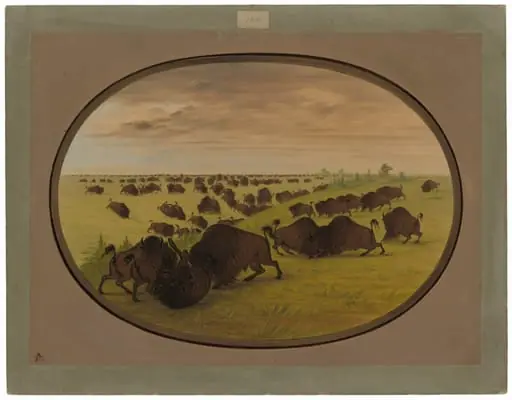 Bulls Fighting
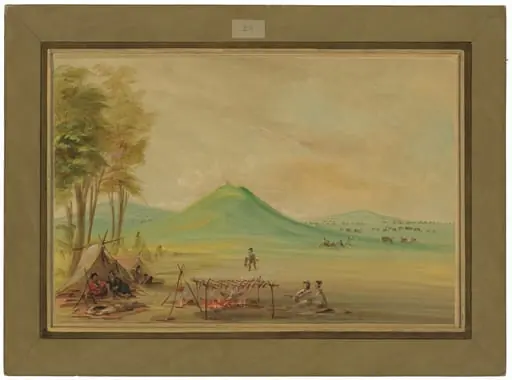 Expedition Encamped on a Texas Prairie. April 1686
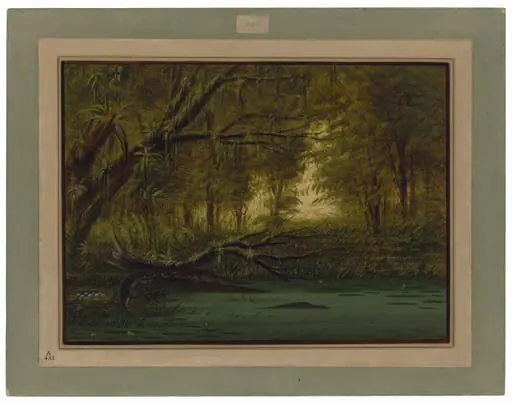 An Alligator's Nest
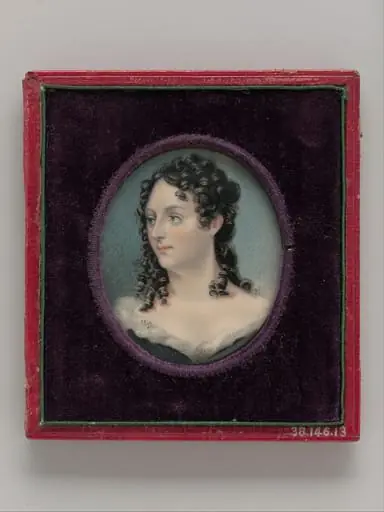 Mrs. George Catlin (Clara Bartlet Gregory)
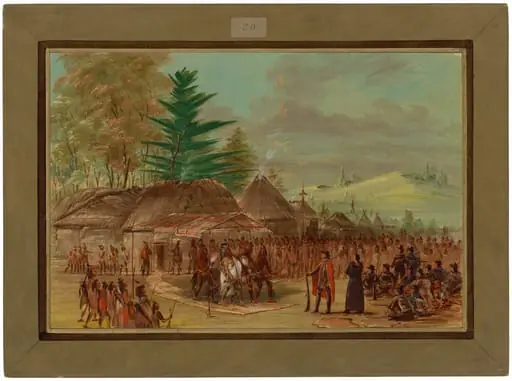 Chief of the Taensa Indians Receiving La Salle. March 20, 1682
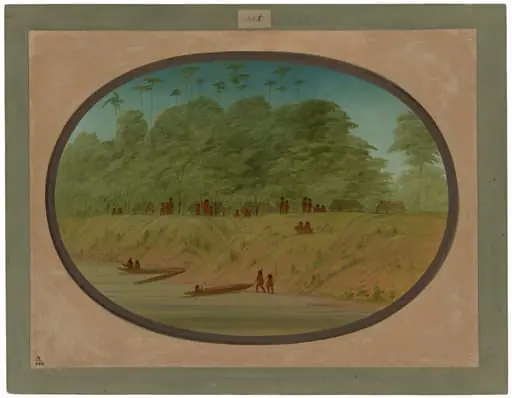 A Small Village - Payaguas Indians
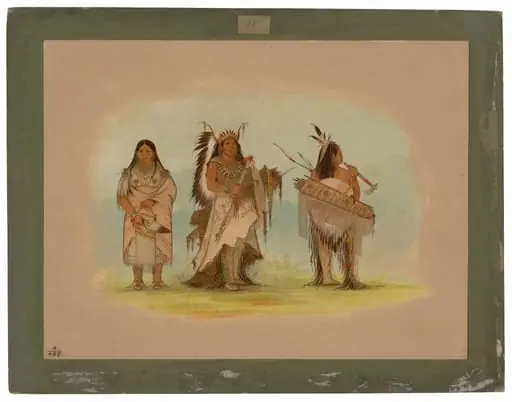 Omaha Chief, His Wife, and a Warrior
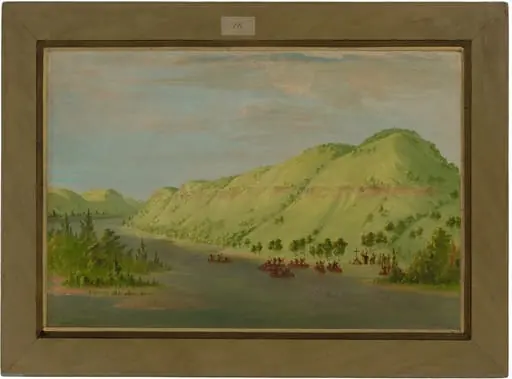 Father Hennepin Leaving the Mississippi to Join La Salle. May 8, 1680