Artwork
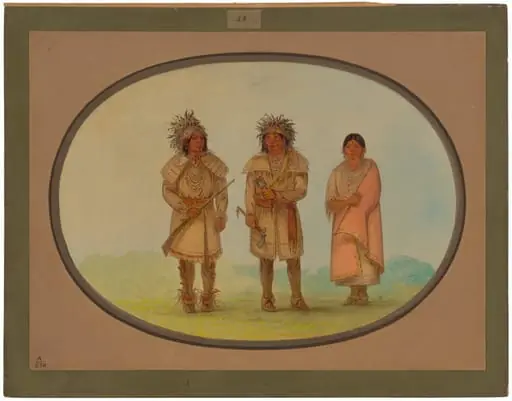
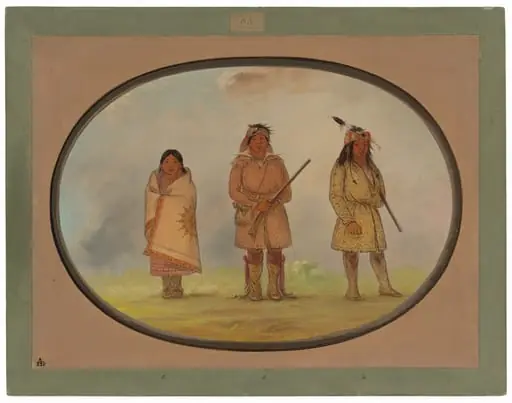
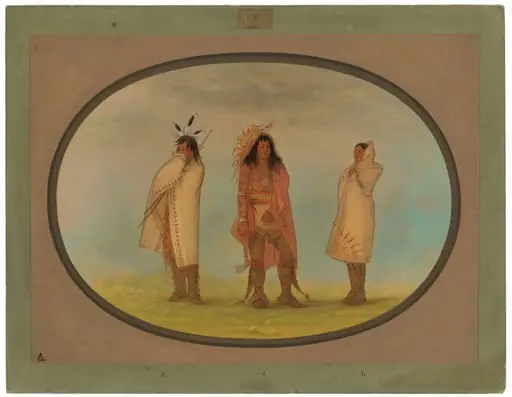
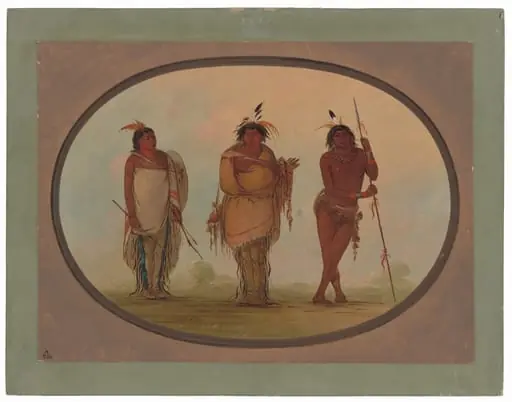
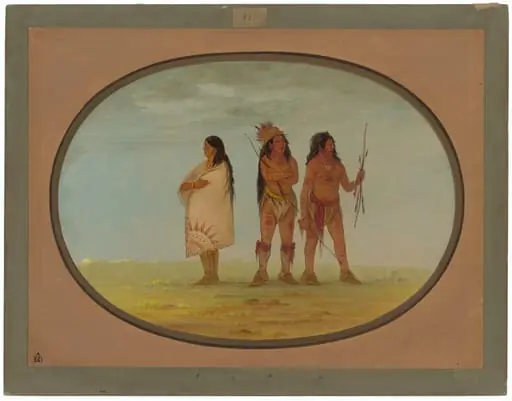
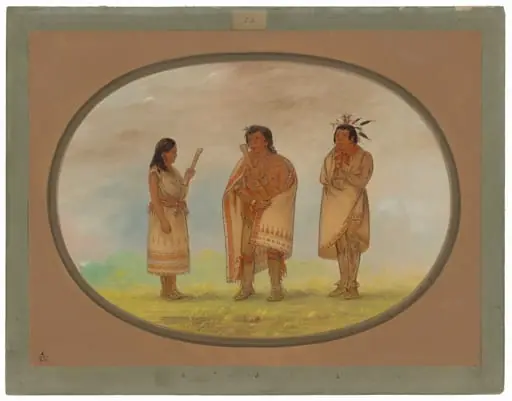
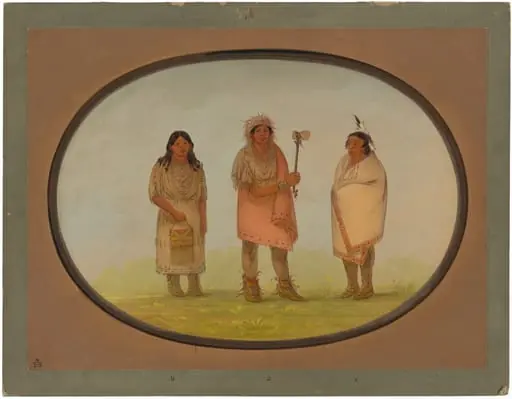
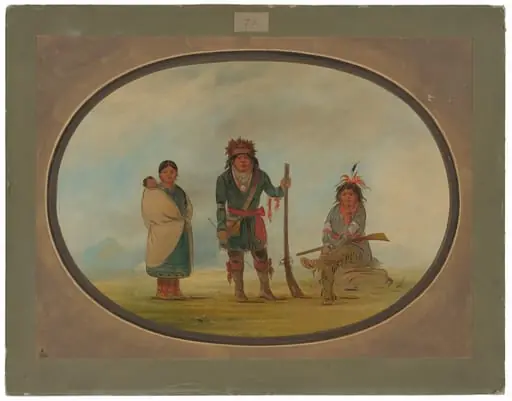
Three Selish Indians
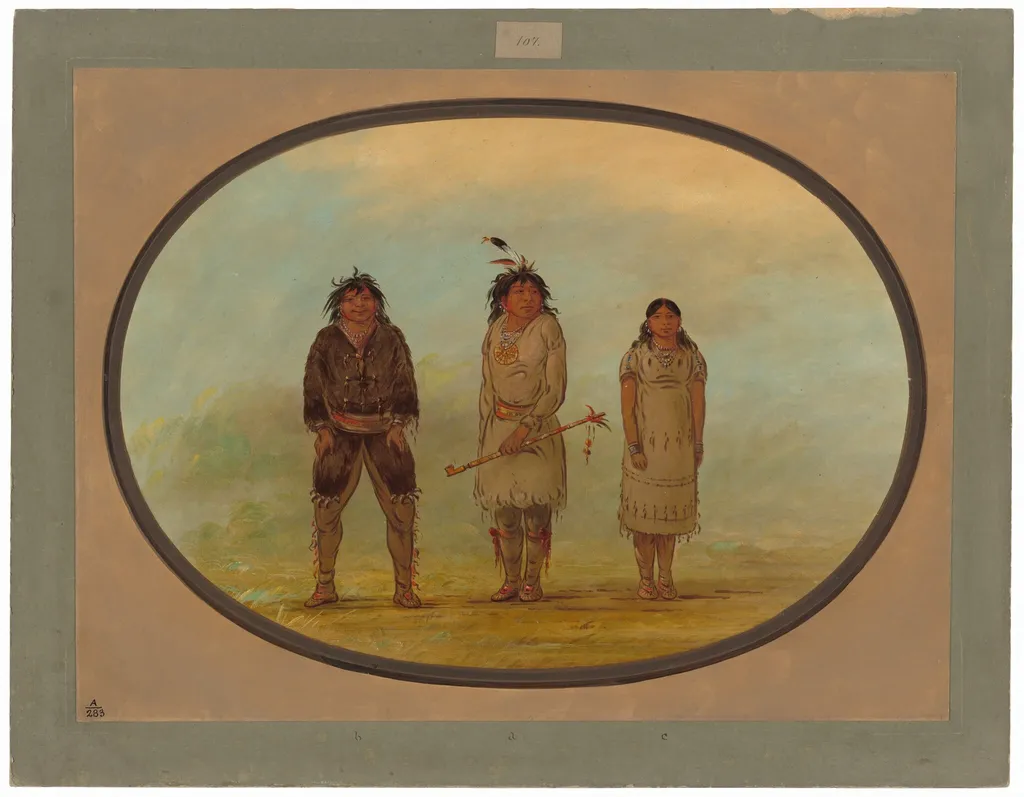
Three Selish Indians is an oil painting by the American Folk Art artist George Catlin. It dates from 1862 and is held in the collection of the National Gallery of Art.
About this work
Overview
Created in 1862, this oval oil painting on card, later affixed to paperboard, presents three figures arranged in a line against a blue‑yellow backdrop. A muted gray border frames the composition, emphasizing the central group. The work reflects George Catlin’s focus on documenting Native peoples, capturing both attire and ceremonial objects with a straightforward, observational approach.
Subject & Meaning
The three figures are depicted in traditional dress, adorned with feathers, jewelry, and a decorated staff held by the central figure. Their posture and regalia suggest a ceremonial or representative gathering, offering a visual record of cultural identity among the Selish, a Plains tribe, as observed by Catlin during his field expeditions.
Technique & Style
Catlin employed oil pigments on a prepared card surface, allowing for fine detail in the rendering of textiles and accessories. The limited palette of the background contrasts with the vivid colors of the clothing, while the oval format and modest brushwork convey a sense of immediacy, typical of his rapid portraiture in remote settings.
History & Provenance
The painting originates from Catlin’s fifth western journey, undertaken in the early 1860s to continue his extensive visual archive of Indigenous peoples. After its completion, the work entered private collections before being acquired by a museum, where it now serves as part of the broader series documenting Plains cultures.
Artist & collection

Artist
George Catlin ( KAT-lin; July 26, 1796 – December 23, 1872) was an American lawyer, painter, author, and traveler, who specialized in portraits of Native Americans in the American frontier.

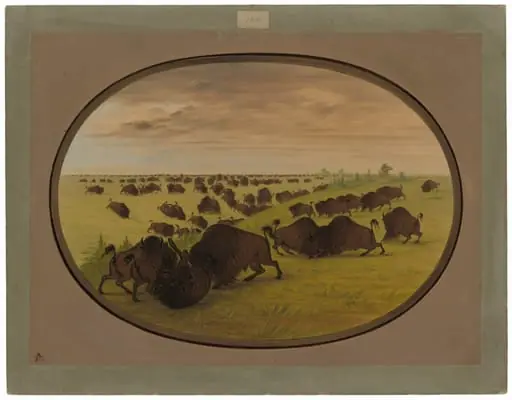 Bulls Fighting
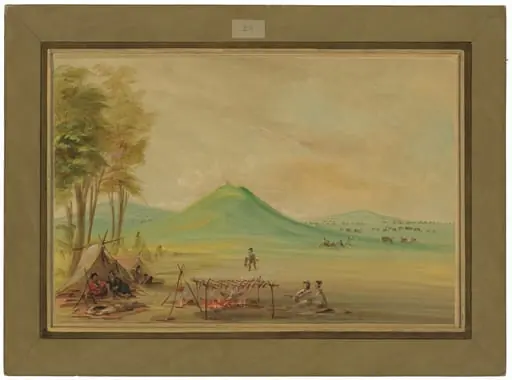 Expedition Encamped on a Texas Prairie. April 1686
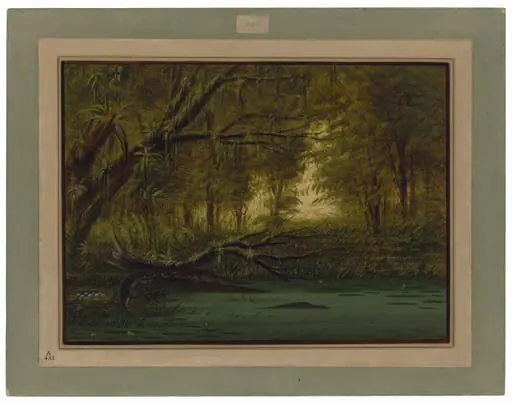 An Alligator's Nest
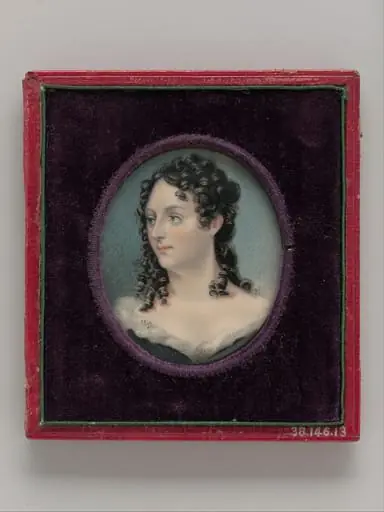 Mrs. George Catlin (Clara Bartlet Gregory)
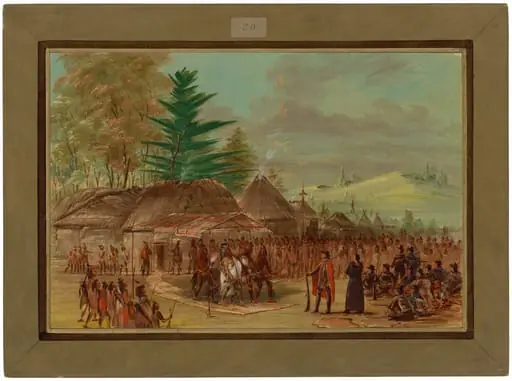 Chief of the Taensa Indians Receiving La Salle. March 20, 1682
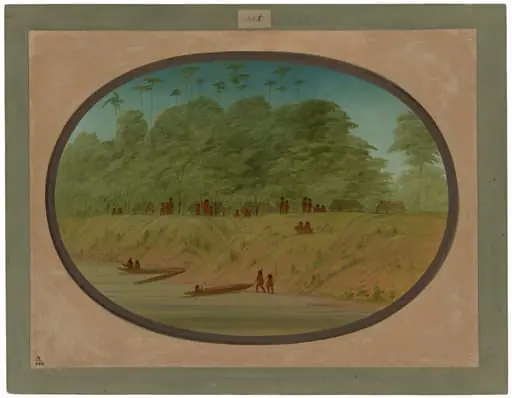 A Small Village - Payaguas Indians
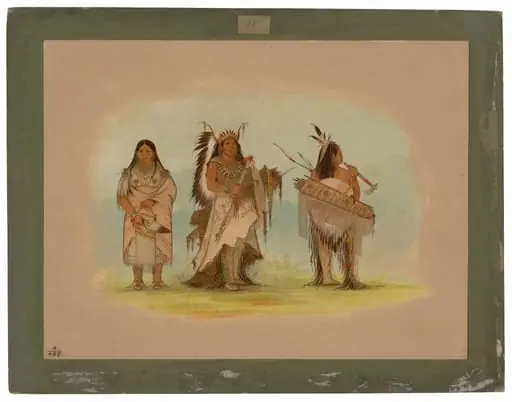 Omaha Chief, His Wife, and a Warrior
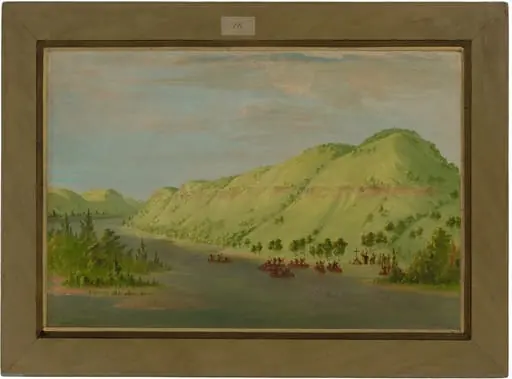 Father Hennepin Leaving the Mississippi to Join La Salle. May 8, 1680