Artwork
Watergate Street Row, looking West, Chester
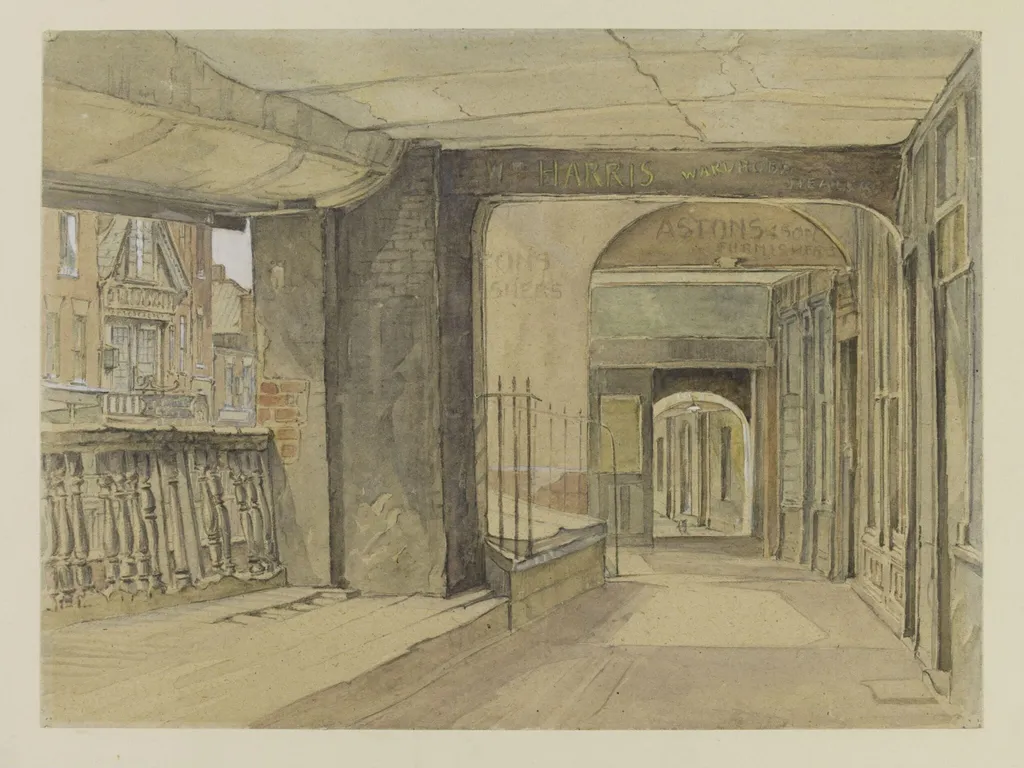
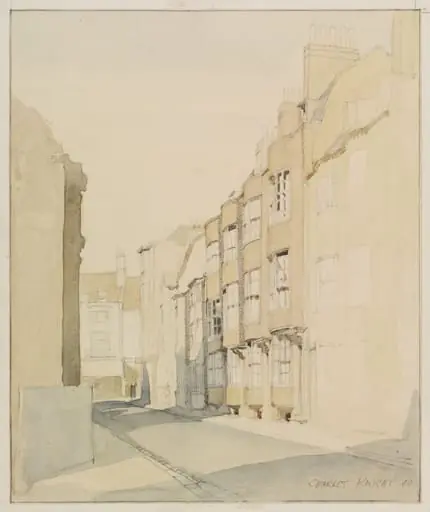
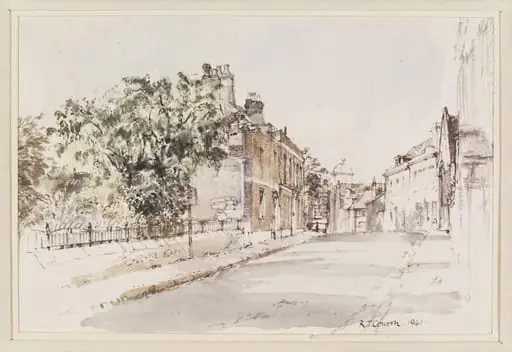
Watergate Street Row, looking West, Chester is a watercolor work on paper by the Social Realist artist Causer. It dates from 1942 and is held in the collection of the Victoria and Albert Museum.
About this work
Overview
The goal was to create a visual archive of England’s architectural heritage, particularly sites deemed vulnerable to destruction or change during the conflict.
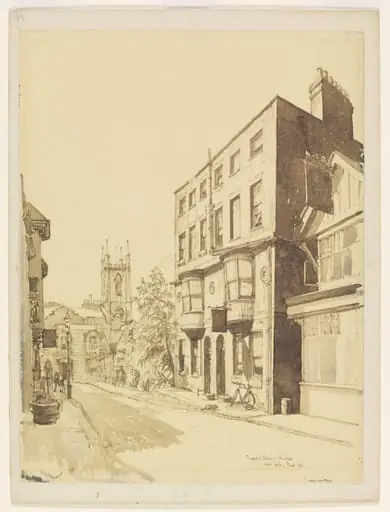
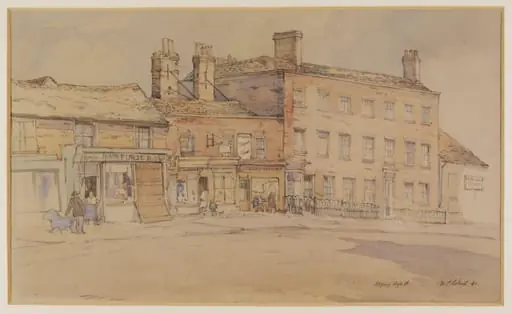
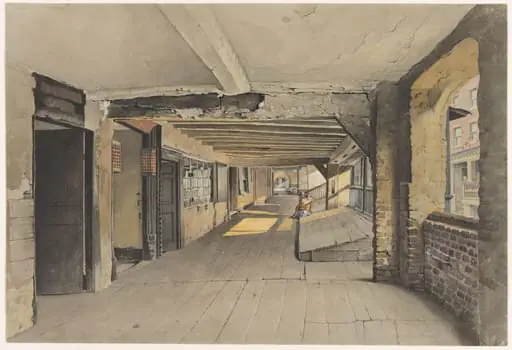
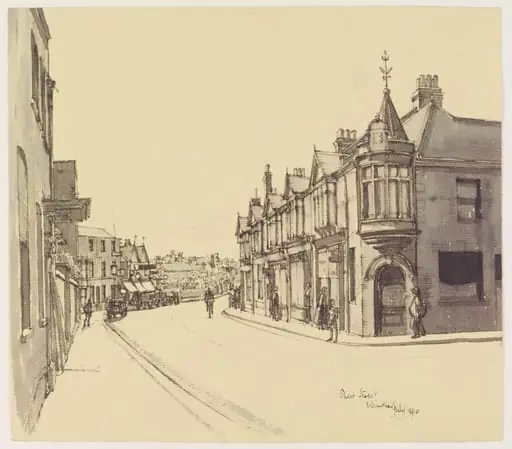
Painted in 1942, this watercolour by Causer captures a westward view of Watergate Street in Chester. It was produced as part of the *Recording Britain* initiative, a wartime project commissioned by the Pilgrim Trust and directed by Sir Kenneth Clark. The goal was to create a visual archive of England’s architectural heritage, particularly sites deemed vulnerable to destruction or change during the conflict. Over 1,500 works were completed by nearly 100 artists, with this piece contributing to a broader effort to preserve cultural memory through art.
Subject & Meaning
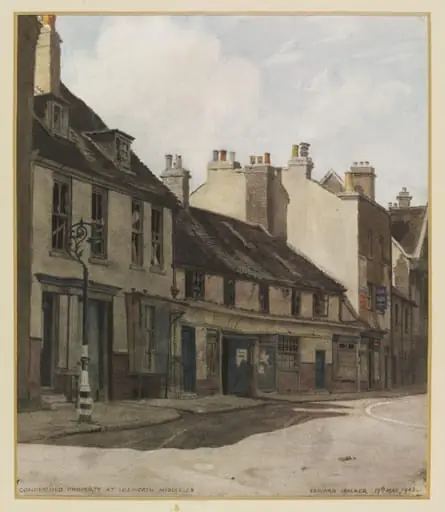
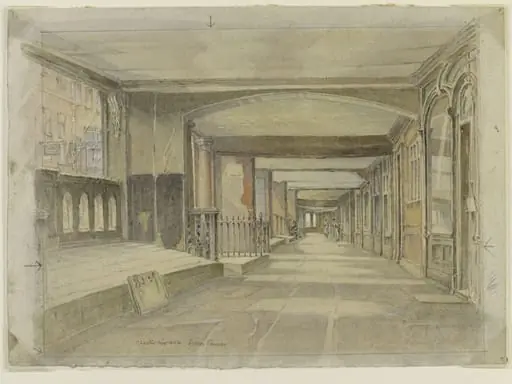
The scene portrays a modest, narrow urban street lined with aging buildings, their surfaces marked by time and use. Shopfronts bear handwritten signs—'W Harris Wares' and 'Astons Ironmongers Furniture'—hinting at local commerce and community life. The composition avoids grandeur, instead emphasizing ordinary details: uneven paving, weathered brick, and a balcony with delicate ironwork. These elements collectively convey a quiet dignity in everyday spaces, suggesting a deliberate act of preservation against the uncertainty of war.
Technique & Style
Causer employed transparent watercolour washes to suggest texture and light without heavy detail. The buildings’ rough plaster and exposed brick are rendered with loose, economical strokes, while the signs and railings are defined with precise, fine lines. The palette is muted, dominated by earth tones and soft greys, reinforcing the subdued atmosphere. The lack of human figures enhances the sense of stillness, turning the street itself into the subject—a quiet, unembellished record of place.
History & Provenance
Created during the Second World War, the painting was acquired by the Pilgrim Trust as part of the *Recording Britain* collection. It entered the Victoria and Albert Museum’s holdings alongside hundreds of other works from the project, which were systematically catalogued to ensure their survival. The collection remained largely unseen in storage for decades before being exhibited publicly, affirming its role as a historical document rather than a decorative object.
Context
The *Recording Britain* project emerged amid fears that historic buildings and traditional ways of life would be lost to bombing or postwar redevelopment. Artists were sent across the country to record vernacular architecture, often in towns like Chester that retained medieval and Georgian fabric. The initiative was both cultural and patriotic, aiming to reinforce national identity through the documentation of places that embodied continuity, even as the nation faced upheaval.
Legacy
The watercolour endures as part of a significant archive of wartime British visual culture. Its value lies not in artistic innovation but in its fidelity to a moment and place. Today, it contributes to scholarly understanding of how communities preserved their sense of self during crisis. The *Recording Britain* collection, including this piece, continues to inform conservation efforts and public awareness of architectural heritage.
Artist & collection
Artist
Causer is a surname. Notable people with the surname include:Arthur Causer (1884–1927), English footballer Martin Causer, American politician Murder of Michael Causer (1989–2008)

![North Gate [by Thomas Harrison], Chester, by Causer](https://artifactworldgallery.com/img/causer--north-gate-by-thomas-harrison-chester--aa1b0a0e4cef52c8-w320.webp)
![Grosvenor Bridge [by Thomas Harrison], Chester, by Causer](https://artifactworldgallery.com/img/causer--grosvenor-bridge-by-thomas-harrison-chester--d0b18622d870bf40-w320.webp)