Artwork
Demolition at Chester 1942
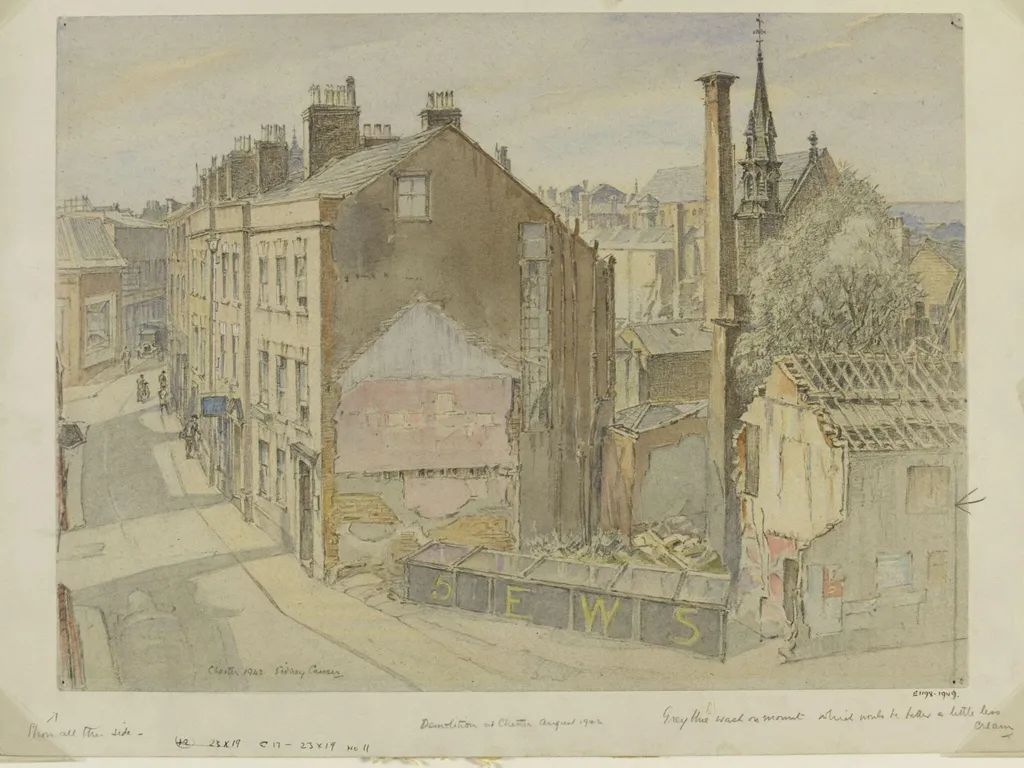
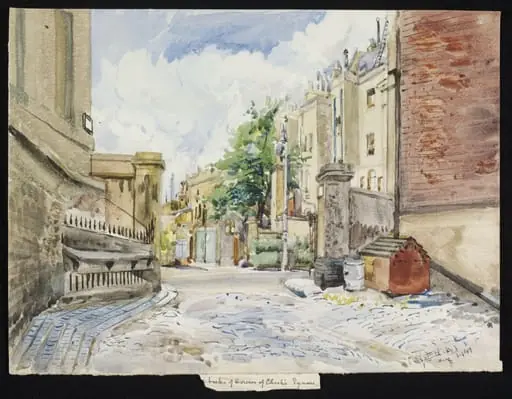
Demolition at Chester 1942 is a watercolor work on paper by the Social Realist artist Sidney Causer. It dates from 1942 and is held in the collection of the Victoria and Albert Museum.
About this work
Overview
Sidney Causer’s 1942 watercolour, Demolition at Chester, is one of over 1,500 works produced for the Recording Britain project during the Second World War.
Sidney Causer’s 1942 watercolour, Demolition at Chester, is one of over 1,500 works produced for the Recording Britain project during the Second World War. Commissioned by the Pilgrim Trust and overseen by Sir Kenneth Clark, the initiative sought to visually archive England’s changing landscapes. Causer’s scene captures a moment of urban transformation in Chester, documenting structures at risk from wartime disruption and redevelopment.
Subject & Meaning
The painting portrays the dismantling of historic buildings along a quiet Chester street, with debris piled in a large container marked '5 FEWS'. The absence of active workers and the distant, indistinct figures suggest a pause in activity, evoking the quiet decay of a city under strain. The scene conveys the tension between preservation and necessity, reflecting the broader societal shifts forced by war.
Technique & Style
Causer employed a restrained watercolour technique, using muted browns and greys to render the weathered brickwork and crumbling facades. The sky, rendered in soft washes of grey, enhances the somber mood. Details like chimneys and rooflines are rendered with precision, while the empty street and sparse figures create a sense of stillness. The medium’s transparency allows underlying pencil lines to subtly guide the composition.
History & Provenance
The painting was created as part of the Recording Britain initiative, which ran from 1939 to 1945. It entered the Victoria and Albert Museum’s collection alongside other works from the project, where it remains accessible for study. The initiative’s records indicate Causer was among the 97 artists commissioned to travel across England, producing topographical records of places deemed vulnerable to wartime damage or modernization.
Context
During the war, many historic urban areas faced threats from aerial bombing and postwar reconstruction plans. Recording Britain emerged as a cultural response to preserve visual memory of at-risk architecture. Chester, with its medieval fabric, was a priority site. Causer’s depiction aligns with the project’s goal of capturing everyday environments before they vanished, offering a quiet counterpoint to wartime propaganda.
Legacy
The Recording Britain collection endures as a vital historical archive, offering insight into England’s architectural landscape during a period of upheaval. Causer’s work contributes to this record not through dramatic action, but through attentive observation. Today, it serves as a reference for historians and urban planners, illustrating how ordinary streets became sites of cultural memory amid national crisis.
Artist & collection
Artist
Sidney Causer’s watercolors look like someone paused mid-sip of tea to watch a building fall.

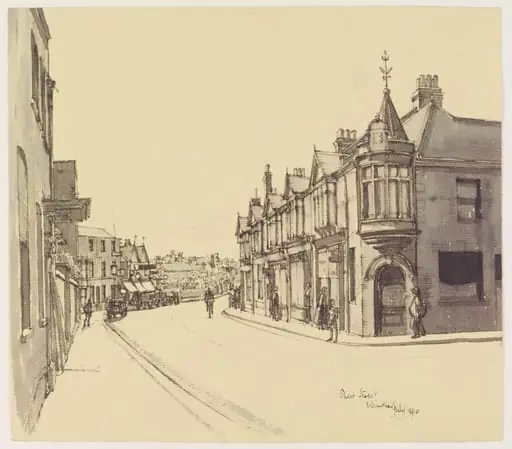 Sheet Street, Windsor
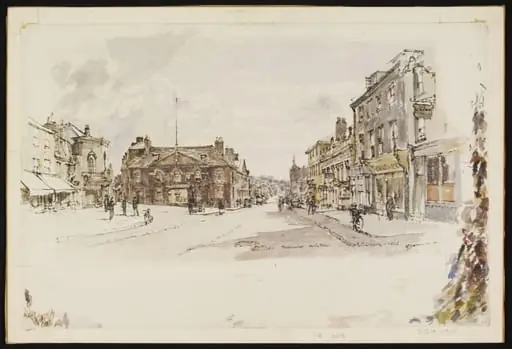 High Street and Rutland Arms, Newmarket
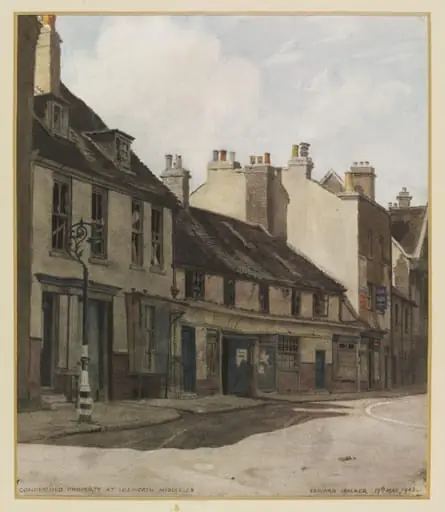 Condemned Property at Isleworth
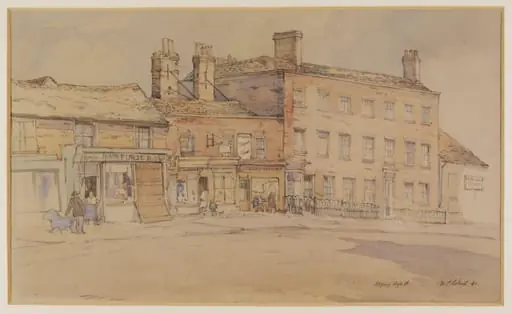 Epping High Street
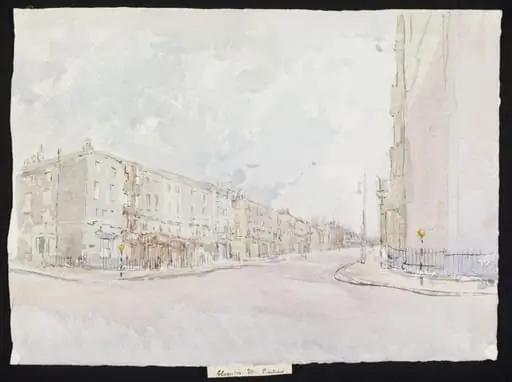 Gloucester Street, Pimlico
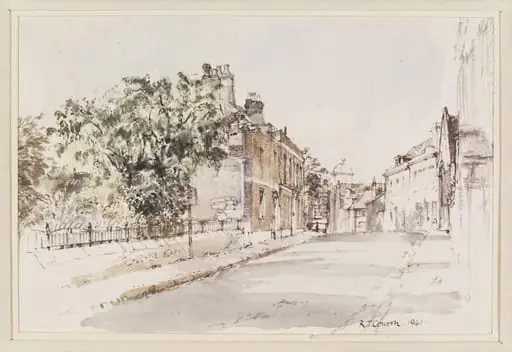 St. Thomas Street, Winchester
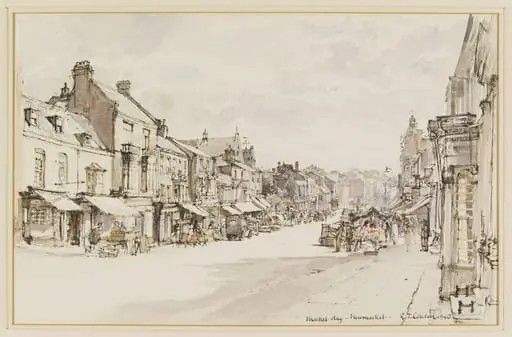 Market Day, Newmarket
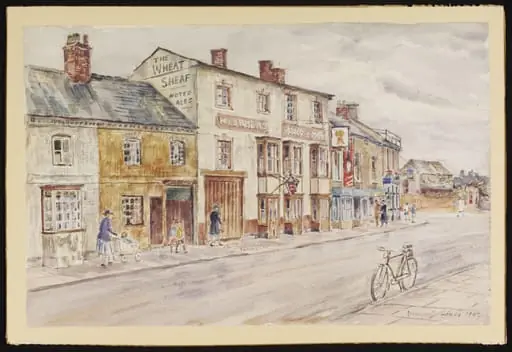 The Wheatsheaf Inn and Cottages, Newport Road, Swindon
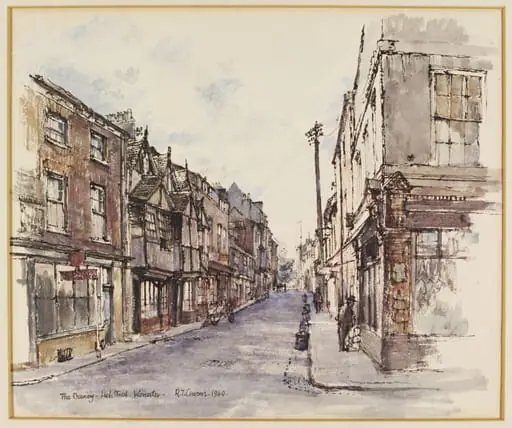 The Deanery, Lich Street, Worcester
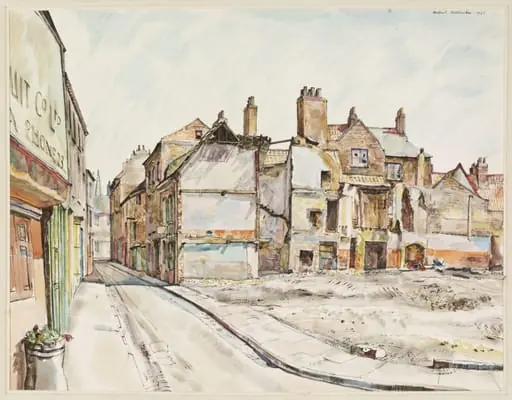 Corner of Grape Lane and Swinegate, York
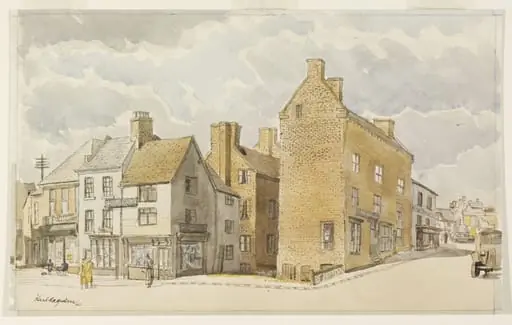 Ashbourne
 Backs of Houses, Chester Square, S.W.1.