Artwork
Madame Cezanne
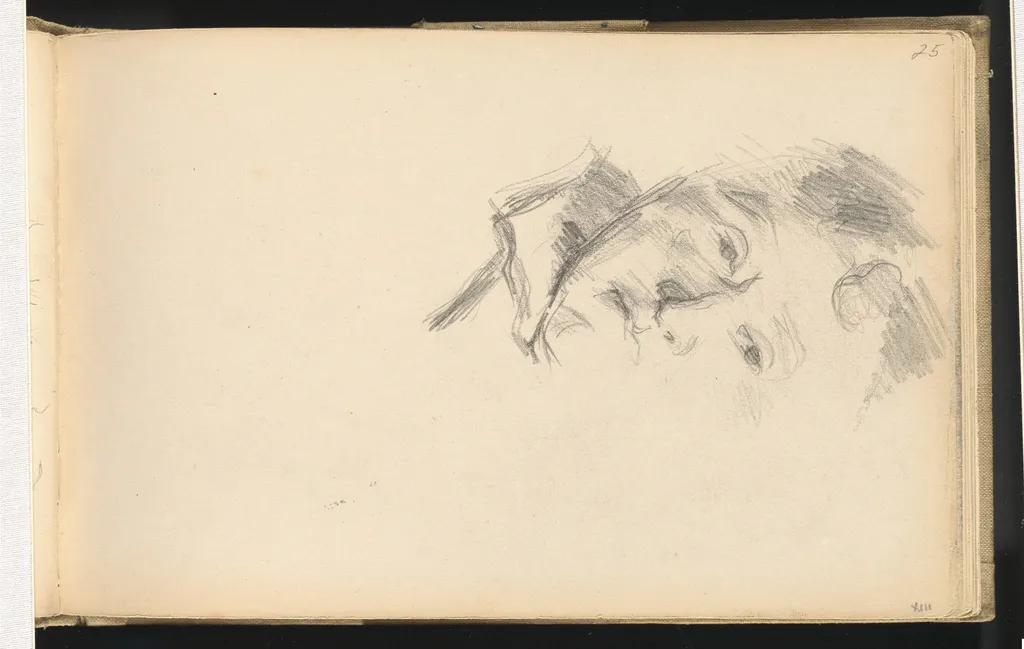
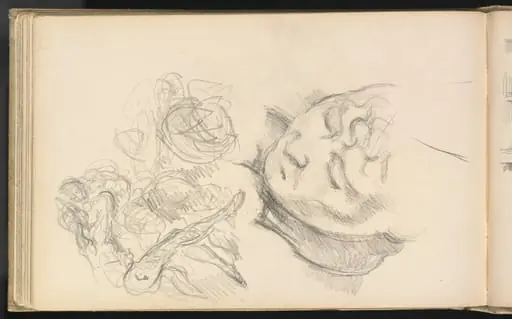
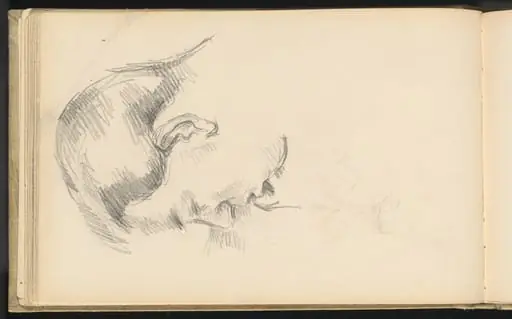
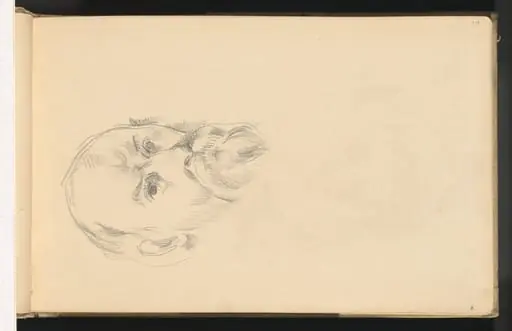
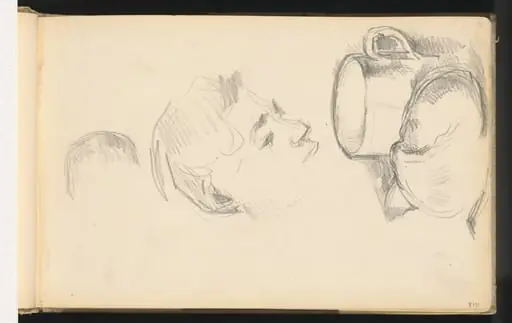
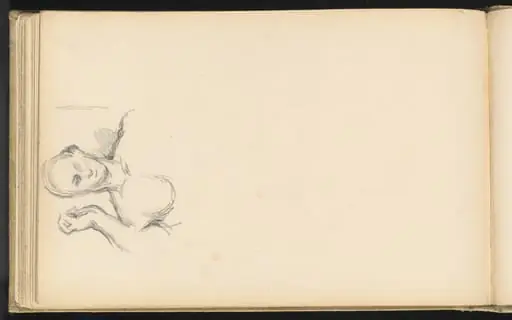
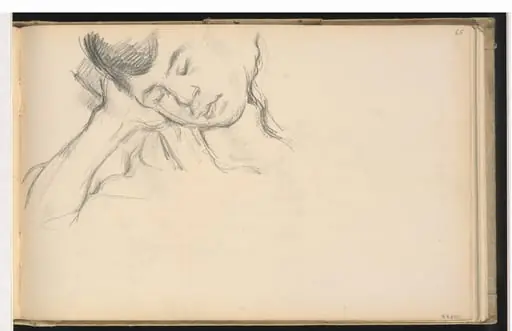
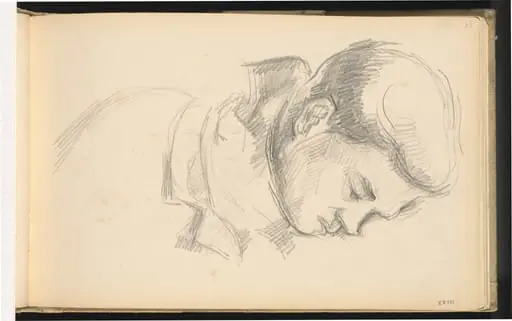
Madame Cezanne is a graphite drawing by the Impressionist artist Paul Cezanne. It dates from 1898 and is held in the collection of the National Gallery of Art.
About this work
Overview
Madame Cezanne is a graphite drawing on wove paper executed by Paul Cézanne in 1898. The work measures only a few inches and occupies a modest corner of the sheet, presenting a brief, informal study rather than a finished composition.
Subject & Meaning
The image depicts a seated woman turned in profile, her posture relaxed and the figure rendered with a sense of immediacy. The lack of facial detail and the loose handling of the form suggest the drawing was intended as a quick observation of gesture rather than a portrait with narrative intent.
Technique & Style
Cézanne employed rapid, sketchy graphite strokes that verge on scribbles, emphasizing overall shape and movement over precise delineation. The lightness of the paper and the minimal tonal variation create a fleeting impression, reflecting the artist’s interest in capturing the essential geometry of the figure through spontaneous line work.
History & Provenance
Created toward the end of the 19th century, the drawing belongs to a period when Cézanne frequently produced informal studies to inform larger oil compositions. Its provenance traces back to the artist’s studio inventory, later entering a private collection before being acquired by the museum that now displays it.
Artist & collection
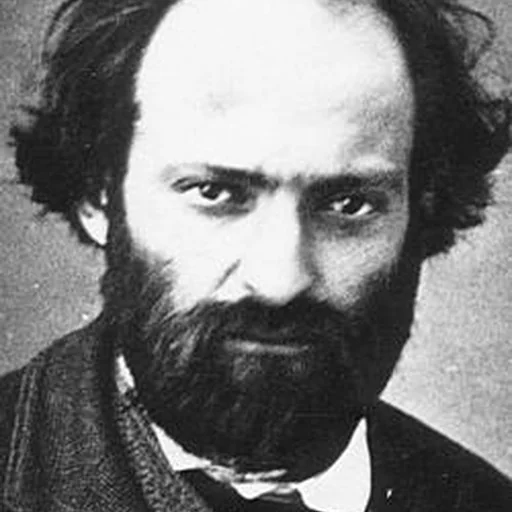
Artist
Paul Cézanne was born on January 19, 1839, in Aix-en-Provence, the son of a hatter turned wealthy banker.

 Harlequin
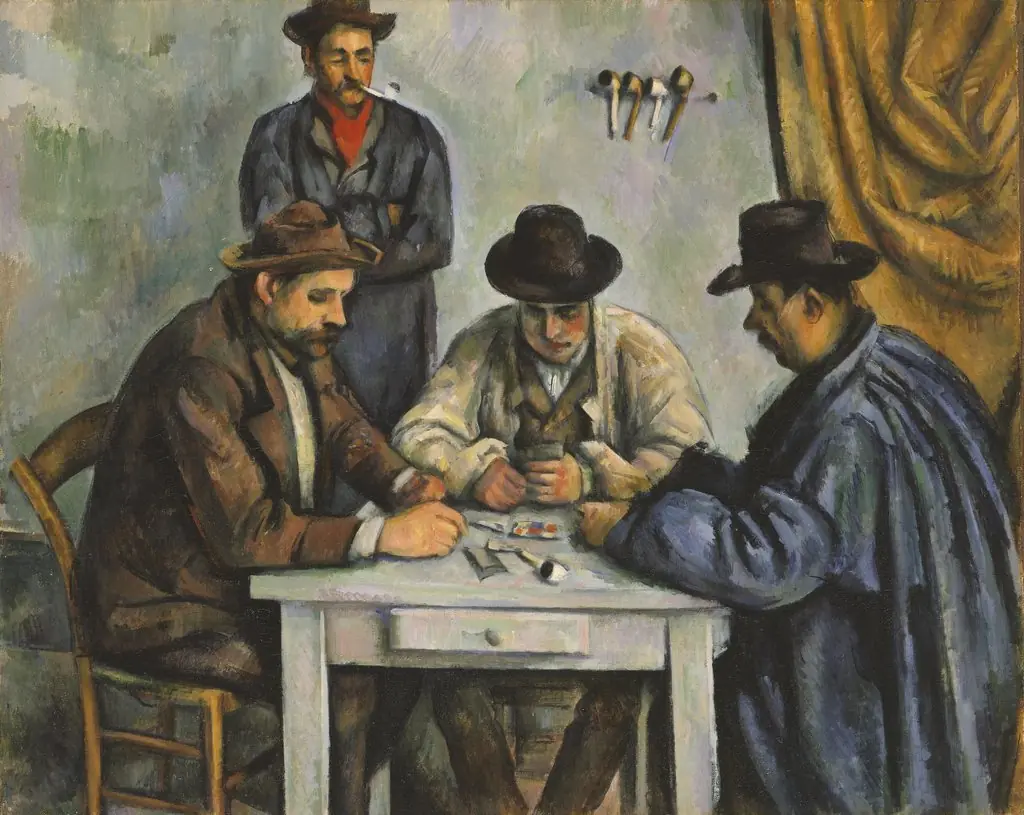 The Card Players
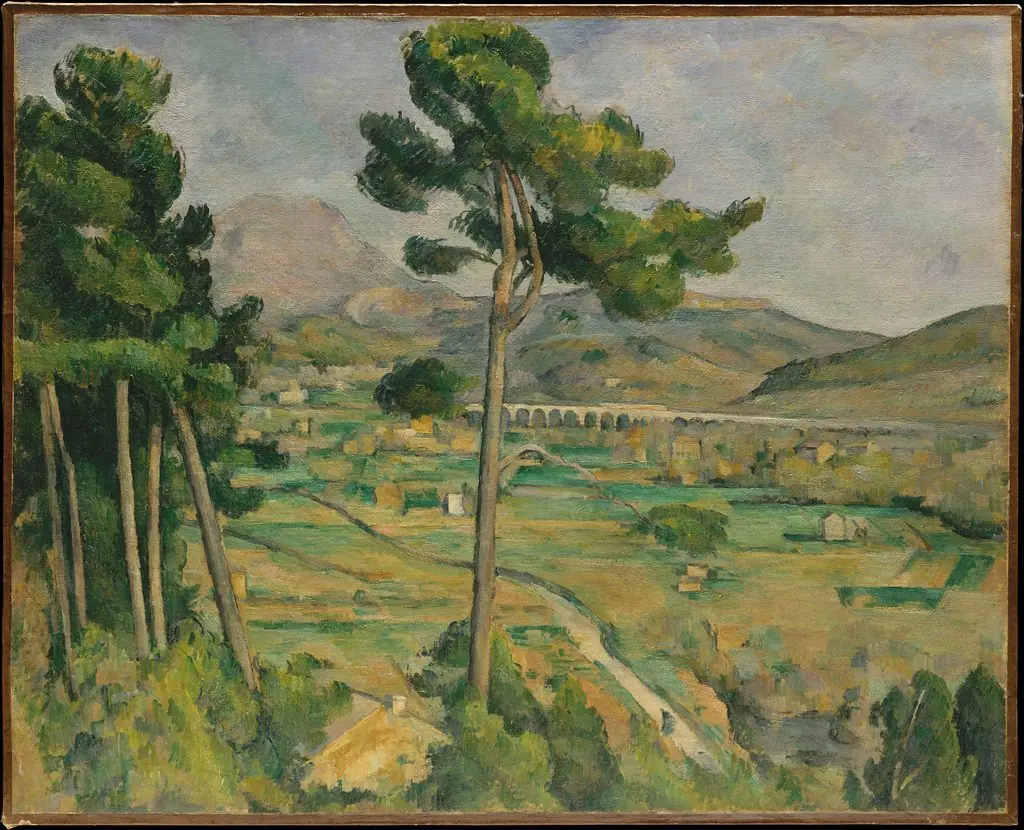 Mont Sainte-Victoire and the Viaduct of the Arc River Valley
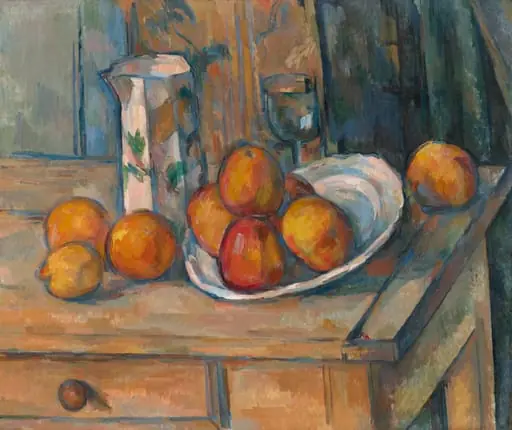 Still Life with Milk Jug and Fruit
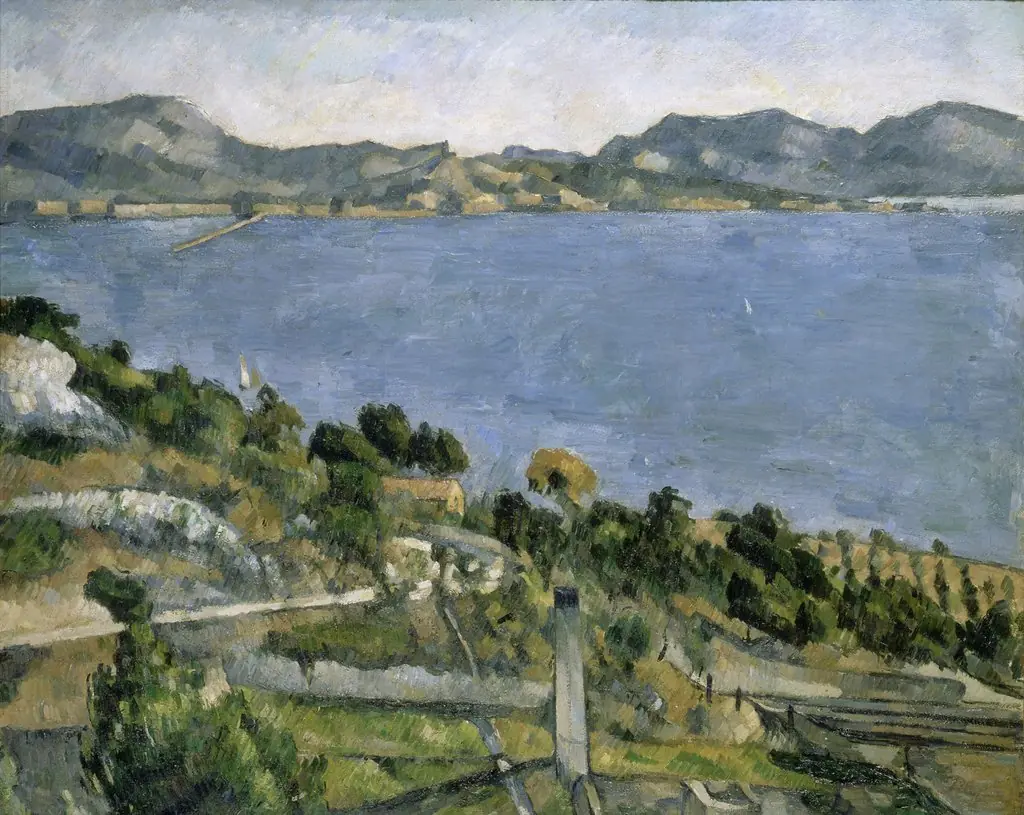 Le Golfe de Marseille vu de l'Estaque (The Gulf of Marseille Seen from L'Estaque)
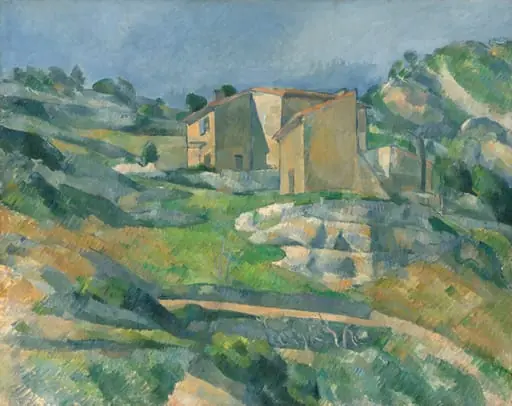 Houses in Provence: The Riaux Valley near L'Estaque
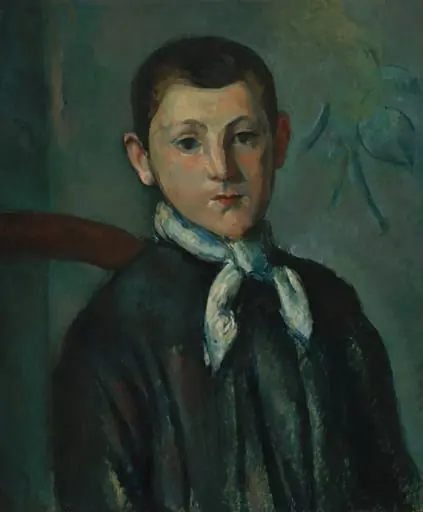 Louis Guillaume
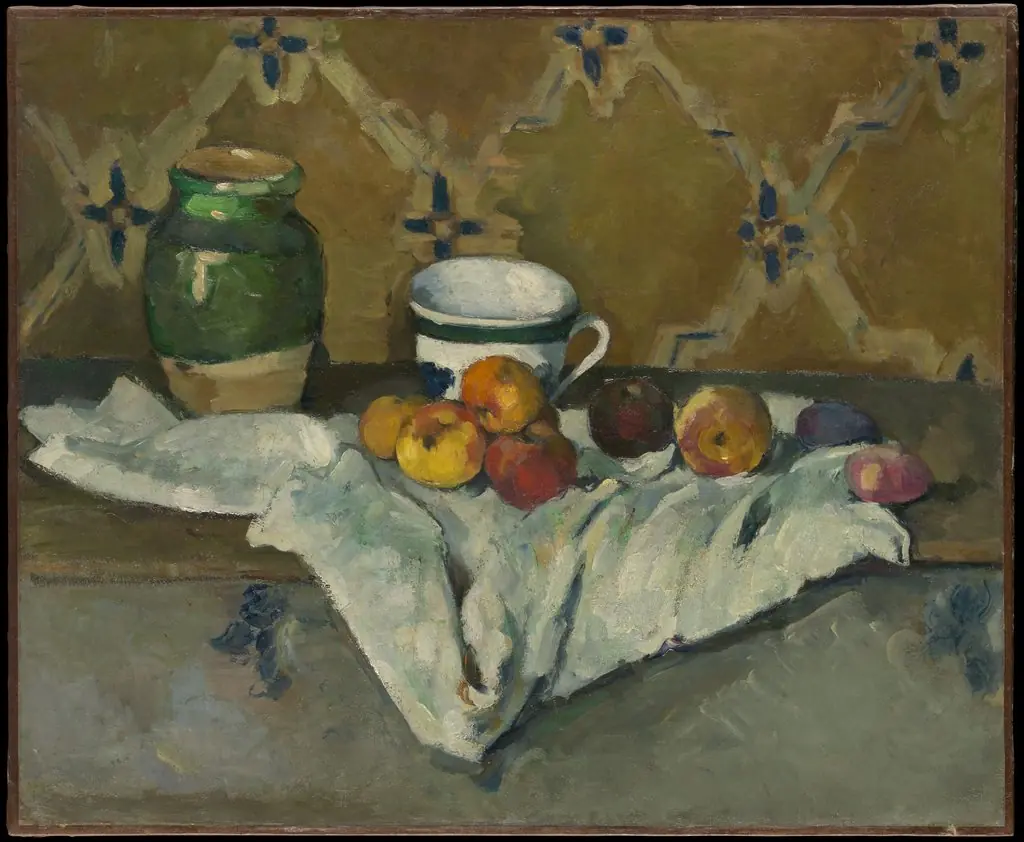 Still Life with Jar, Cup, and Apples