Artwork
A Head, a Cup, and a Bread Roll
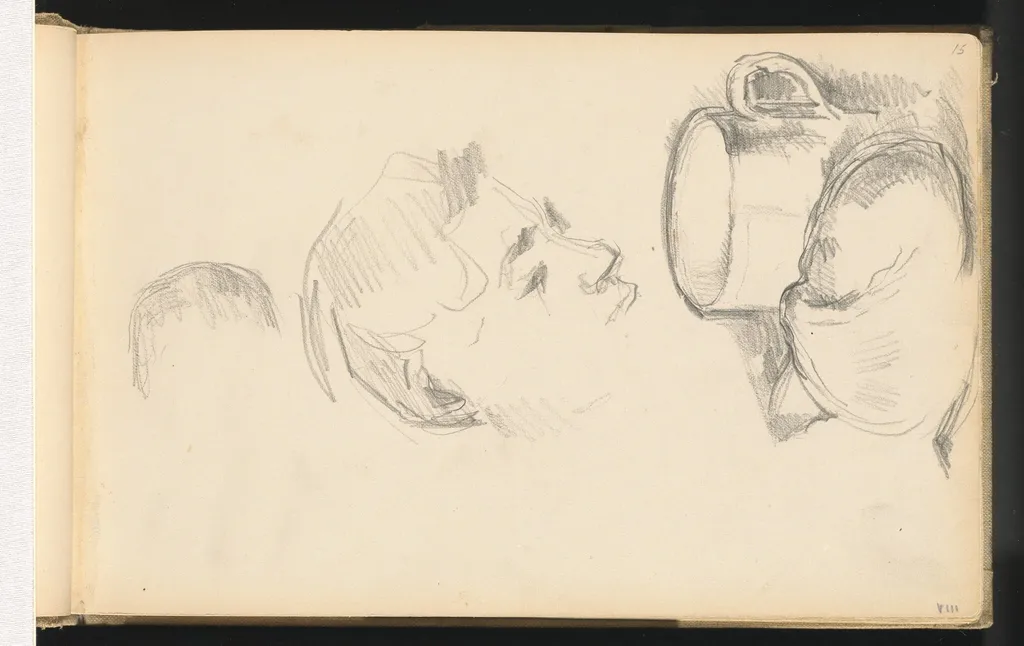
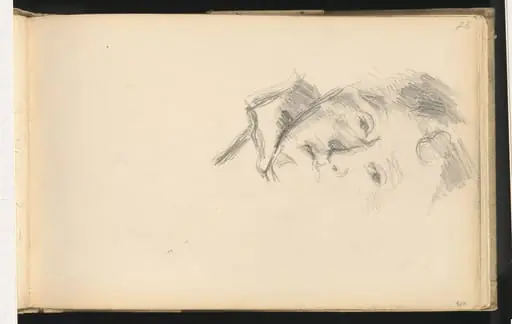
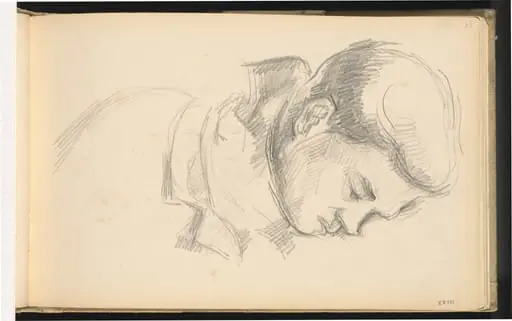
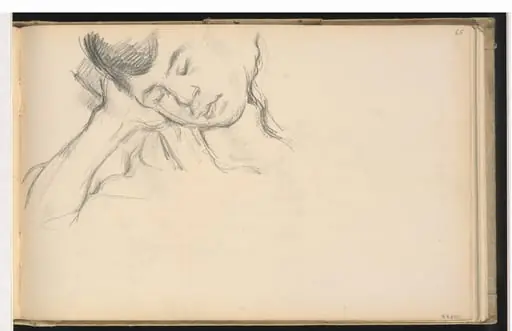
A Head, a Cup, and a Bread Roll is a graphite drawing by the Impressionist artist Paul Cezanne. It dates from 1892 and is held in the collection of the National Gallery of Art.
About this work
The painting is called A Head, a Cup, and a Bread Roll.
It was made by Paul Cezanne between 1891 and 1894.
The artist used graphite on wove paper to create this work, which is a mix of Impressionism and Realism, two styles that focus on everyday life and accurate depiction.
You can learn more about similar styles at the National Gallery of Art, Washington.
Overview
Executed on wove paper, the work belongs to a series of intimate studies Cézanne produced during his later years, focusing on quiet, unadorned subjects.
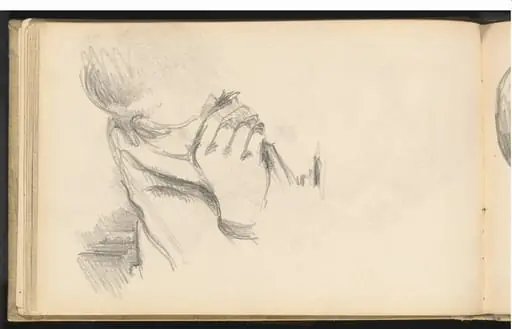
Created between 1891 and 1894, this graphite drawing by Paul Cézanne depicts a simple arrangement of three everyday objects: a human head, a cup, and a bread roll. Executed on wove paper, the work belongs to a series of intimate studies Cézanne produced during his later years, focusing on quiet, unadorned subjects. Its modest scale and medium reflect a deliberate turn toward private, observational practice rather than public exhibition.
Subject & Meaning
The drawing presents no narrative or symbolic intent; its power lies in the quiet coexistence of forms. The head, likely a portrait study, rests beside utilitarian objects—a cup and a loaf—each rendered with equal attention. Cézanne treats the human face no differently than the still life elements, suggesting a philosophical equivalence between person and object, and a rejection of hierarchical subject matter in art.
Technique & Style
Cézanne employed graphite with deliberate, measured strokes, building volume through tonal gradations rather than outline. The surface shows careful hatching and smudging, emphasizing structure over spontaneity. While rooted in Realism’s observation of the ordinary, the work’s geometric simplification and emphasis on form anticipate modernist concerns, bridging 19th-century naturalism and early 20th-century abstraction.
History & Provenance
The drawing was made during Cézanne’s time in Aix-en-Provence, where he increasingly withdrew from public life to focus on personal studies. It remained in his possession until his death in 1906, after which it passed through private collections before entering a public museum. Its survival in relatively unaltered condition offers insight into his working methods and private artistic priorities.
Context
In the 1890s, Cézanne distanced himself from the Impressionist movement, seeking greater structural coherence in his work. While contemporaries like Monet pursued light and atmosphere, Cézanne turned inward, refining his approach to form through repeated studies of heads, fruit, and household items. This drawing exemplifies his quiet rebellion against decorative painting in favor of enduring composition.
Legacy
This drawing contributed to Cézanne’s reputation as a bridge between traditional and modern art. Its emphasis on form over narrative influenced Picasso, Braque, and other pioneers of Cubism. Though unassuming in appearance, it became a touchstone for artists seeking to decode the underlying geometry of the visible world, cementing its role in the evolution of modern visual language.
Artist & collection
Artist
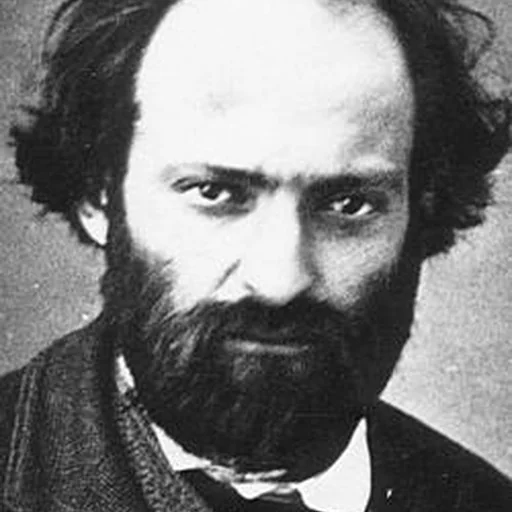
Paul Cézanne was born on January 19, 1839, in Aix-en-Provence, the son of a hatter turned wealthy banker.

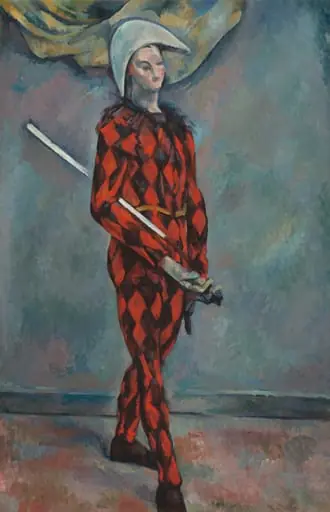 Harlequin
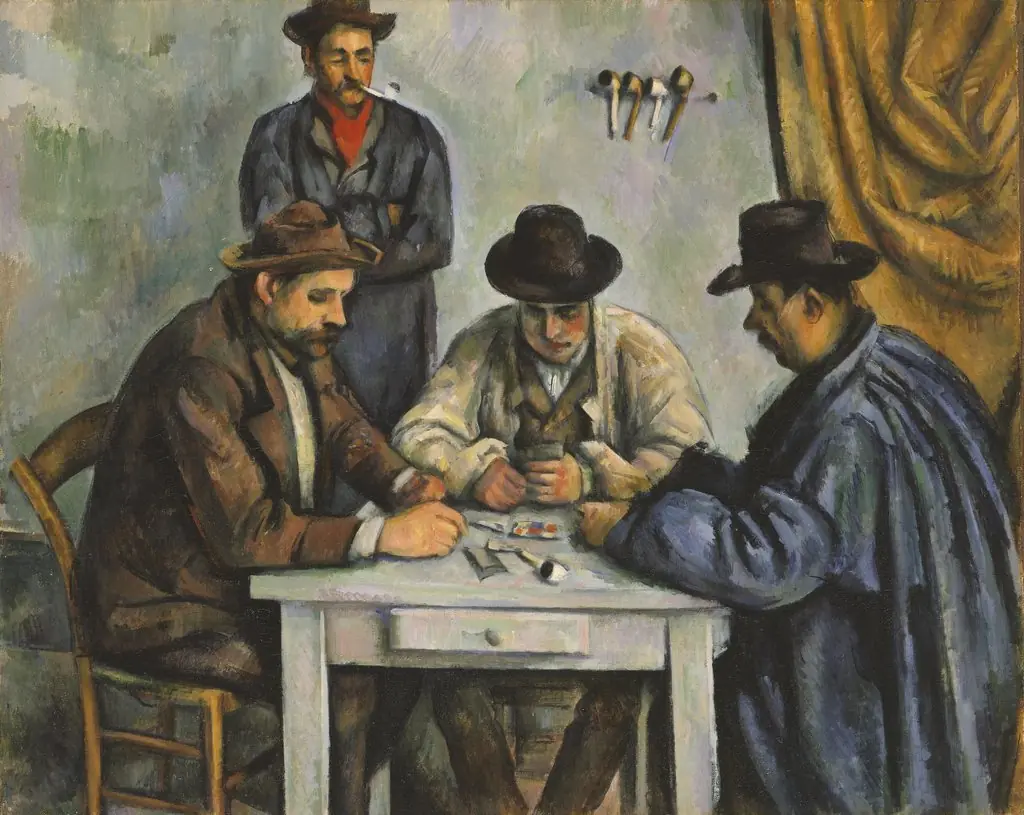 The Card Players
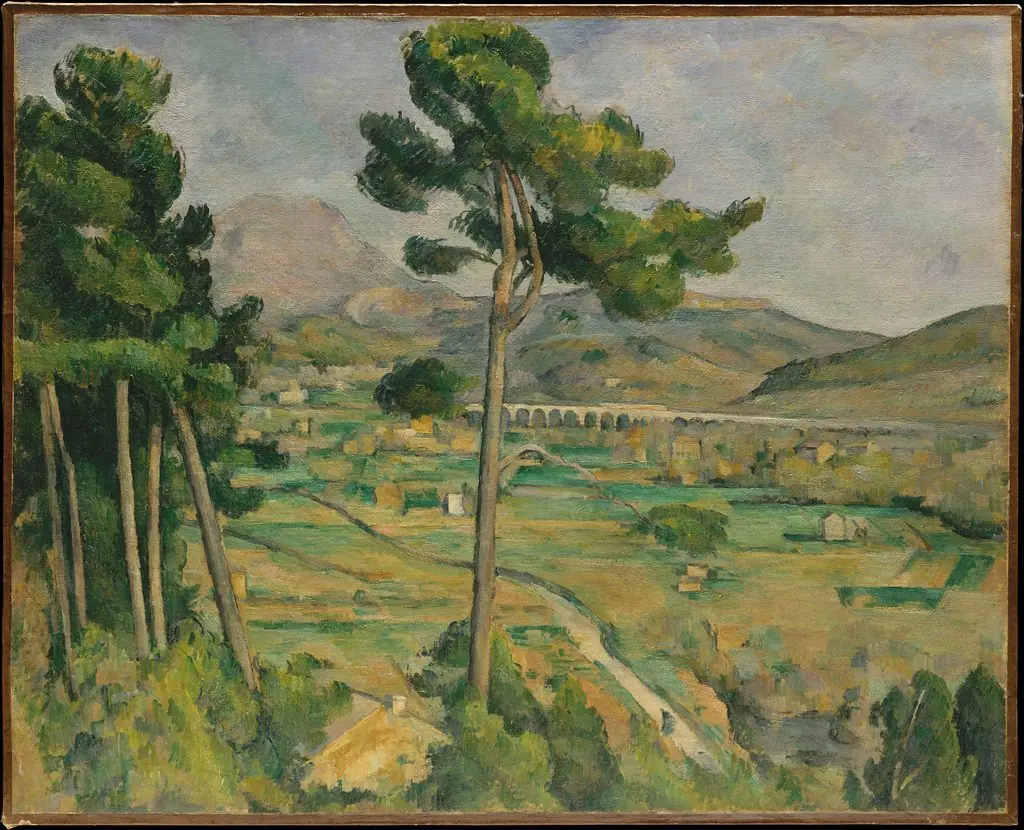 Mont Sainte-Victoire and the Viaduct of the Arc River Valley
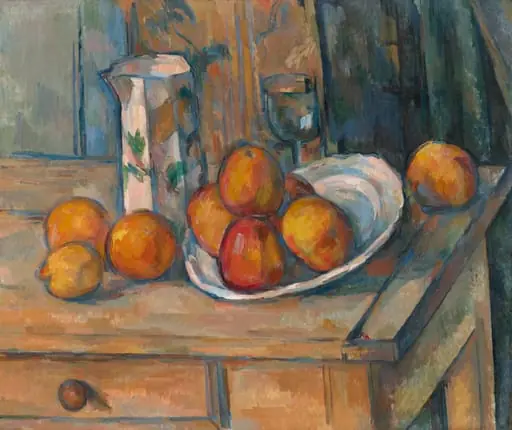 Still Life with Milk Jug and Fruit
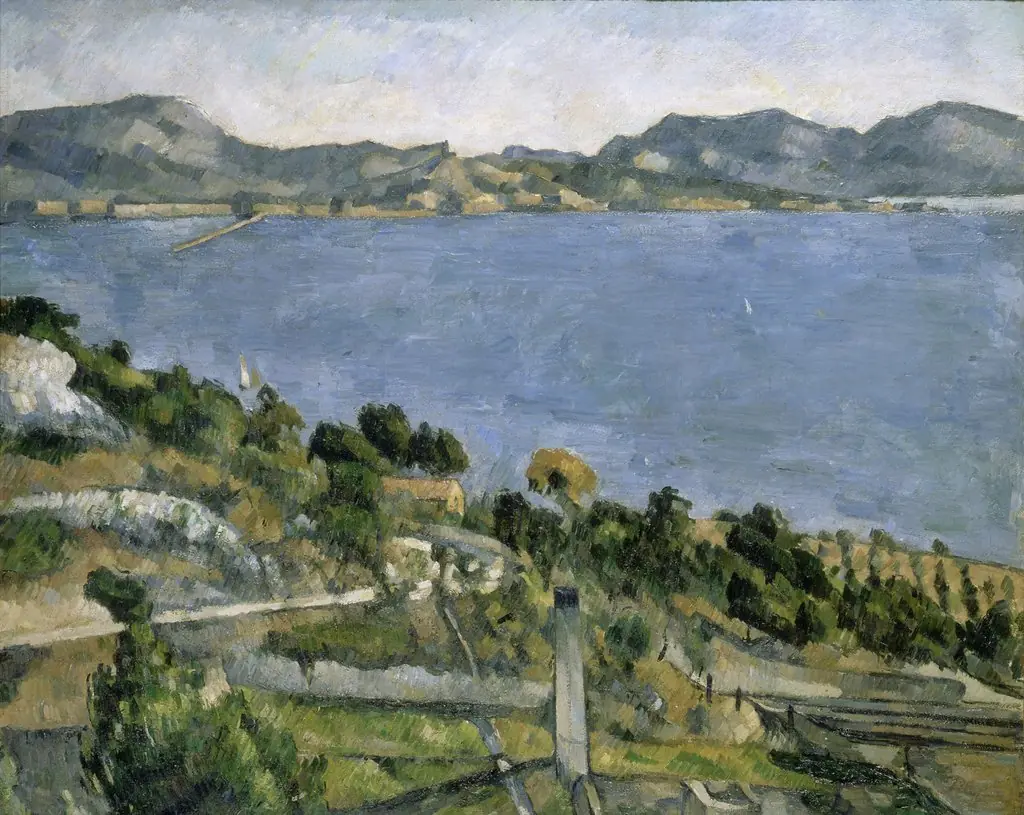 Le Golfe de Marseille vu de l'Estaque (The Gulf of Marseille Seen from L'Estaque)
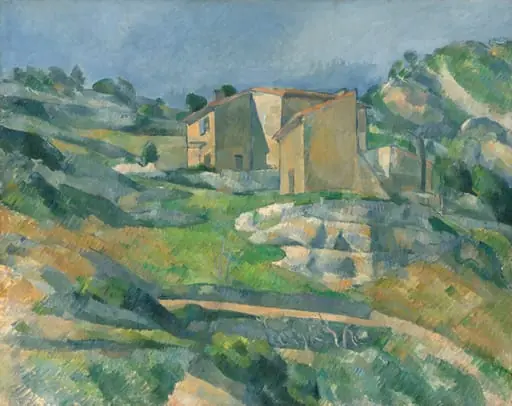 Houses in Provence: The Riaux Valley near L'Estaque
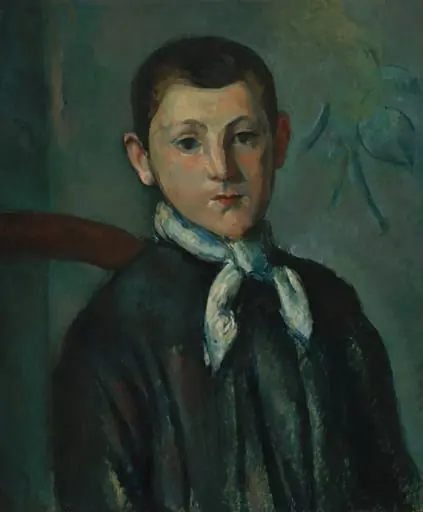 Louis Guillaume
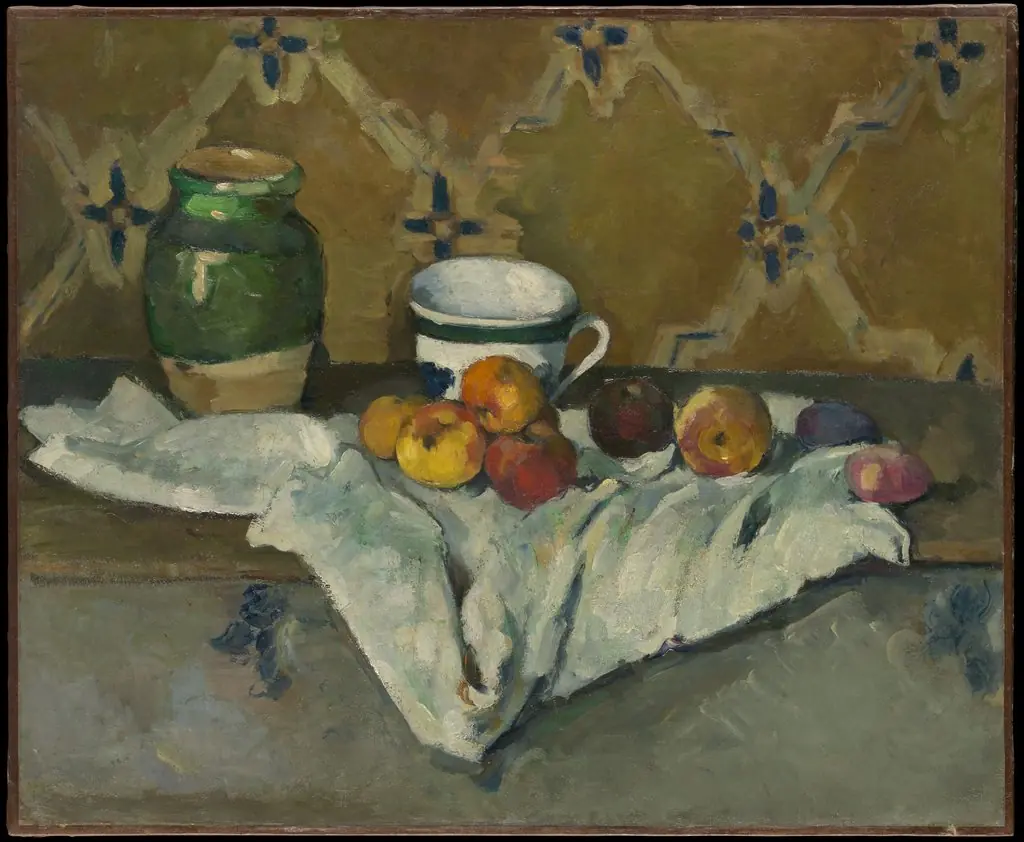 Still Life with Jar, Cup, and Apples