Artwork
Spring Landscape
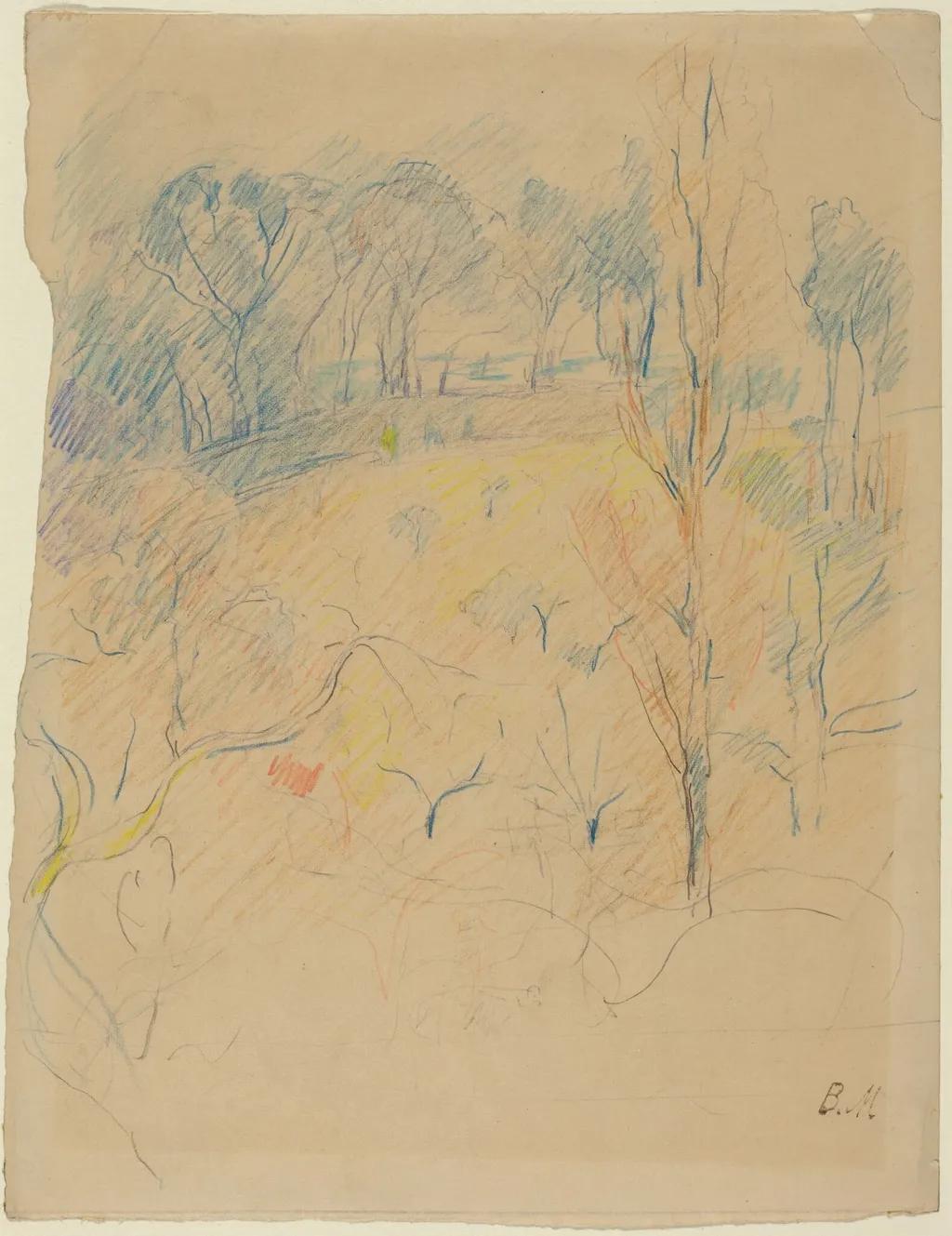
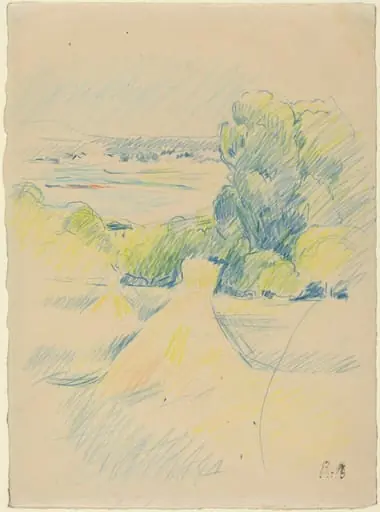
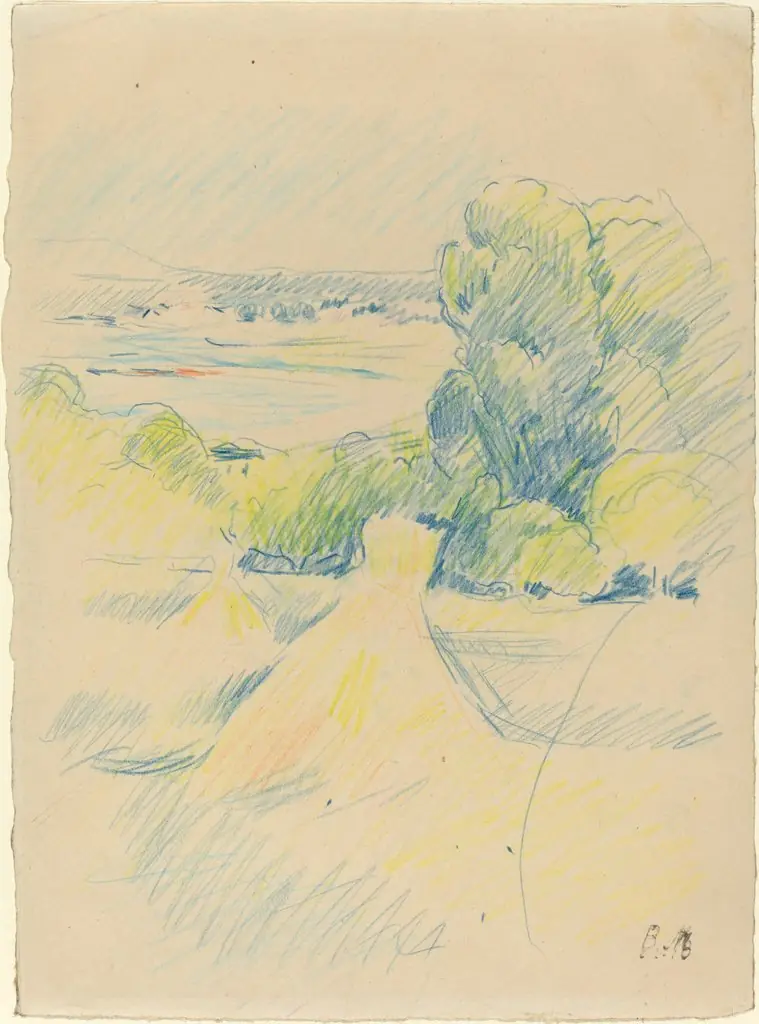
Spring Landscape is a graphite drawing by the Impressionist artist Berthe Morisot. It dates from 1890 and is held in the collection of the National Gallery of Art.
About this work
Overview
Spring Landscape, created circa 1890 by Berthe Morisot, is a drawing executed in colored pencils and graphite, characteristic of the Impressionist movement's emphasis on natural light and subjects.
Subject & Meaning
The drawing depicts a serene, sunlit hillside in early spring, featuring trees, bushes, and a palette of soft yellows, greens, and blues, evoking a sense of warmth and natural tranquility.
Technique & Style
Morisot employed quick, loose strokes and layered marks, combining colored pencils and graphite. The sketchy lines and pale colors reflect the Impressionist focus on capturing fleeting outdoor impressions.
History & Provenance
As a member of the Impressionist circle, Morisot exhibited with the group after leaving the Paris Salon in 1874. The specific provenance of Spring Landscape is not detailed here, highlighting her broader association with the movement.
Context
Created during Morisot's established career within the Impressionist movement, Spring Landscape aligns with the era's artistic shift towards outdoor, light-driven themes, distinct from the formal Salon traditions she had earlier abandoned.
Legacy
While specific legacy details of Spring Landscape are not provided, it contributes to Morisot's recognized contribution to Impressionism, particularly as one of the few prominent female artists of the movement.
Own this work as a print
Artist & collection

Artist
Berthe Marie Pauline Morisot (French: ; 14 January 1841 – 2 March 1895) was a French painter, printmaker and a member of the circle of painters in Paris who became known as the Impressionists.

 Landscape
 Landscape
 Towpath, Richmond, 1913
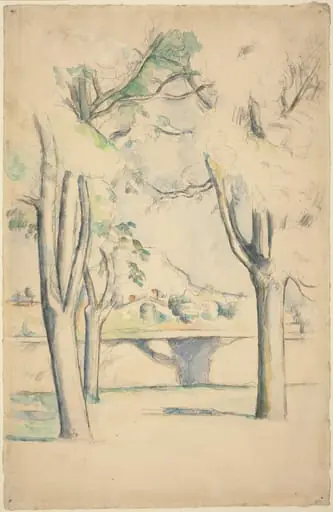 Mont Sainte-Victoire Seen beyond the Wall of the Jas de Bouffan
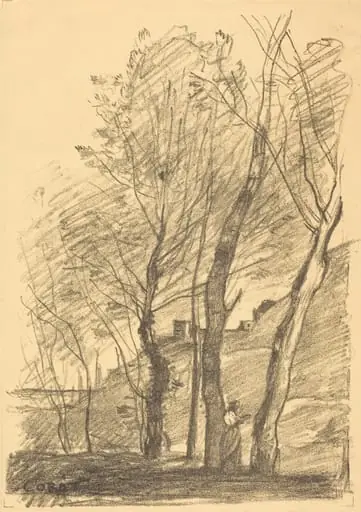 Reading Beneath the Trees (La Lecture sous les arbres)
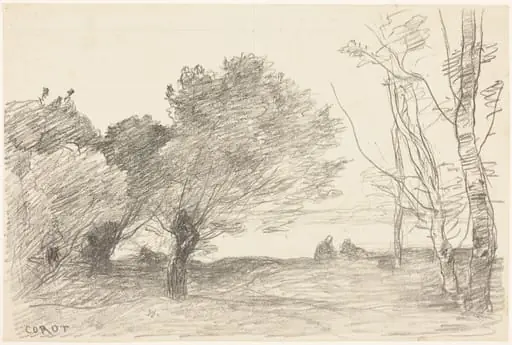 Willows and White Poplars (Saules et peupliers blancs)
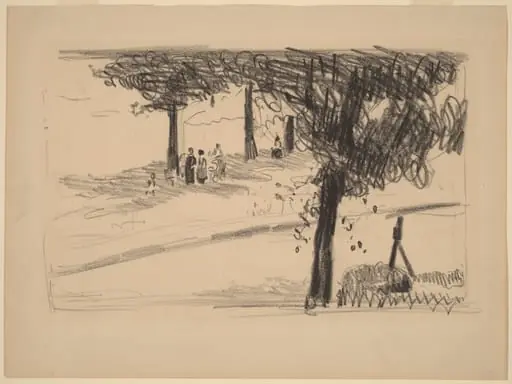 Under the Trees
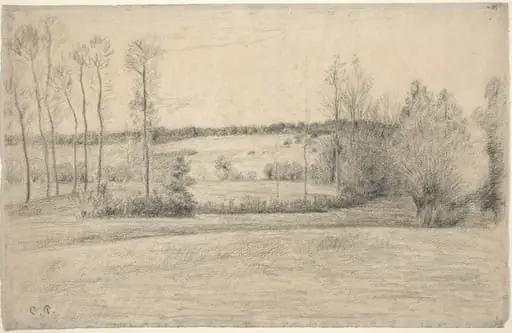 Trees and Meadows at Eragny
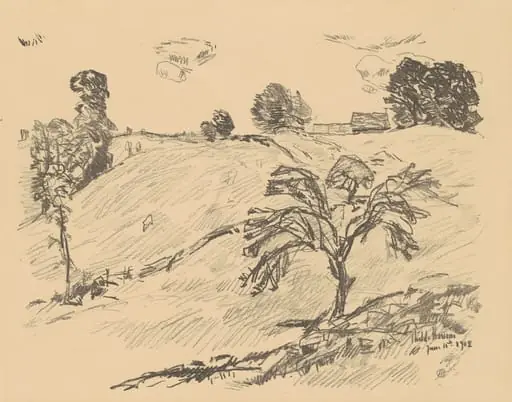 The Land of Nod
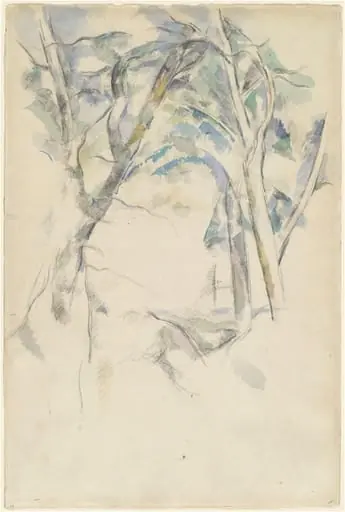 Trees Leaning over Rocks
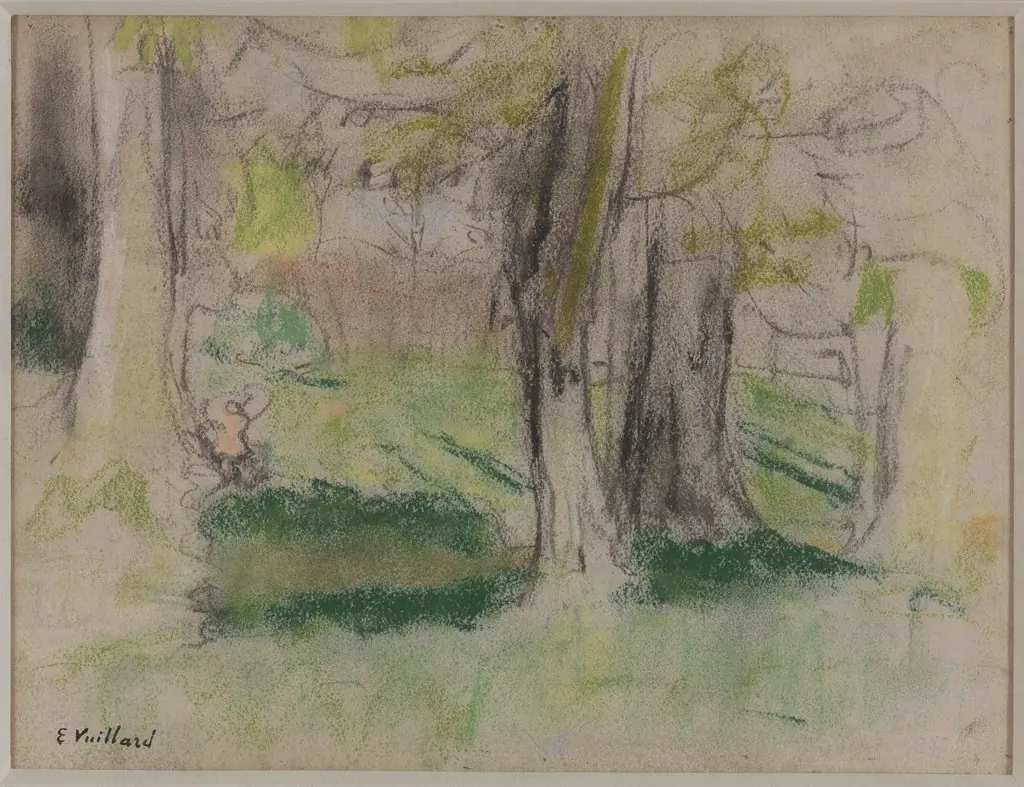 پارک
پارک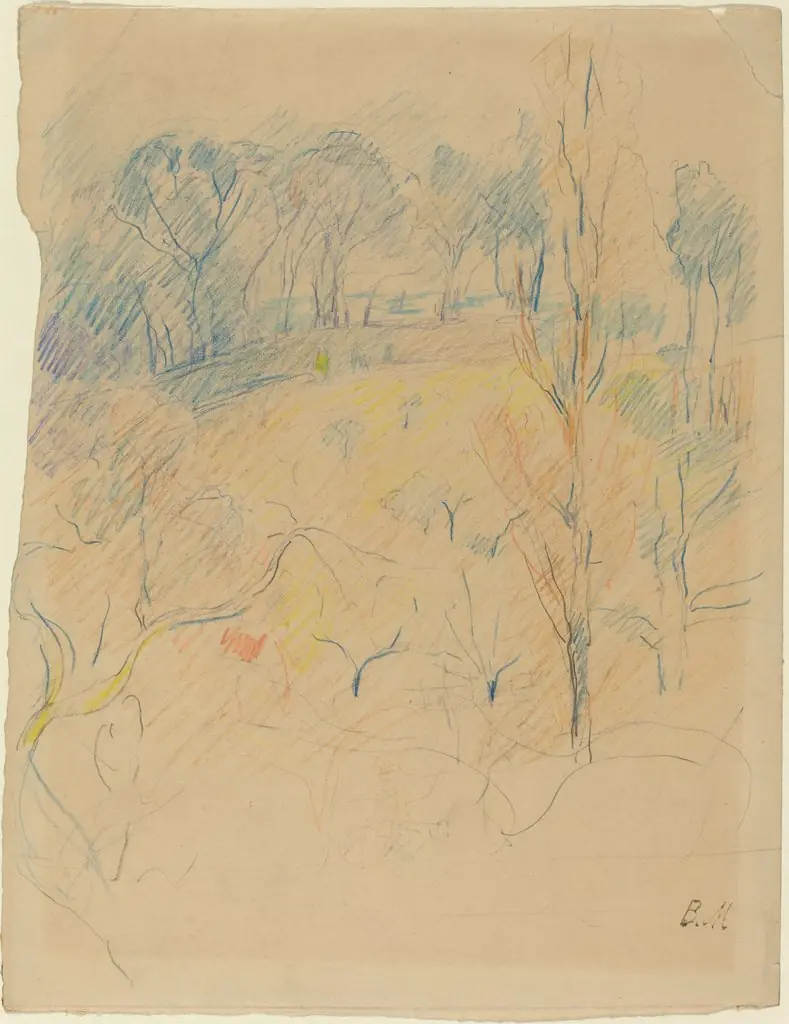 Spring landscape