Artwork
The Little Bridge [recto]
![The Little Bridge [recto], by Paul Cezanne, graphite, 1880](https://artifactworldgallery.com/img/paul-cezanne--the-little-bridge-recto--f3c8e2d05f6dc79e-w1024.webp)
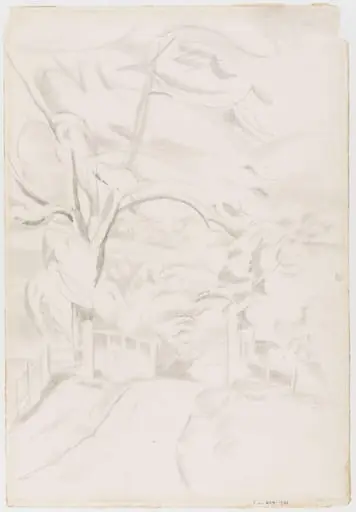
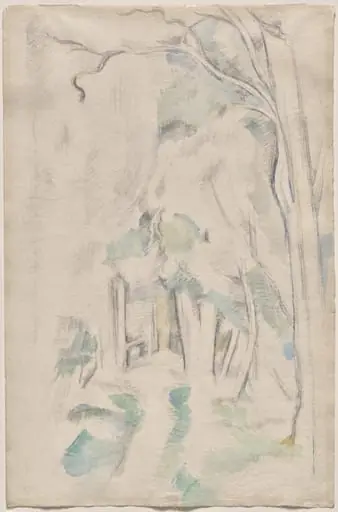
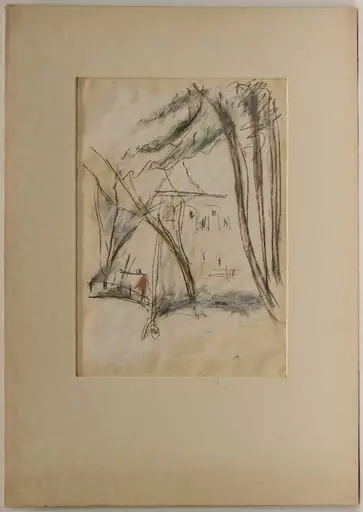
The Little Bridge [recto] is a graphite drawing by the Impressionist artist Paul Cezanne. It dates from 1880 and is held in the collection of the National Gallery of Art. Created around 1880, this graphite drawing by Paul Cézanne captures a modest rural bridge spanning a narrow waterway.
About this work
Overview
The paper’s texture remains visible in places, and overlapping lines suggest spontaneous observation rather than deliberate composition.
Created around 1880, this graphite drawing by Paul Cézanne captures a modest rural bridge spanning a narrow waterway. Executed with rapid, unrefined strokes, it lacks the polish of a finished composition. The paper’s texture remains visible in places, and overlapping lines suggest spontaneous observation rather than deliberate composition. The work functions as a direct record of the artist’s visual encounter with the landscape.
Subject & Meaning
The subject is a simple bridge, likely in the countryside near Aix-en-Provence, framed by trees on one side and open space on the other. There is no narrative or symbolic intent; instead, the drawing emphasizes the act of seeing. Cézanne treats the bridge not as an architectural feature but as a structural element within a larger spatial arrangement, reflecting his interest in how forms occupy and define space.
Technique & Style
Cézanne employed loose, hesitant pencil lines that convey movement and uncertainty. The strokes are uneven, with no attempt to erase or refine contours. Some lines cross or fade, and the paper’s surface interrupts the graphite, creating a sense of fragility. This approach reveals his preference for capturing perception over idealized form, prioritizing the immediacy of observation over technical finish.
History & Provenance
The drawing is part of a larger body of sketches Cézanne made during his time in the Provence region, often en plein air. It was likely kept in his personal collection and later entered institutional holdings through posthumous acquisitions. Its unassuming nature suggests it was never intended for public display, serving instead as a private study for his later landscape paintings.
Context
In the early 1880s, Cézanne was moving away from Impressionist spontaneity toward a more structured approach to nature. This sketch reflects that transition: it retains the immediacy of outdoor sketching but hints at his growing focus on geometric simplification. Similar drawings from this period formed the foundation for his mature works, where natural forms were reinterpreted through underlying planes and volumes.
Legacy
Though modest in scale, this drawing exemplifies Cézanne’s revolutionary method of seeing. Its unfinished quality influenced later modernists who valued process over polish, particularly Cubists drawn to his structural analysis of form. The work stands as evidence of his belief that art emerges not from idealization, but from persistent, honest observation of the visible world.
Artist & collection
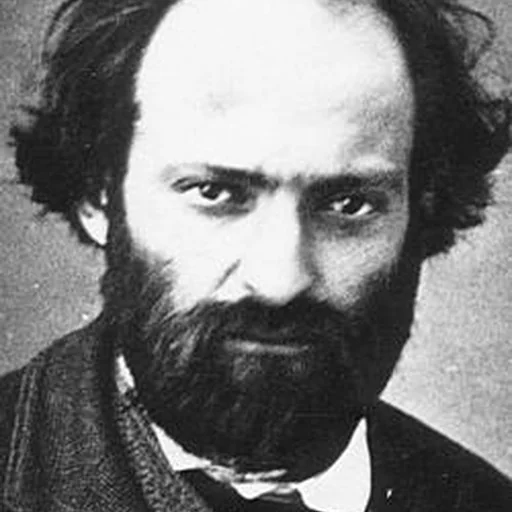
Artist
Paul Cézanne was born on January 19, 1839, in Aix-en-Provence, the son of a hatter turned wealthy banker.

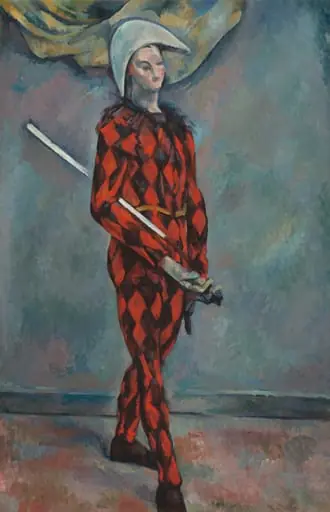 Harlequin
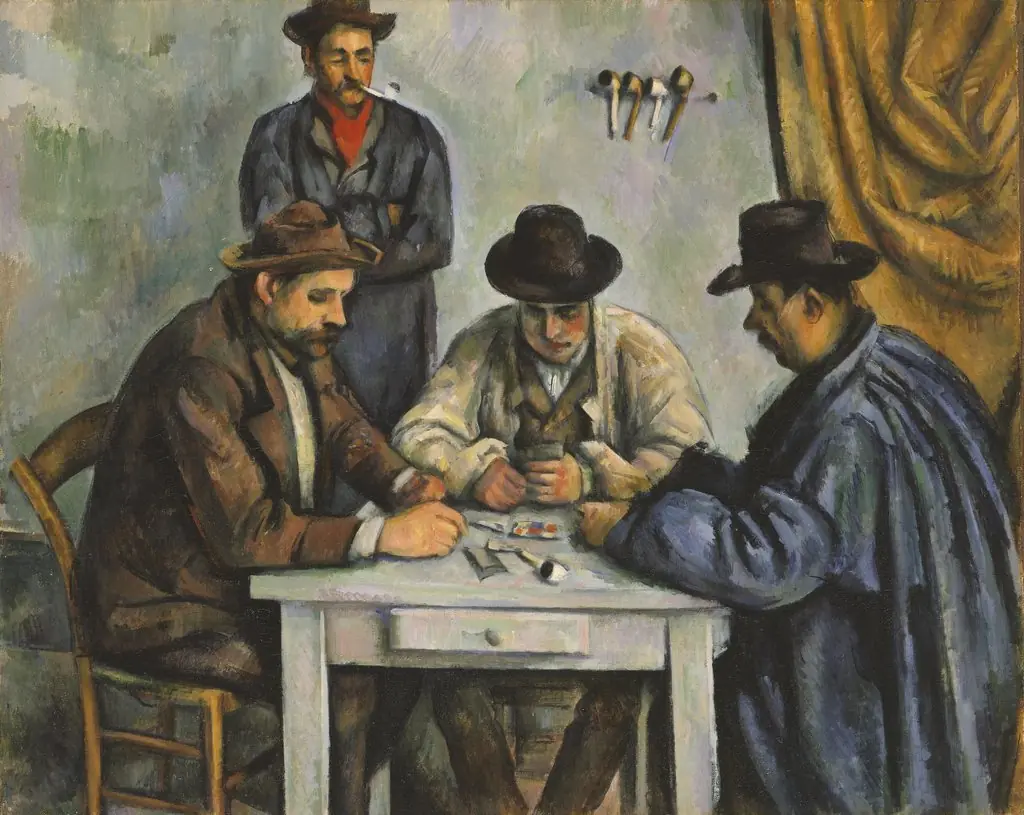 The Card Players
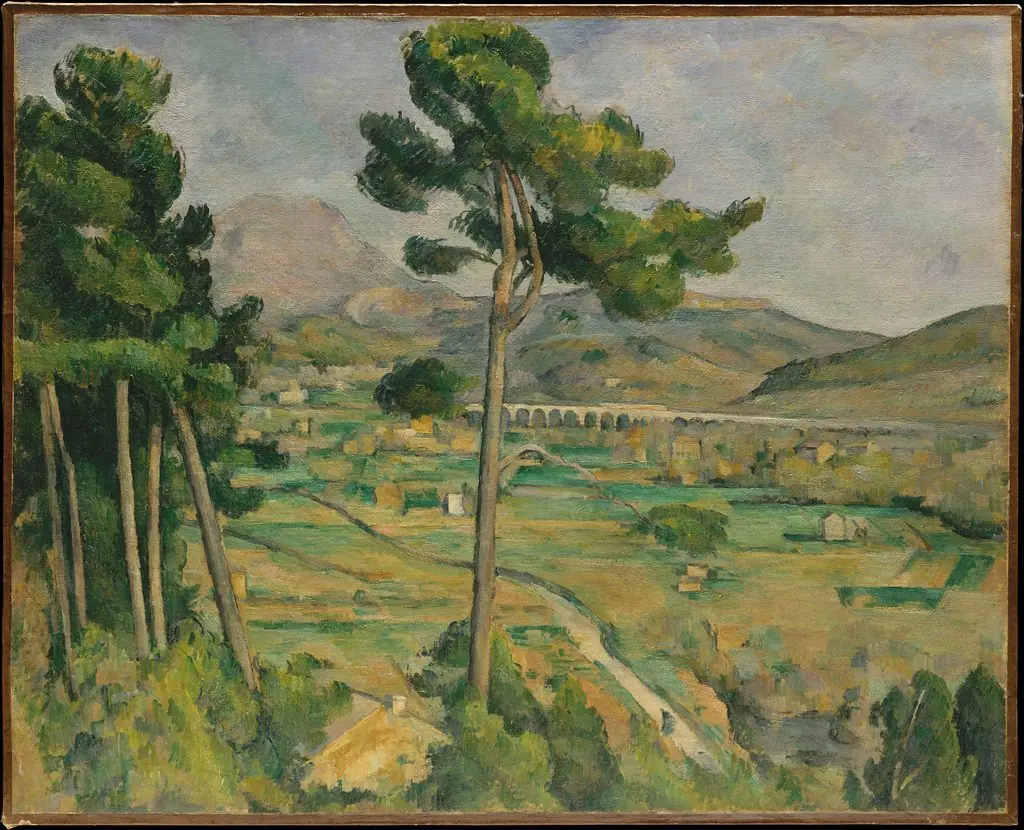 Mont Sainte-Victoire and the Viaduct of the Arc River Valley
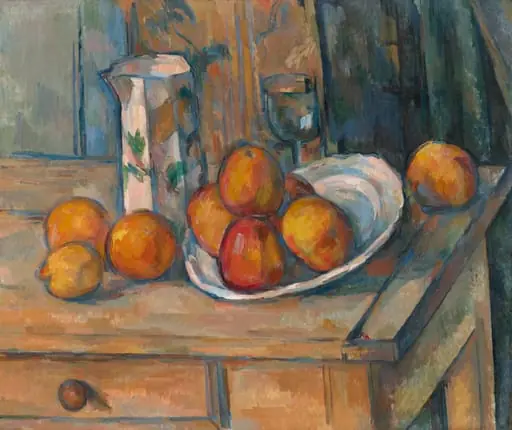 Still Life with Milk Jug and Fruit
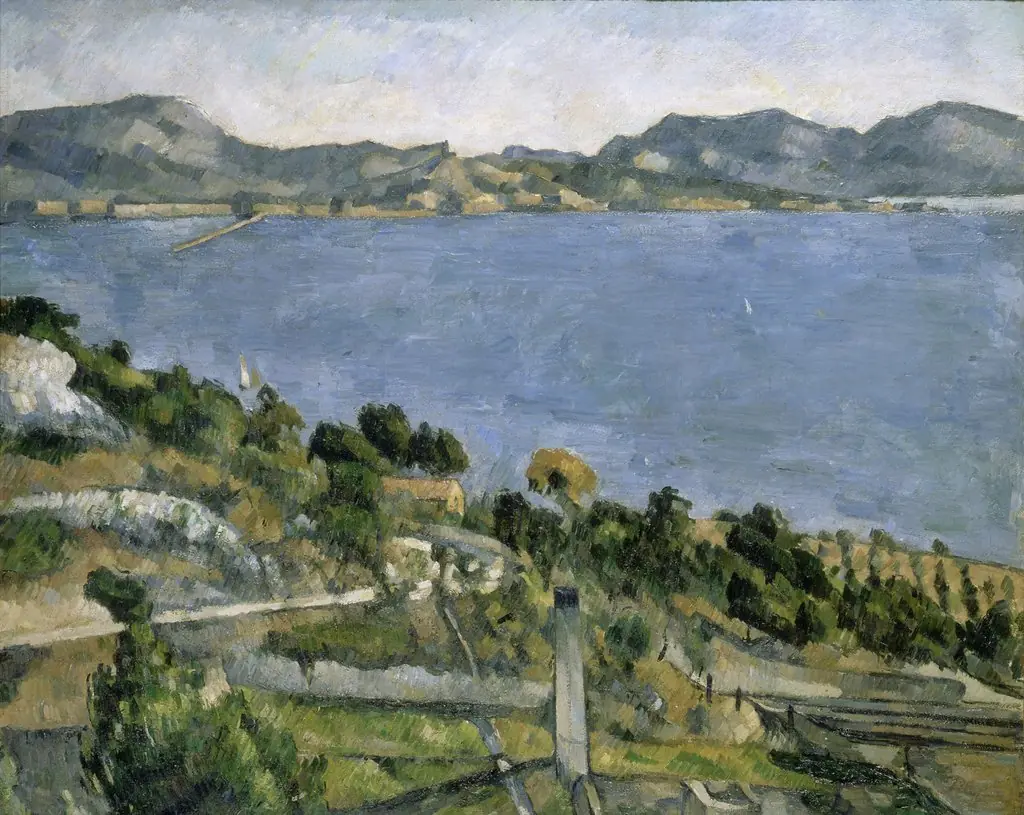 Le Golfe de Marseille vu de l'Estaque (The Gulf of Marseille Seen from L'Estaque)
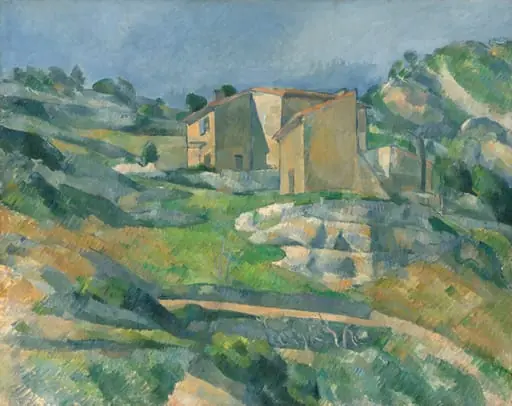 Houses in Provence: The Riaux Valley near L'Estaque
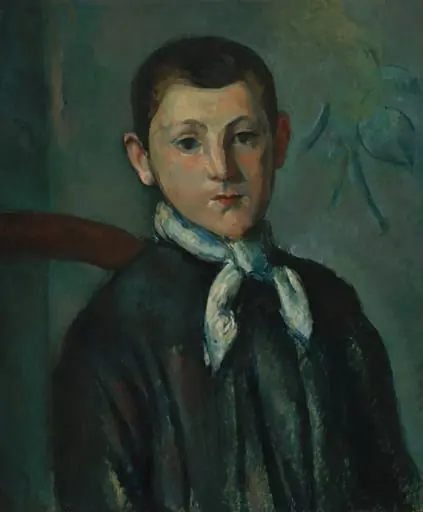 Louis Guillaume
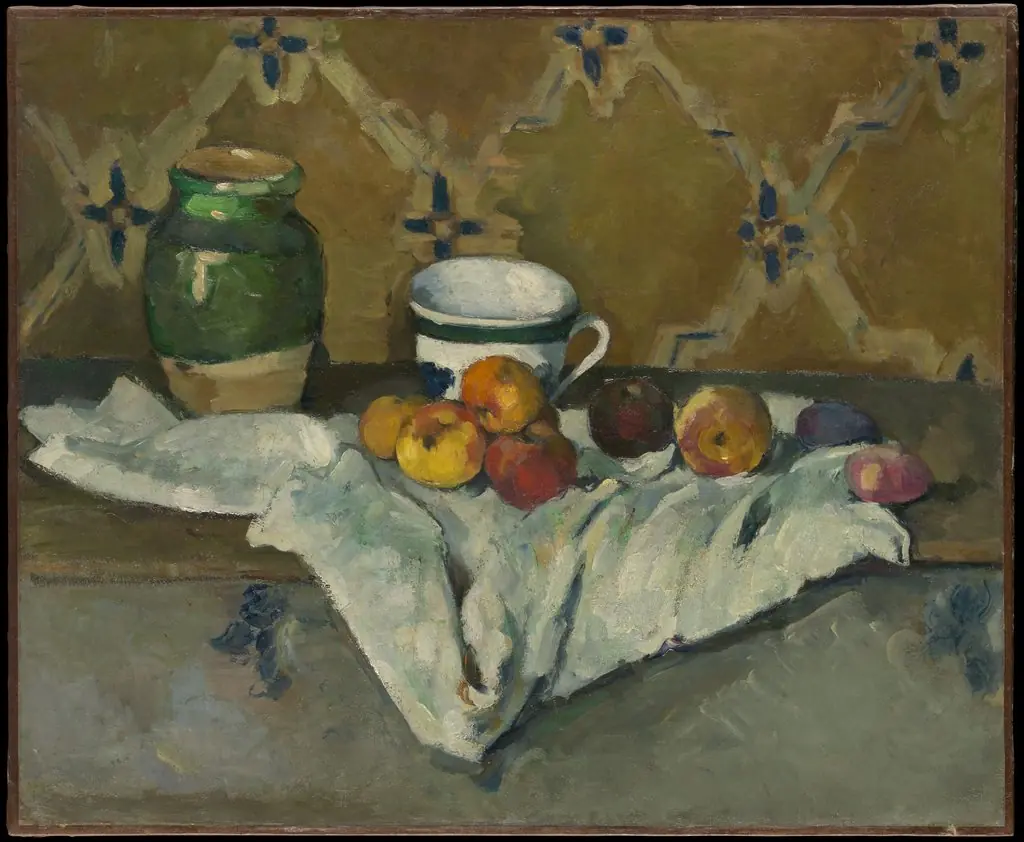 Still Life with Jar, Cup, and Apples