Artwork
Young Woman Kneeling by a Stand with a Ceremonial Cap (from the series The Six Immortal Poets in Elegant Modern Dress)
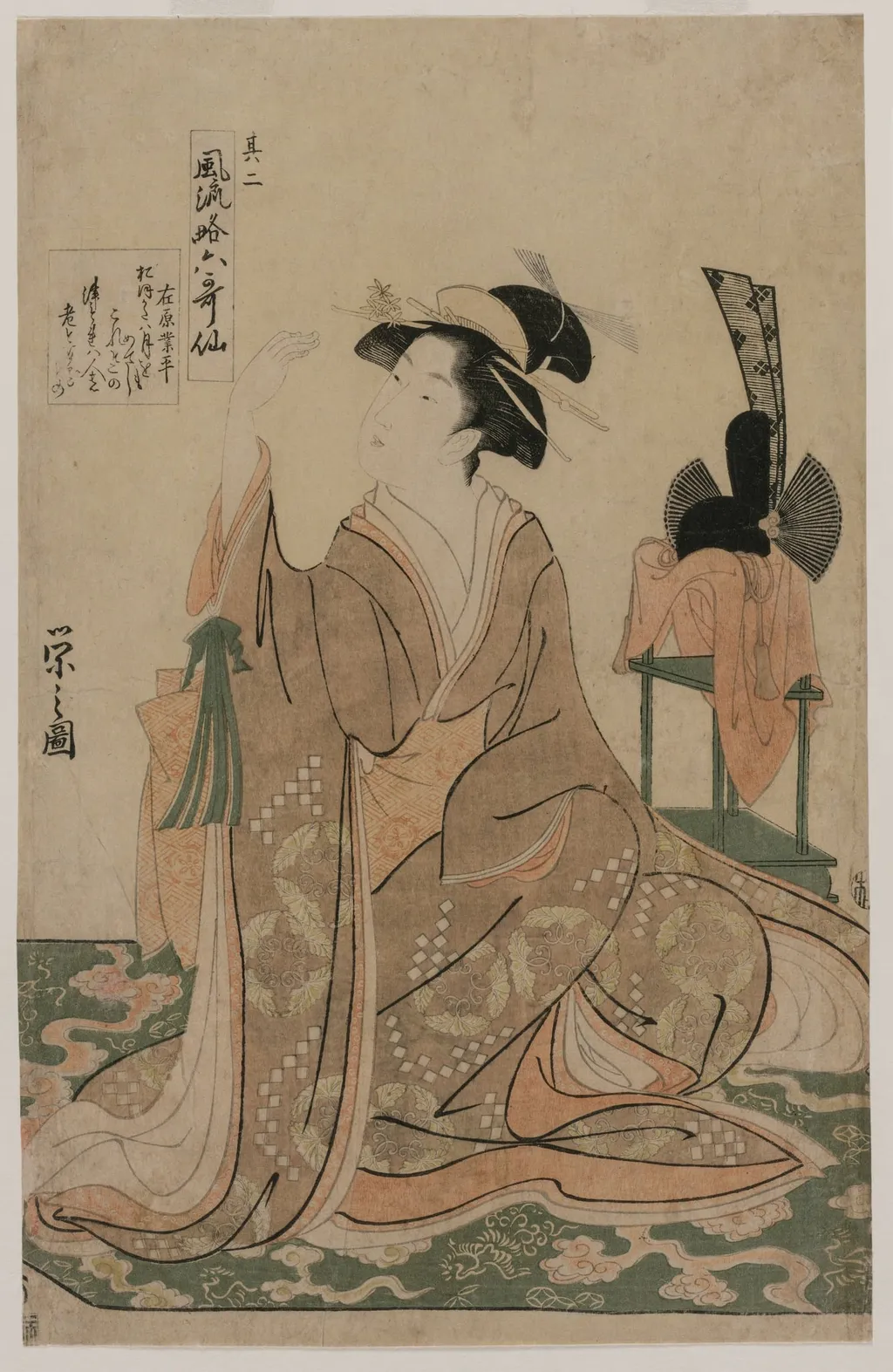
Young Woman Kneeling by a Stand with a Ceremonial Cap (from the series The Six Immortal Poets in Elegant Modern Dress) is a print by the Romanticist artist Chôbunsai Eishi. It dates from 1794 and is held in the collection of the Cleveland Museum of Art.
About this work
Overview
The composition emphasizes stillness and refined detail, characteristic of Eishi’s late ukiyo-e style, which blended traditional themes with modern fashion.
Created around 1794 by Chōbunsai Eishi, this woodblock print is part of a series depicting six revered Japanese poets reimagined in contemporary Edo-period attire. The image captures a woman in a moment of quiet ritual, kneeling before a small stand adorned with a fan and draped garment. The composition emphasizes stillness and refined detail, characteristic of Eishi’s late ukiyo-e style, which blended traditional themes with modern fashion.
Subject & Meaning
The figure represents one of the Six Immortal Poets, reinterpreted not as a historical figure but as a contemporary woman engaged in an act of ceremonial preparation. The ceremonial cap and tassel suggest ritual significance, while the draped kimono and fan imply readiness for poetic performance or formal gathering. The scene evokes cultural continuity—honoring literary heritage through the poise and dress of Edo-era women.
Technique & Style
Eishi employed fine linework and subtle color gradations typical of refined ukiyo-e prints of the period. The kimono’s floral pattern is rendered with delicate precision, and the green mat’s wavy motif adds rhythmic texture. Soft, muted tones dominate, with restrained use of color to highlight the woman’s attire and accessories. The background’s neutral brown enhances focus on the figure and objects, reflecting Eishi’s shift from theatrical subjects to intimate, contemplative scenes.
History & Provenance
The print was produced during Eishi’s mature period, after he left the monkhood to pursue art under the patronage of the Tokugawa shogunate. It was likely issued as part of a limited print run for elite audiences. The work entered The Cleveland Museum of Art’s collection in the 20th century, having passed through private Japanese and Western collections, where its literary theme and aesthetic restraint attracted scholarly interest.
Context
In the 1790s, ukiyo-e artists increasingly turned to literary and historical subjects, blending classical references with contemporary fashion. Eishi’s series responded to a growing urban elite’s interest in cultural heritage and refined aesthetics. The depiction of women in elegant, non-theatrical roles reflected broader social shifts—where poetry, propriety, and personal expression became markers of status among educated women in Edo.
Legacy
Eishi’s reinterpretation of the Six Immortal Poets influenced later artists to treat historical themes with psychological nuance rather than grandeur. This print exemplifies a quiet transition in ukiyo-e—from entertainment to introspection—and remains a key example of how traditional Japanese literary culture was visually reimagined for a modernizing society in the late 18th century.
Artist & collection

Artist
Chōbunsai Eishi (鳥文斎 栄之; 1756–1829) was a Japanese ukiyo-e artist. His last name was Hosoda (細田). His first name was Tokitomi (時富). His common name was Taminosuke (民之丞) and later Yasaburo (弥三郎). Pupil of Kano Eisen'in…

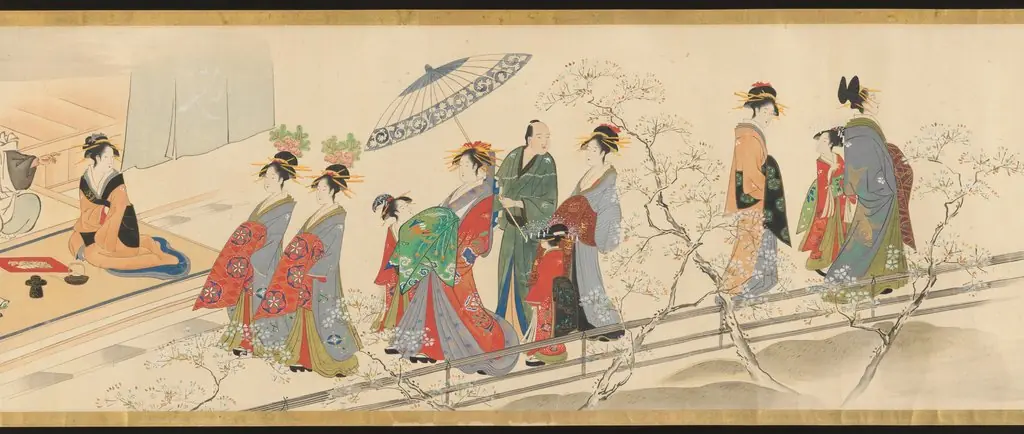 Three Gods of Good Fortune Visit the Yoshiwara; or “Scenes of Pleasure at the Height of Spring”
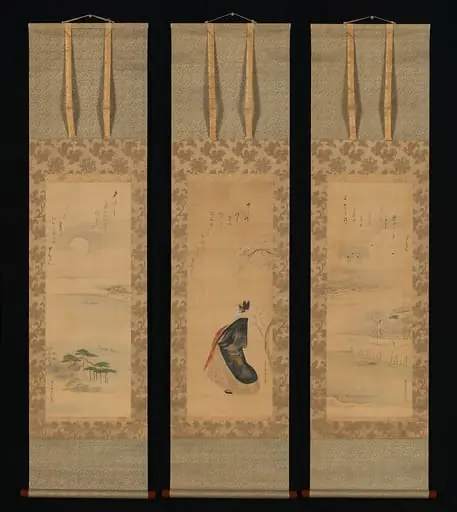 蜀山人(大田 南畝)賛 雪・月・花図 |Snow, Moon, and Cherry Blossoms (Yoshiwara in Three Seasons)
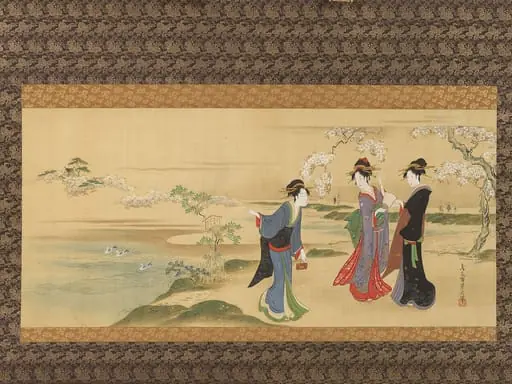 Untitled
 Untitled
 Untitled
 Shellfish and Apparitions of the Yoshiwara Pleasure Quarter
 A Courtesan Reading a Letter
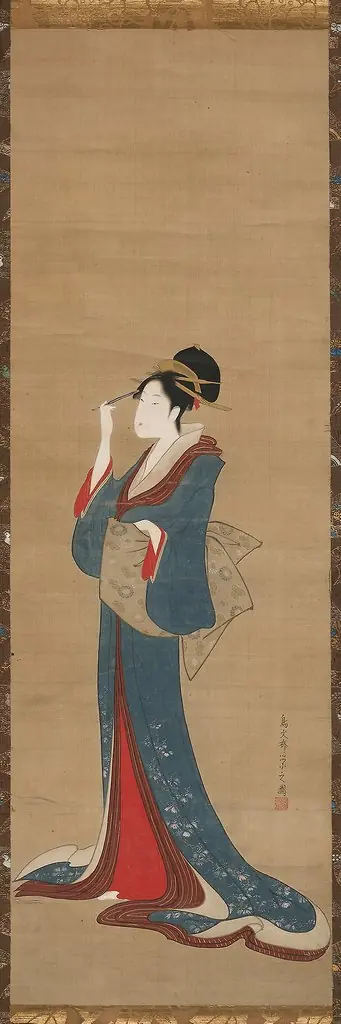 Beauty Replacing Her Hairpin
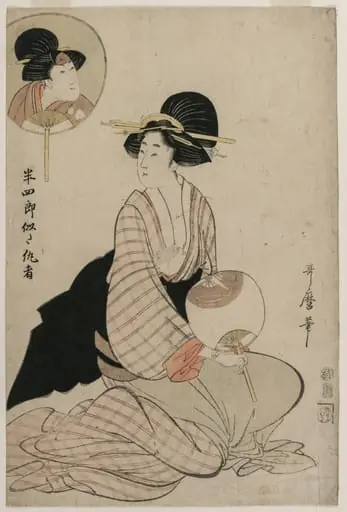 An Attractive Woman Who Looks Like the Actor Iwai Hanshiro V
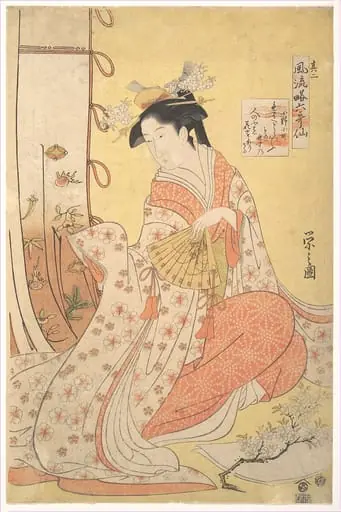 鳥文斎栄之画 「風流略六哥仙 其の二」小野小町|Ono no Komachi: Number Two (Sono ni), from the series Stylish Parodies of the Six Poetic Immortals (Fūryū yatsushi rokkasen)
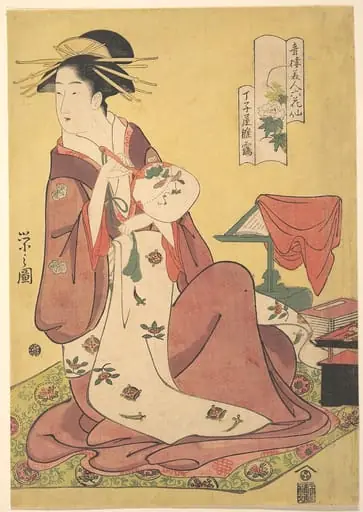 鳥文斎栄之画 「青楼美人六花仙 丁子屋雛鶴鸖」|The Courtesan Hinazuru of the Chōjiya Brothel (Chōjiya Hinazuru), from the series Beauties of the Pleasure Quarters as Six Floral Immortals (Seirō bijin rokkasen)
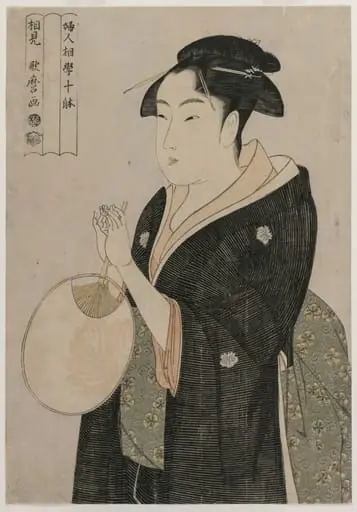 Woman Holding a Fan (from the series Ten Aspects of the Physiognomy of Women)
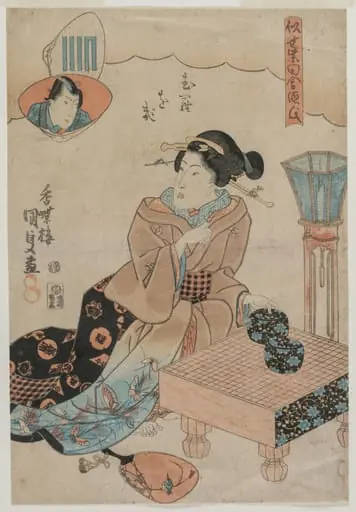 Muraogi, from the series The False Murasaki's Rustic Genji (Nise Murasaki Inaka Genji)
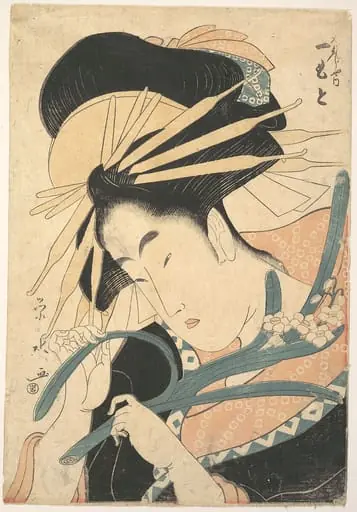 Untitled
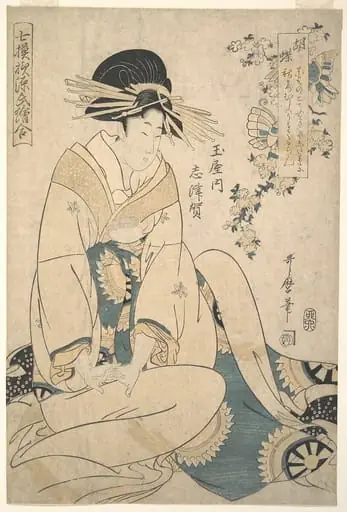 玉屋内 志津賀|A Courtesan
 Woman of the Yoshiwara Reading Scroll
 Ushi no Koku|青楼十二時 続 丑の刻|The Hour of the Ox (1 A.M.–3 A.M.)
 Portrait of a Courtesan Holding a Pipe (from the series The Six Immortal Poets in Modern Dress)