Artwork
Ushi no Koku|青楼十二時 続 丑の刻|The Hour of the Ox (1 A.M.–3 A.M.)
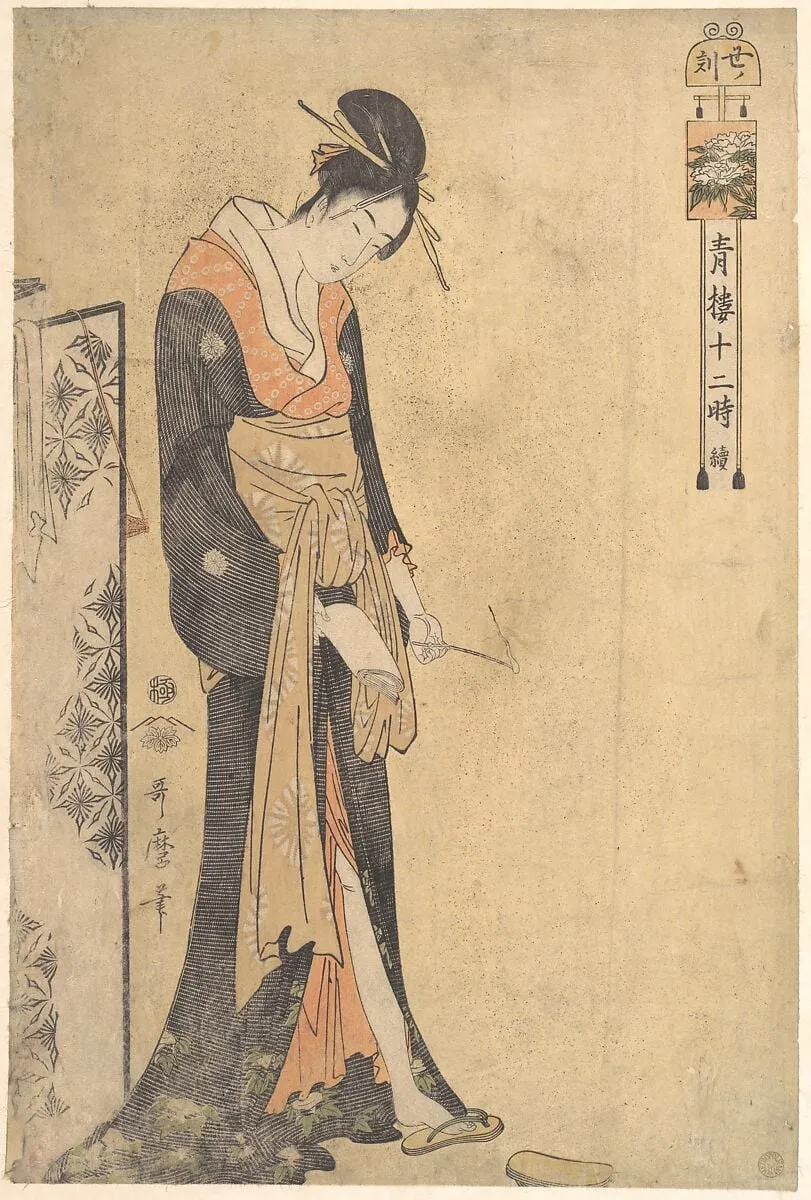
Ushi no Koku|青楼十二時 続 丑の刻|The Hour of the Ox (1 A.M.–3 A.M.) is an ink print by the Romanticist artist Kitagawa Utamaro. It dates from 1794 and is held in the collection of the Metropolitan Museum of Art. The woodblock print titled Ushi no Koku (The Hour of the Ox, 1 a.
About this work
Overview
The woodblock print titled Ushi no Koku (The Hour of the Ox, 1 a.m.–3 a.m.) was produced by Kitagawa Utamō around 1794. Executed in ink and color on paper, the image belongs to the genre‑scene tradition of late‑eighteenth‑century Japan and is part of the collection of the Metropolitan Museum of Art.
Subject & Meaning
The presence of a floral‑patterned screen behind her and the nocturnal time reference suggest an intimate, private moment during the early hours of the night.
The composition centers on a solitary woman dressed in a dark robe with vivid orange sleeves and a matching underskirt. She stands in profile, a fan held in one hand while the other rests on her hip, her hair neatly arranged beneath a black hat. The presence of a floral‑patterned screen behind her and the nocturnal time reference suggest an intimate, private moment during the early hours of the night.
Technique & Style
Utamō employs delicate line work and a restrained palette, allowing the bright orange accents to stand out against the muted background. The print’s soft coloration and careful delineation of fabric folds convey a sense of quiet stillness, while the flat decorative screen exemplifies the ukiyo‑e emphasis on pattern and surface design.
History & Provenance
Created in the Edo period, the print entered the Metropolitan Museum of Art’s collection through acquisition in the twentieth century, where it is catalogued under the museum’s Japanese prints department. Its attribution to Utamō is based on stylistic analysis consistent with his late career output.
Context
Ushi no Koku belongs to a series depicting the twelve hours of the night, a popular motif in ukiyo‑e that explored the lives of courtesans and pleasure‑district figures after dark. The work reflects contemporary interest in fleeting, everyday scenes and the subtle emotional states of women within the licensed quarters of Edo.
Artist & collection


 Untitled
 Untitled
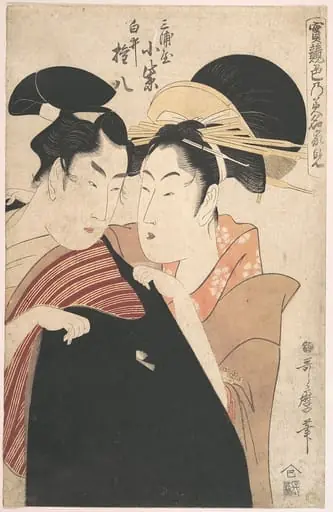 実競色乃美名家見 三浦屋小紫 白井権八|The Lovers Miura-ya Komurasaki and Shirai Gonpachi.
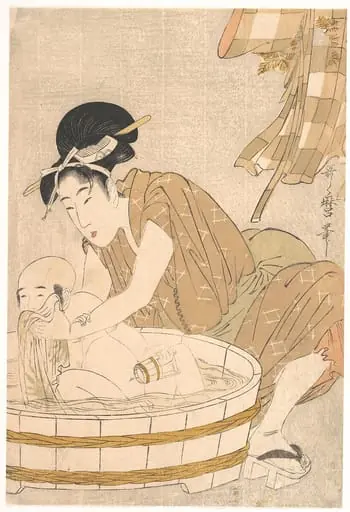 行水|Bathtime (Gyōzui)
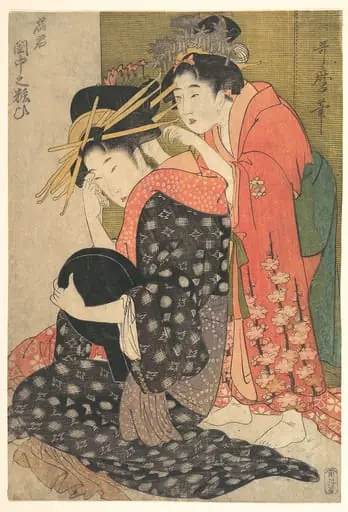 名君 閨中の粧ひ|The Oiran Yoso-oi Seated at Her Toilet
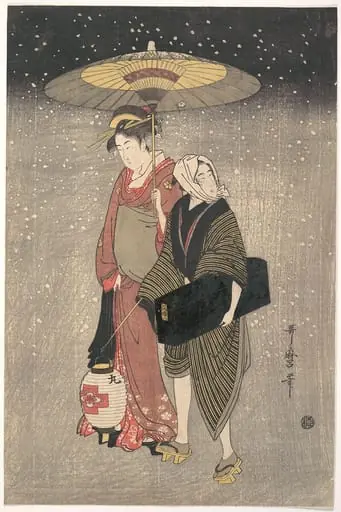 Untitled
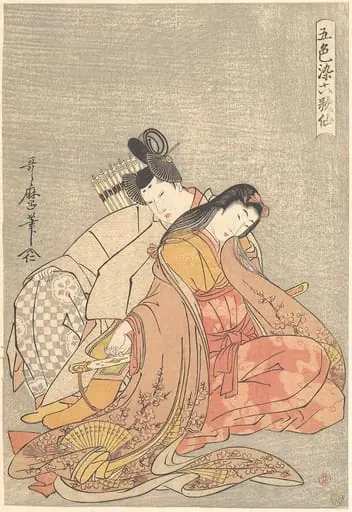 『五色染六歌仙』 在原業平と小野小町|“The Poet Ariwara no Narihira (825–880) and Ono no Komachi,” from the series Five Colors of Love for the Six Poetic Immortals (Goshiki-zome rokkasen)
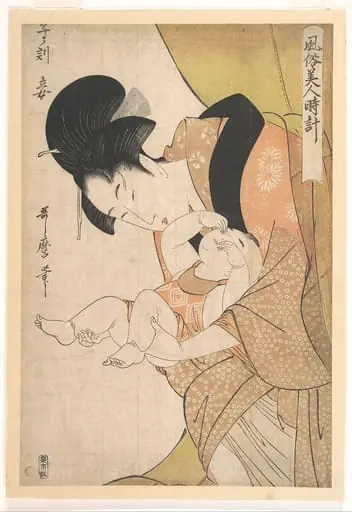 風俗美人時計 子ノ刻 妾|Midnight: Mother and Sleepy Child
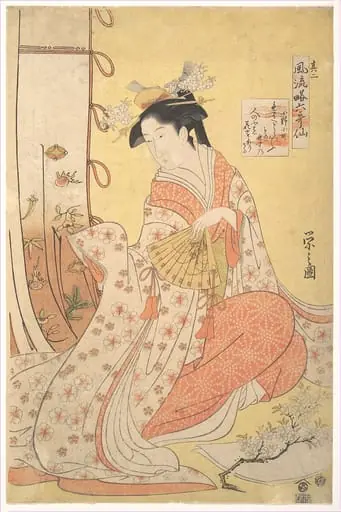 鳥文斎栄之画 「風流略六哥仙 其の二」小野小町|Ono no Komachi: Number Two (Sono ni), from the series Stylish Parodies of the Six Poetic Immortals (Fūryū yatsushi rokkasen)
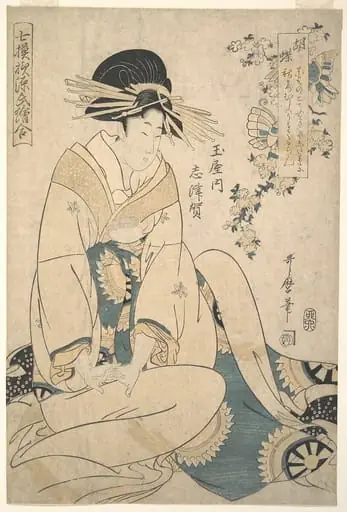 玉屋内 志津賀|A Courtesan
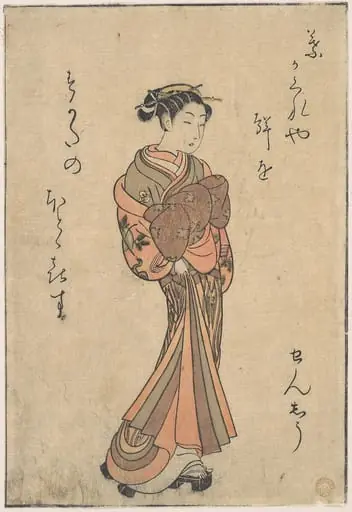 青楼美人合|The Courtesans, from the Series, "Seiro Bijin Awase Carver End Shigoro" (sic.)
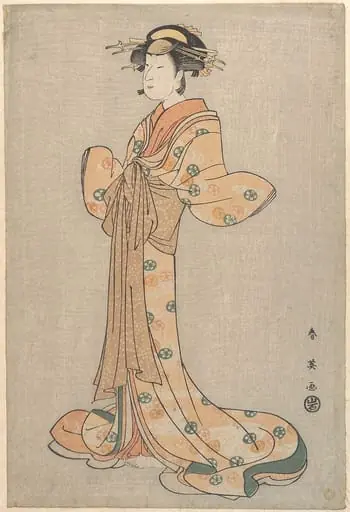 二代目中村二代目中村野塩のお軽|The Actor Nakamura Noshio II as the Courtesan Okaru
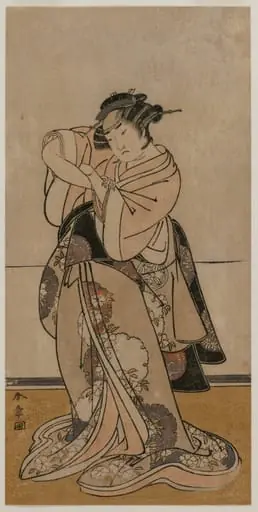 Actor Yamashita Yaozo
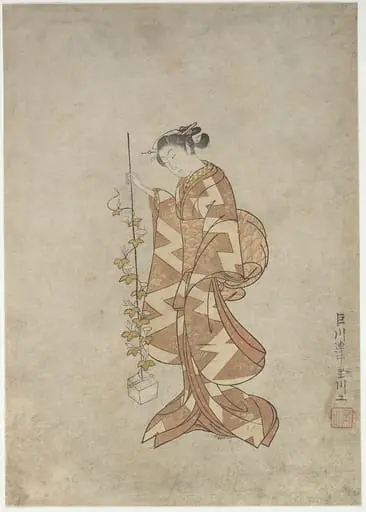 Untitled
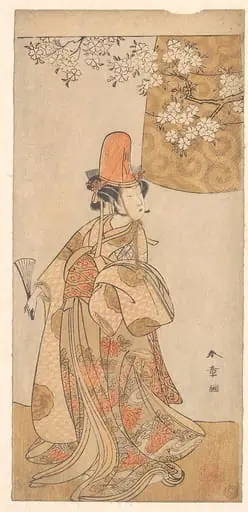 花形見風折烏帽子瀬川富三郎の娘道成寺|Segawa Tomisaburo in the Role of Musume Dojoji in "Hanagatami Kazaori Eboshi"
 Untitled
 Untitled
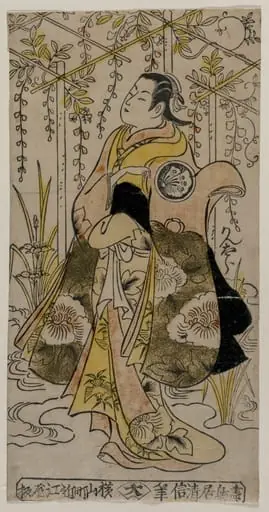 Sanjo Kantaro as a Young Woman Standing in a Wisteria Arbor