Artwork
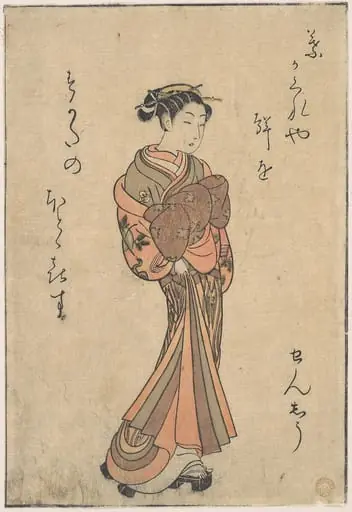
鳥文斎栄之画 「青楼美人六花仙 丁子屋雛鶴鸖」|The Courtesan Hinazuru of the Chōjiya Brothel (Chōjiya Hinazuru), from the series Beauties of the Pleasure Quarters as Six Floral Immortals (Seirō bijin rokkasen)
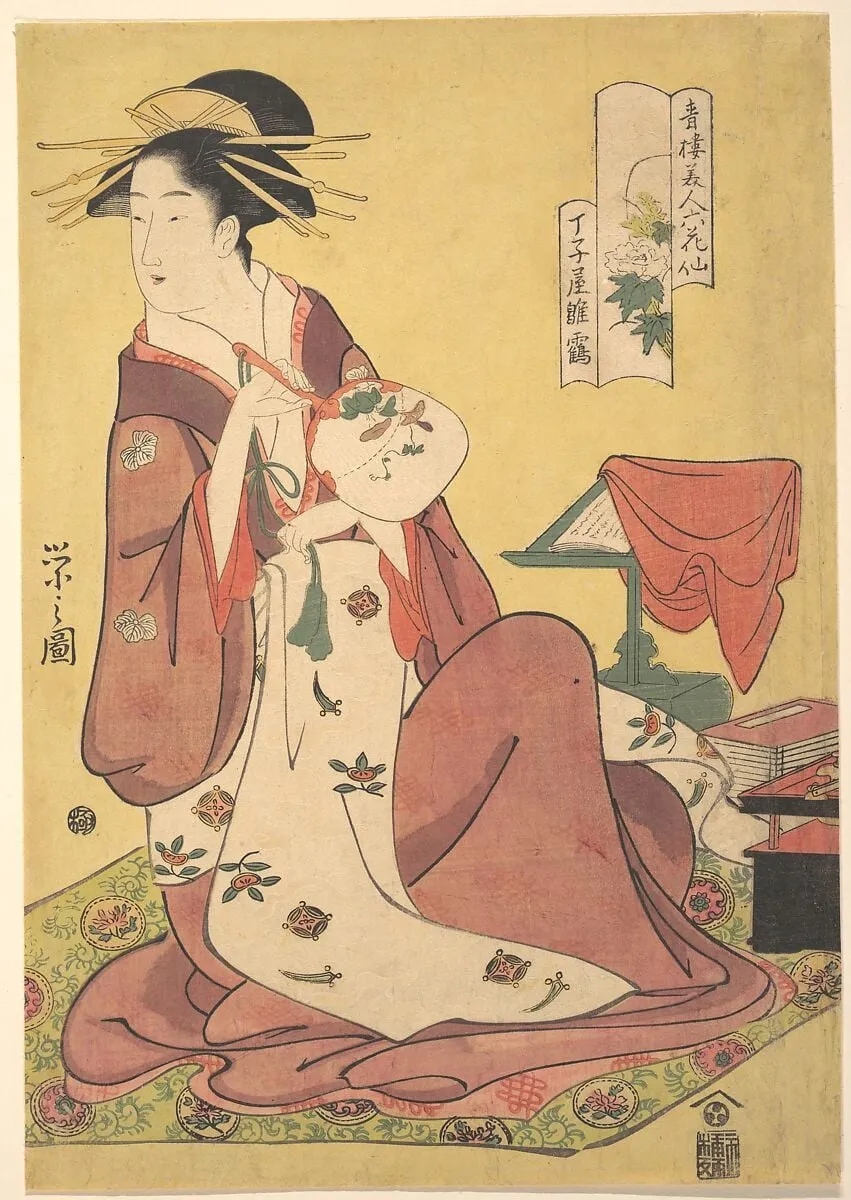
鳥文斎栄之画 「青楼美人六花仙 丁子屋雛鶴鸖」|The Courtesan Hinazuru of the Chōjiya Brothel (Chōjiya Hinazuru), from the series Beauties of the Pleasure Quarters as Six Floral Immortals (Seirō bijin rokkasen) is an ink print by the Romanticist artist Chôbunsai Eishi. It dates from 1795 and is held in the collection of the Metropolitan Museum of Art.
About this work
Overview
This woodblock print, *The Courtesan Hinazuru of the Chōjiya Brothel*, is a work by Japanese ukiyo-e artist Chōbunsai Eishi, created around 1795 as part of the series *Beauties of the Pleasure Quarters as Six Floral Immortals*. Executed in ink and color on paper, it portrays a courtesan in a serene, elegantly composed scene.
Subject & Meaning
The print depicts Hinazuru, a courtesan of the Chōjiya Brothel, seated on a floral mat, conveying refinement and grace. Her attire and accessories—a kimono with floral designs, a fan, and a hat adorned with long sticks—emphasize her status and the artist’s focus on capturing the beauty of figures from the pleasure quarters.
Technique & Style
Characterized by Eishi’s distinctive bijin-ga style, the print features a tall, thin, graceful figure set against a light yellow background. The composition includes meticulously detailed objects such as a table with a red cloth and a stack of books, showcasing Eishi’s attention to decorative elements and spatial harmony.
History & Provenance
Created by Chōbunsai Eishi (born Hosoda Tokitomi), a former samurai turned artist, after leaving his position with a 500 koku stipend from the Shōgun. Trained under Kano Eisen'in Michinobu, Eishi established a reputation for his portraits of elegant beauties, with this work being part of a series highlighting courtesans as 'floral immortals'.
Context
Emerging in the late 18th century, this print reflects the ukiyo-e tradition’s fascination with the pleasure quarters and beautiful people. It also highlights Eishi’s transition from a samurai background to contributing to the flourishing world of woodblock printing in Edo (modern Tokyo).
Legacy
*The Courtesan Hinazuru* contributes to Eishi’s legacy as a prominent bijin-ga artist, influencing subsequent generations of ukiyo-e practitioners with his idealized, graceful depictions of women. The work remains a testament to the artistic shift towards capturing the allure of everyday elite and pleasure quarter life in late Edo-period Japan.
Artist & collection

Artist
Chōbunsai Eishi (鳥文斎 栄之; 1756–1829) was a Japanese ukiyo-e artist. His last name was Hosoda (細田). His first name was Tokitomi (時富). His common name was Taminosuke (民之丞) and later Yasaburo (弥三郎). Pupil of Kano Eisen'in…

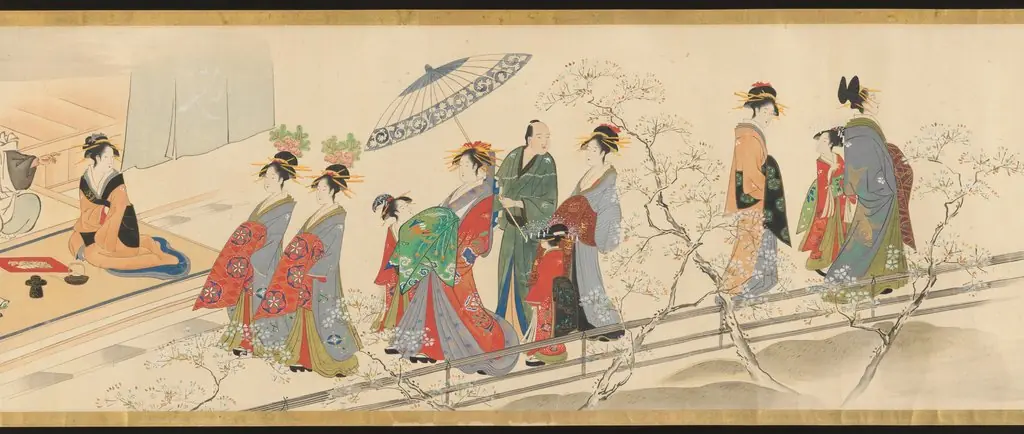 Three Gods of Good Fortune Visit the Yoshiwara; or “Scenes of Pleasure at the Height of Spring”
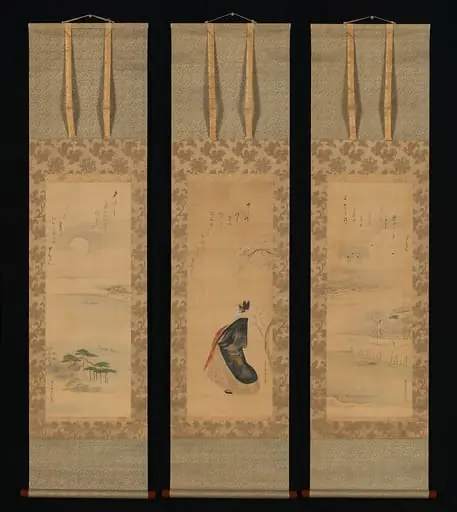 蜀山人(大田 南畝)賛 雪・月・花図 |Snow, Moon, and Cherry Blossoms (Yoshiwara in Three Seasons)
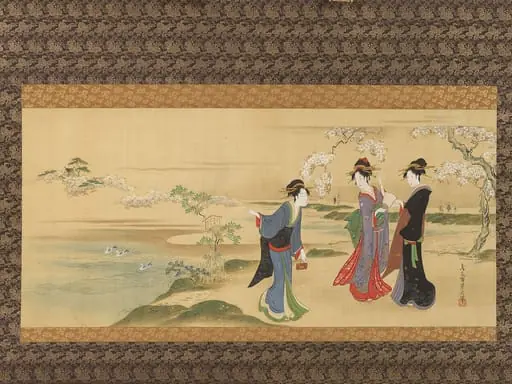 Untitled
 Untitled
 Untitled
 Shellfish and Apparitions of the Yoshiwara Pleasure Quarter
 A Courtesan Reading a Letter
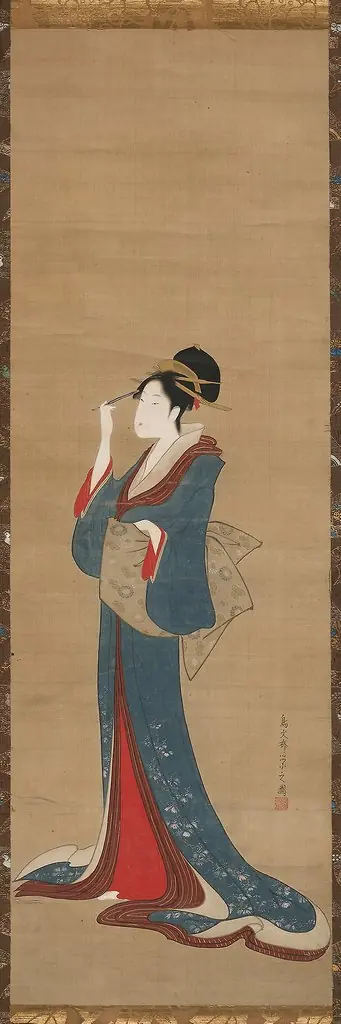 Beauty Replacing Her Hairpin
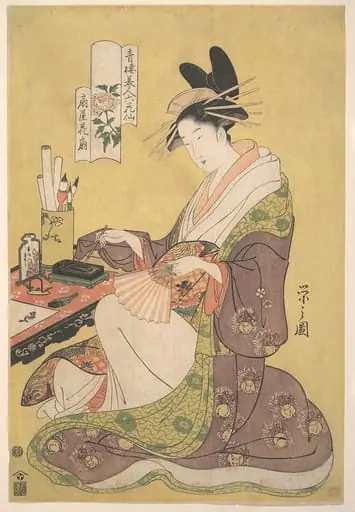 「青楼美人六花仙 扇屋花扇」|The Courtesan Hanaōgi of the Ōgiya Brothel (Ōgiya Hanaōgi), from the series Beauties of the Pleasure Quarters as Six Floral Immortals (Seirō bijin rokkasen)
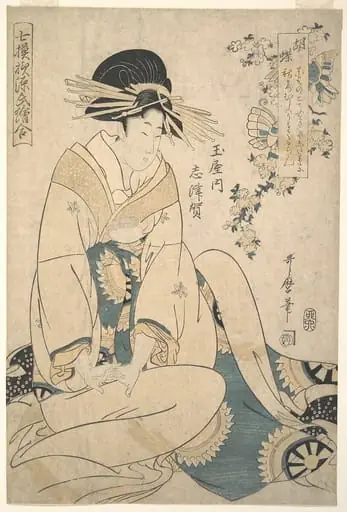 玉屋内 志津賀|A Courtesan
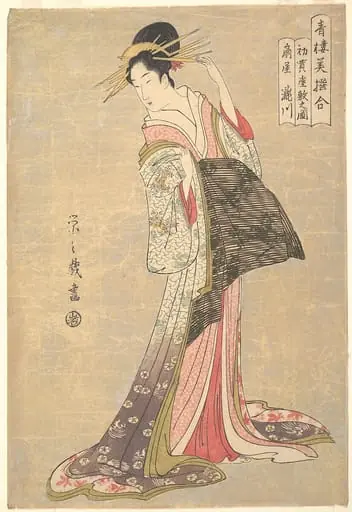 鳥文斎栄之画 「青楼美撰合 初売座敷之図 扇屋滝川」|Takigawa of the Ōgiya Brothel: The First Reception Room Appointment of the New Year (Hatsu-uri zashiki no zu: Ōgiya Takigawa), from the series A Comparison of Selected Beauties of the Pleasure Quarters (Seirō bisen awase)
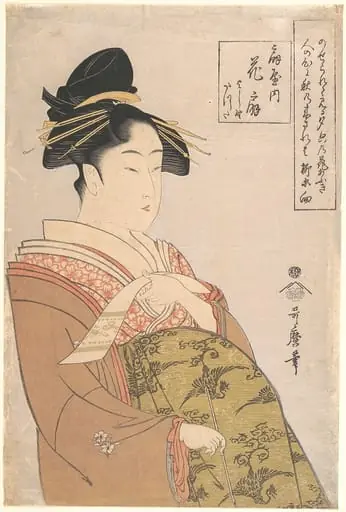 「扇屋内花扇図」|The Courtesan Hanaōgi of the Ōgiya Brothel in Yoshiwara (Ōgiya uchi Hanaōgi, Yoshino, Tatsuta)
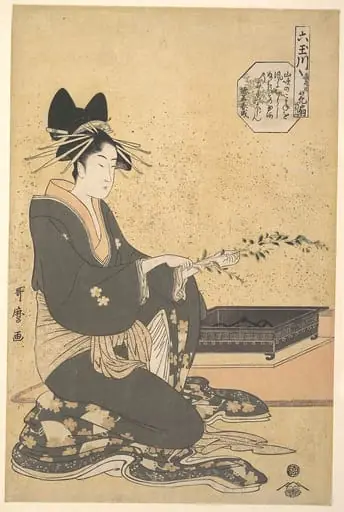 喜多川歌麿画 六玉川 扇屋内 花扇 扇屋内花扇|The Oiran Hanaogi of Ogiya, from the series “Six Jewel Rivers” (Mutamagawa)
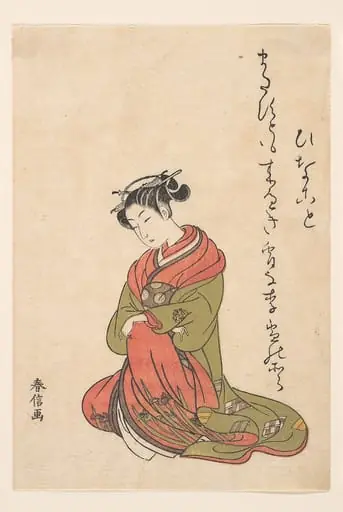 青楼美人合|The Courtesan Itsuhata with Her Pipe
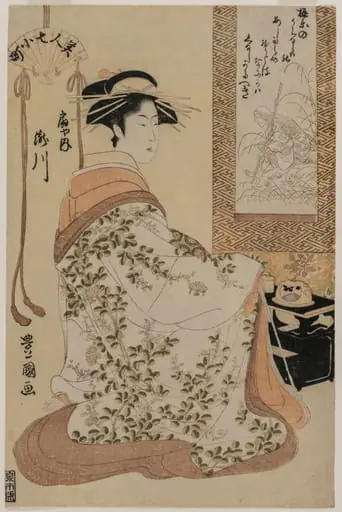 Takigawa of Ōgiya, from the series Beauties as the Seven Komachi
 青楼美人合|The Courtesans, from the Series, "Seiro Bijin Awase Carver End Shigoro" (sic.)