Artwork
The Salt Maidens, Matsukaze with Yukihira's Coat
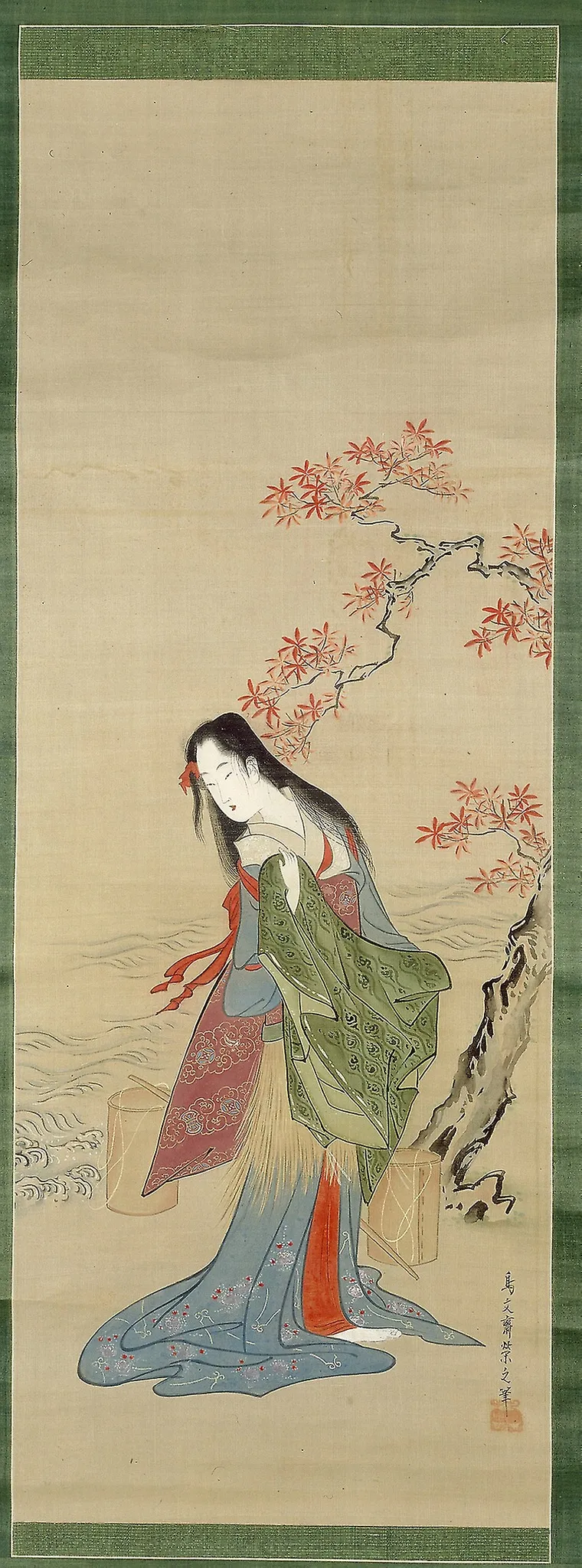
The Salt Maidens, Matsukaze with Yukihira's Coat is an ink painting by the Ukiyo-e artist Chôbunsai Eishi. It dates from 1796 and is held in the collection of the Art Institute of Chicago. Created in 1796 by Chōbunsai Eishi, this ink painting portrays a scene drawn from Japanese literary tradition.
About this work
Overview
Eishi, formerly a samurai retainer with a stipend from the Shōgun, abandoned his official role to dedicate himself to art.
Created in 1796 by Chōbunsai Eishi, this ink painting portrays a scene drawn from Japanese literary tradition. Eishi, formerly a samurai retainer with a stipend from the Shōgun, abandoned his official role to dedicate himself to art. Though known for woodblock prints early in his career, this work reflects his later shift toward monochrome ink painting, showcasing a refined sensitivity to form and atmosphere.
Subject & Meaning
The figure represents Matsukaze, a spirit from the Noh play 'Matsukaze,' who lingers near the shore where her lover, Yukihira, once stayed. The coat she holds symbolizes his absence and her enduring sorrow. The red leaves and waves evoke seasonal change and the sea’s constancy, reinforcing themes of memory and longing rooted in classical Japanese poetry and theater.
Technique & Style
Rendered in ink with subtle washes, the painting employs fluid, expressive lines to define the figure and landscape. The kimono’s layered colors—green, red, and blue—are applied with restraint, emphasizing tonal harmony over bold contrast. Background elements like waves and sky are suggested rather than detailed, inviting contemplation and aligning with literati aesthetics that valued suggestion over literalism.
History & Provenance
The work entered the Art Institute of Chicago’s collection as part of a broader acquisition of Japanese ink paintings from the late Edo period. Its provenance before museum acquisition remains undocumented, but its preservation suggests it was valued by collectors interested in Eishi’s transition from ukiyo-e printmaker to ink painter. The piece is among the few surviving ink works from his later years.
Context
Eishi’s shift from printmaking to ink painting coincided with a broader trend among Edo-period artists seeking to align with scholarly traditions. While ukiyo-e often depicted urban pleasures, this work draws from classical literature and Noh drama, reflecting a growing interest among artists in introspective, literary subjects. The painting bridges popular and elite cultural spheres of late 18th-century Japan.
Legacy
Though Eishi is better known for his prints, this ink painting exemplifies his mastery of understated expression. It contributes to the recognition of late Edo ink painting as a serious artistic pursuit, distinct from commercial print culture. The work remains a quiet testament to the emotional depth achievable within minimal means, influencing later generations interested in the intersection of literature and visual art.
Artist & collection

Artist
Chōbunsai Eishi (鳥文斎 栄之; 1756–1829) was a Japanese ukiyo-e artist. His last name was Hosoda (細田). His first name was Tokitomi (時富). His common name was Taminosuke (民之丞) and later Yasaburo (弥三郎). Pupil of Kano Eisen'in…

 Three Gods of Good Fortune Visit the Yoshiwara; or “Scenes of Pleasure at the Height of Spring”
 蜀山人(大田 南畝)賛 雪・月・花図 |Snow, Moon, and Cherry Blossoms (Yoshiwara in Three Seasons)
 Untitled
 Untitled
 Untitled
 Shellfish and Apparitions of the Yoshiwara Pleasure Quarter
 A Courtesan Reading a Letter
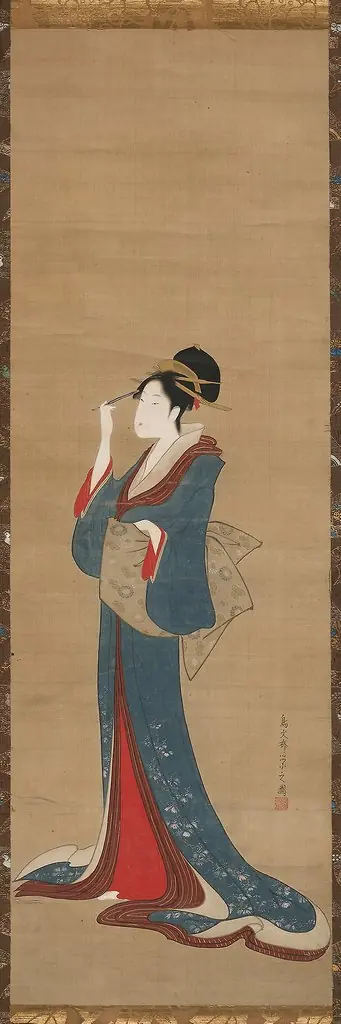 Beauty Replacing Her Hairpin
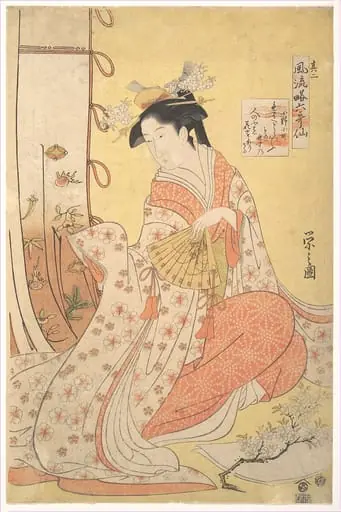 鳥文斎栄之画 「風流略六哥仙 其の二」小野小町|Ono no Komachi: Number Two (Sono ni), from the series Stylish Parodies of the Six Poetic Immortals (Fūryū yatsushi rokkasen)
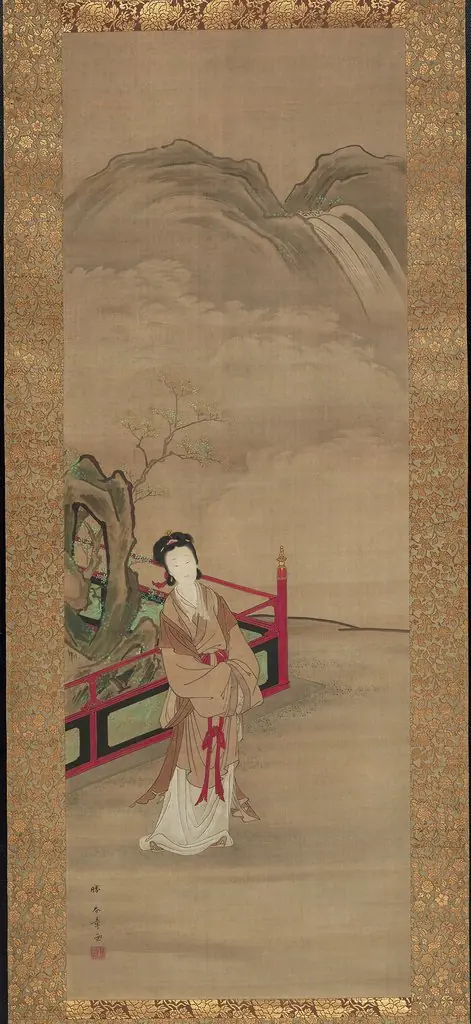 Chinese Beauty (Yang Guifei)
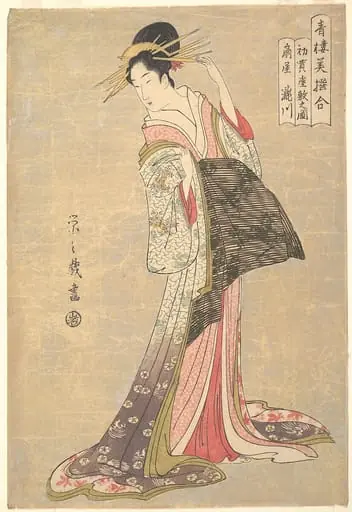 鳥文斎栄之画 「青楼美撰合 初売座敷之図 扇屋滝川」|Takigawa of the Ōgiya Brothel: The First Reception Room Appointment of the New Year (Hatsu-uri zashiki no zu: Ōgiya Takigawa), from the series A Comparison of Selected Beauties of the Pleasure Quarters (Seirō bisen awase)
 Untitled
 Courtesan
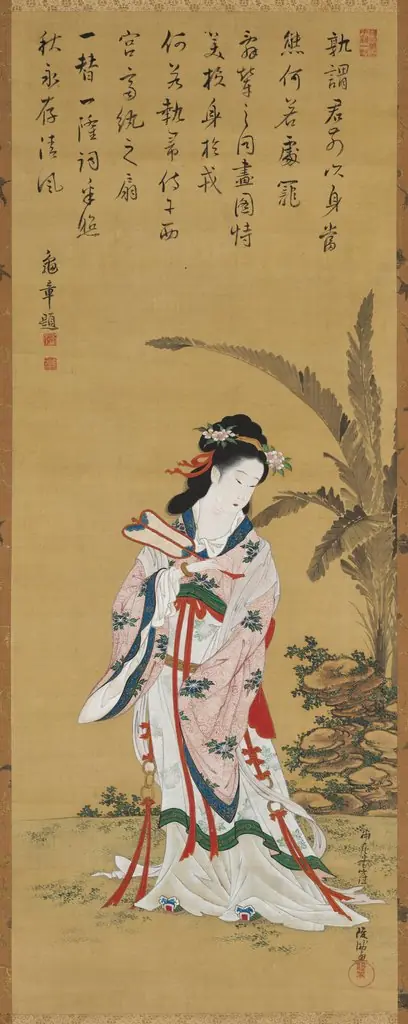 Chinese Beauty
 Untitled
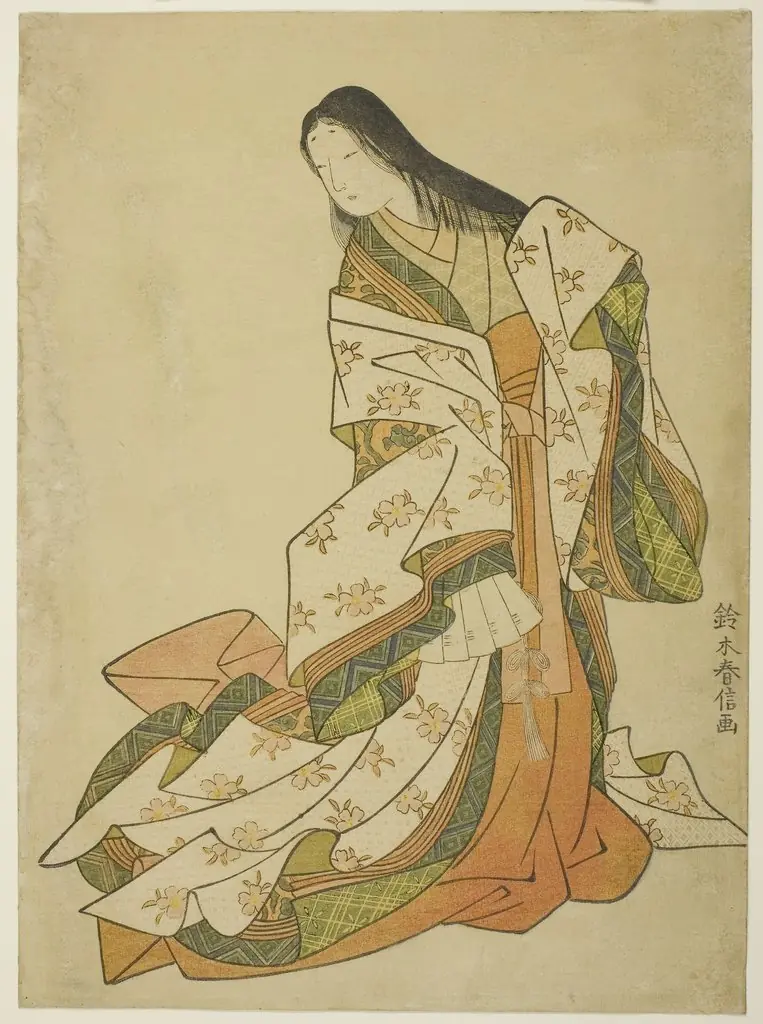 The Poetess Ono no Komachi
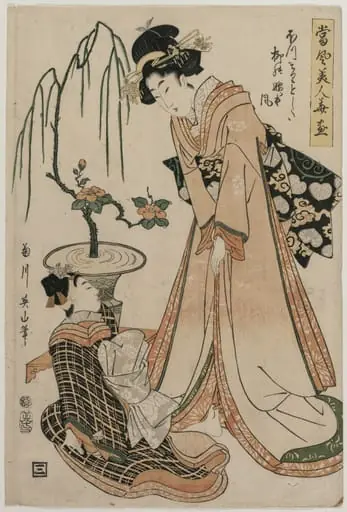 A Lady-in-Waiting with Waist as Slender as a Willow from the series Flowers and Modern Beauties