Artwork
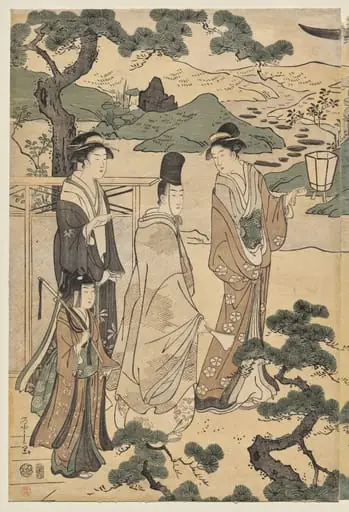
A Lady-in-Waiting with Waist as Slender as a Willow from the series Flowers and Modern Beauties
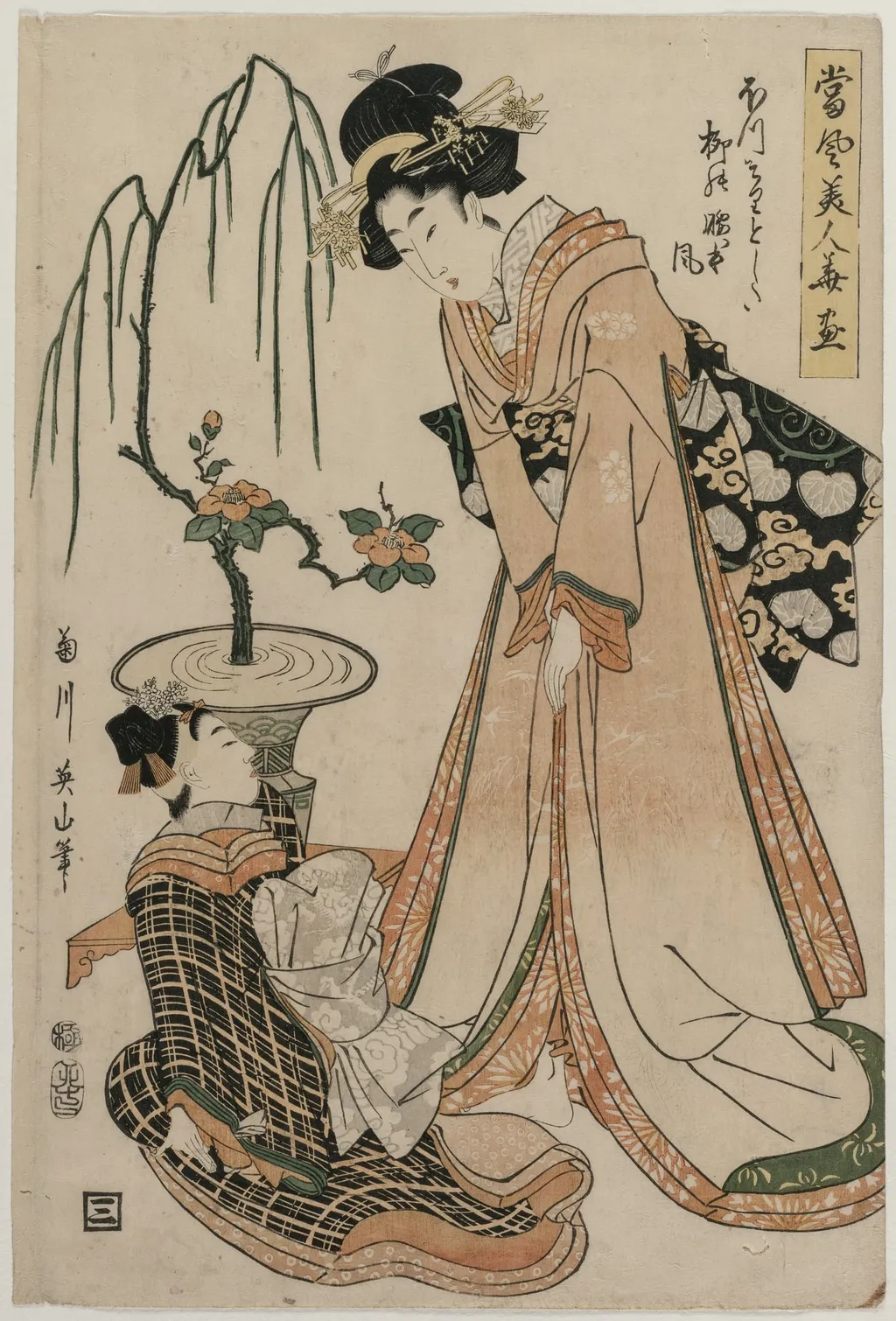
A Lady-in-Waiting with Waist as Slender as a Willow from the series Flowers and Modern Beauties is a print by the Romanticist artist Kikukawa Eizan. It dates from 1807 and is held in the collection of the Cleveland Museum of Art.
About this work
Overview
Created in 1807 by Kikukawa Eizan, this woodblock print is part of the series Flowers and Modern Beauties, which pairs idealized female figures with seasonal floral motifs. The work exemplifies the ukiyo-e tradition of depicting contemporary urban life through elegant, stylized portraiture. It is currently held in the collection of The Cleveland Museum of Art.
Subject & Meaning
The print portrays a court lady-in-waiting, her slender waist evoking the grace of a willow branch—a poetic metaphor common in Edo-period literature. Her poised posture and refined attire suggest aristocratic refinement, while the accompanying floral element, likely a seasonal bloom, reinforces the link between feminine beauty and natural cycles.
Technique & Style
Eizan employed fine linework and muted, layered pigments typical of early 19th-century ukiyo-e. The figure is rendered with delicate contours and subtle shading, emphasizing elegance over realism. Background elements are minimal, focusing attention on the subject’s form and the symbolic floral motif integrated into the composition.
History & Provenance
The print was produced during the Bunka era, a time when ukiyo-e artists increasingly turned to refined depictions of women in domestic and courtly settings. It entered The Cleveland Museum of Art’s collection through established acquisition channels, likely as part of a broader effort to document Japanese print culture in the early 20th century.
Context
Flowers and Modern Beauties reflects a trend among ukiyo-e artists to blend classical poetic imagery with contemporary fashion and social roles. While earlier prints often featured courtesans or actors, Eizan’s series elevated lesser-known female figures, aligning them with literary ideals of grace and restraint prevalent in Edo elite culture.
Legacy
Eizan’s work contributed to the evolution of bijin-ga, or pictures of beautiful women, by softening earlier dramatic styles in favor of quiet dignity. Though less widely known than contemporaries like Utamaro, his prints remain valued for their poetic restraint and technical precision within the ukiyo-e canon.
Own this work as a print
Artist & collection

Artist
Kikukawa Eizan was a designer of ukiyo-e style Japanese woodblock prints. He first studied with his father, Eiji, a minor painter of the Kanō school, and subsequently with Suzuki Nanrei (1775–1844), of the Shijō…

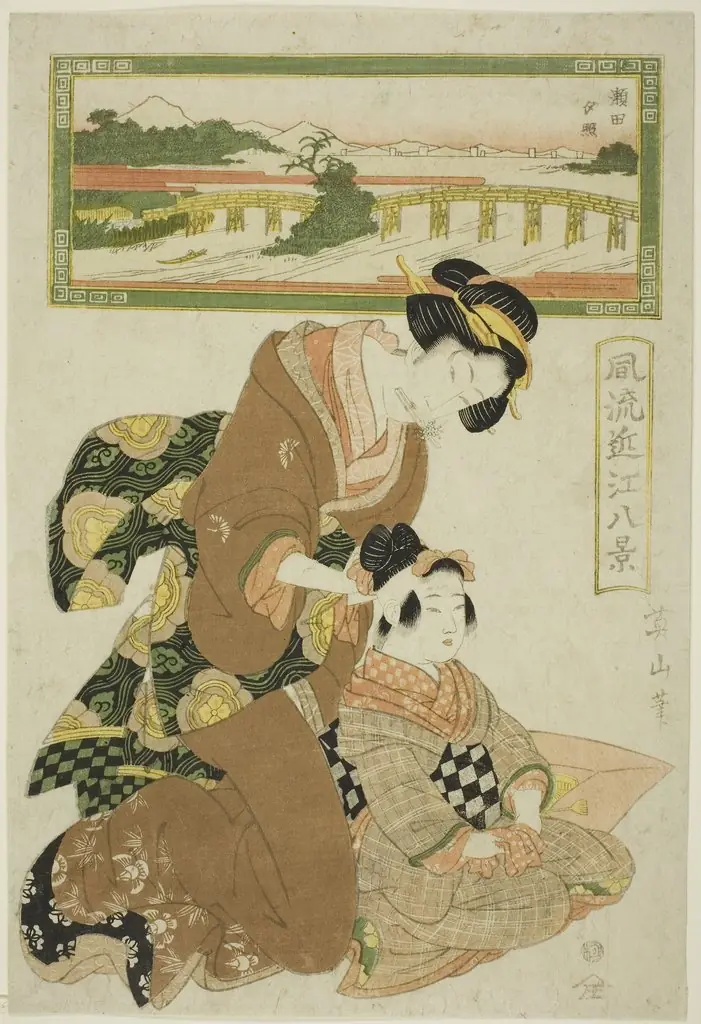 Evening Glow at Seta (Seta sekisho), from the series "Fashionable Eight Views of Omi (Furyu Omi hakkei)"
 Untitled
 Untitled
 The Courtesan Meizan of the Chojiya on a Balcony Overlooking the Sumida River
 No Title
 Woman Performing the Tea Ceremony
 A Picture of the Viewing in the Pleasure Quarters
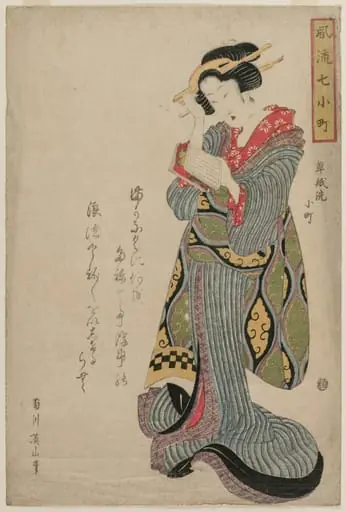 Komachi Washes the Book (from the series Seven Elegant Episodes from the Life of the Poetess Ono no Komachi)
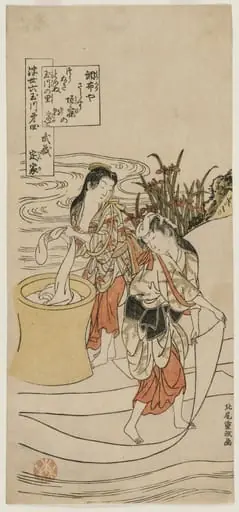 The Chofu Tama River in Musashi Province (from the series The Six Tama Rivers of the Floating World)
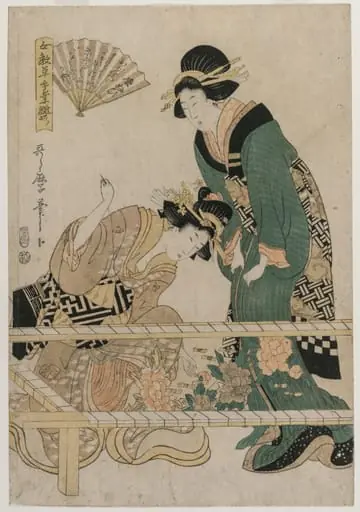 Chinese Embroidery (from the series Instructive Patterns for Women's Handicraft)
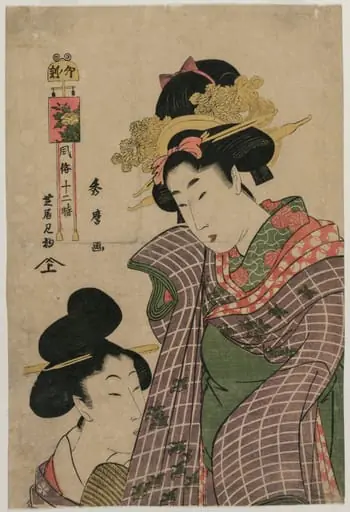 Going to the Kabuki Theater in the Hour of the Hare (From the Series The Twelve Hours with Daily Events)
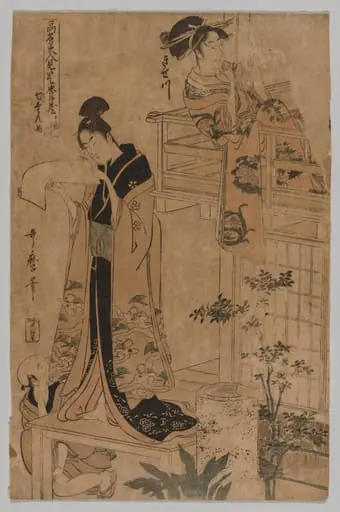 Act VII from the series The Storehouse of Loyal Retainers As Portrayed by Famous Beauties in Twelve Leaves
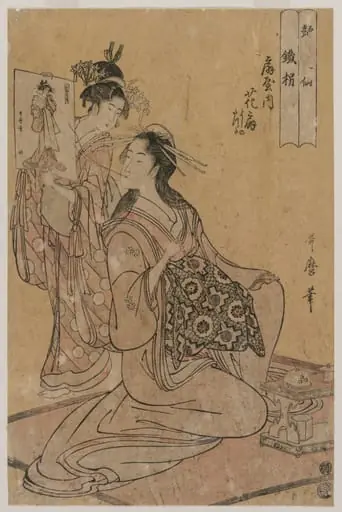 The Courtesan Hana-ogi of Ogiya as the Sennin Tekkai (from the series Eight Immortals of Sensuality)
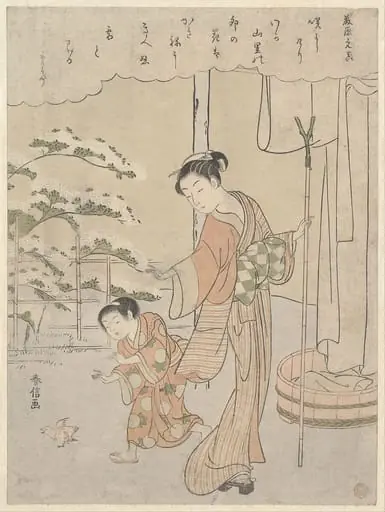 百人一首 藤原元真|Poem by Fujiwara no Motozane (ca. 860) from the Series Thirty-Six Poets
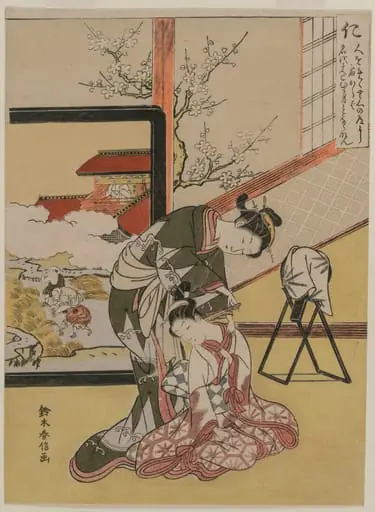 Benevolence, from The Five Virtues
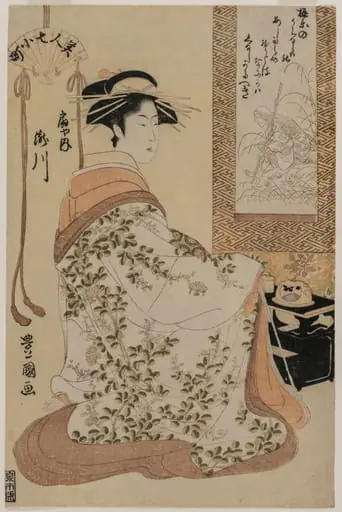 Takigawa of Ōgiya, from the series Beauties as the Seven Komachi
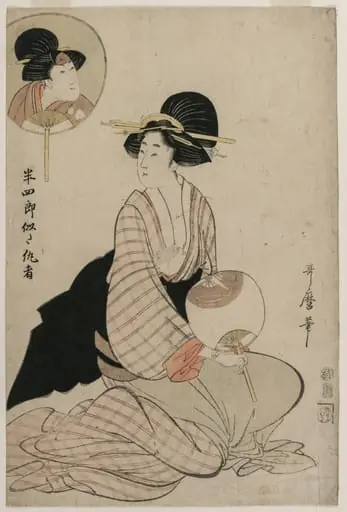 An Attractive Woman Who Looks Like the Actor Iwai Hanshiro V
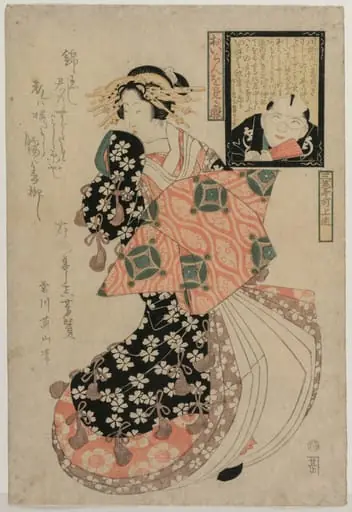 Eyes for Looking at a Courtesan
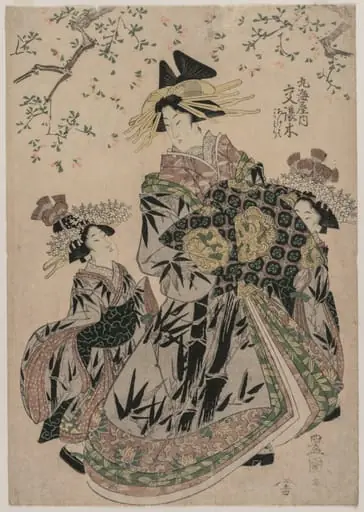 The Courtesan Katakoshigi (?) of Maruebiya with her Kamuro Ageha and Midori
 The Matsukaze Chapter of the Tale of Genji (from the series The Tale of Genji in Elegant Modern Dress)