Artwork
Untitled
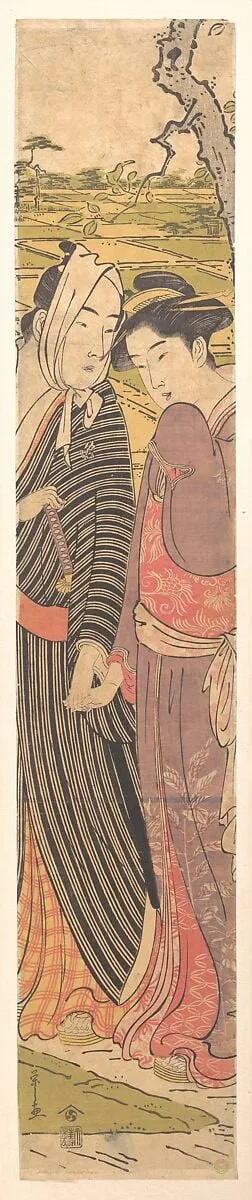
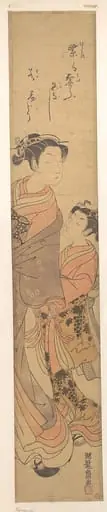
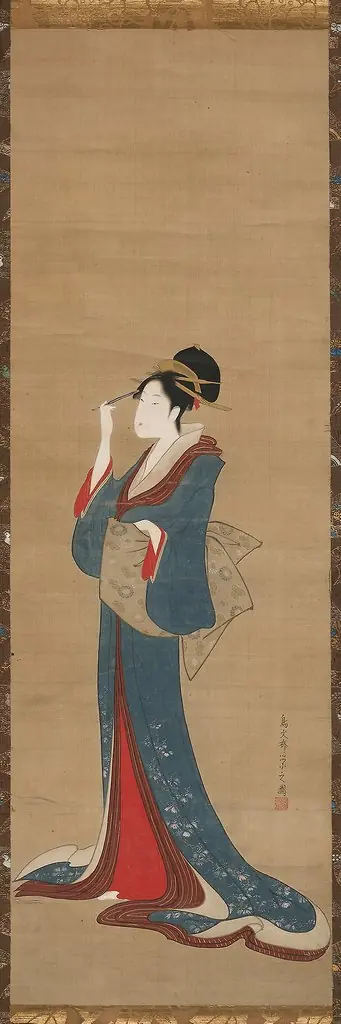
Untitled is an ink print by the Romanticist artist Chôbunsai Eishi. It dates from 1780 and is held in the collection of the Metropolitan Museum of Art. This woodblock print, created around 1780 by Chōbunsai Eishi, belongs to his early body of work in ukiyo-e.
About this work
Overview
The piece is rendered in ink and color on paper, reflecting his transition from aristocratic service to the world of commercial printmaking.
This woodblock print, created around 1780 by Chōbunsai Eishi, belongs to his early body of work in ukiyo-e. Originally a samurai retainer with a stipend of 500 koku, Eishi left his official post to devote himself to art. The piece is rendered in ink and color on paper, reflecting his transition from aristocratic service to the world of commercial printmaking. It is now part of The Metropolitan Museum of Art’s collection.
Subject & Meaning
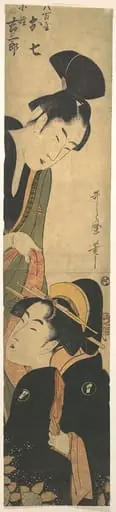
Two women stand side by side, facing left, their postures composed and restrained. Dressed in contrasting kimonos—one striped black and white with a red sash, the other brown with a pink sash—they embody the refined aesthetic of Eishi’s bijin-ga. Their hair is neatly bound in buns, adorned with headbands, suggesting status and decorum. The quiet, introspective expressions and the calm landscape behind them evoke a mood of stillness rather than narrative drama.
Technique & Style
Eishi employed bold, clean outlines and layered color washes typical of early ukiyo-e woodblock printing. The figures are elongated and slender, a hallmark of his distinctive approach to beauty. Background elements—trees and a distant structure—are rendered with minimal detail, allowing the figures to dominate. The color palette, though vibrant, is controlled, emphasizing harmony over theatricality, distinguishing his style from more flamboyant contemporaries.
History & Provenance
Eishi began his career as a retainer to the Shōgun before abandoning his position to study under Kano Eisen'in Michinobu. His shift to ukiyo-e marked a significant departure from traditional painting lineages. This print, among his earliest, helped establish his reputation for portraying elegant, melancholic women. It entered The Metropolitan Museum of Art’s collection through documented acquisitions, preserving its place in the history of Japanese printmaking.
Context
In late 18th-century Edo, bijin-ga flourished as a popular genre, reflecting urban tastes and the rise of the merchant class. Eishi’s figures diverged from the more voluptuous ideals of earlier artists, favoring slender, contemplative forms that aligned with emerging literary sensibilities. His work emerged alongside the waning influence of the Kano school and the ascendance of print culture, positioning him at a pivotal moment in Japanese visual arts.
Legacy
Eishi’s refined aesthetic influenced later ukiyo-e artists who sought subtlety over spectacle. His elongated figures and restrained compositions became a model for depicting feminine grace in print. Though less widely known than Hokusai or Utamaro, his contributions helped shape the evolution of bijin-ga, bridging classical training with the commercial demands of Edo’s print market. His works remain valued for their quiet dignity and technical precision.
Artist & collection

Artist
Chōbunsai Eishi (鳥文斎 栄之; 1756–1829) was a Japanese ukiyo-e artist. His last name was Hosoda (細田). His first name was Tokitomi (時富). His common name was Taminosuke (民之丞) and later Yasaburo (弥三郎). Pupil of Kano Eisen'in…

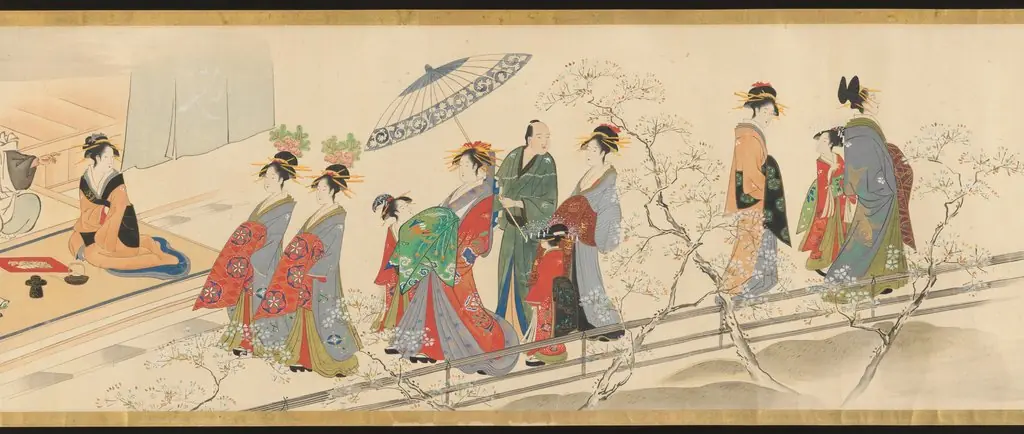 Three Gods of Good Fortune Visit the Yoshiwara; or “Scenes of Pleasure at the Height of Spring”
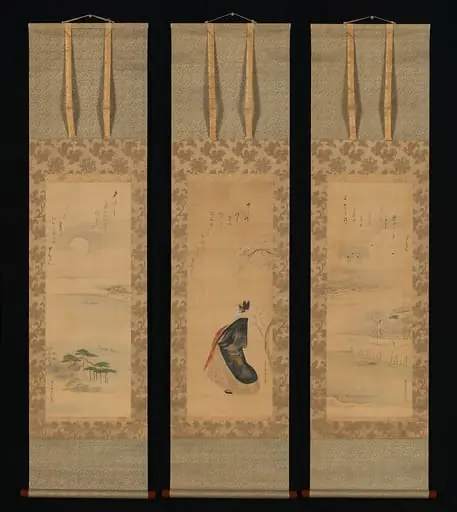 蜀山人(大田 南畝)賛 雪・月・花図 |Snow, Moon, and Cherry Blossoms (Yoshiwara in Three Seasons)
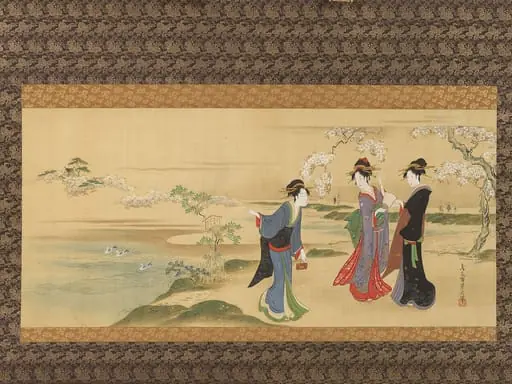 Untitled
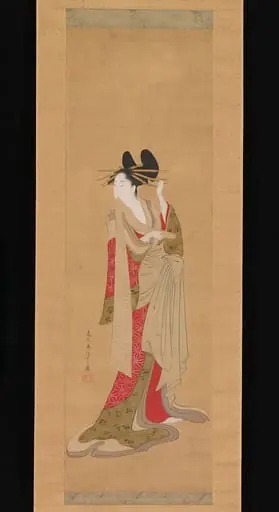 Untitled
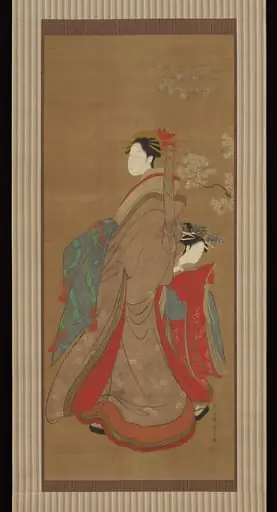 Untitled
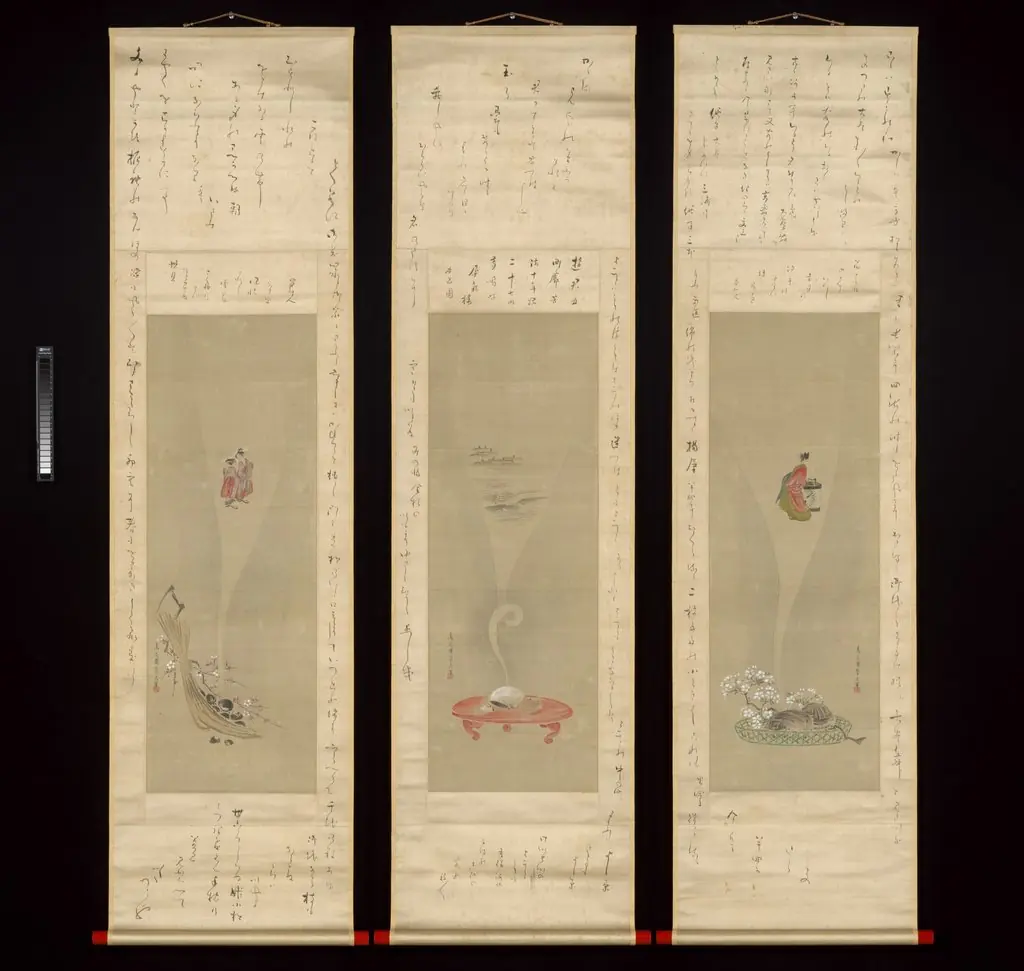 Shellfish and Apparitions of the Yoshiwara Pleasure Quarter
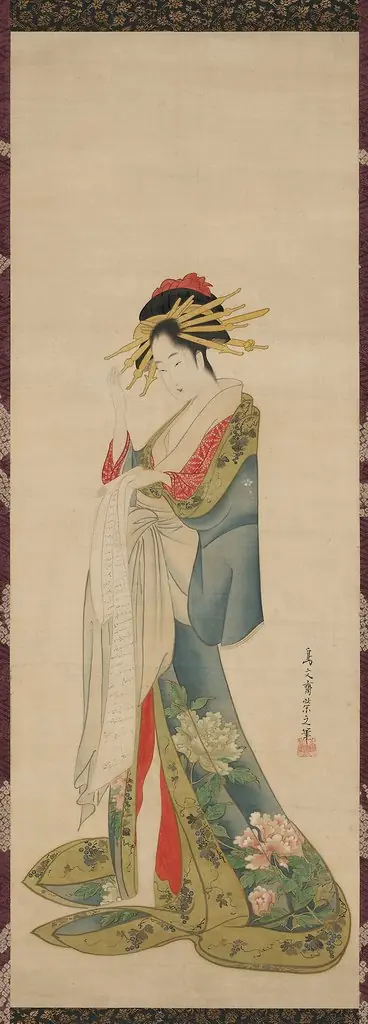 A Courtesan Reading a Letter
 Beauty Replacing Her Hairpin