Artwork
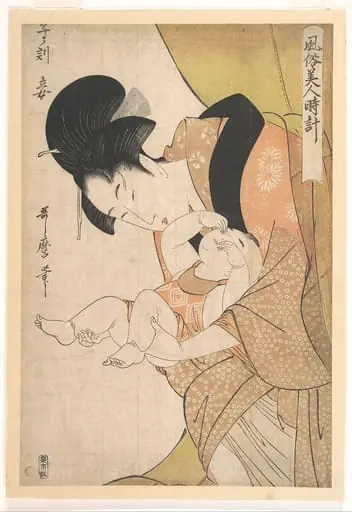
八百屋お七 寺小姓吉三郎|O Shichi and Kichisaburo
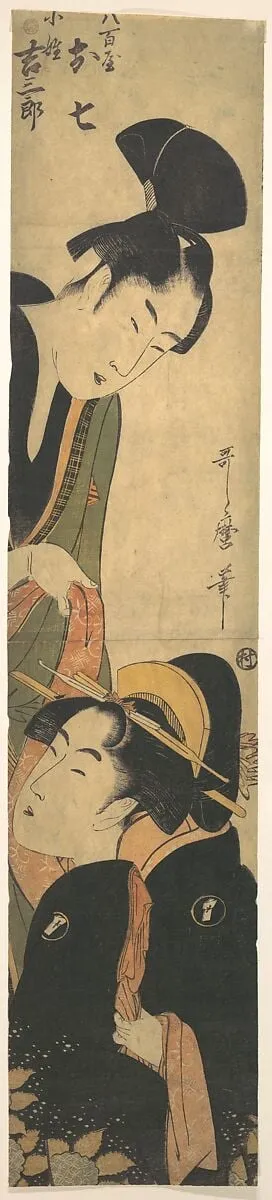
八百屋お七 寺小姓吉三郎|O Shichi and Kichisaburo is an ink print by the Romanticist artist Kitagawa Utamaro. It dates from 1780 and is held in the collection of the Metropolitan Museum of Art.
About this work
Utamaro freezes the moment before everything changes, using soft colors and fine lines to make the scene feel quiet and tense.
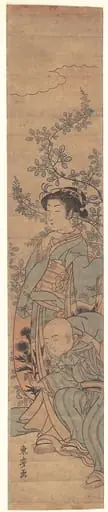
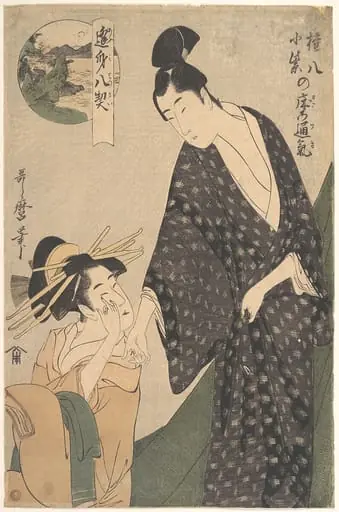
A young woman in a patterned kimono leans close to a young man in a dark robe. Their faces almost touch, but their eyes don’t meet—hers look down, his gaze drifts away.
This print shows a real story from 1683: a greengrocer’s daughter, O Shichi, fell for a temple page, Kichisaburo. The law at the time punished women harshly for even small crimes, and O Shichi’s fate became a warning. Utamaro freezes the moment before everything changes, using soft colors and fine lines to make the scene feel quiet and tense.
To see how other artists told stories in prints, look up *Kitagawa Utamaro*.
Overview
Kitagawa Utamaro’s woodblock print, created around 1780, portrays a fleeting encounter between a young woman and a young man. Rendered in ink and color on paper, the image belongs to the genre‑scene tradition of Edo‑period ukiyo‑e, focusing on everyday moments rather than formal portraiture.
Subject & Meaning
The scene references the historical tale of Yaoya Oshichi, a greengrocer’s daughter who, in 1683, fell in love with a temple page named Kichisaburo. Their close proximity—her head bowed, his gaze averted—captures a moment of secret affection that would later serve as a cautionary example of the severe penalties imposed on women for minor transgressions.
Technique & Style
Utamara employs delicate line work and a muted palette of soft hues to convey intimacy and tension. The patterned kimono of the woman and the dark robe of the man are rendered with fine gradations, while the surrounding space remains understated, directing attention to the subtle gestures and expressions of the figures.
History & Provenance
The print belongs to the late Edo period, a time when ukiyo‑e artists frequently illustrated popular narratives. Though specific ownership records are scarce, the work is catalogued among Utamaro’s genre prints that circulated widely in the 18th‑century pleasure districts.
Context
During the early 1680s, Japanese law prescribed harsh punishments for women involved in even minor offenses, a social backdrop that amplified the moral weight of Oshichi’s story. Utamaro’s depiction reflects contemporary interest in dramatizing such cautionary tales for a broad audience.
Artist & collection


 Untitled
 Untitled
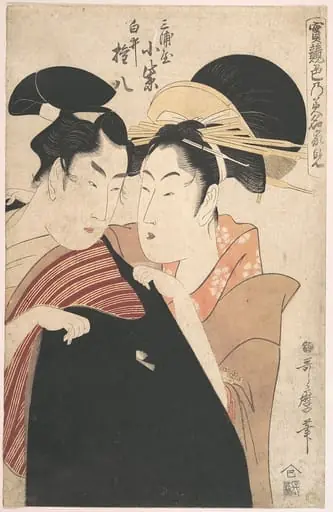 実競色乃美名家見 三浦屋小紫 白井権八|The Lovers Miura-ya Komurasaki and Shirai Gonpachi.
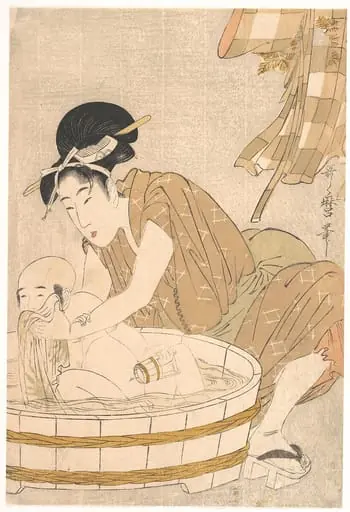 行水|Bathtime (Gyōzui)
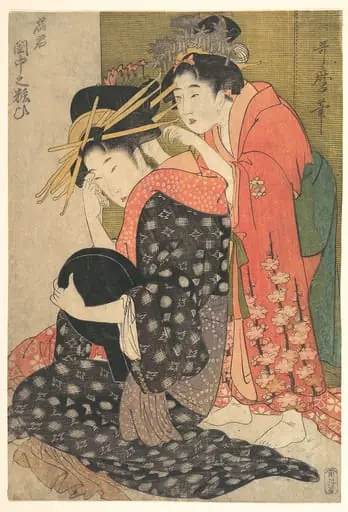 名君 閨中の粧ひ|The Oiran Yoso-oi Seated at Her Toilet
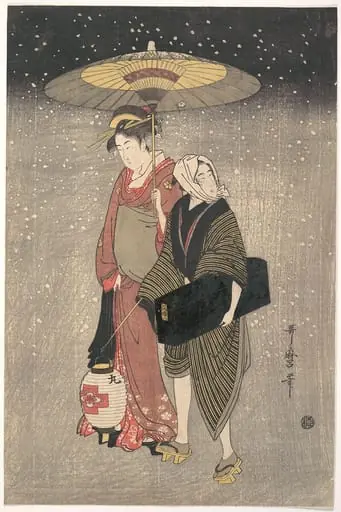 Untitled
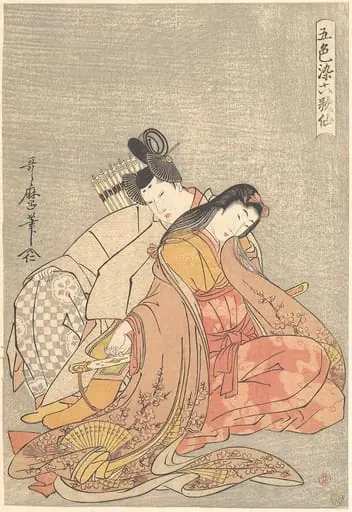 『五色染六歌仙』 在原業平と小野小町|“The Poet Ariwara no Narihira (825–880) and Ono no Komachi,” from the series Five Colors of Love for the Six Poetic Immortals (Goshiki-zome rokkasen)
 風俗美人時計 子ノ刻 妾|Midnight: Mother and Sleepy Child