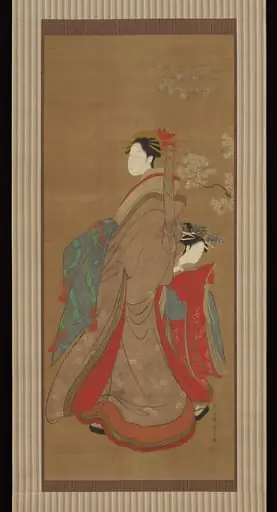
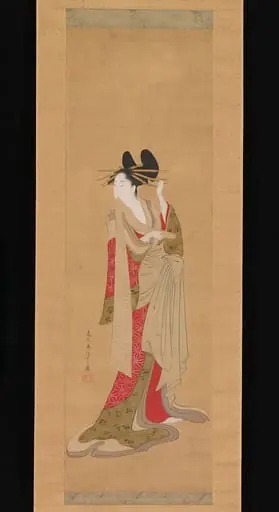
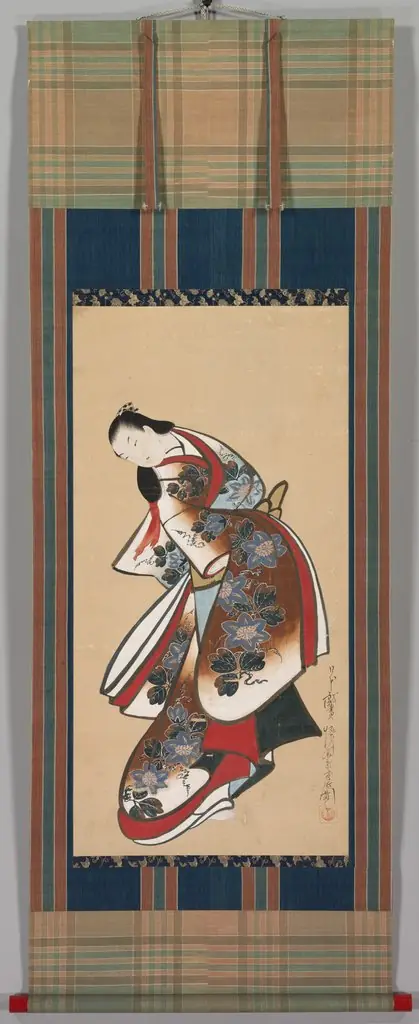
Artwork
Untitled
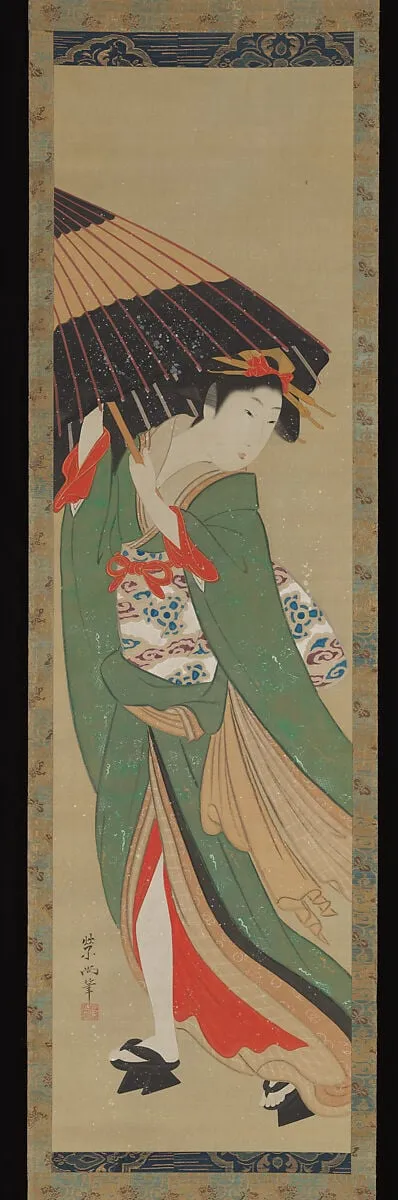
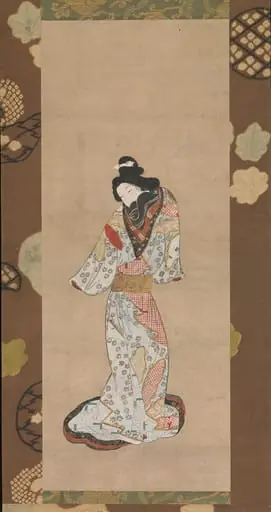
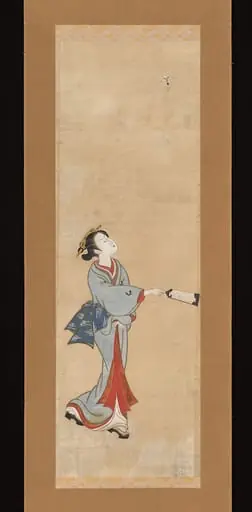
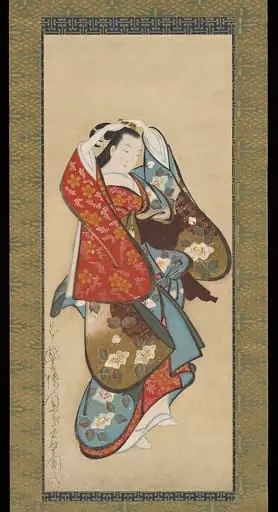
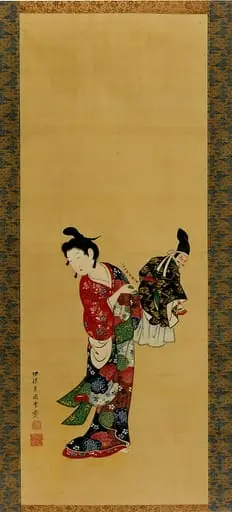
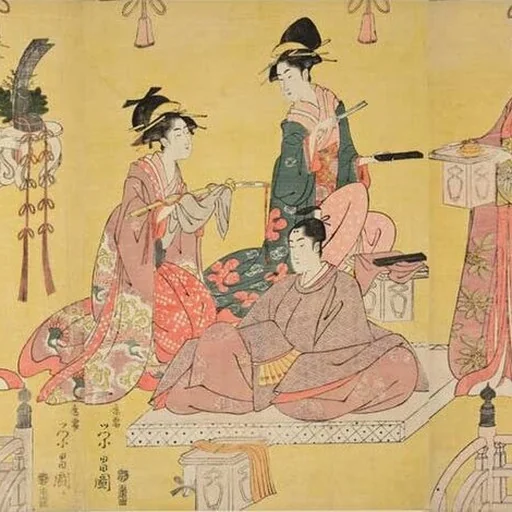
Untitled is an ink painting by the Romanticist artist Chōkōsai Eishō. It dates from 1800 and is held in the collection of the Metropolitan Museum of Art. Created around 1800, this hanging scroll presents a solitary female figure rendered in ink and color on silk.
About this work
The woman's clothing and hairstyle give clues about her social status and the time period.
This painting shows a woman in a traditional Japanese setting.
It's an ink and color work on silk, made in the early 19th century.
The woman is the main focus, with simple surroundings.
The artist used simple lines and colors to create a calm mood.
The woman's clothing and hairstyle give clues about her social status and the time period.
Check out the work of artist Chōkōsai Eishō to learn more about this style.
Overview
Created around 1800, this hanging scroll presents a solitary female figure rendered in ink and color on silk. The composition is modest, centering the woman against an understated backdrop, and exemplifies the early‑19th‑century Japanese approach to portraiture within the ukiyo‑e tradition.
Subject & Meaning
The central figure is a woman dressed in period attire, her hairstyle and garments offering clues to her social standing and the fashions of the time. While no narrative is explicit, the work reflects the ukiyo‑e focus on everyday individuals, emphasizing personal presence over elaborate storytelling.
Technique & Style
Eishō employs clean, flowing lines and a restrained palette, allowing ink washes and subtle color accents to define form and atmosphere. The silk support contributes a luminous quality, while the simplicity of the setting enhances the calm, contemplative mood characteristic of his training under Eishi.
History & Provenance
Chōkōsai Eishō, a prominent student of the artist Eishi, produced this piece during his most active period in the 1790s‑1800s. His career included numerous print series and collaborations with publishers such as Yamaguchiya Chūsuke, situating the scroll within a broader body of work that demonstrates his mature skill after years of apprenticeship.
Context
Portraits of women were a frequent motif in ukiyo‑e, reflecting the genre’s interest in urban life and its inhabitants. This scroll aligns with that tradition, offering a glimpse into the visual culture of Edo‑period Japan, where silk paintings complemented the more widely circulated woodblock prints.
Artist & collection
Artist
Chōkōsai Eishō (鳥高斎 栄昌, fl. 1790s) was a Japanese ukiyo-e artist. He also used the name Shōeidō (昌栄堂). Eishō's personal details are unknown. His works that remain show a practised skill, so it is likely that they…