Artwork
Osage Warrior
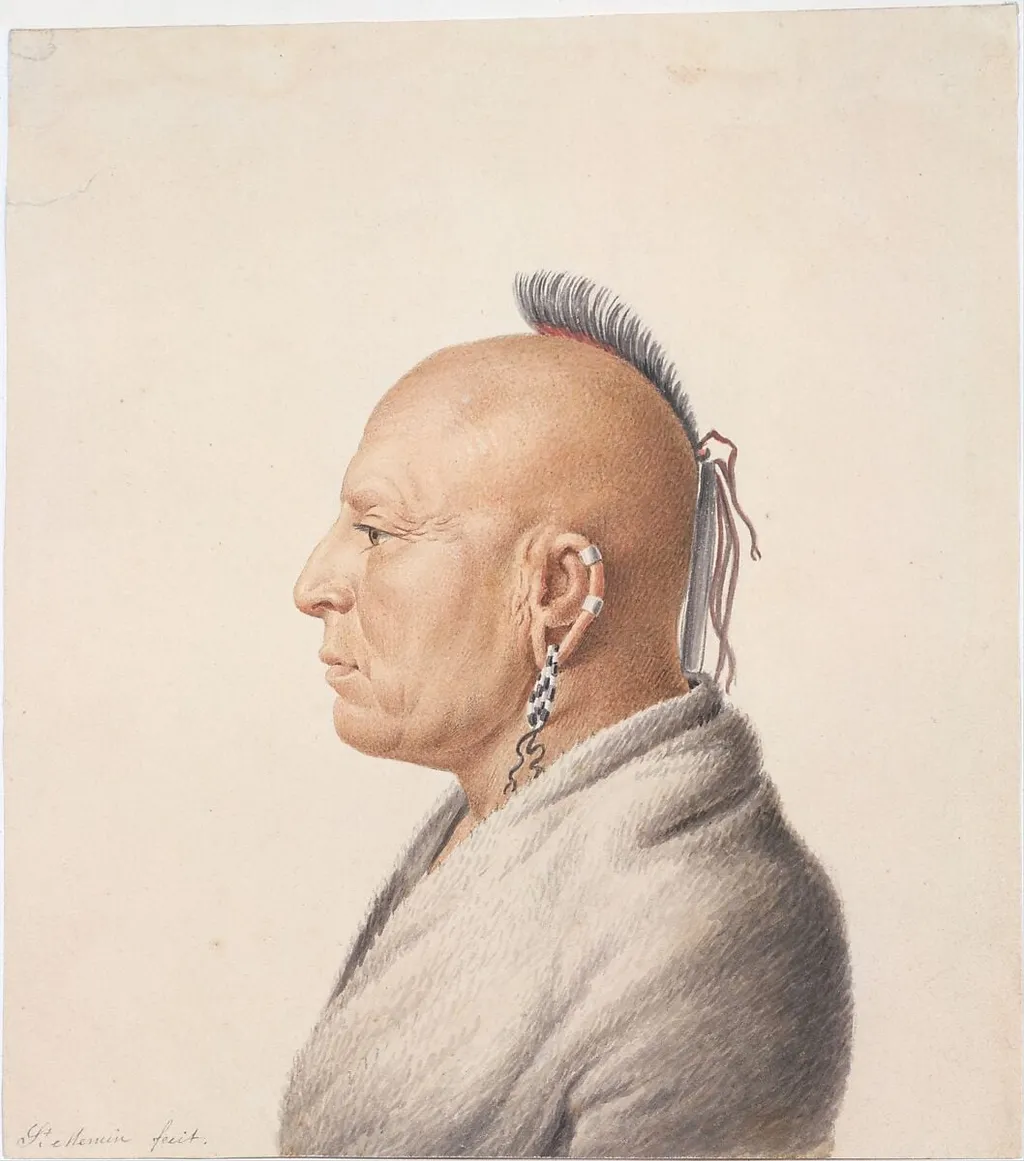
Osage Warrior is a watercolor work on paper by the Romanticist artist Charles Balthazar Julien Févret de Saint-Mémin. It dates from 1806 and is held in the collection of the Metropolitan Museum of Art. Created in 1806, this portrait presents an Osage individual in profile, rendered with watercolor and graphite on off‑white wove paper.
About this work
Overview
The figure is shown in traditional warrior attire, his facial features—particularly a pronounced nose and firm jaw—emphasized against an unadorned background.
Created in 1806, this portrait presents an Osage individual in profile, rendered with watercolor and graphite on off‑white wove paper. The figure is shown in traditional warrior attire, his facial features—particularly a pronounced nose and firm jaw—emphasized against an unadorned background. The work belongs to the American Wing collection and exemplifies early nineteenth‑century interest in documenting Native American subjects.
Subject & Meaning
The sitter is identified as an Osage warrior, his posture and dress conveying a sense of dignity and martial readiness. By focusing solely on the head and shoulders, the artist highlights personal character rather than narrative context, allowing viewers to contemplate the individual's identity and the broader cultural role of warriors within Osage society.
Technique & Style
Saint‑Mémin employed fine graphite lines to delineate facial structure, then applied delicate watercolor washes to suggest skin tone and texture. The restrained palette and minimal background keep attention on the sitter’s expression, while the combination of drawing and watercolor reflects the artist’s training in portraiture and his adaptation of European methods to American subjects.
History & Provenance
French portraitist Charles Balthazar Julien Févret de Saint‑Mémin produced this piece after emigrating to the United States, where he created numerous profile likenesses for a market lacking photographic reproduction. The work later entered the American Wing collection, illustrating the artist’s transition from European engravings of political figures to a prolific series of Native American portraits.
Context
In the early 1800s, demand for individual likenesses was high among collectors and officials seeking visual records of frontier peoples. Saint‑Mémin’s series of profile portraits met this need, offering a standardized yet respectful representation of diverse Native individuals, and contributing to contemporary ethnographic documentation.
Artist & collection

Artist
Charles Balthazar Julien Févret de Saint-Mémin
Charles Balthazar Julien Févret de Saint-Mémin (French pronunciation: ; 1770–1852) was a French portrait painter and museum director.