Artwork
A Donkey in the Field
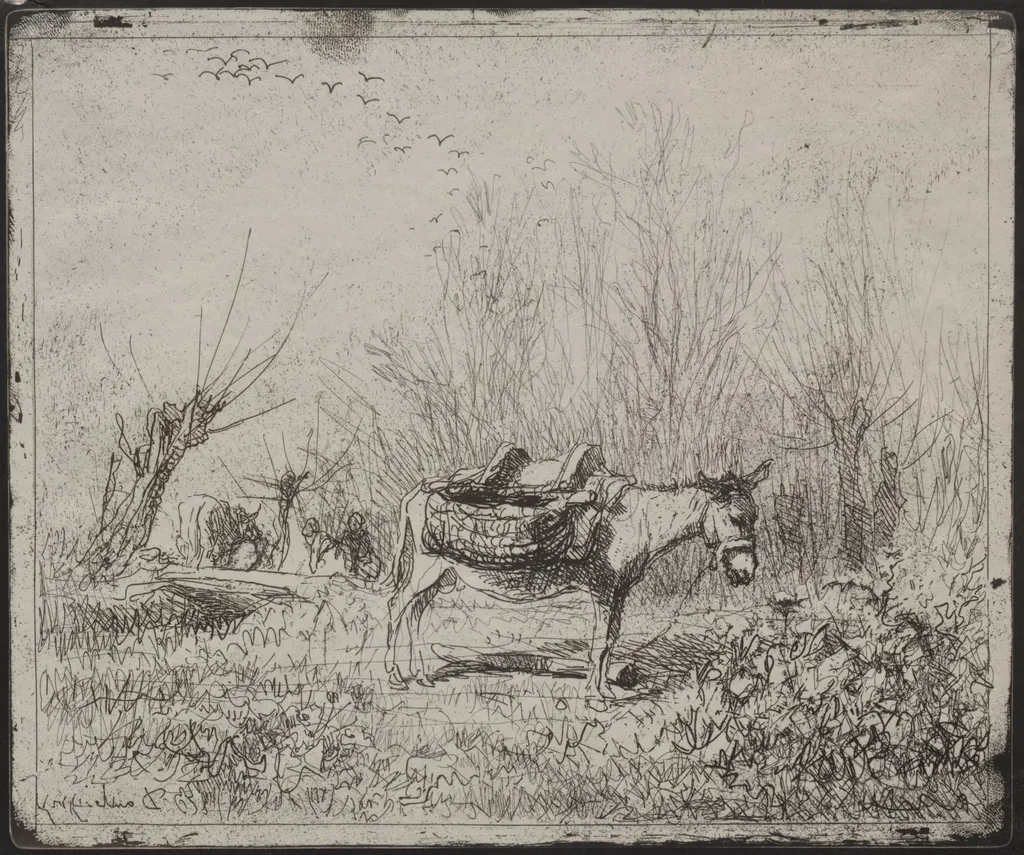
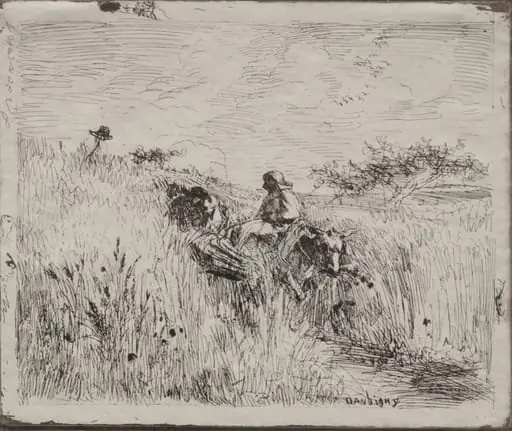
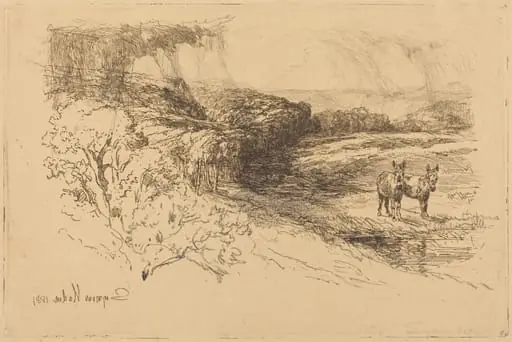
A Donkey in the Field is a print by Charles François Daubigny. It dates from 1862 and is held in the collection of the Cleveland Museum of Art.
About this work
Overview
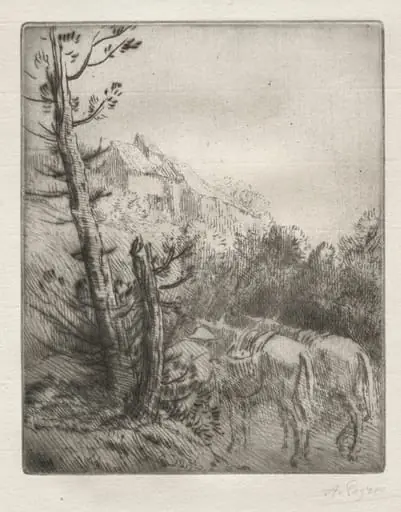
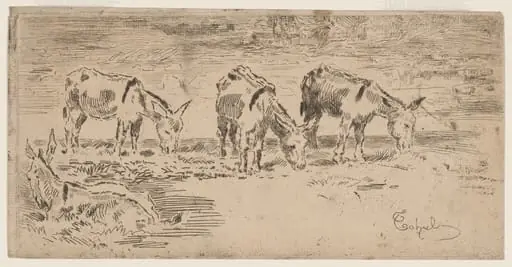
Created in 1862, *A Donkey in the Field* is a graphic work by Charles-François Daubigny, reflecting his interest in rural life and experimental printmaking. Rather than a polished painting, it appears as a spontaneous sketch, executed with rapid, fluid lines. The piece belongs to a body of work where Daubigny explored the natural world through direct observation, favoring immediacy over finish.
Subject & Meaning
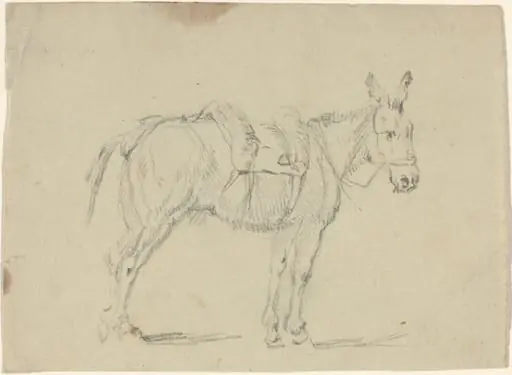
The subject is a solitary donkey standing amid tall, untamed grass, a quiet emblem of rural labor and endurance. No human figures are present, emphasizing solitude and the rhythms of the land. A few birds in flight suggest movement beyond the frame, reinforcing the sense of a transient, unposed moment. The scene carries no overt narrative, instead inviting contemplation of ordinary nature.
Technique & Style
Daubigny employed loose, energetic linework, likely through etching or cliché verre, to capture the texture of grass and the donkey’s form with minimal detail. Dark strokes contrast against a light ground, creating depth without shading. The hurried quality suggests direct observation outdoors, aligning with his preference for capturing light and motion as experienced in real time.
History & Provenance
The work emerged during Daubigny’s most active period of printmaking, when he was refining techniques that would influence later artists. Though not widely exhibited in his lifetime, such studies circulated among peers and collectors interested in his innovative approach to landscape. Its survival reflects its value as a record of his working method rather than a commercial product.
Context
Daubigny worked alongside the Barbizon painters, who rejected academic idealism in favor of observing nature directly. His focus on humble subjects—animals, fields, rivers—challenged traditional hierarchy in art. This piece aligns with a broader shift toward realism and the acceptance of sketch-like forms as legitimate artistic expressions, paving the way for Impressionist practices.
Legacy
Though modest in scale, works like this contributed to a redefinition of artistic process, valuing spontaneity and direct engagement with the environment. Daubigny’s prints influenced artists who sought to capture fleeting effects of light and atmosphere. His approach helped legitimize the sketch as a finished work, expanding the boundaries of what art could be.
Own this work as a print
Artist & collection
Artist
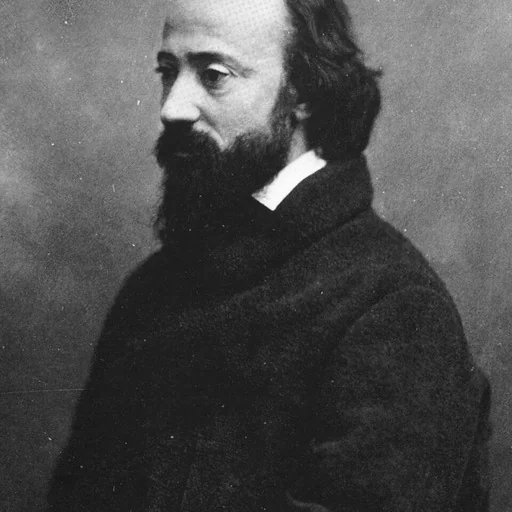
Charles-François Daubigny ( DOH-bin-yee, US: DOH-been-YEE, doh-BEEN-yee, French: ; 15 February 1817 – 19 February 1878) was a French painter, one of the members of the Barbizon school, and is considered an important precursor of…