Artwork
The Laundresses
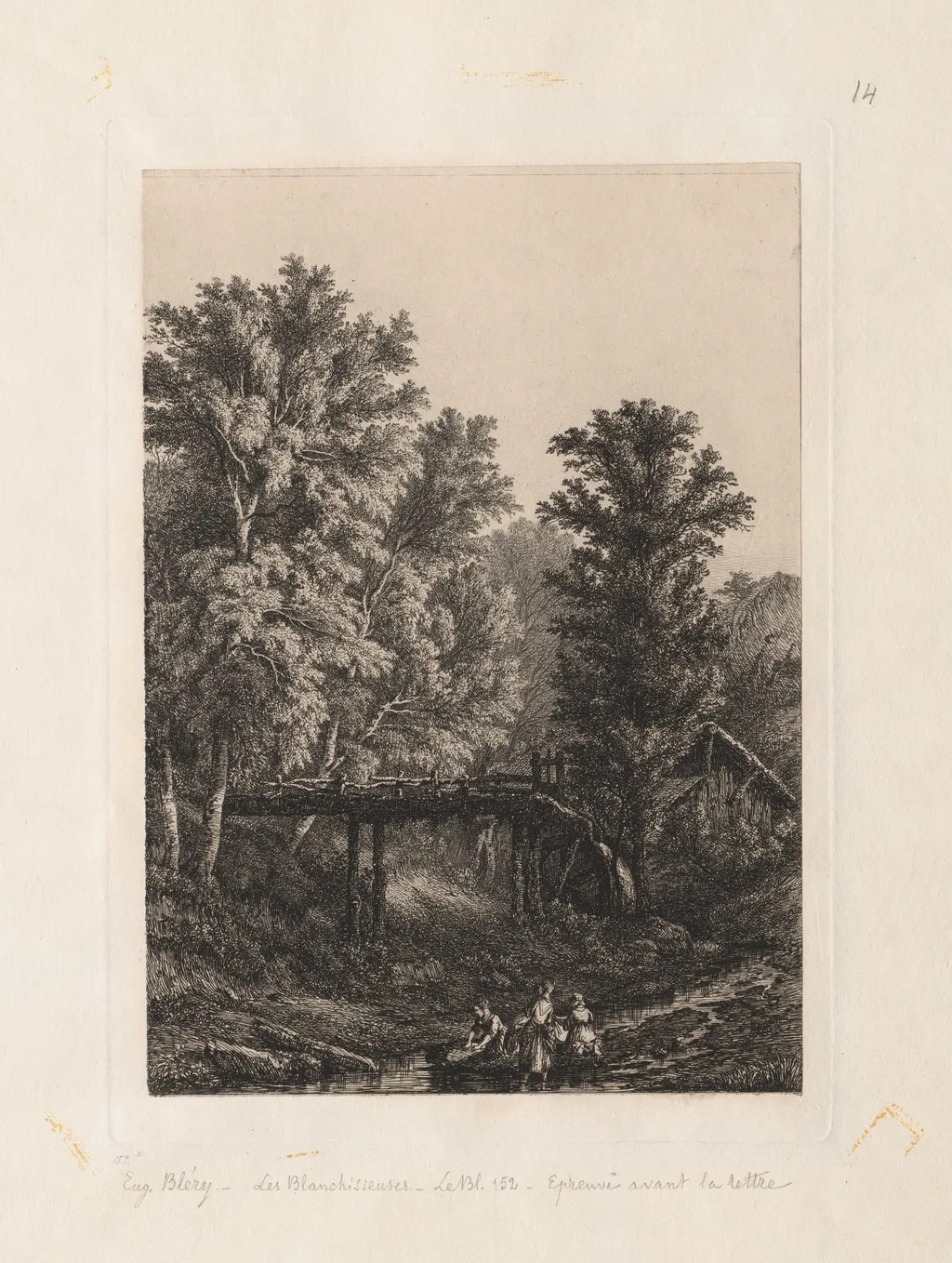
The Laundresses is a print by the Romanticist artist Eugène Blery. It dates from 1838 and is held in the collection of the Cleveland Museum of Art.
About this work
Overview
Trained in etching and lithography under aristocratic patronage, he specialized in detailed, small-scale prints of daily life.
Eugène Bléry, a French printmaker born in 1805, produced *The Laundresses* in 1838 as a lithographic work. Trained in etching and lithography under aristocratic patronage, he specialized in detailed, small-scale prints of daily life. This piece exemplifies his commitment to capturing unidealized labor and natural settings, distinguishing his output from grand historical or mythological subjects common in his era.
Subject & Meaning
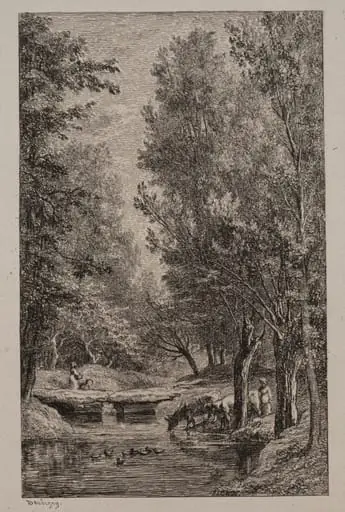
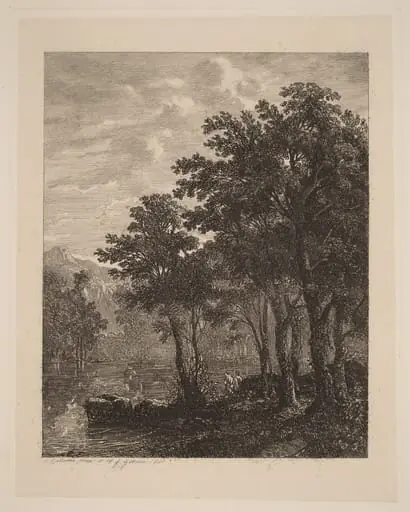
The print portrays a group of women engaged in the physical labor of washing clothes beside a river. Their bent postures and simple attire emphasize the routine nature of their work. The inclusion of a distant bridge and cottage situates the scene within a rural landscape, suggesting a quiet dignity in mundane tasks. Bléry avoids sentimentality, presenting the figures as part of the environment rather than as symbolic figures.
Technique & Style
Bléry employed fine, controlled lines to render texture and light, particularly in the reflections on water and the dense foliage of the trees. The contrast between the dark, tangled branches and the softly graded tones of the riverbank creates depth without heavy shading. His lithographic technique allowed for delicate gradations, enhancing the atmospheric quality of the scene while maintaining a restrained, observational tone.
History & Provenance
Bléry received early training under the patronage of the comtesse de Montalivet, which helped establish his career in the 1820s. *The Laundresses* emerged during a period when printmaking was gaining traction as a medium for social observation. Though not widely exhibited, the work circulated among collectors interested in domestic and rural life, reflecting a growing interest in non-elite subjects in mid-19th-century France.
Context
Created during the rise of Romanticism, the print aligns with the movement’s interest in nature and ordinary human experience, though it lacks overt emotional drama. Unlike grand Romantic landscapes, Bléry’s work focuses on quiet, untheatrical moments. His choice of subject reflects broader cultural shifts toward documenting labor and the natural world with precision rather than idealization.
Legacy
Bléry’s prints, including *The Laundresses*, contributed to a tradition of French printmaking that valued technical precision and quiet observation. While not widely known today, his work influenced later artists who sought to portray labor and landscape without embellishment. His approach prefigured the realist tendencies that would gain prominence in the decades following his career.
Artist & collection
Artist
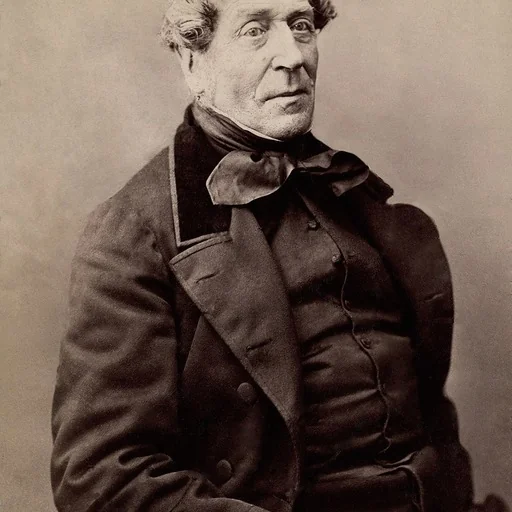
Eugène Stanislas Alexandre Bléry (3 March 1805–7 June 1887), was a French engraver.

 Landscape
 Landscape
 Plant Study
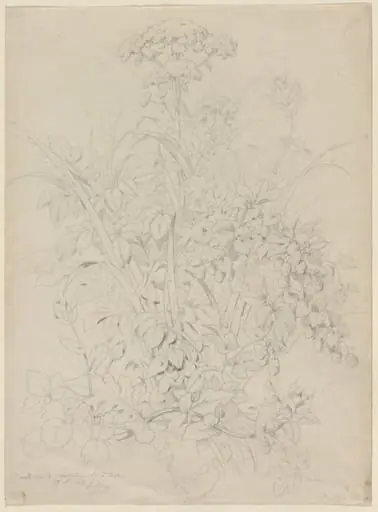
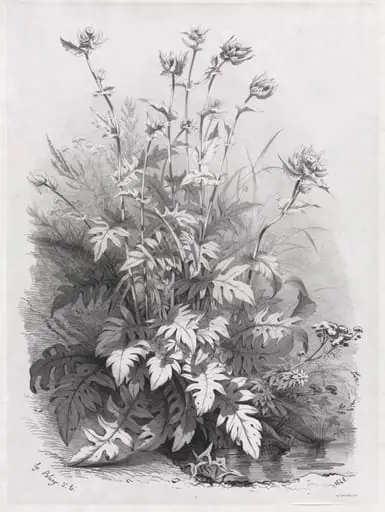 Groups of Various Plants Drawn After Nature: No. 7
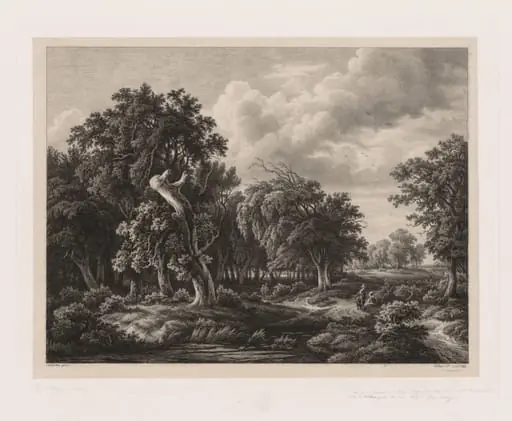 Groups of Various Plants Drawn After Nature: No. 7
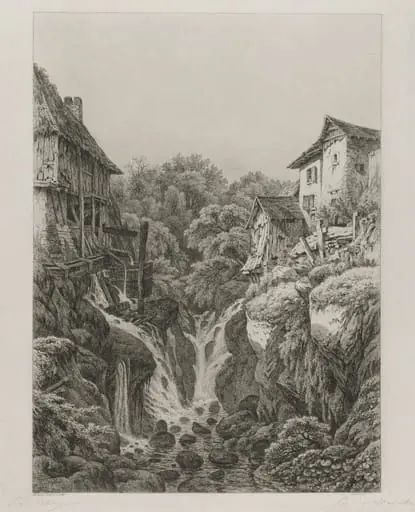 The Mill and Waterfall of Grésy near Aix-les-Bains
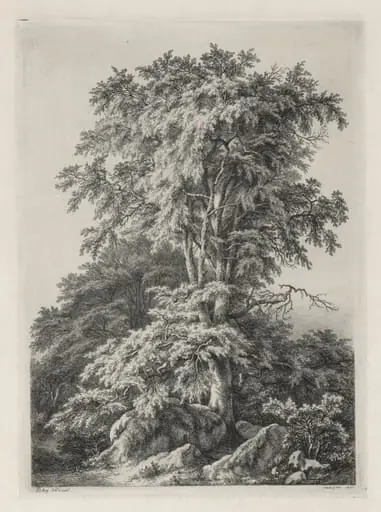 Studies Drawn and Engraved after Nature: The Beach, Fontainebleau (Études dessinées et Gravées D'après nature: Le hêtre, Fontainebleau)