Artwork
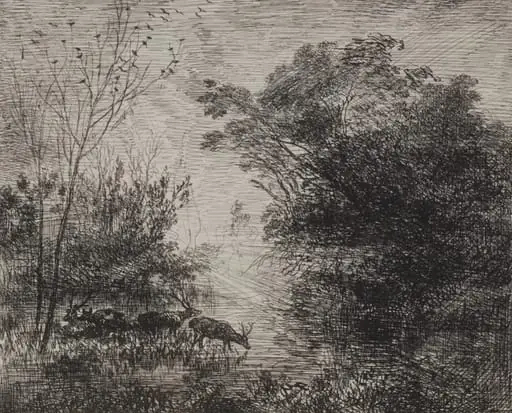
Stags
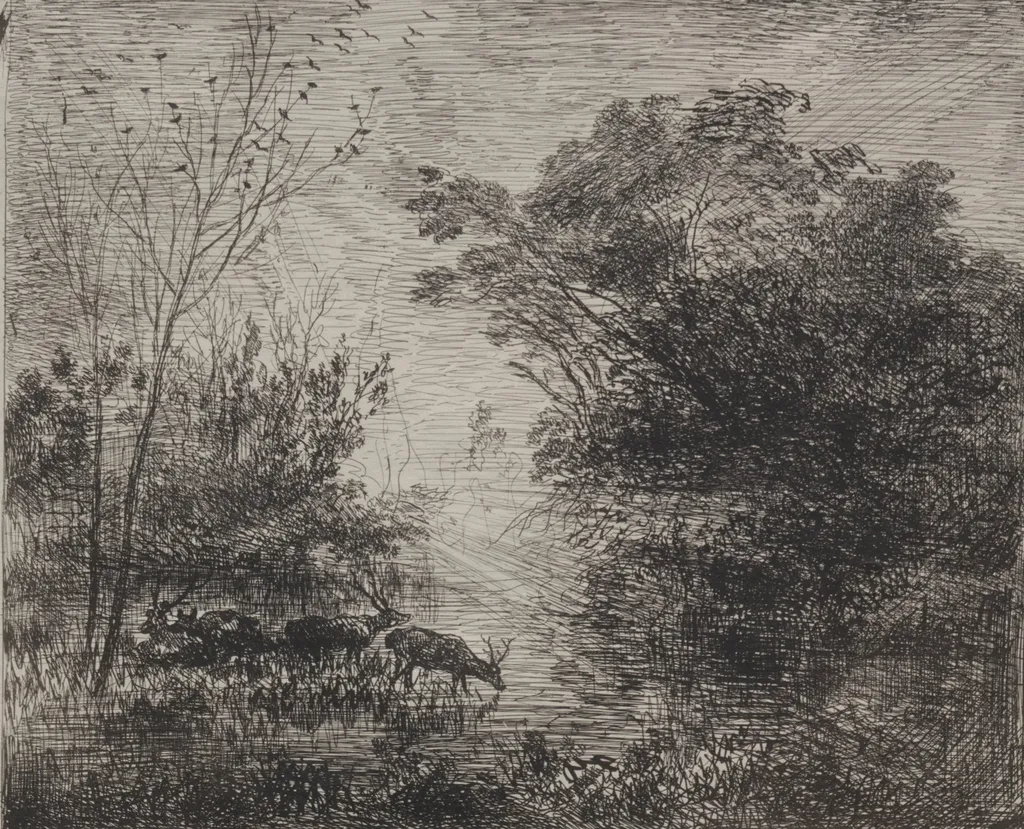
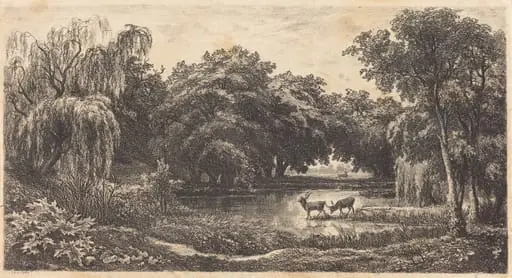
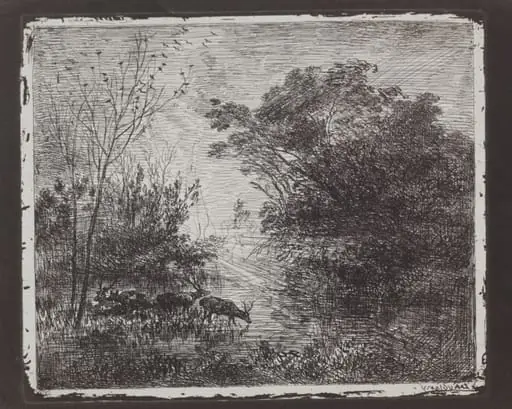
Stags is a print by the Impressionist artist Charles François Daubigny. It dates from 1862 and is held in the collection of the Cleveland Museum of Art.
About this work
Overview
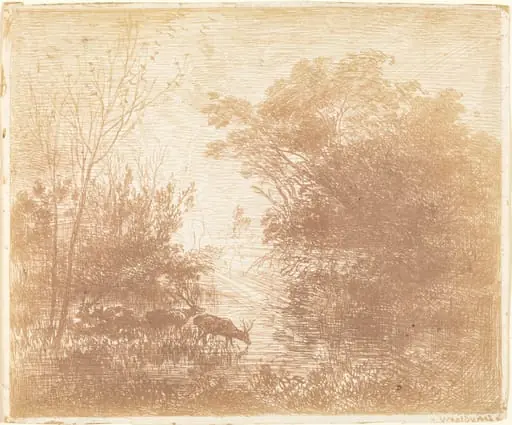
Stags is a print created using the cliché-verre technique around 1853. The work depicts a serene landscape with deer, trees, and a cloudy sky.
Subject & Meaning
The subject of Stags is a naturalistic scene of deer in a landscape, conveying a sense of calm through the arrangement of grazing and vigilant animals.
Technique & Style
Utilizing cliché-verre, the artist coated a glass plate with an opaque ground, etched the design, and exposed it to light on light-sensitive paper to produce the print. The style emphasizes naturalism and potentially incorporates chiaroscuro principles for depth.
History & Provenance
Created circa 1853, Stags is an early example of the cliché-verre technique, developed by artists and photographers seeking a method for multiple print production.
Context
Stags reflects the mid-19th-century interest in both photography and traditional artistic techniques, blending them through cliché-verre to capture natural scenes.
Legacy
While specific influence of Stags is not detailed, it contributes to the broader legacy of cliché-verre in the history of printmaking and the intersection of photography with traditional art forms.
Artist & collection
Artist
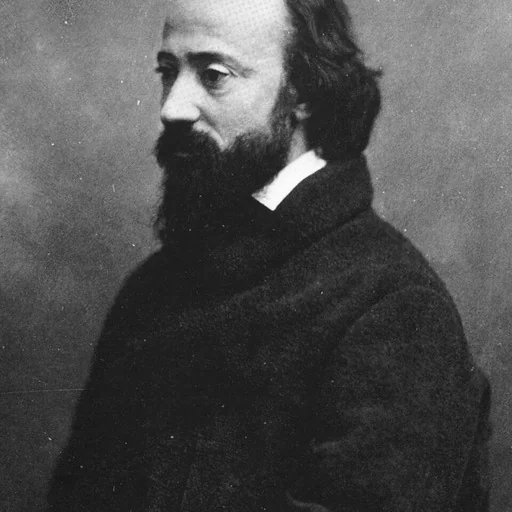
Charles-François Daubigny ( DOH-bin-yee, US: DOH-been-YEE, doh-BEEN-yee, French: ; 15 February 1817 – 19 February 1878) was a French painter, one of the members of the Barbizon school, and is considered an important precursor of…