Artwork
Combe Bottom
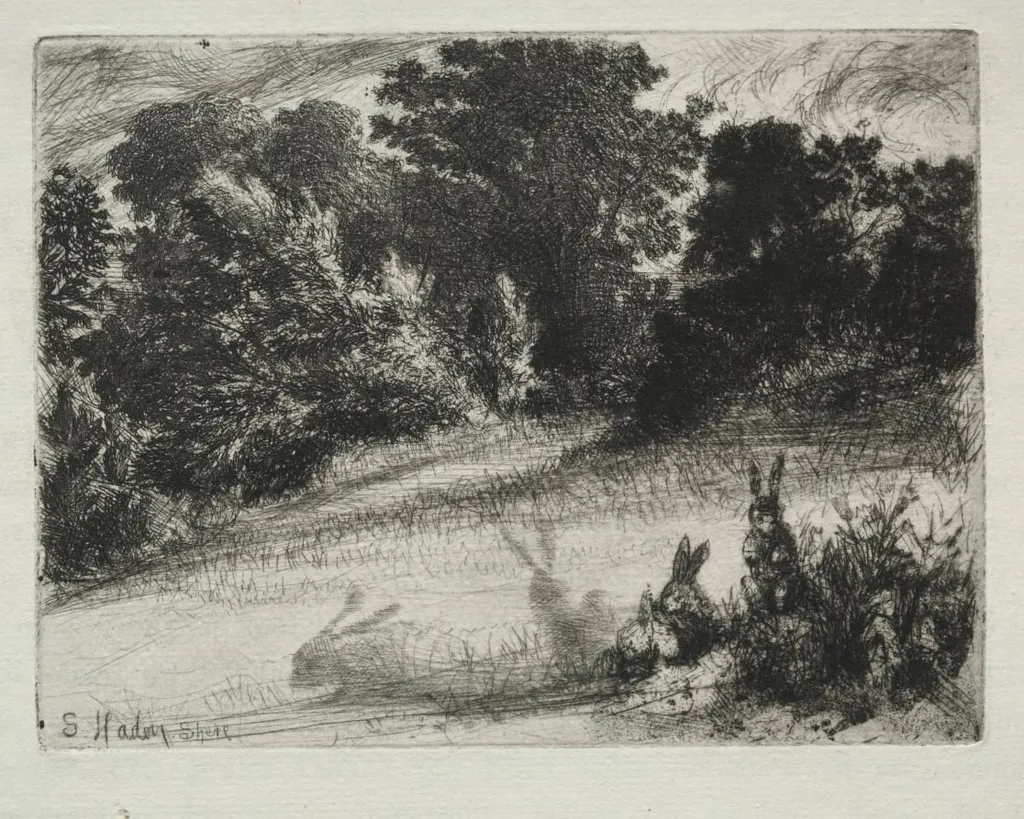
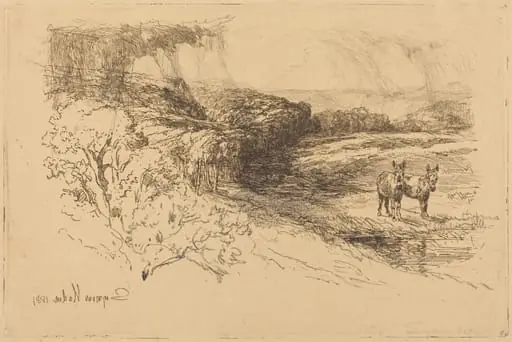
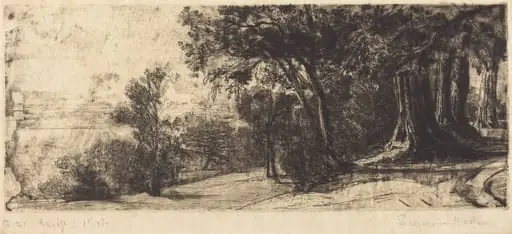
Combe Bottom is a print by the Impressionist artist Francis Seymour Haden. It dates from 1860 and is held in the collection of the Cleveland Museum of Art.
About this work
Overview
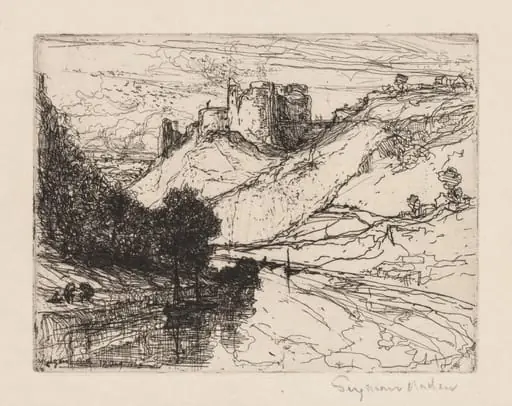
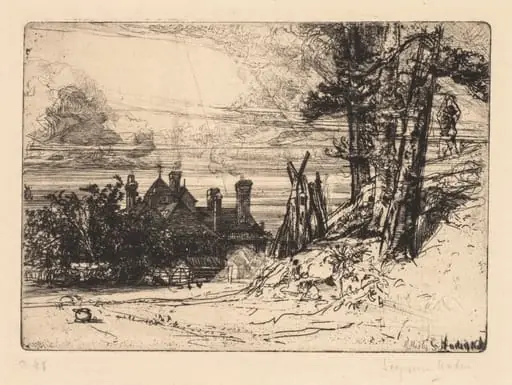
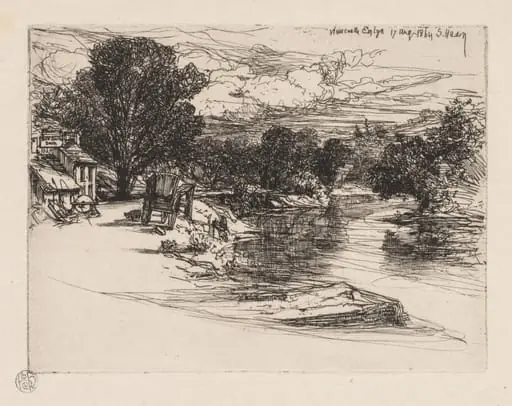
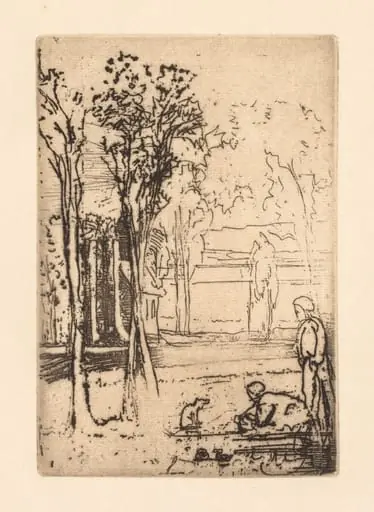
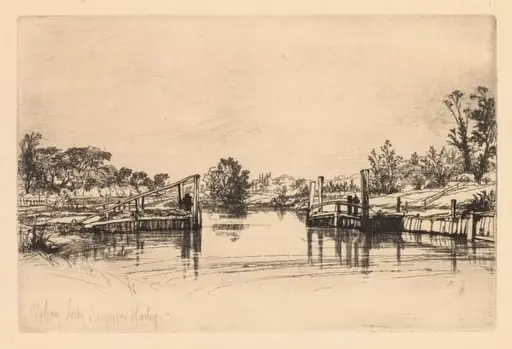
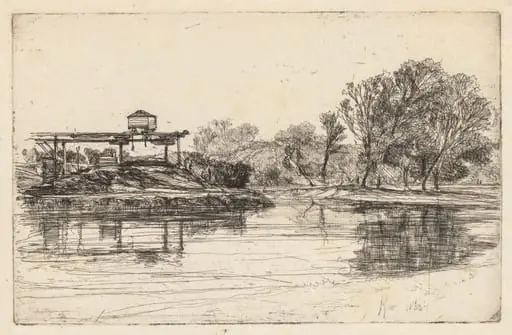
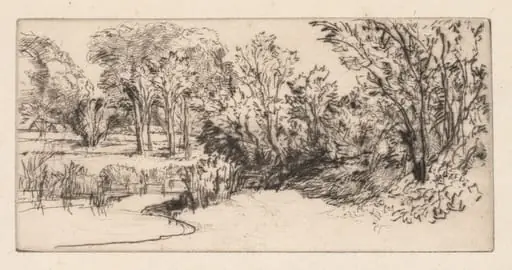
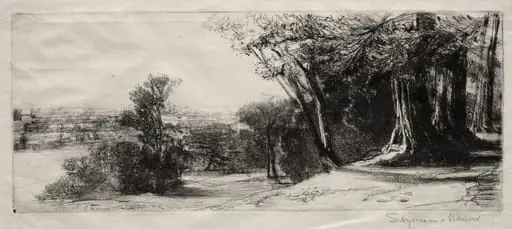
Combe Bottom is an 1860 etching by Francis Seymour Haden, part of The Cleveland Museum of Art’s print collection. Unlike oil paintings, this work is executed in ink on paper using etching techniques, capturing a quiet rural scene with careful tonal gradations. The composition centers on a secluded English landscape, rendered with subtle contrasts that emphasize stillness and natural detail.
Subject & Meaning
The scene portrays a secluded valley path winding through dense woodland, with two rabbits resting in the foreground—one seated, the other curled. Their presence introduces a quiet, unobtrusive life to the landscape, reinforcing themes of solitude and the unnoticed rhythms of nature. No human figures appear, enhancing the sense of peace and withdrawal from human activity.
Technique & Style
Haden employed etching to achieve nuanced light and shadow, using fine lines and varying ink densities to model form. The dense foliage and soft ground are built through layered cross-hatching, creating depth without color. The chiaroscuro effect is deliberate, not theatrical—used to evoke atmosphere rather than drama, aligning with the quiet realism of mid-19th-century British printmaking.
History & Provenance
Created in 1860, Combe Bottom was made during Haden’s active period as a practicing etcher, before he became known primarily as a writer on art. The work entered The Cleveland Museum of Art’s collection through established channels of print acquisition in the early 20th century. Its provenance reflects the museum’s longstanding interest in British graphic art of the Victorian era.
Context
Haden worked alongside the Etching Revival movement in England, which sought to elevate printmaking as a fine art form. While contemporaries like Whistler explored atmospheric effects, Haden focused on intimate, unidealized landscapes. Combe Bottom reflects this ethos—neither romanticized nor impressionistic, but grounded in direct observation of the English countryside.
Legacy
Though not widely reproduced, Combe Bottom exemplifies Haden’s influence on the technical and aesthetic standards of British etching. His emphasis on tonal control and naturalistic detail helped redefine printmaking’s potential beyond reproduction. The work remains a quiet reference point in studies of 19th-century landscape printmaking in Britain.
Artist & collection