Artwork
The Shepherd and the Shepherdess
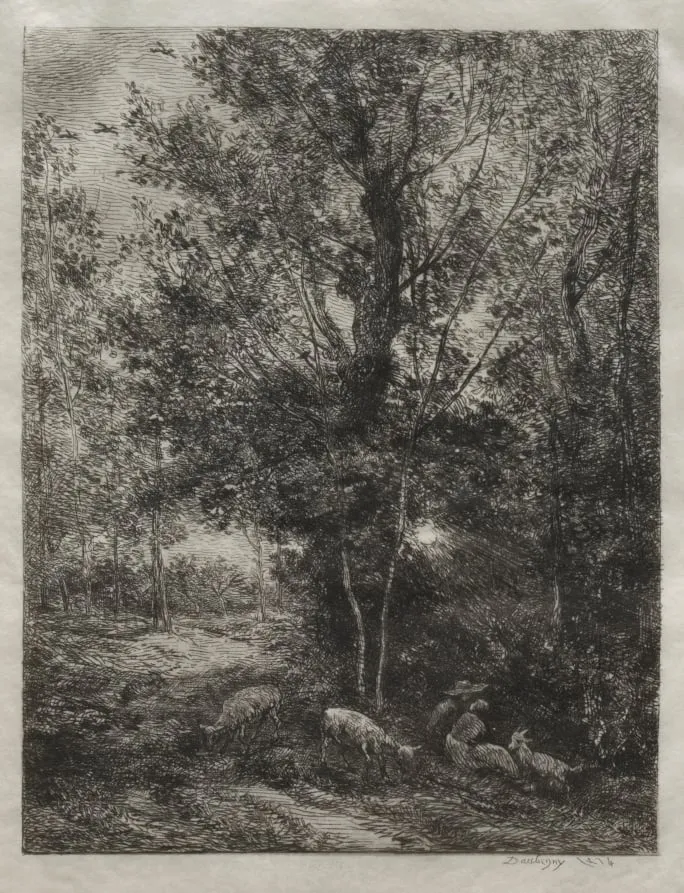
The Shepherd and the Shepherdess is a print by the Impressionist artist Charles François Daubigny. It dates from 1874 and is held in the collection of the Cleveland Museum of Art.
About this work
Overview
The Shepherd and the Shepherdess is an etching by Charles-François Daubigny, created during the mid-19th century revival of the medium in France.
The Shepherd and the Shepherdess is an etching by Charles-François Daubigny, created during the mid-19th century revival of the medium in France. Though etching had declined in popularity, Daubigny and others reinvigorated it through direct engagement with nature. This print reflects a broader cultural shift toward valuing original, hand-made prints over reproductive engravings, supported by new publishing initiatives and periodicals that showcased artists' work.
Subject & Meaning
The scene depicts a quiet rural moment: a shepherd and shepherdess in a gentle landscape, framed by trees and rolling hills. There is no narrative drama, only stillness and presence. The figures are small within the expanse of nature, suggesting harmony rather than dominance. This quietude aligns with the Barbizon artists’ broader interest in unidealized rural life, emphasizing observation over sentimentality.
Technique & Style
Daubigny employed etching with a focus on immediacy, using loose, fluid lines to suggest light and texture rather than precise detail. His approach favored atmospheric effect over finish, capturing the transient qualities of the outdoors. The tonal contrasts are subtle, avoiding dramatic chiaroscuro in favor of soft gradations that mirror natural light. This technique reflects his commitment to direct observation, often conducted from his floating studio on French rivers.
History & Provenance
Daubigny began producing original etchings in the 1840s, at a time when the medium was largely neglected in France. His work contributed to a resurgence that culminated in the 1862 founding of the Société des Aquafortistes by Alfred Cadart, which promoted etching through curated print albums. The print likely circulated in such collections or in periodicals like L'Artiste, helping to establish etching as a legitimate artistic practice rather than a reproductive tool.
Context
The Barbizon region, near Paris, became a hub for artists seeking refuge from urban industrialization. Its varied terrain—forests, rivers, and open fields—offered rich subjects for landscape studies. Daubigny’s use of a boat as a studio exemplifies the Barbizon group’s dedication to painting and printing en plein air. This context shaped not only subject matter but also a new aesthetic grounded in direct experience rather than studio convention.
Legacy
Daubigny’s etchings helped redefine printmaking as a vehicle for personal expression rather than mere reproduction. His emphasis on spontaneity and naturalism influenced later generations of printmakers, including the Impressionists. By elevating the status of original etching and promoting its accessibility through publications, he played a key role in transforming the medium into a respected art form in 19th-century France.
Artist & collection
Artist
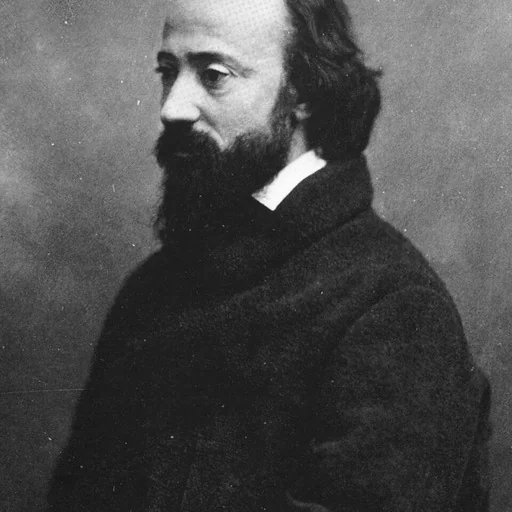
Charles-François Daubigny ( DOH-bin-yee, US: DOH-been-YEE, doh-BEEN-yee, French: ; 15 February 1817 – 19 February 1878) was a French painter, one of the members of the Barbizon school, and is considered an important precursor of…

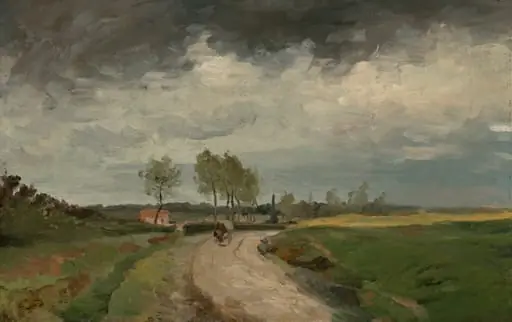
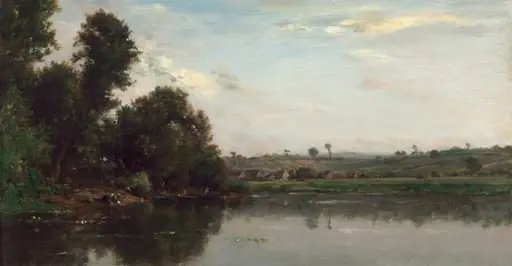
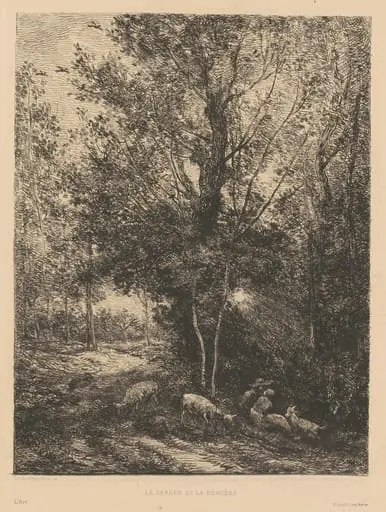 Le Berger et La Bergre
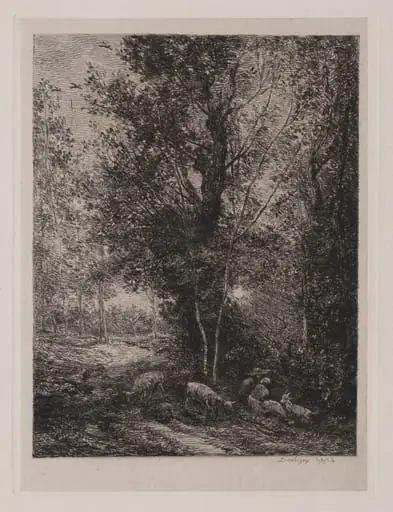 The Shepherd and Shepherdess
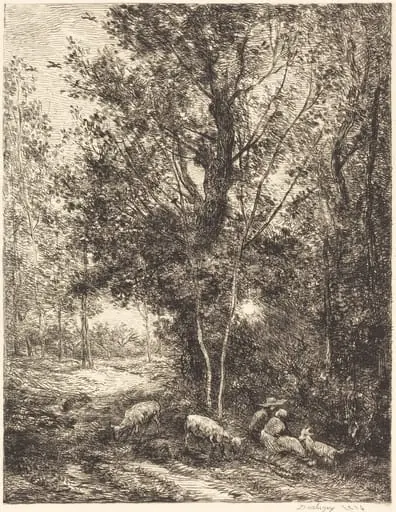 Shepherd and Shepherdess (Le Berger et la bergere)
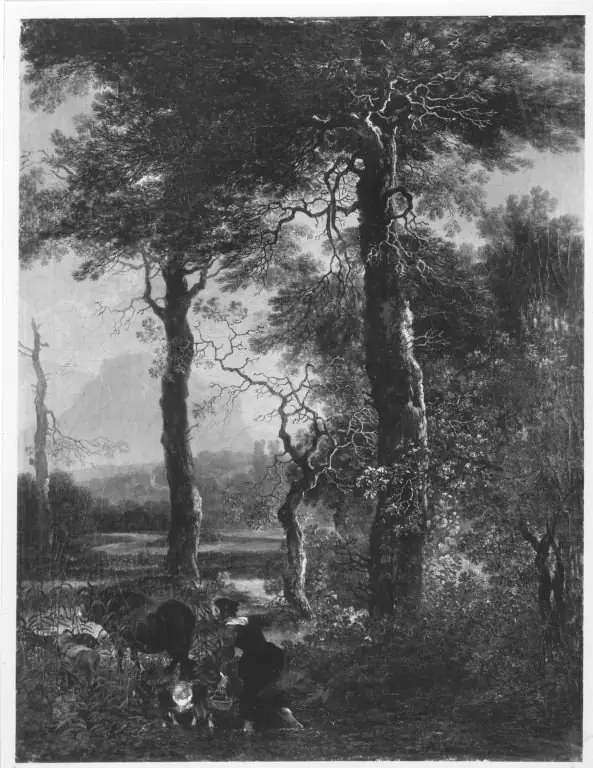 Landschaft mit hochstämmigen Bäumen
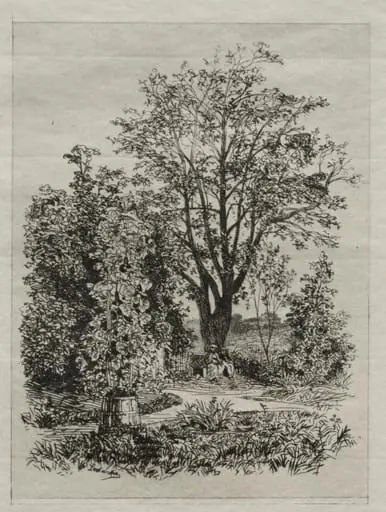 In my Bordeaux Garden
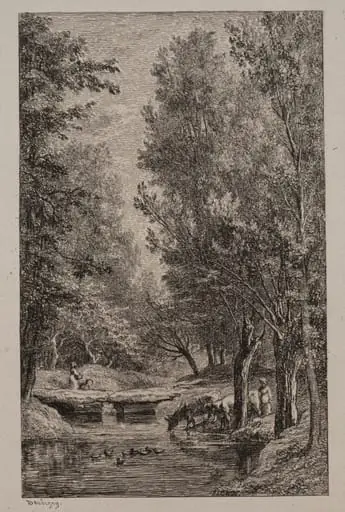 Brook in the Val Mondois
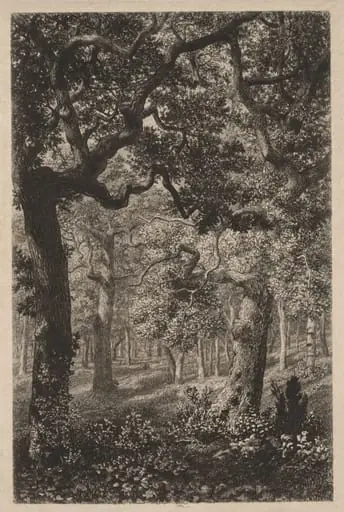 In the Woods
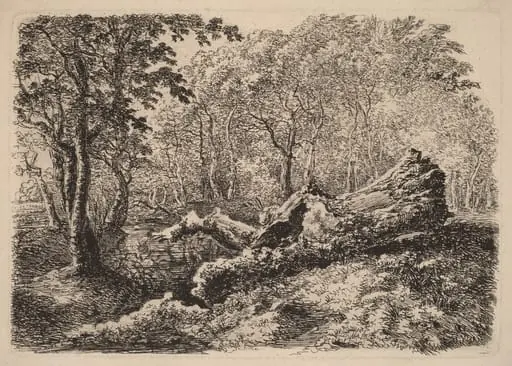 Mouldering Tree Trunk
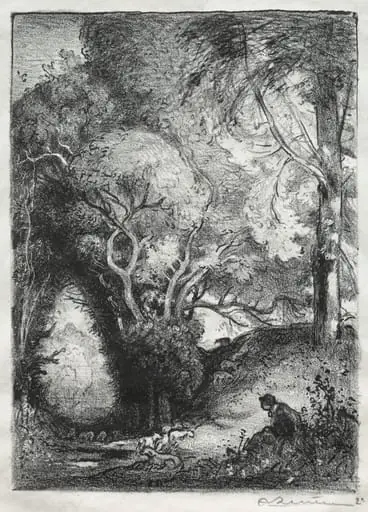 The Ravine in June
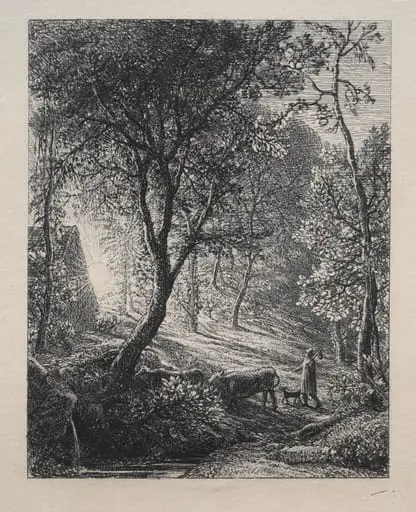 The Herdsman's Cottage
 Landscape with a Peasant Carrying Firewood
 Dans Mon Jardin à Bordeaux