Artwork
The Shepherd and Shepherdess
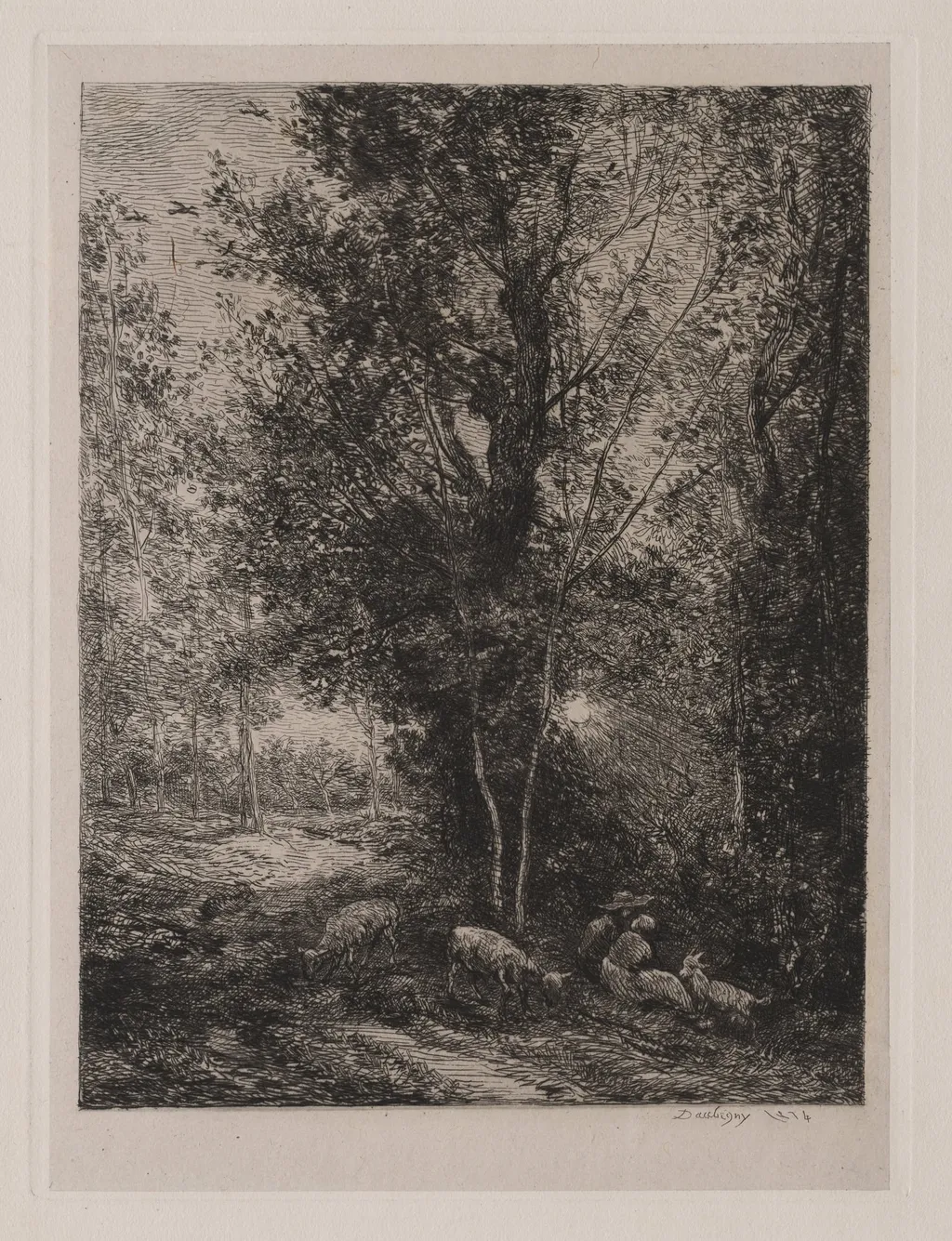
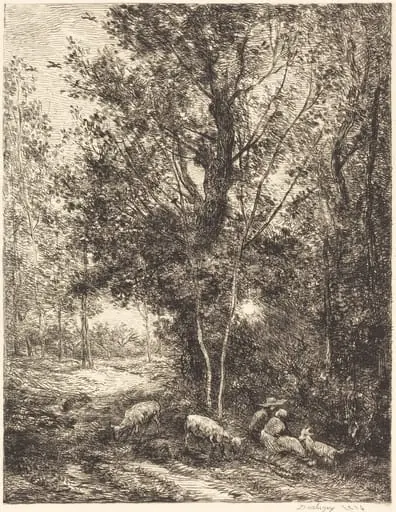
The Shepherd and Shepherdess is a print by the Impressionist artist Charles François Daubigny. It dates from 1874 and is held in the collection of the Cleveland Museum of Art.
About this work
Overview
Created in 1874 by French artist Charles François Daubigny, *The Shepherd and Shepherdess* is a landscape print that blends etching and cliché verre techniques.
Created in 1874 by French artist Charles François Daubigny, *The Shepherd and Shepherdess* is a landscape print that blends etching and cliché verre techniques. Daubigny, associated with the Barbizon school, used these methods to explore natural light and rural quietude. The work captures a moment of stillness in the countryside, reflecting his interest in direct observation and the subtle rhythms of agrarian life.
Subject & Meaning
The scene portrays a shepherd and shepherdess guiding their flock through a sun-dappled meadow beneath a sprawling tree. Their presence is unobtrusive, integrated into the land rather than dominating it. The composition suggests harmony between humans and nature, a recurring theme in 19th-century French rural imagery. There is no narrative drama—only the quiet persistence of daily labor in the open air.
Technique & Style
Daubigny employed etching and cliché verre to achieve soft tonal gradations and textured surfaces. The play of light through foliage is rendered with delicate lines and varying ink densities, suggesting movement without sharp definition. Brushwork in the original painting, though translated into print, retains an expressive looseness that anticipates Impressionist approaches to atmosphere and transient effects.
History & Provenance
The work emerged during a period when Daubigny was increasingly focused on printmaking as a means to experiment beyond oil painting. It was likely produced in his studio near Auvers-sur-Oise, where he lived and worked in the 1870s. The print circulated among collectors and artists familiar with his innovations, though it never achieved widespread public recognition during his lifetime.
Context
In the 1870s, French landscape art was shifting from idealized pastoralism toward direct, unembellished observation. Daubigny’s work aligned with this trend, rejecting academic conventions in favor of everyday rural scenes. His prints contributed to a broader movement that valued the artist’s personal response to nature, influencing younger painters who would later form the Impressionist circle.
Legacy
Though less known than his paintings, Daubigny’s prints like *The Shepherd and Shepherdess* helped redefine printmaking as a medium for artistic expression rather than mere reproduction. His use of light, texture, and informal composition paved the way for later generations of printmakers who sought to capture the immediacy of the natural world with minimal intervention.
Own this work as a print
Artist & collection
Artist
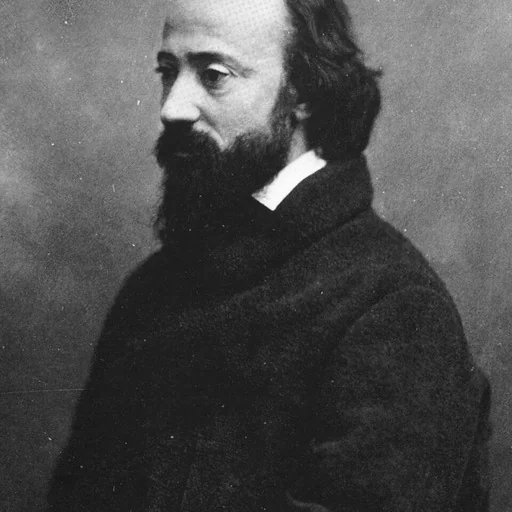
Charles-François Daubigny ( DOH-bin-yee, US: DOH-been-YEE, doh-BEEN-yee, French: ; 15 February 1817 – 19 February 1878) was a French painter, one of the members of the Barbizon school, and is considered an important precursor of…

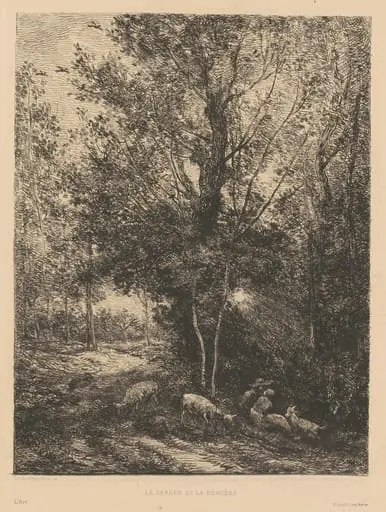 Le Berger et La Bergre
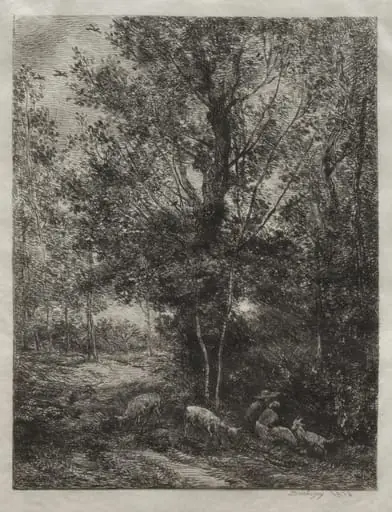 The Shepherd and the Shepherdess
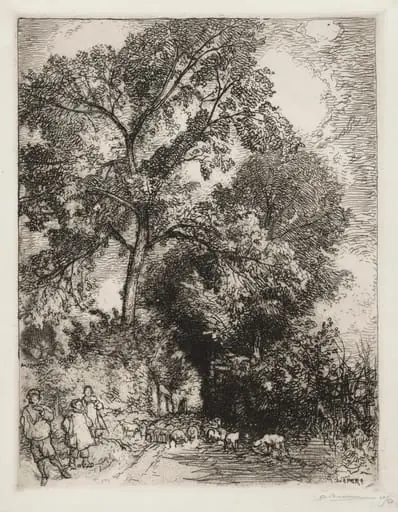 Le Retour du Troupeau, Crèvecoeur
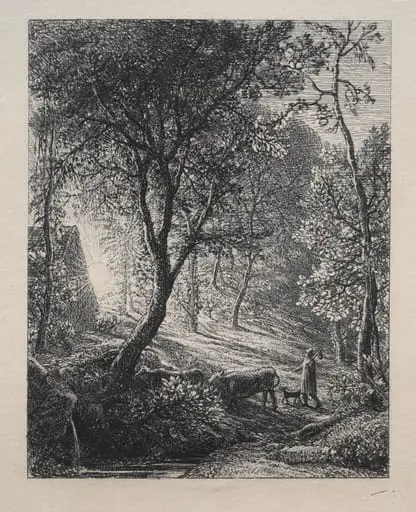 The Herdsman's Cottage
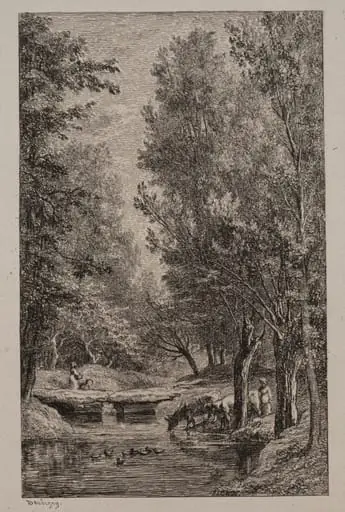 Brook in the Val Mondois
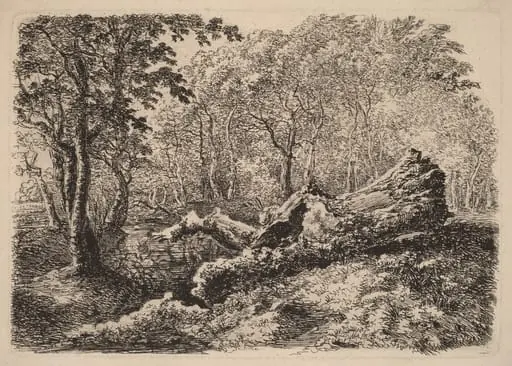 Mouldering Tree Trunk
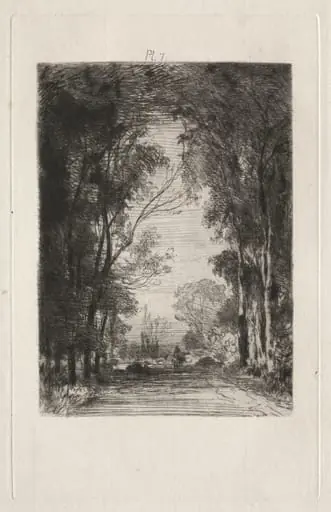 Traveler on a Road in a Forest
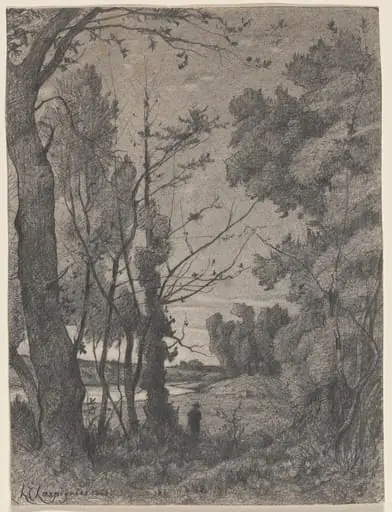 Wooded Landscape beside a River
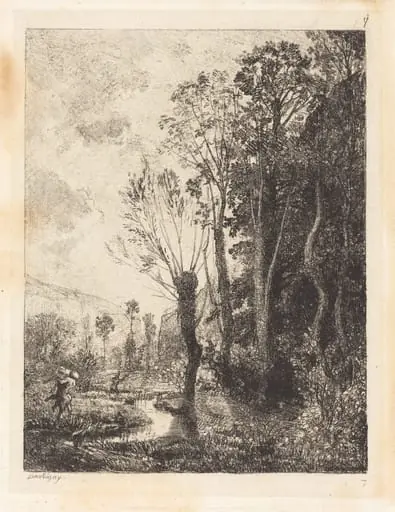 Satyr (Le Satyre)
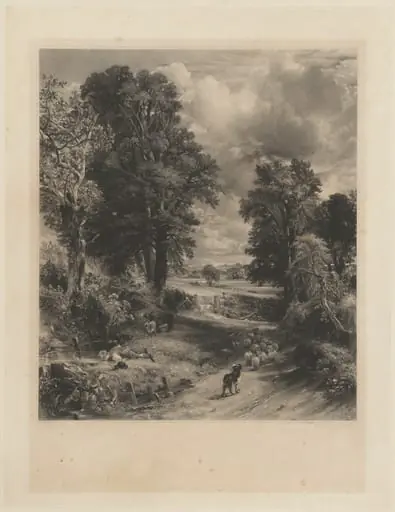 The Cornfield
 Road Scene, Hethersett
 Shepherd and Shepherdess (Le Berger et la bergere)