Artwork
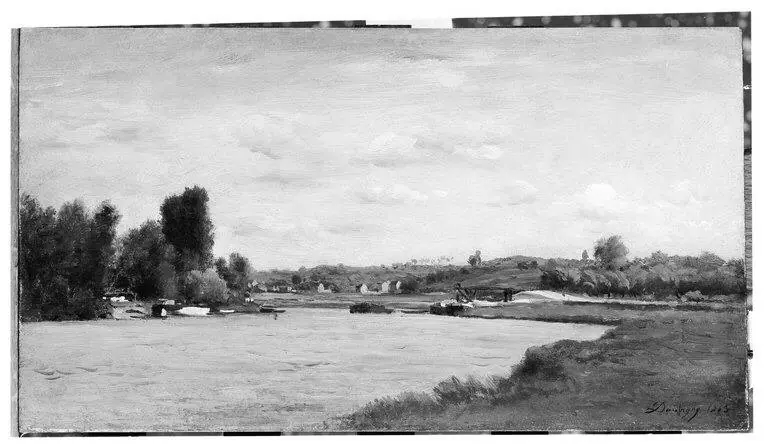
On the Bank of the Seine at Portejoie
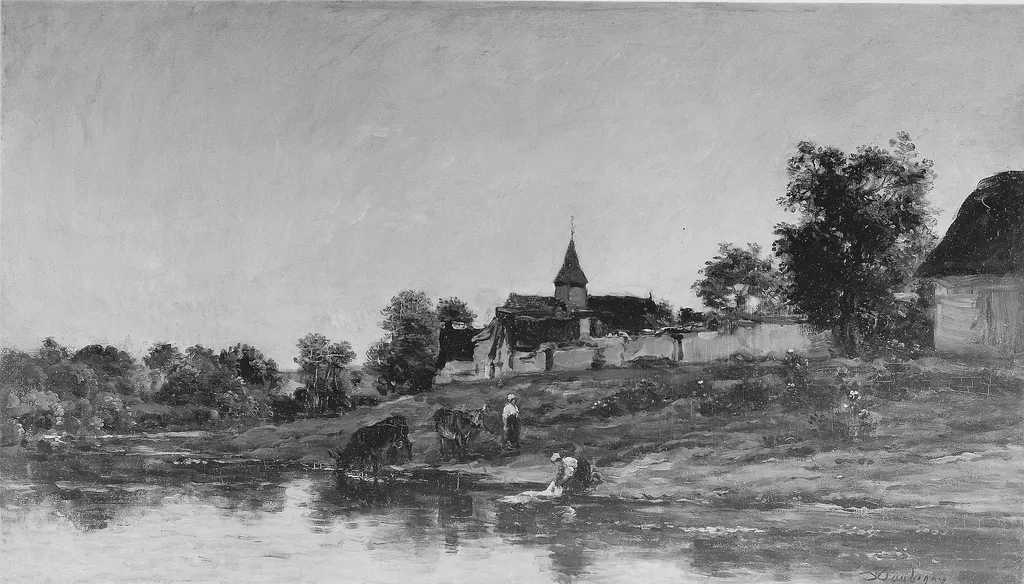
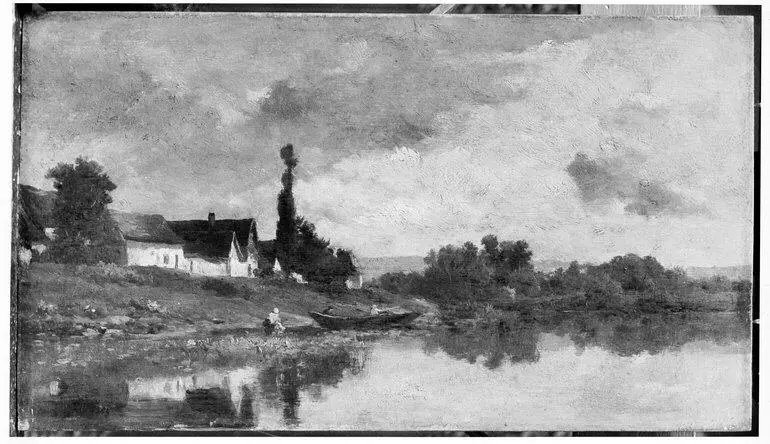
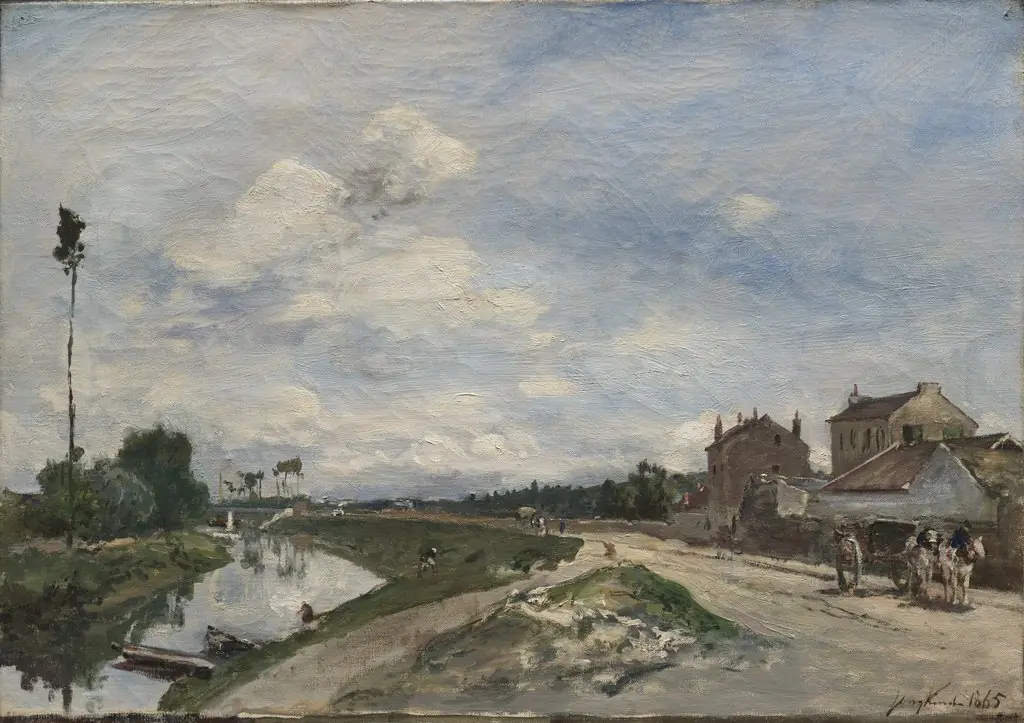
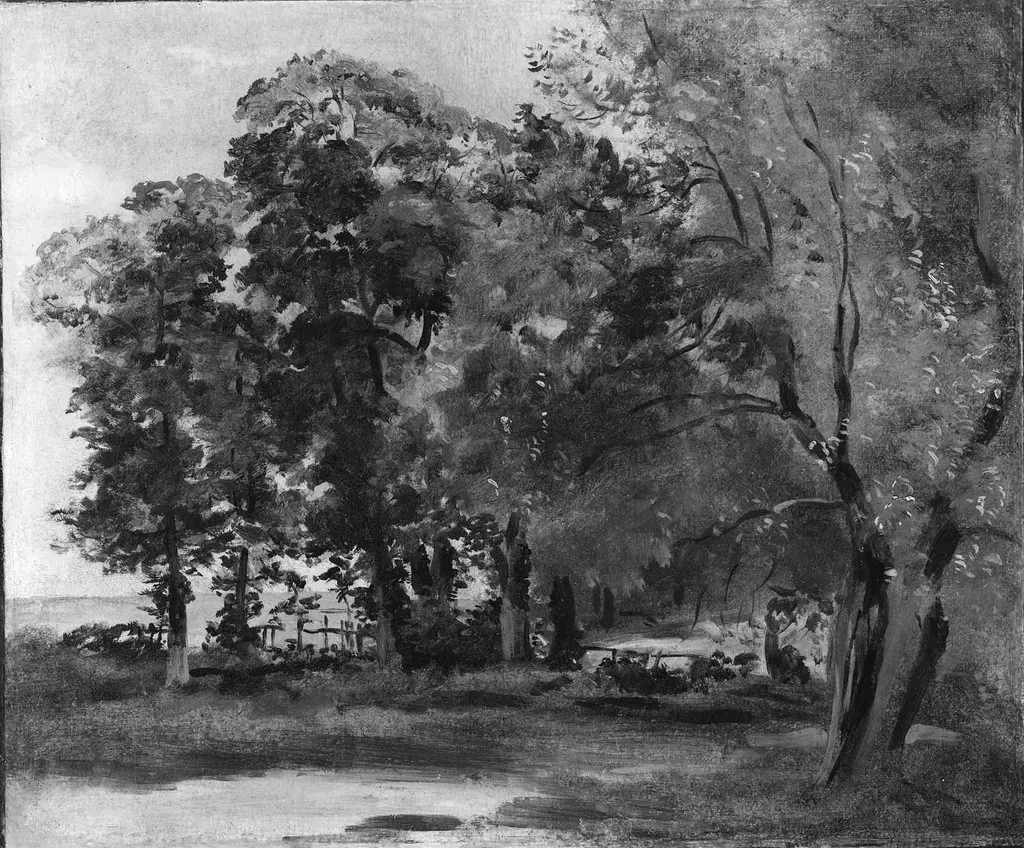
On the Bank of the Seine at Portejoie is an unspecified painting by the Barbizon school artist Charles François Daubigny. It dates from 1865 and is held in the collection of the Art Institute of Chicago. Created in 1865, this oil painting by Charles‑François Daubigny portrays a tranquil stretch of the Seine near the hamlet of Portejoie.
About this work
Overview
Created in 1865, this oil painting by Charles‑François Daubigny portrays a tranquil stretch of the Seine near the hamlet of Portejoie. The composition balances a calm river foreground with a modest village set back in the distance, under a muted, overcast sky. The scene conveys a quiet, pastoral atmosphere, characteristic of mid‑nineteenth‑century French landscape painting.
Subject & Meaning
The work focuses on a peaceful riverside setting: trees line the bank, a small boat is tied to the shore, and modest dwellings rise faintly beyond. By emphasizing everyday rural life and the gentle flow of water, Daubigny invites contemplation of nature’s quiet rhythms, reflecting the Barbizon school’s interest in unidealized, lived‑in environments.
Technique & Style
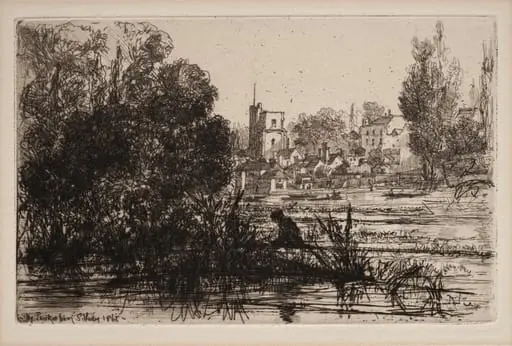
Daubigny employed a loose, naturalistic brushwork that captures the soft light and atmospheric haze of the sky. His palette of muted greens, browns, and grays renders the landscape with a realistic yet lyrical quality. Although primarily a painter, Daubigny also explored printmaking methods such as etching and cliché verre, underscoring his experimental approach to depicting nature.
History & Provenance
Since its completion, the painting has entered the collection of the Art Institute of Chicago, where it remains on view. Its acquisition reflects the museum’s broader commitment to representing the Barbizon movement and the evolution of French landscape painting in the nineteenth century.
Artist & collection
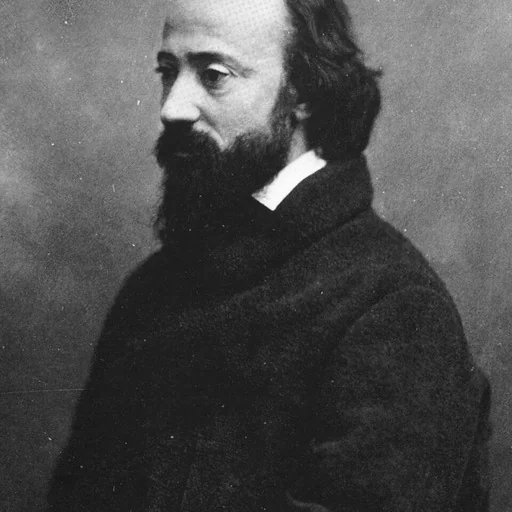
Artist
Charles-François Daubigny ( DOH-bin-yee, US: DOH-been-YEE, doh-BEEN-yee, French: ; 15 February 1817 – 19 February 1878) was a French painter, one of the members of the Barbizon school, and is considered an important precursor of…