Artwork
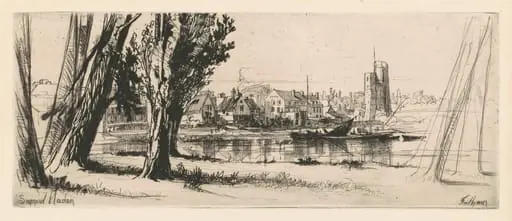
Twickenham Church
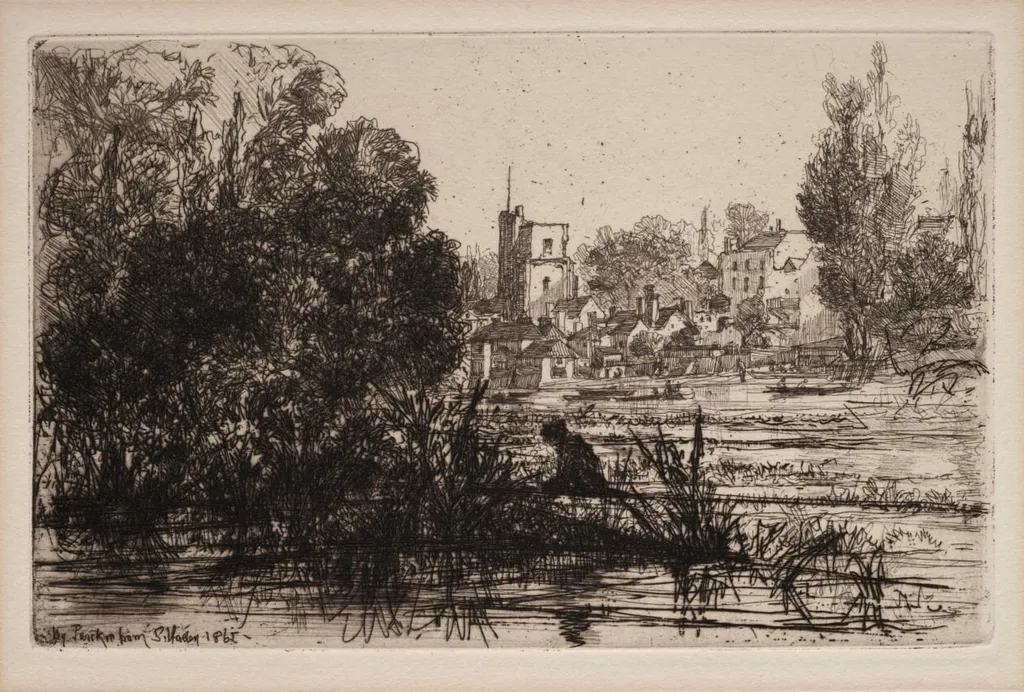
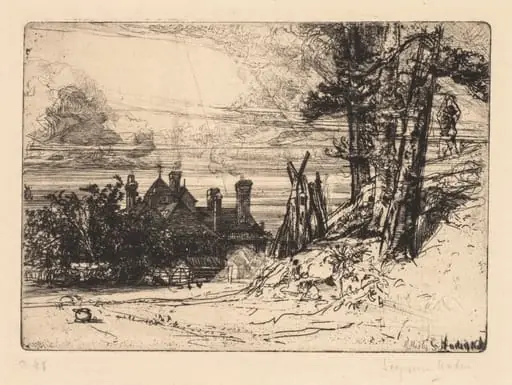
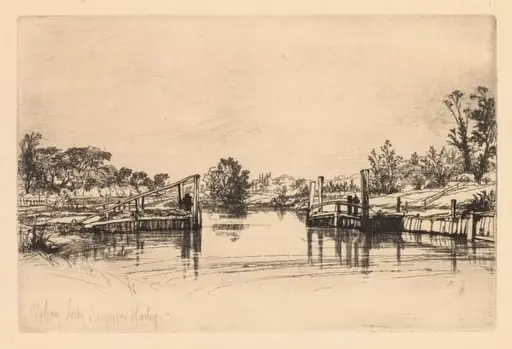
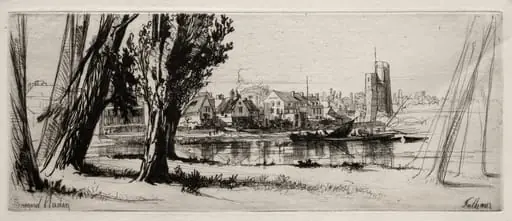
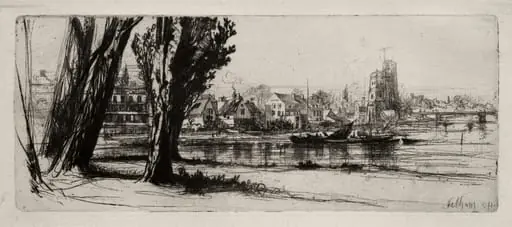
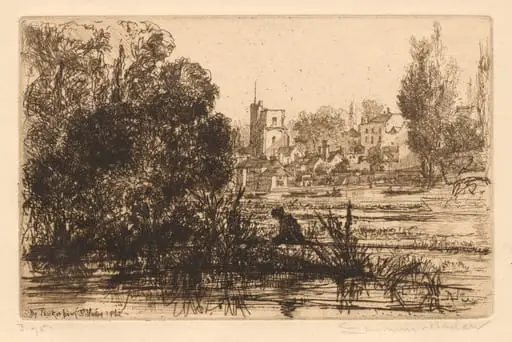
Twickenham Church is a print by the Impressionist artist Francis Seymour Haden. It dates from 1865 and is held in the collection of the Cleveland Museum of Art.
About this work
Overview
The composition emphasizes atmosphere over narrative, reflecting Haden’s interest in landscape as a subject for intimate, tonal exploration.
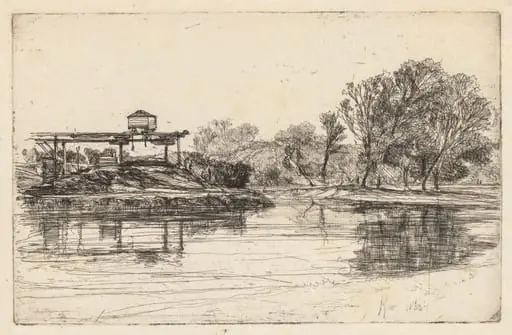
Francis Seymour Haden produced Twickenham Church in 1865 as a print, not a painting, using etching and drypoint techniques. The work is part of the collection at The Cleveland Museum of Art. It captures a quiet rural scene near London, focusing on the architectural presence of a church amid natural surroundings. The composition emphasizes atmosphere over narrative, reflecting Haden’s interest in landscape as a subject for intimate, tonal exploration.
Subject & Meaning
The scene depicts Twickenham Church, a real parish church in southwest London, framed by mature trees and a reflective stretch of water. The church, modest and unadorned, stands slightly off-center, suggesting humility rather than grandeur. The surrounding foliage and still water imply solitude and contemplation. Haden’s choice of subject reflects a 19th-century English fascination with quiet, local landmarks as vessels of memory and place.
Technique & Style
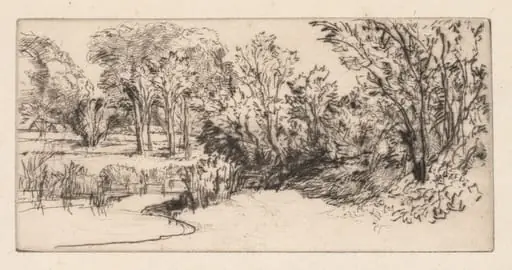
Haden employed etching and drypoint to achieve subtle gradations of tone, using fine lines and textured marks to render light filtering through leaves and glinting on water. The contrast between dense shadows and delicate highlights creates depth without relying on color. His approach prioritizes atmospheric effect over sharp detail, aligning with the tonal traditions of British printmaking rather than the brushwork of French Impressionism.
History & Provenance
Created in 1865, the print was made during Haden’s active period as a printmaker, following his career as a surgeon. He was instrumental in elevating etching as a fine art medium in Britain. The work entered The Cleveland Museum of Art’s collection through established acquisition channels in the 20th century, valued for its technical refinement and its place in the revival of original printmaking.
Context
In mid-19th-century Britain, landscape prints gained renewed interest among artists seeking alternatives to academic painting. Haden, part of the Etching Revival, emphasized personal expression through direct handwork. Twickenham Church reflects this movement’s focus on everyday scenery, quiet light, and the emotional resonance of ordinary places, distinct from the grand historical or mythological themes favored earlier.
Legacy
Haden’s work influenced later generations of British printmakers by demonstrating how subtle tonal variation could convey mood without color or dramatic composition. Twickenham Church remains a representative example of his quiet, introspective style. Though not widely known outside specialist circles, it is studied for its contribution to the legitimacy of etching as a serious artistic medium in the Victorian era.
Artist & collection