Artwork
Outskirts of Villerville
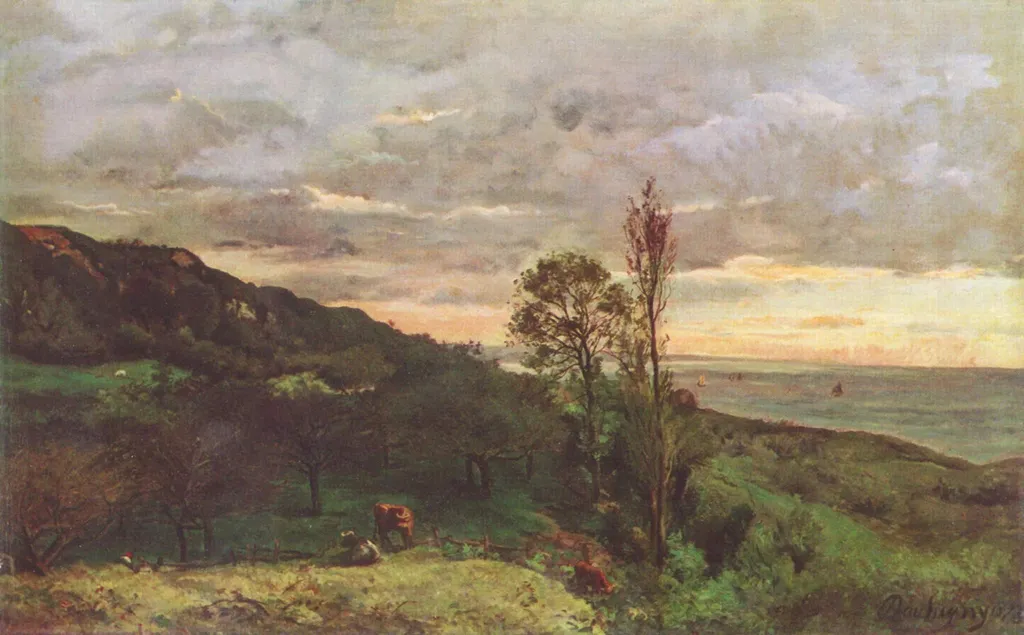
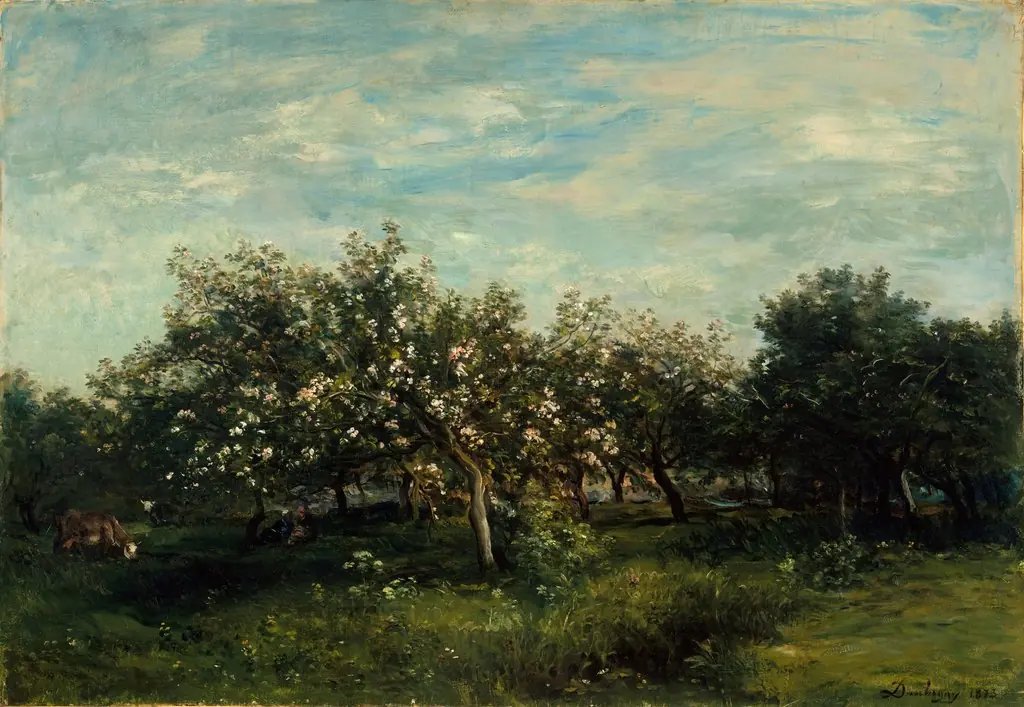
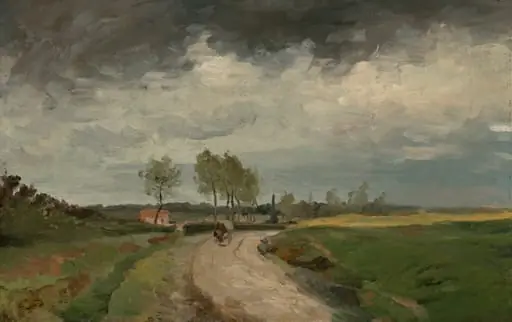
Outskirts of Villerville is an oil painting by the Impressionist artist Charles François Daubigny. It dates from 1873 and is held in the collection of the Hungarian National Gallery.
About this work
Overview
A key figure in the Barbizon tradition, he focused on unidealized rural environments, often working directly outdoors.
Charles-François Daubigny painted *Outskirts of Villerville* in 1873 using oil on canvas. A key figure in the Barbizon tradition, he focused on unidealized rural environments, often working directly outdoors. This piece exemplifies his commitment to capturing transient natural conditions, bridging the observational rigor of earlier landscape painting with the light-sensitive approaches later adopted by the Impressionists.
Subject & Meaning
The painting depicts a quiet stretch of countryside near the Normandy coast, with gently rolling hills, sparse trees, and a distant expanse of water. There is no human presence or narrative; the emphasis lies in the quietude of the land and sky. Daubigny’s choice of subject reflects a philosophical shift toward valuing the ordinary and unembellished, inviting contemplation rather than dramatic storytelling.
Technique & Style
Daubigny employed thin layers of oil paint, using glazing to build subtle tonal transitions and atmospheric depth. His brushwork is loose yet deliberate, capturing the diffuse quality of light under overcast skies. The muted palette of greens, grays, and browns reinforces the scene’s tranquility, while careful modulation of shadow and tone gives the landscape a palpable sense of space and air.
History & Provenance
Completed in 1873, the painting entered the collection of the Hungarian National Gallery in Budapest, where it remains today. Its journey from France to Hungary reflects broader 19th-century patterns of art acquisition by European institutions seeking to document the evolution of landscape painting. No significant alterations or documented restorations are known.
Context
Daubigny worked during a period when artists increasingly rejected studio-based idealism in favor of direct observation. His frequent travels along French rivers and coasts, including Villerville on the Normandy coast, allowed him to study shifting weather and light. These excursions influenced not only his own style but also younger painters like Monet, who admired his open-air method and tonal sensitivity.
Legacy
Though less celebrated than his Impressionist successors, Daubigny’s emphasis on plein-air practice and atmospheric realism laid essential groundwork for the movement. *Outskirts of Villerville* exemplifies his quiet, persistent exploration of nature’s subtleties — a model for artists who sought truth in everyday landscapes rather than grand historical or mythological themes.
Own this work as a print
Artist & collection
Artist
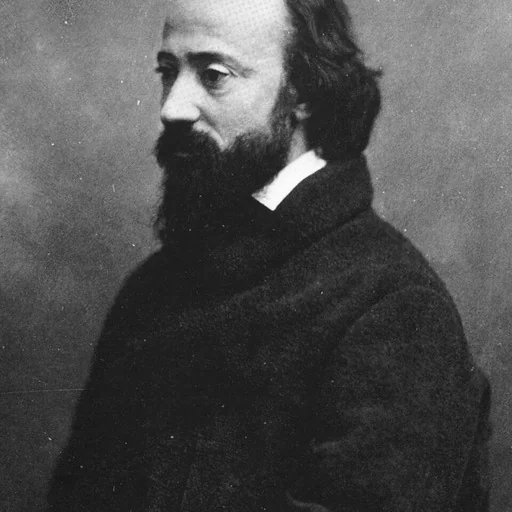
Charles-François Daubigny ( DOH-bin-yee, US: DOH-been-YEE, doh-BEEN-yee, French: ; 15 February 1817 – 19 February 1878) was a French painter, one of the members of the Barbizon school, and is considered an important precursor of…

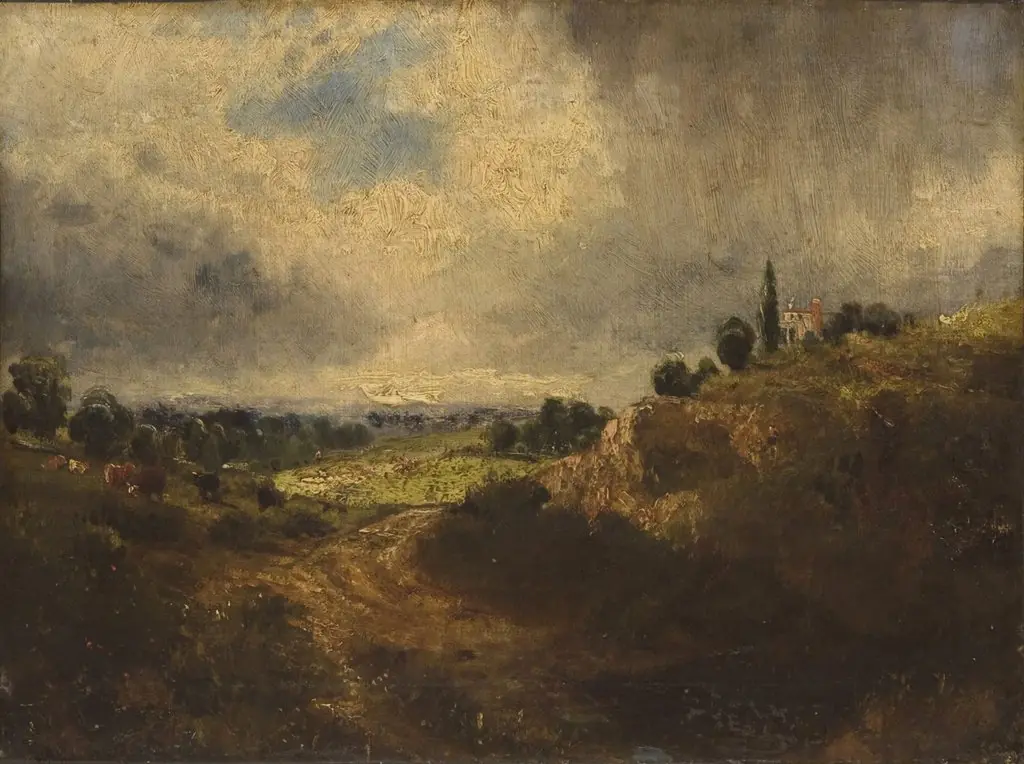 Branch Hill Pond, Hampstead Heath
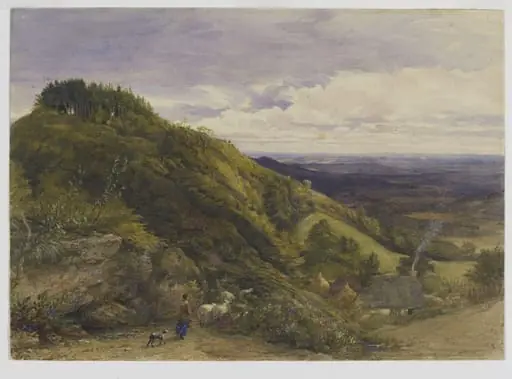 Landscape with a woman driving sheep
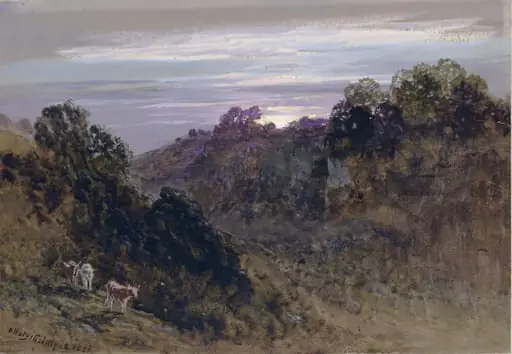 Hilly Landscape - Sunset
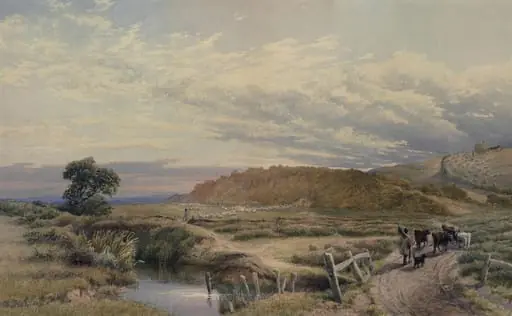 On the Hill at St. Leonards
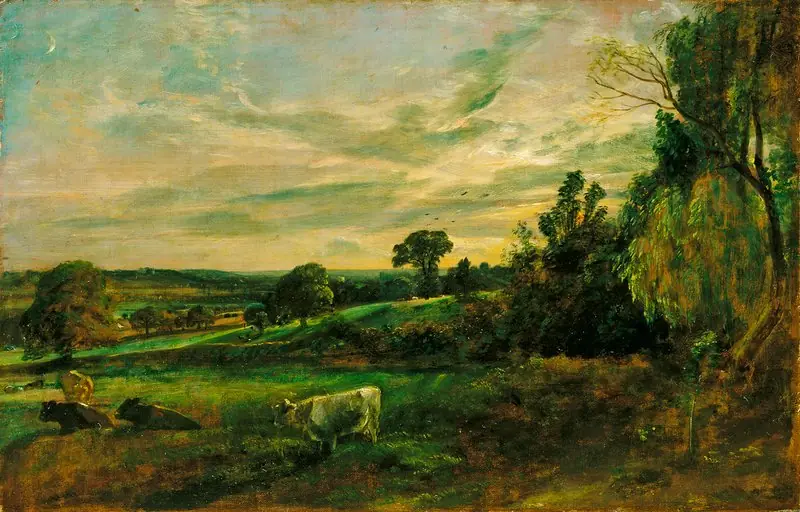 Summer Evening: View near East Bergholt Showing Langham Church, Stratford Church and Stoke-by-Nayland Church
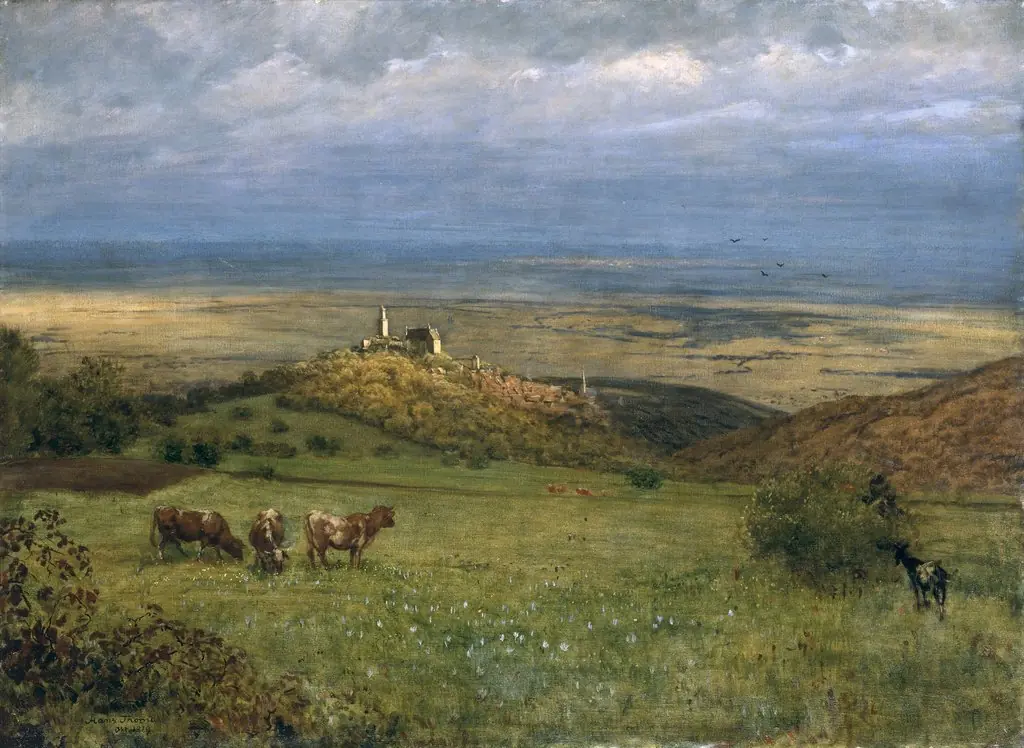 View of Kronberg in the Taunus
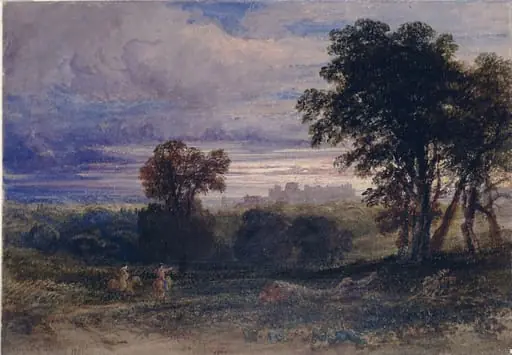 Windsor Park with the castle in the distance
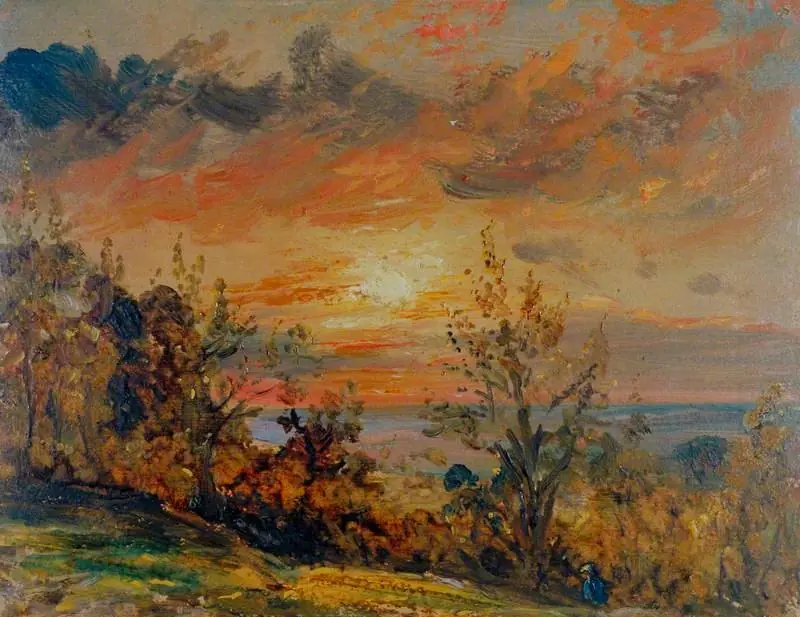 Sketch at Hampstead, Evening
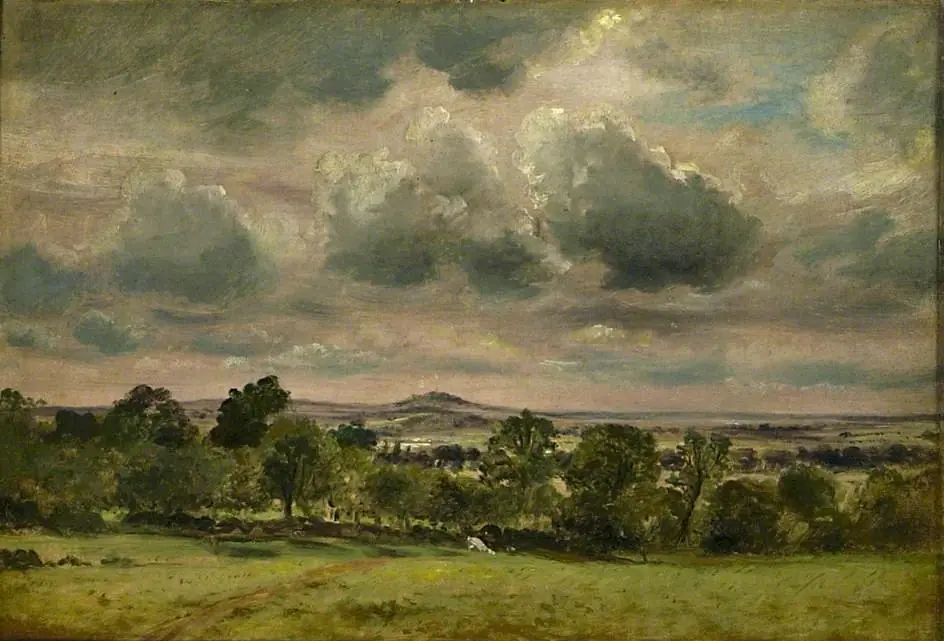 View of Hampstead looking towards Harrow
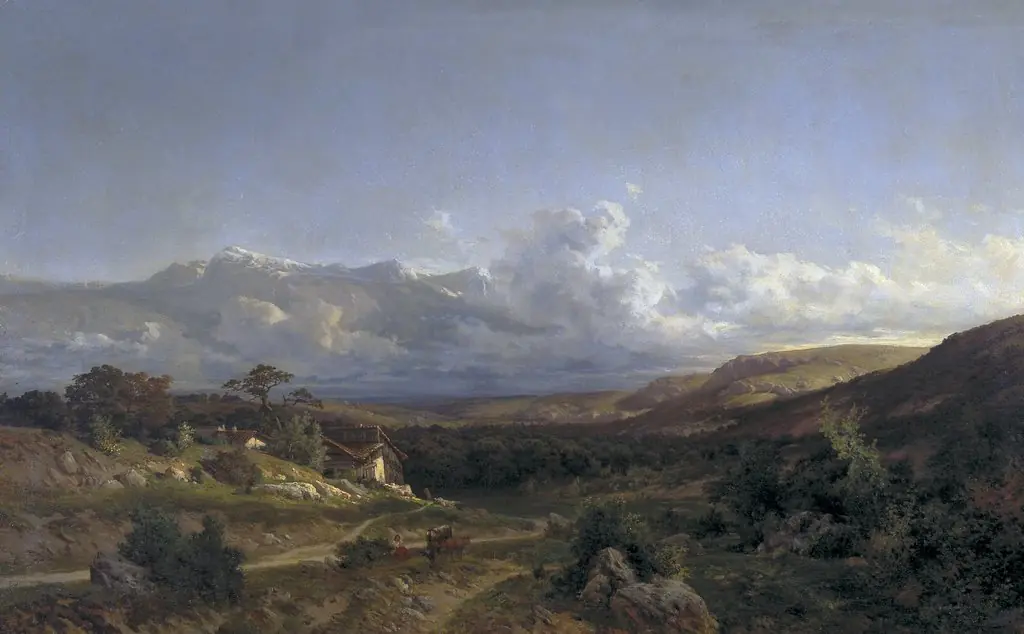 Landscape in the Dauphinoise