Artwork
Landscape with a woman driving sheep
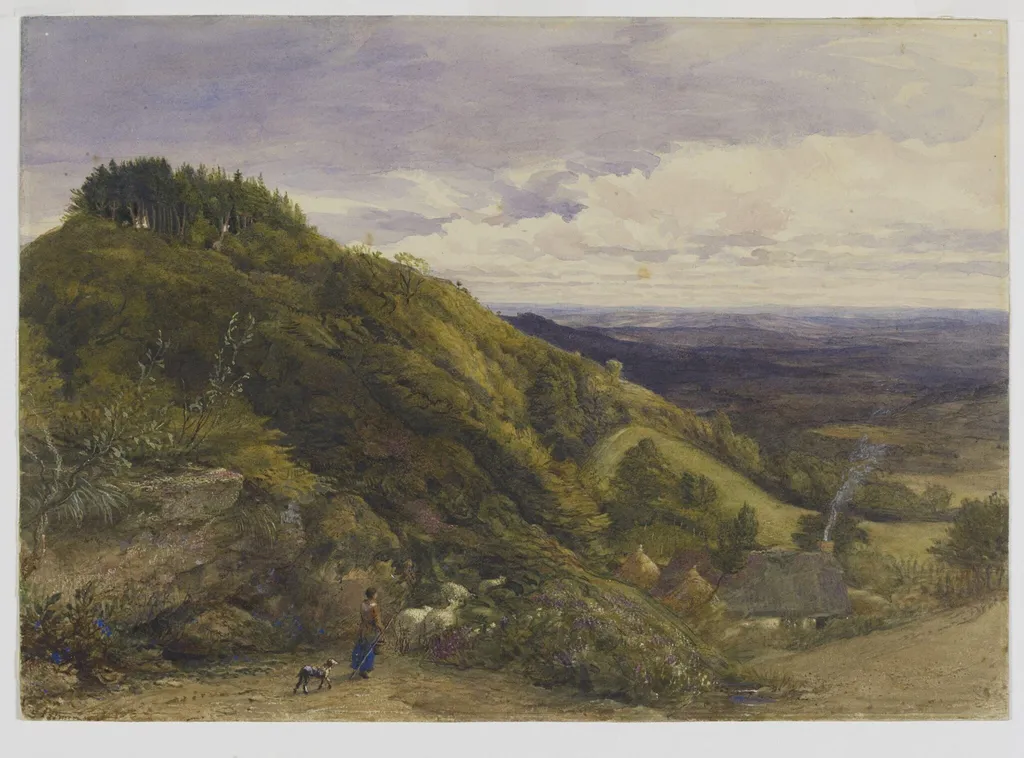
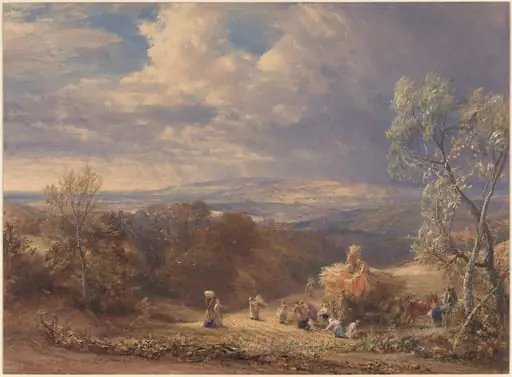
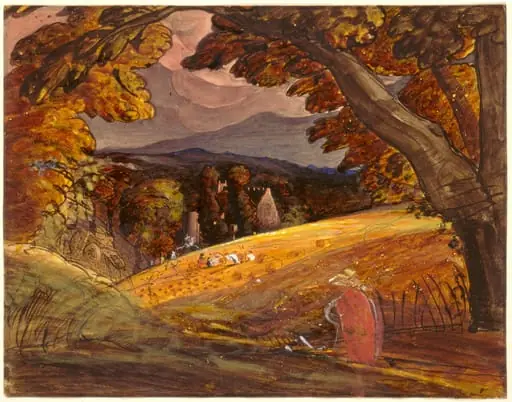
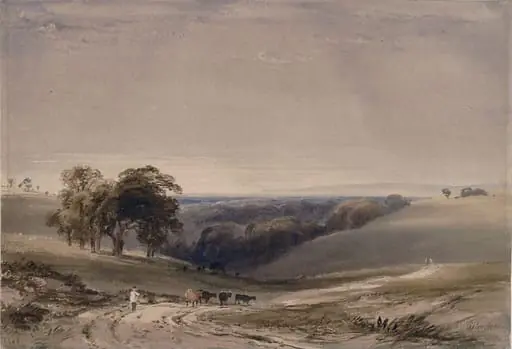
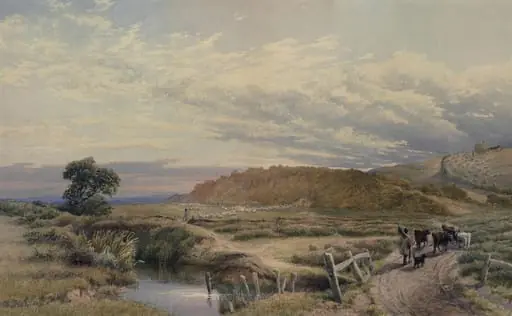
Landscape with a woman driving sheep is a watercolor work on paper by Samuel Palmer. It dates from 1850 and is held in the collection of the Victoria and Albert Museum.
About this work
Overview
This 1850 watercolour by Samuel Palmer presents a quiet rural scene in which a woman leads a small flock of sheep along a winding path.
This 1850 watercolour by Samuel Palmer presents a quiet rural scene in which a woman leads a small flock of sheep along a winding path. Executed in loose, fluid brushwork, the piece captures the natural irregularity of the landscape without idealized precision. The palette favors muted earth tones, enhanced by subtle highlights of blue wildflowers and soft sky light, reflecting Palmer’s interest in the quiet rhythms of country life.
Subject & Meaning
The figure of the woman guiding sheep suggests themes of labor, continuity, and harmony with nature. Her presence is unassuming, integrated into the terrain rather than dominating it. The absence of human structures or dramatic events emphasizes a meditative, almost timeless quality. The scene evokes a sense of daily rural existence, where human activity exists as a gentle thread within the broader fabric of the land.
Technique & Style
Palmer employed watercolour with a spontaneous, expressive hand, using diluted washes and uneven strokes to convey texture and movement. The hills are rendered with dense, layered greens, while the path and foliage lack rigid contours, embracing organic forms. Light is suggested through subtle gradations rather than sharp contrasts, enhancing the atmospheric mood. The technique mirrors the untamed character of the landscape itself.
History & Provenance
Created in 1850, this work belongs to Palmer’s later period, following his association with the Shoreham Ancients and his retreat from mystical symbolism toward more grounded observations of nature. It was likely painted in Kent, where he lived and worked after leaving London. The piece remained in private collections until entering public institutional holdings, though its exact early provenance is not fully documented.
Context
In mid-19th century Britain, industrialization reshaped the countryside, prompting artists to seek solace in pastoral imagery. Palmer’s work stood apart from both academic traditions and emerging realism, favoring intimate, emotionally resonant views of rural life. This watercolour reflects a broader cultural nostalgia for agrarian rhythms, even as they faded from daily experience.
Legacy
Though not widely exhibited in his lifetime, Palmer’s later watercolours gained recognition in the 20th century for their poetic sensitivity to landscape. This piece exemplifies his ability to transform ordinary scenes into quiet, enduring visions. His approach influenced later British watercolourists who valued emotional authenticity over technical polish, securing his place in the evolution of landscape art.
Own this work as a print
Artist & collection
Artist
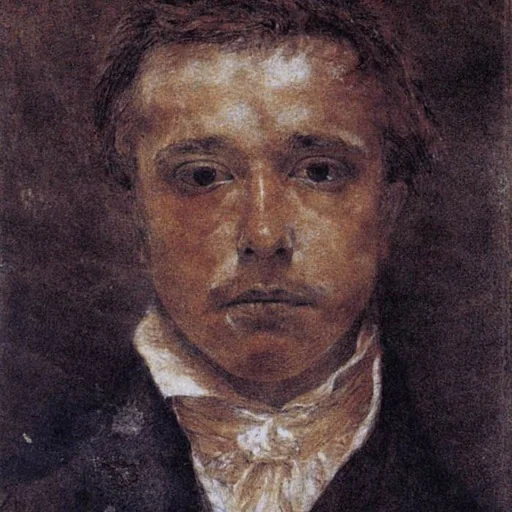
Samuel Palmer Hon.RE (Hon. Fellow of the Society of Painter-Etchers) (27 January 1805 – 24 May 1881) was a British landscape painter, etcher and printmaker. He was also a prolific writer. Palmer was a key figure in…