Artwork
The Confluence of the Rivers Seine and Oise
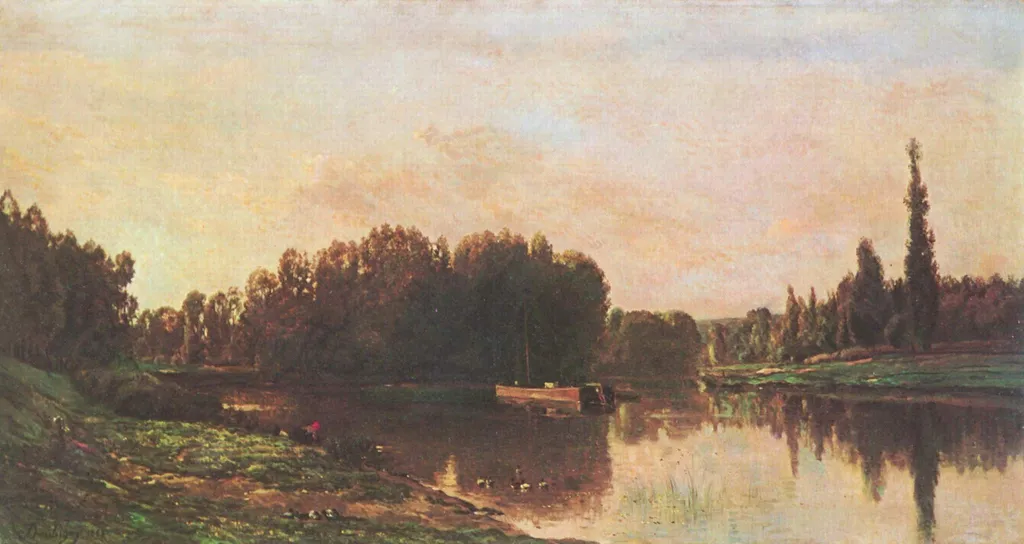
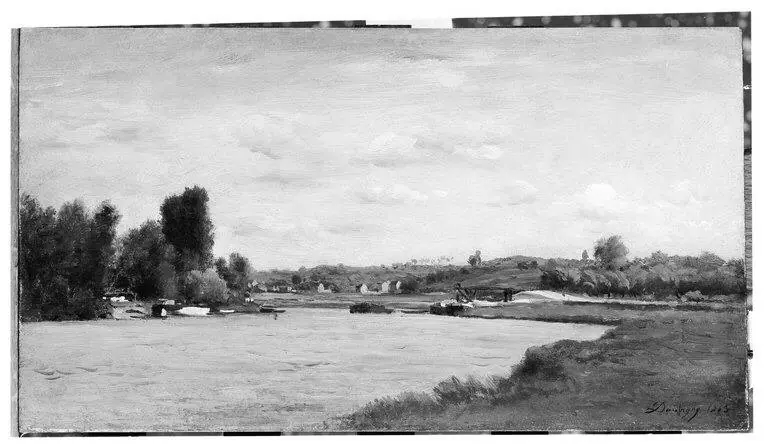
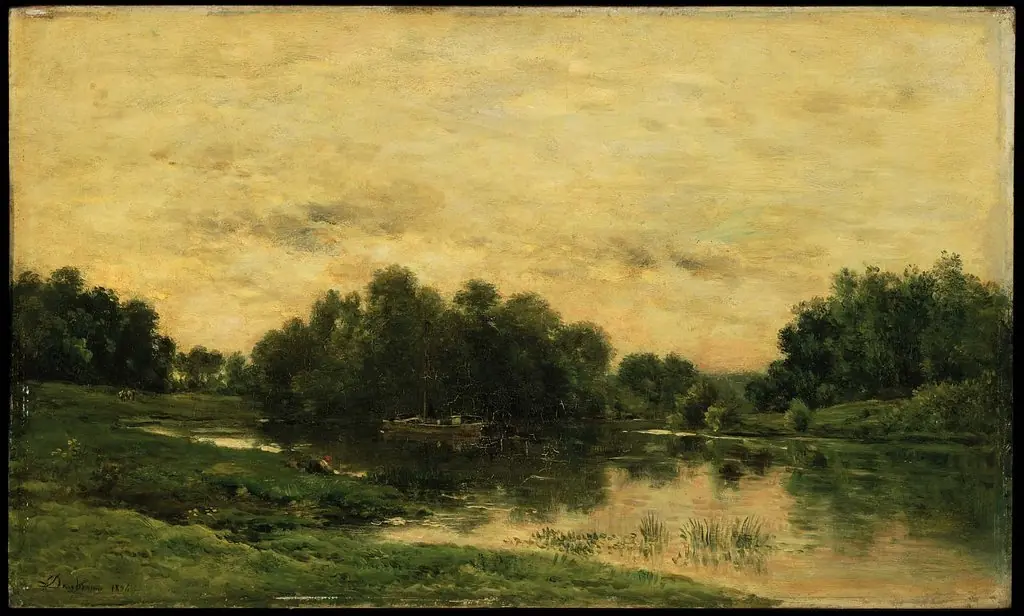
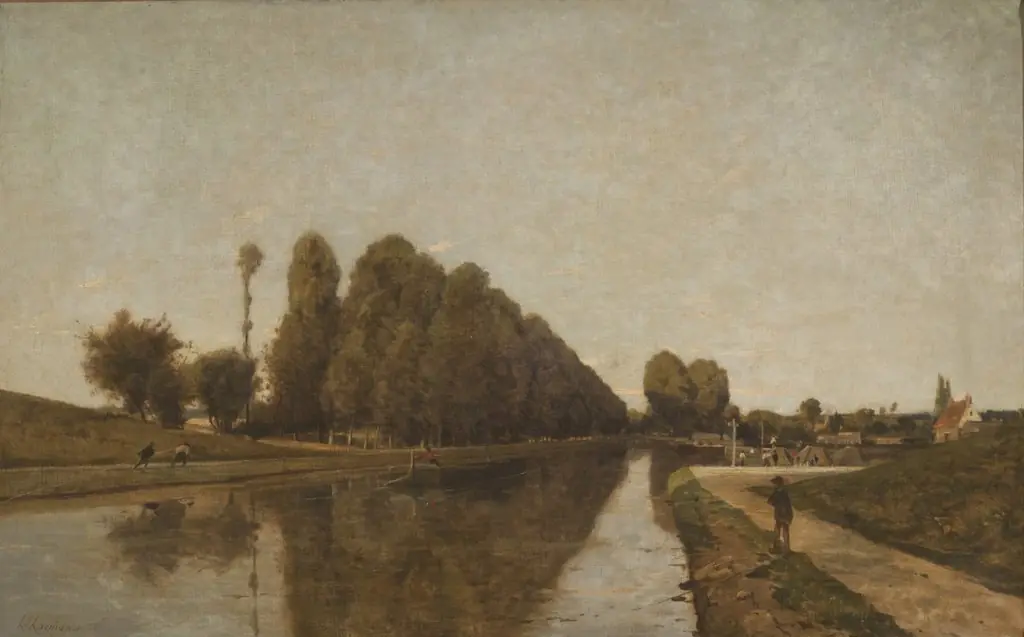
The Confluence of the Rivers Seine and Oise is an oil painting by the Barbizon school artist Charles François Daubigny. It dates from 1868 and is held in the collection of the Hungarian National Gallery. Created in 1868, this oil painting portrays the meeting point of two French waterways, the Seine and the Oise.
About this work
Overview
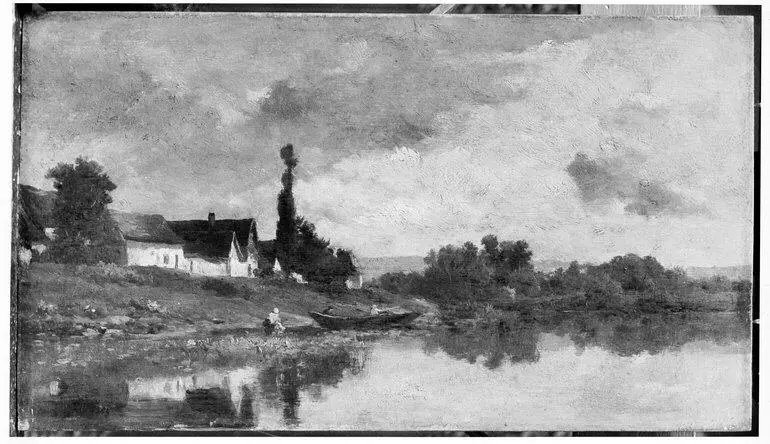
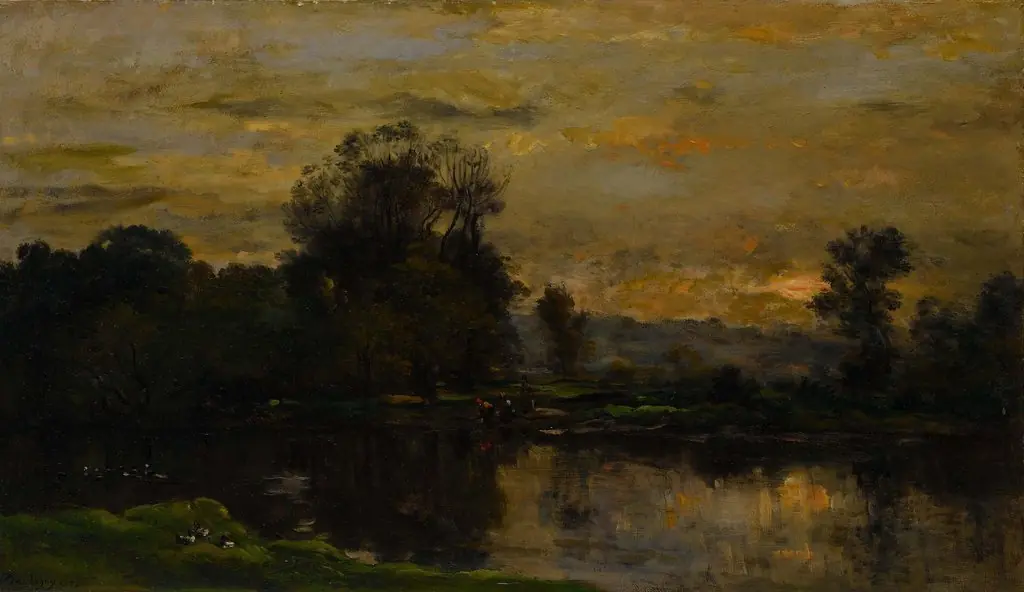
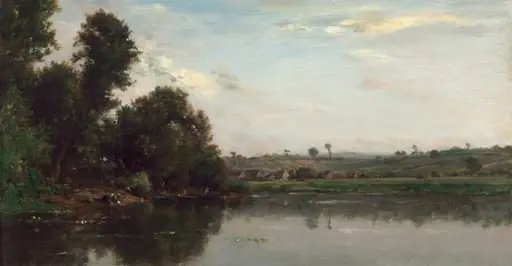
Created in 1868, this oil painting portrays the meeting point of two French waterways, the Seine and the Oise. The canvas captures a broad, tranquil river surface that mirrors surrounding foliage and a softly lit sky. A modest boat drifts near a grassy bank, while distant trees and a hazy horizon lend the scene a calm, expansive feel.
Subject & Meaning
The work focuses on the natural convergence of water and land, emphasizing the quiet interaction between river and atmosphere. By placing a solitary vessel against the gentle flow, the artist suggests a contemplative relationship between humanity and the landscape, inviting viewers to consider the serenity of rural waterways away from urban bustle.
Technique & Style
Executed with smooth, delicate brushwork, the palette leans toward muted greens, browns, and pale blues. Subtle chiaroscuro models the depth of the water and the foliage, while the soft handling of light creates a dreamy, atmospheric effect. The approach anticipates later Impressionist concerns with fleeting illumination yet retains a restrained, realistic foundation.
History & Provenance
The painting was produced by Charles‑François Daubigny, a leading figure of the Barbizon school whose river scenes helped pave the way for Impressionism. After changing hands among private collectors, it entered the holdings of the Hungarian National Gallery, where it remains part of the museum’s permanent collection.
Artist & collection
Artist
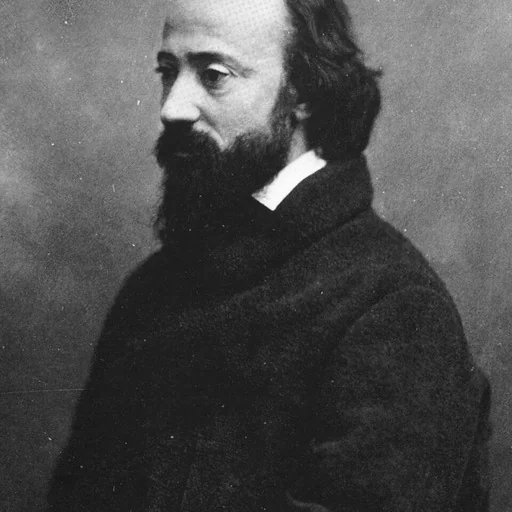
Charles-François Daubigny ( DOH-bin-yee, US: DOH-been-YEE, doh-BEEN-yee, French: ; 15 February 1817 – 19 February 1878) was a French painter, one of the members of the Barbizon school, and is considered an important precursor of…