Artwork
Woodland Scene
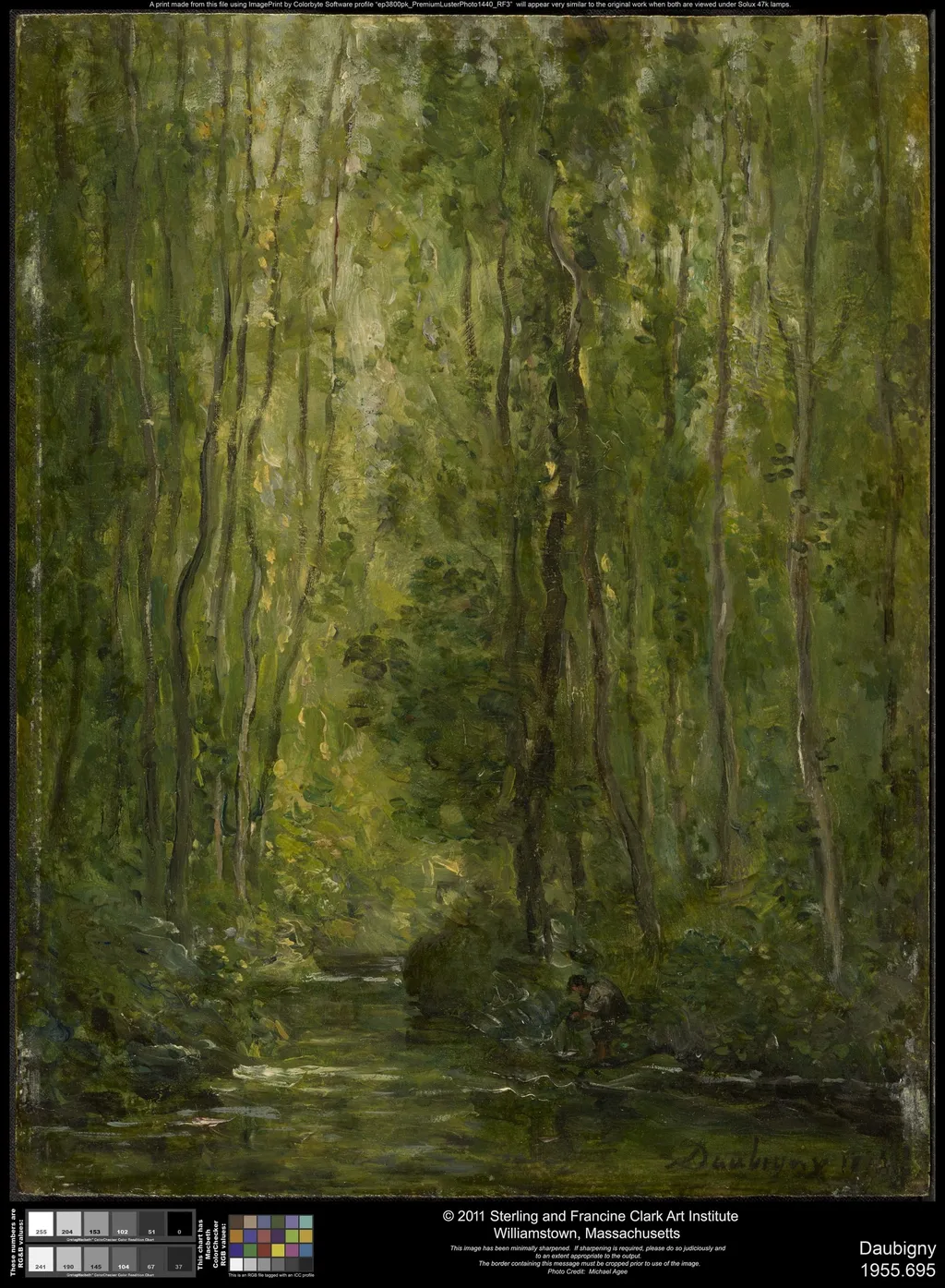
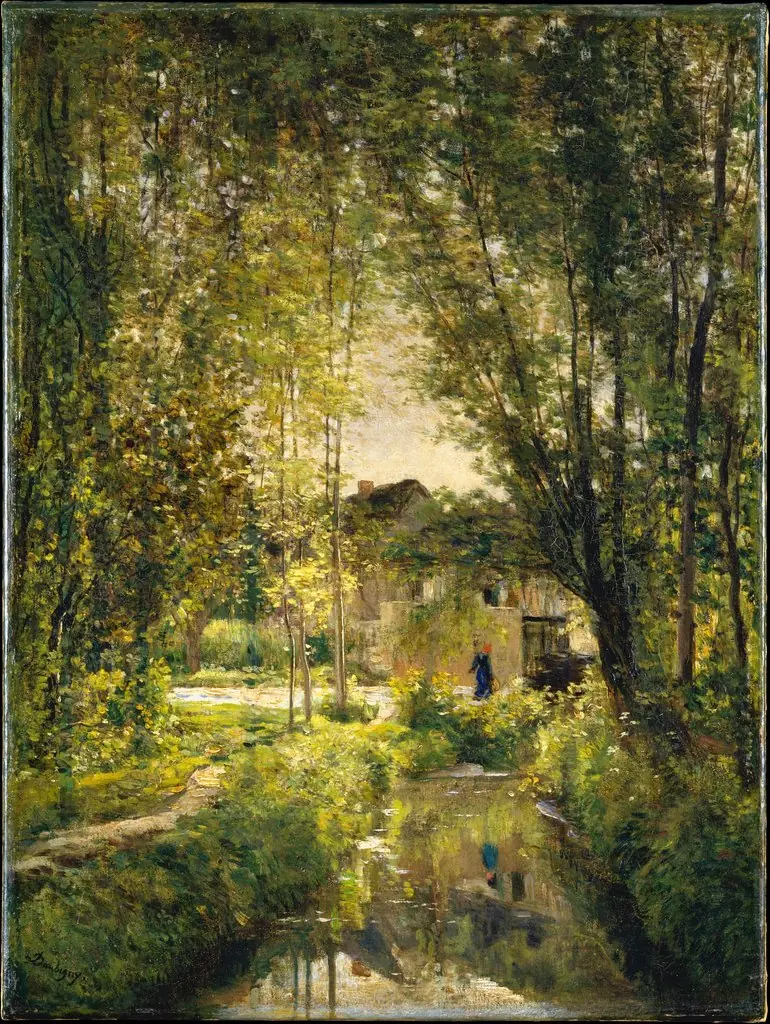
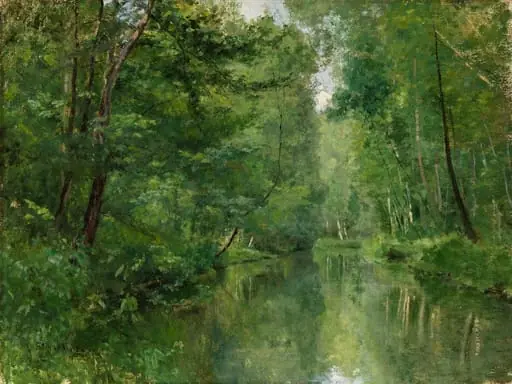
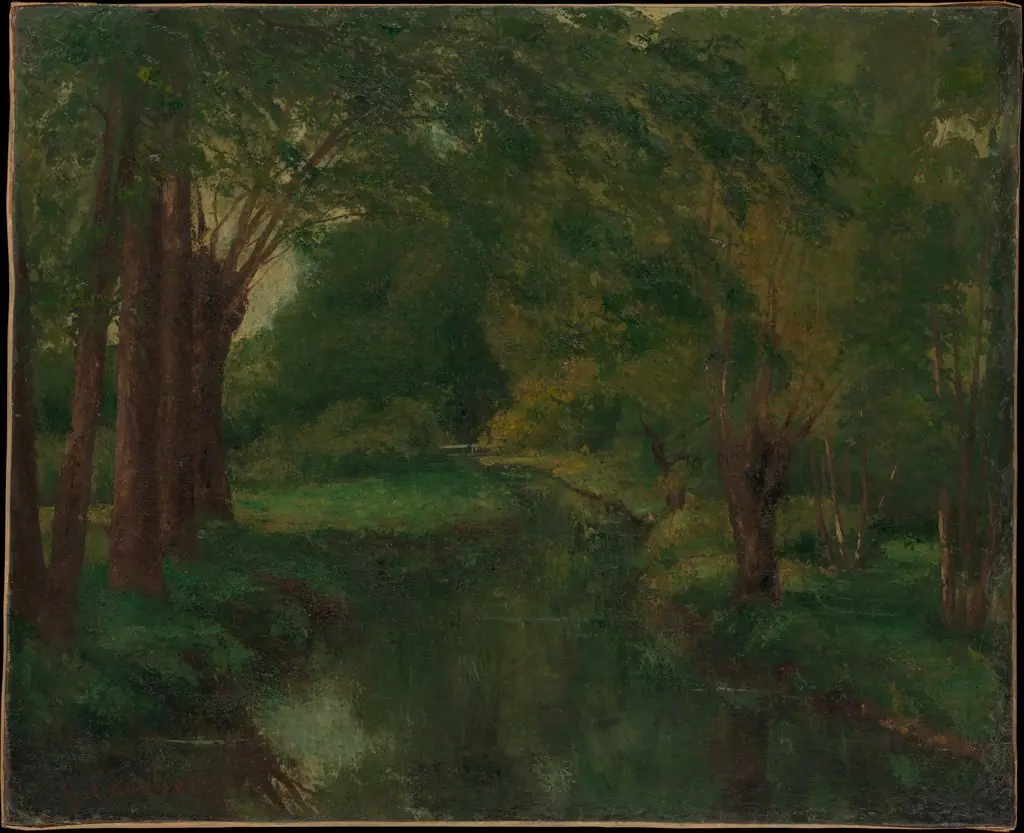
Woodland Scene is an oil painting by the Impressionist artist Charles François Daubigny. It dates from 1873 and is held in the collection of the Clark Art Institute.
About this work
Overview
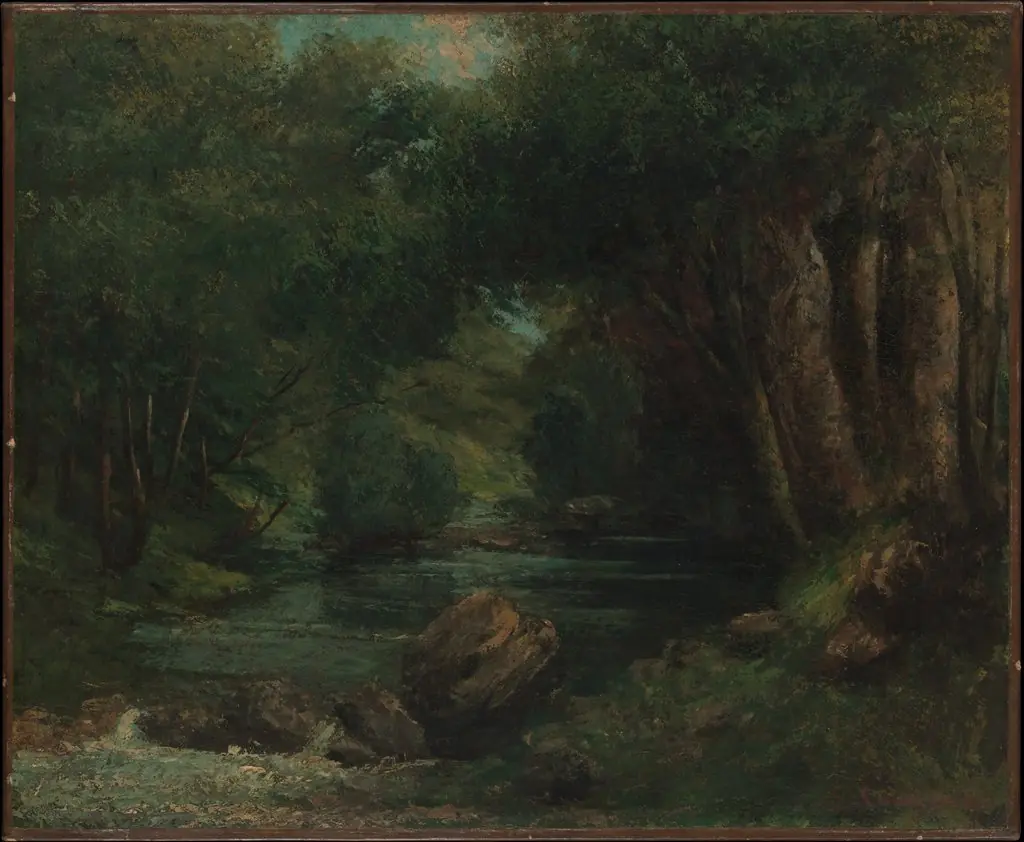
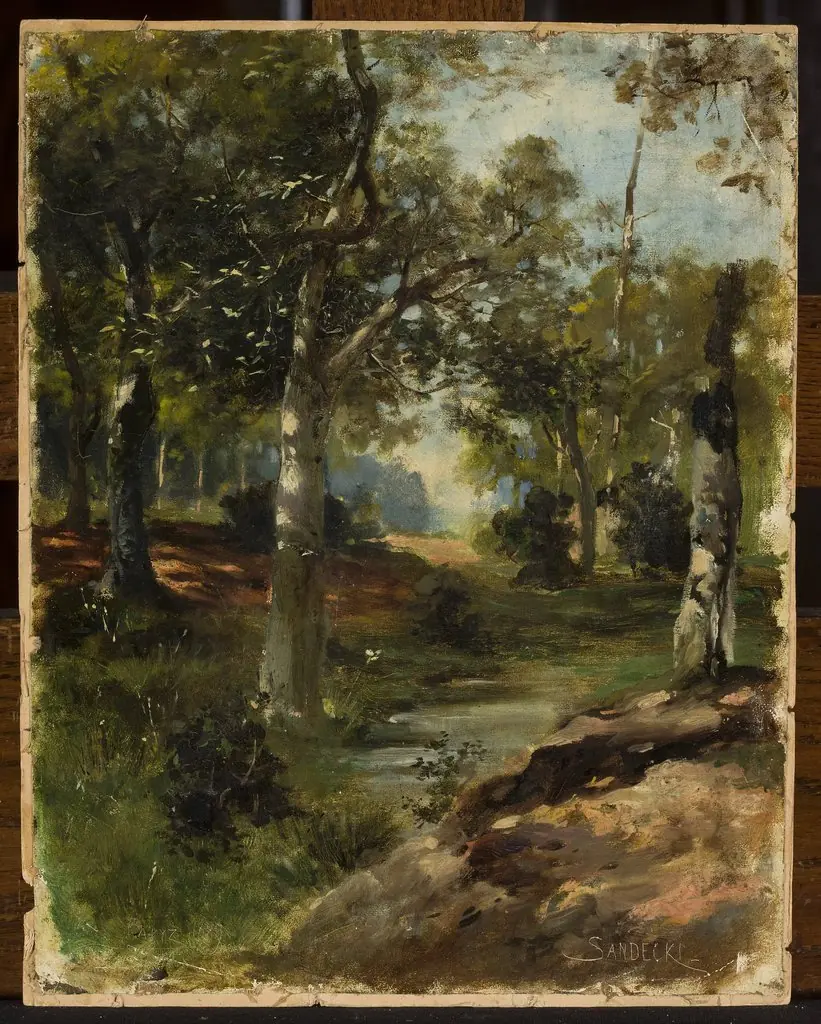
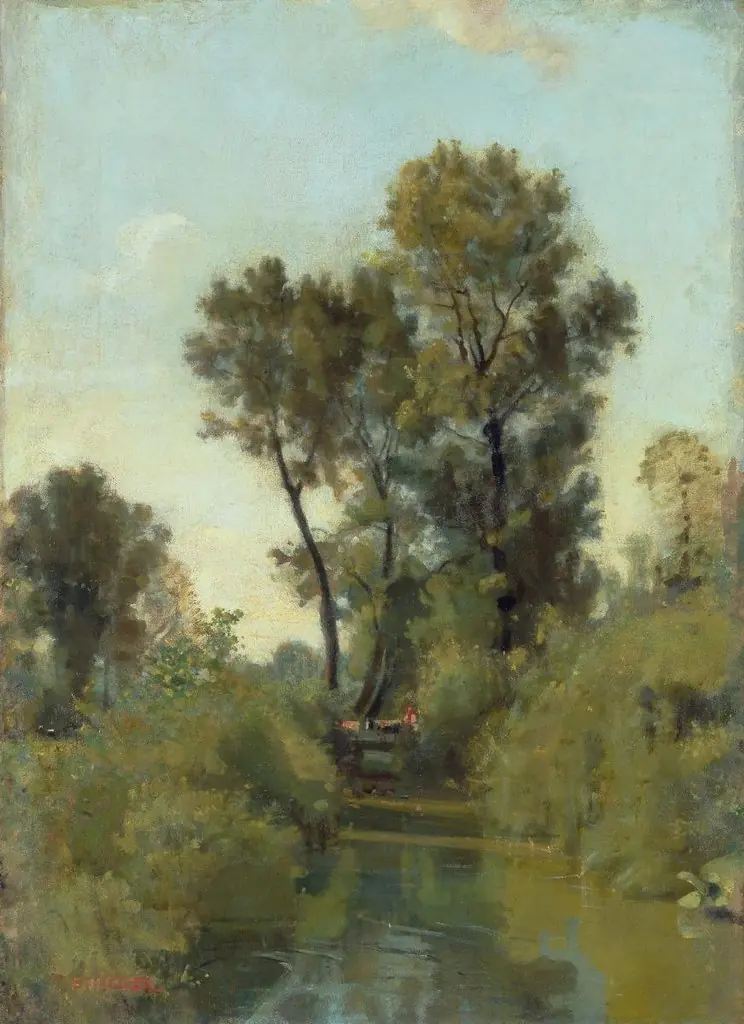
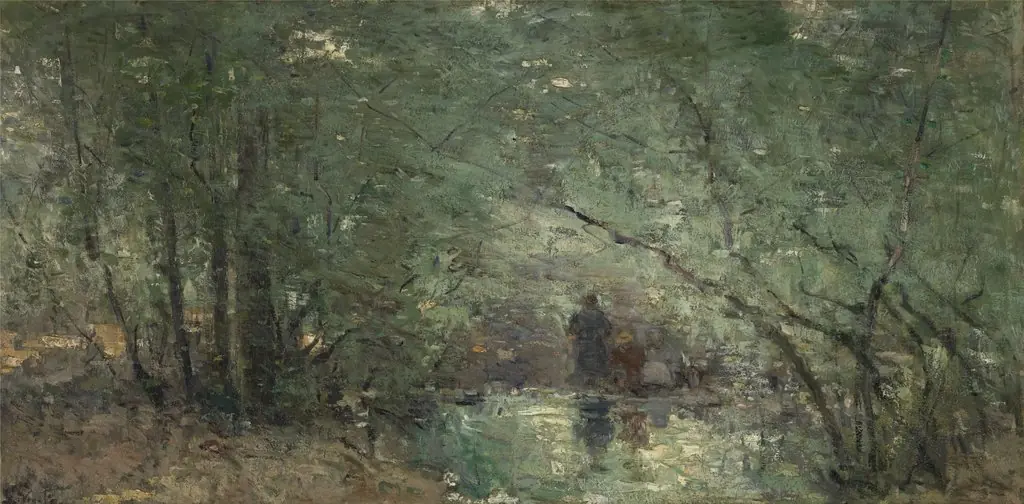
Created in 1873, *Woodland Scene* is an oil painting by French artist Charles‑François Daumier (Daubigny). The work depicts a quiet forest interior, where slender trunks rise through a canopy of foliage and a meandering stream cuts across the lower plane. Muted greens and earth tones dominate, giving the composition a calm, natural atmosphere.
Subject & Meaning
The canvas presents a densely wooded area, its trees receding into the distance, while a gentle watercourse adds subtle motion. The tranquil setting invites contemplation of the forest’s quiet rhythms, emphasizing the interplay of light and shadow that defines the scene’s serene mood.
Technique & Style
Daubigny employed oil pigments to render layered textures, allowing the foliage and water to convey depth through nuanced brushwork. His handling of light creates a soft atmospheric veil, a hallmark of the Barbizon approach to landscape, while the restrained palette reinforces the naturalistic tone of the work.
Context
As a member of the Barbizon school, Daubigny contributed to a shift toward painting directly from nature, a practice that anticipated later plein‑air methods. The emphasis on rural woodland subjects and the observation of natural illumination positioned the piece within the broader movement that would inform early Impressionist experiments.
History & Provenance
The painting remains documented as a work produced by Daubigny during his mature period, reflecting his continued focus on forested scenes. Its ownership history is recorded in museum inventories, where it is listed under the title *Woodland Scene* and identified as an oil on canvas from 1873.
Artist & collection
Artist
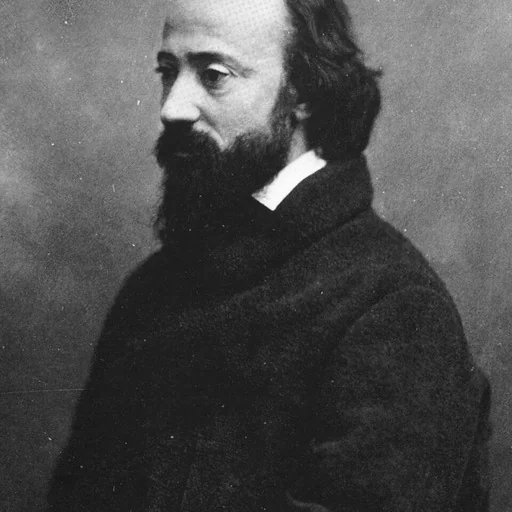
Charles-François Daubigny ( DOH-bin-yee, US: DOH-been-YEE, doh-BEEN-yee, French: ; 15 February 1817 – 19 February 1878) was a French painter, one of the members of the Barbizon school, and is considered an important precursor of…