Artwork
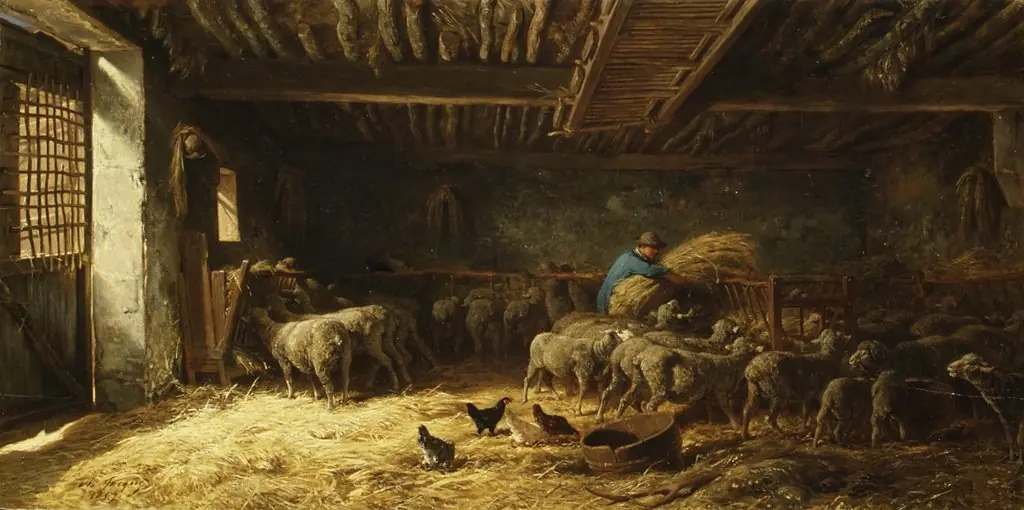
Sheep in a Barn
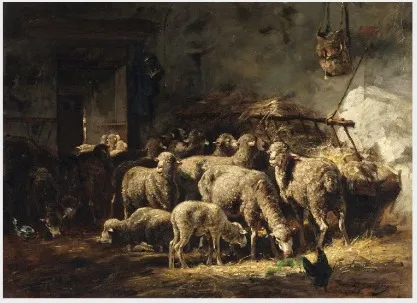
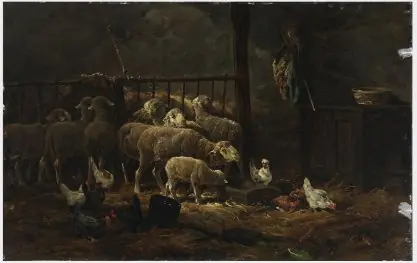
Sheep in a Barn is an oil painting by the Realist artist Charles Jacque. It dates from 1867 and is held in the collection of the National Gallery of Ireland.
About this work
Overview
Charles Jacque painted *Sheep in a Barn* in 1867 using oil on canvas, capturing a quiet interior scene of livestock in a rural French setting. A member of the Barbizon School, Jacque devoted his practice to depicting agricultural life with quiet dignity. The work reflects the group’s commitment to observing nature and labor outside urban centers, favoring sincerity over idealization.
Subject & Meaning
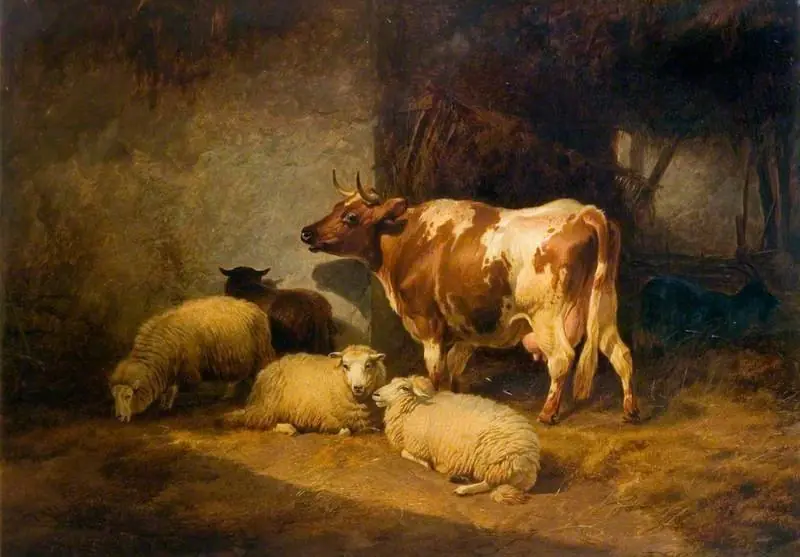
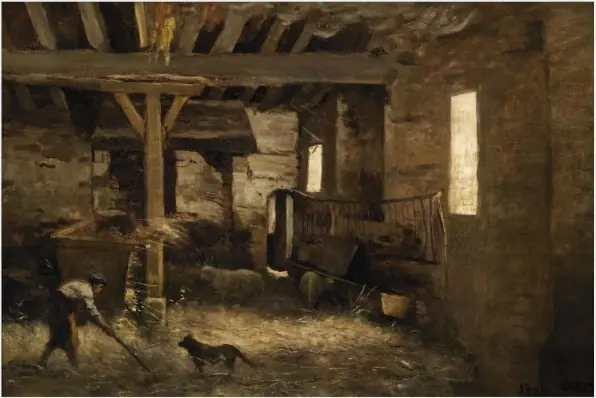
The painting centers on a group of sheep within a dimly lit barn, some standing, others resting, each turned in a different direction. No human figures appear, emphasizing the animals’ autonomy and the calm rhythm of farm life. The absence of drama or narrative suggests an appreciation for ordinary moments, aligning with the Barbizon ethos of honoring the unremarkable as worthy of attention.
Technique & Style
Jacque employs chiaroscuro to model the forms of the sheep and the wooden structure of the barn, using subtle gradations of light and shadow to suggest depth. The palette is muted, dominated by earth tones and soft grays, with a warm, diffuse glow implying an unseen source of daylight. Brushwork is restrained, favoring texture over detail to evoke the tactile presence of wool and aged timber.
History & Provenance
Created in 1867, the painting entered the collection of the National Gallery of Ireland at an unknown date, likely through acquisition or donation in the late 19th or early 20th century. Jacque’s reputation as a printmaker and painter of rural subjects ensured his works were collected by institutions interested in French Realism, though this piece remained relatively obscure compared to those of his peers.
Context
Jacque worked alongside Jean-François Millet and other Barbizon artists who rejected academic conventions in favor of direct observation of the countryside.
Jacque worked alongside Jean-François Millet and other Barbizon artists who rejected academic conventions in favor of direct observation of the countryside. In mid-19th-century France, industrialization reshaped rural life, making scenes like this both a record and a quiet elegy. *Sheep in a Barn* fits within a broader trend of artists turning to the farm as a site of authenticity and moral clarity.
Legacy
Though not among Jacque’s most widely reproduced works, *Sheep in a Barn* exemplifies the Barbizon School’s quiet revolution in subject matter and tone. Its restrained composition and emphasis on atmosphere influenced later generations of realist painters who sought to portray rural existence without sentimentality. The painting remains a quiet testament to the dignity of everyday animal and human labor.
Artist & collection
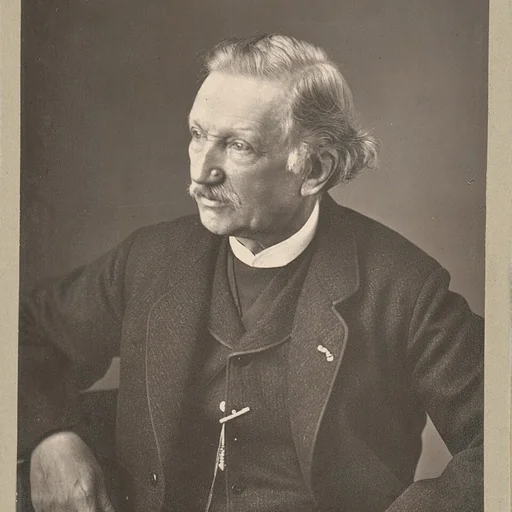
Artist
Charles-Émile Jacque (23 May 1813 – 7 May 1894) was a French painter of Pastoralism and engraver who was, with Jean-François Millet, part of the Barbizon School. He first learned to engrave maps when he spent seven years in the French Army.