Artwork
Rape of Europa
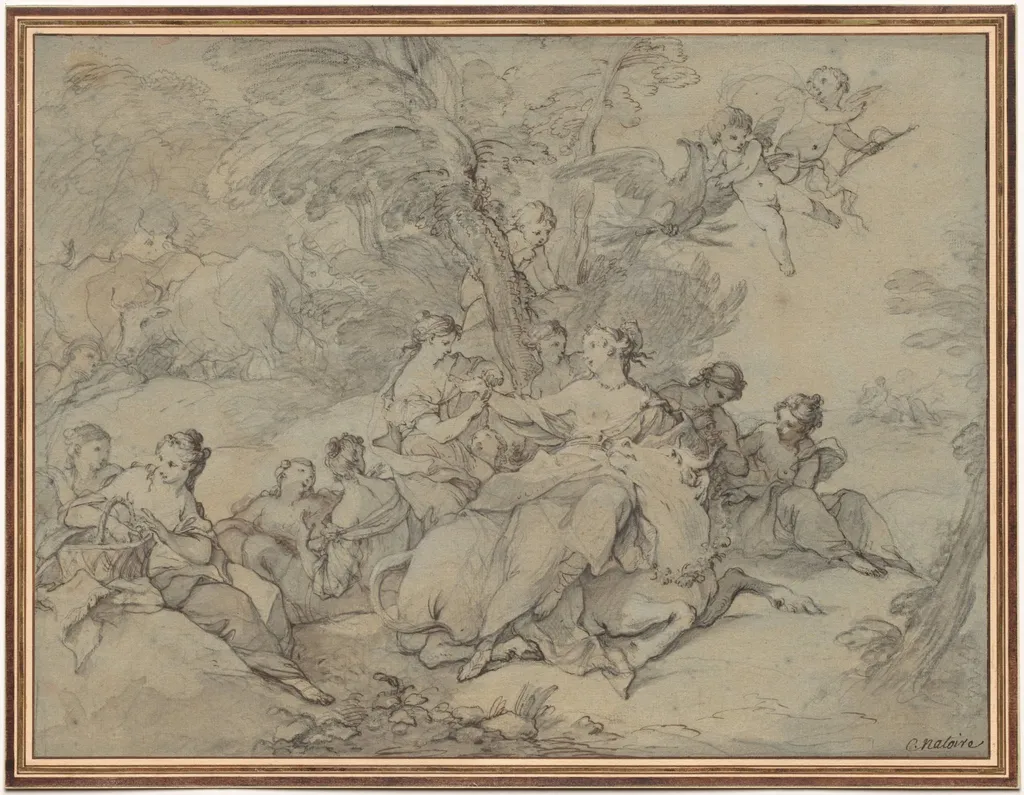
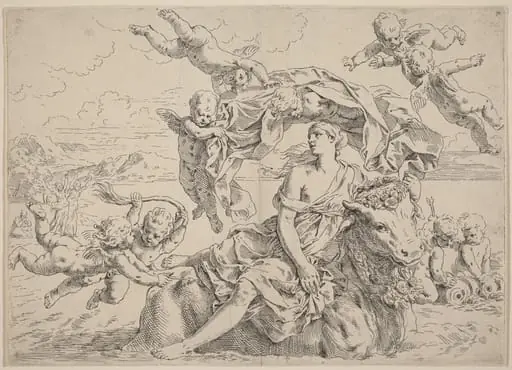
Rape of Europa is a drawing by the Baroque artist Charles-Joseph Natoire. It dates from 1731 and is held in the collection of the Cleveland Museum of Art. Created in 1731 by Charles Joseph Natoire, this pencil drawing depicts a dramatic episode from classical myth.
About this work
Overview
The composition is densely populated with figures in dynamic poses, rendered in soft graphite with subtle tonal variations.
Created in 1731 by Charles Joseph Natoire, this pencil drawing depicts a dramatic episode from classical myth. Executed with fluid, energetic lines, the work captures a moment of abduction with a sense of urgency and motion. The composition is densely populated with figures in dynamic poses, rendered in soft graphite with subtle tonal variations. It resides in the collection of The Cleveland Museum of Art as an example of 18th-century French draftsmanship.
Subject & Meaning
The scene illustrates the myth of Europa’s abduction by Zeus, who took the form of a bull. Europa, shown reclining on the creature’s back, is surrounded by figures in distress or pursuit. Above, two cherubs hover, possibly symbolizing divine intervention or the celestial nature of the event. The drawing emphasizes the tension between human vulnerability and supernatural power, a common theme in mythological narratives of the period.
Technique & Style
Natoire employed loose, rapid pencil strokes to convey movement and emotional intensity. Light shading defines volume without heavy modeling, preserving the sketch’s spontaneity. The figures are interwoven in a tangled composition, their limbs overlapping to enhance the sense of chaos. The absence of color and the focus on line reflect the drawing’s function as a preparatory study, prioritizing gesture and narrative over finish.
History & Provenance
The drawing was produced during Natoire’s early career, likely as a study for a larger painting or decorative scheme. It entered the Cleveland Museum of Art’s collection through established acquisition channels in the 20th century. Its preservation reflects its value as a document of French academic practice, offering insight into how mythological subjects were explored in preparatory works before final execution.
Context
Natoire worked within the French Royal Academy tradition, where mythological themes were central to artistic training. This drawing aligns with the Baroque fascination with movement and emotional drama, though its intimate scale and medium distinguish it from grander painted versions. Such sketches were often used to refine compositions before commissioning large-scale works for aristocratic patrons or public spaces.
Legacy
The drawing exemplifies how 18th-century artists translated classical narratives into visual language through direct, expressive means. While not widely exhibited, it remains a key reference for understanding the evolution of French academic drawing. Its emphasis on gesture and narrative immediacy influenced later generations of draftsmen who valued spontaneity within formal traditions.
Artist & collection
Artist
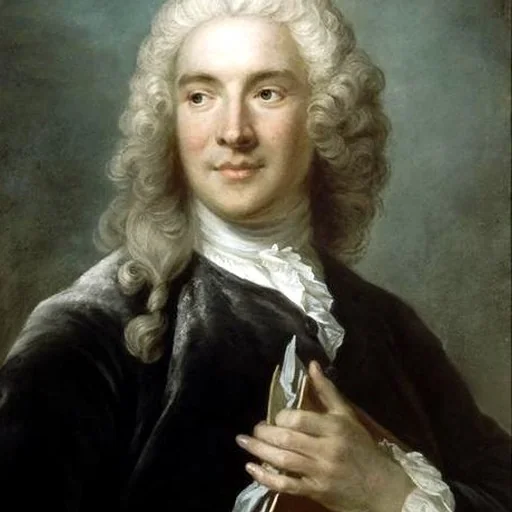
Charles-Joseph Natoire (3 March 1700 – 23 August 1777) was a French painter in the Rococo manner, a pupil of François Lemoyne and director of the French Academy in Rome, 1751–1775.

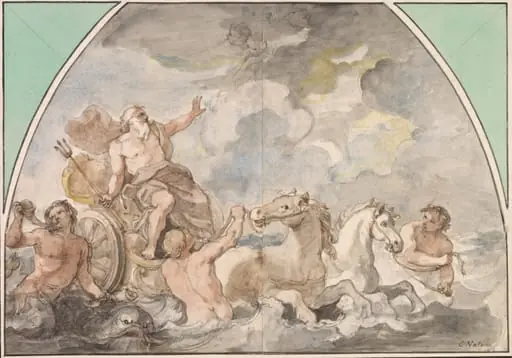
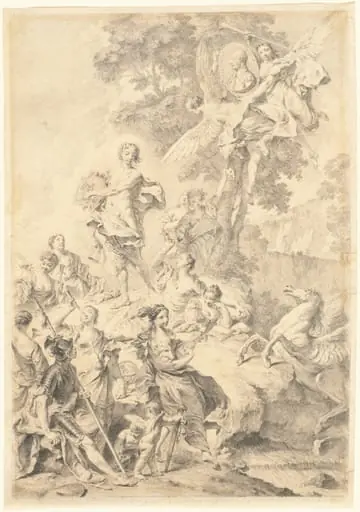 Apollo, the Muses, and Mars: In Praise of Tasso
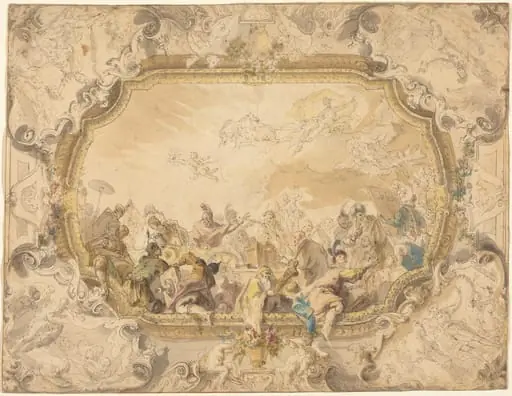 A Ceiling with Apollo Presiding over Military and Historical Learning
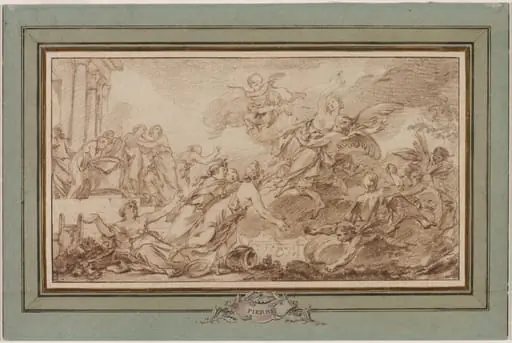 Boreas Abducting Oreithyia
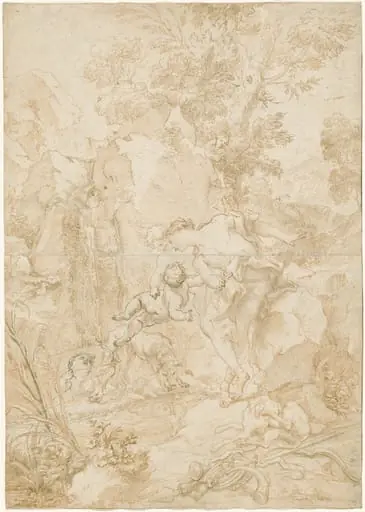 Echo and Narcissus
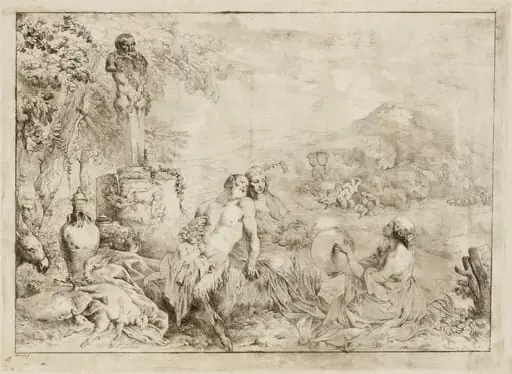 Landscape with a Satyr Family and Classical Sculpture
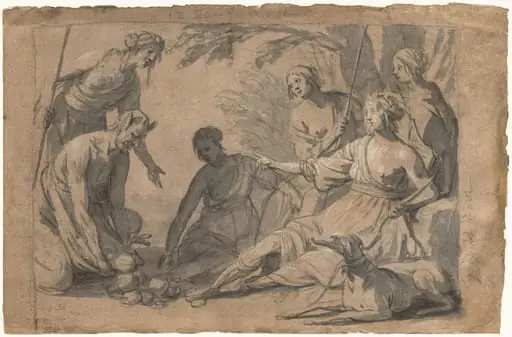 Diana and Four Nymphs Receiving Gifts from a Satyr
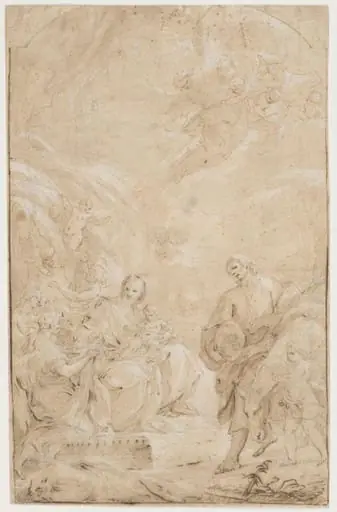 Untitled
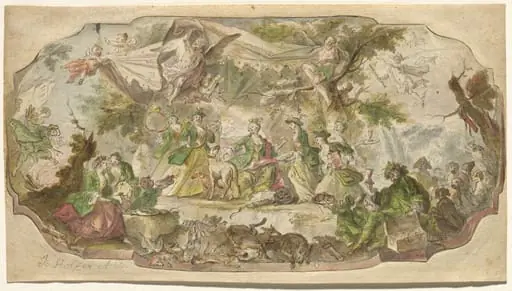 Diana Resting after the Hunt
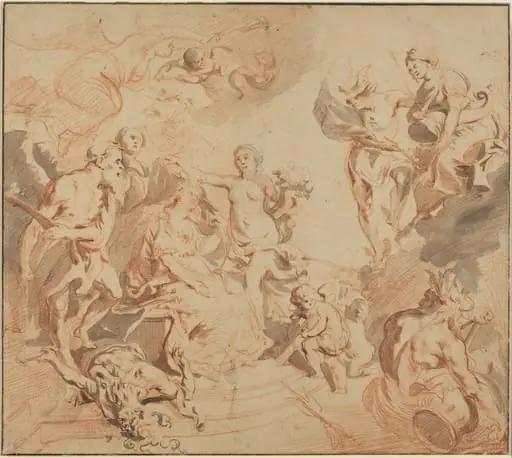 Antwerp Blessed with Abundance
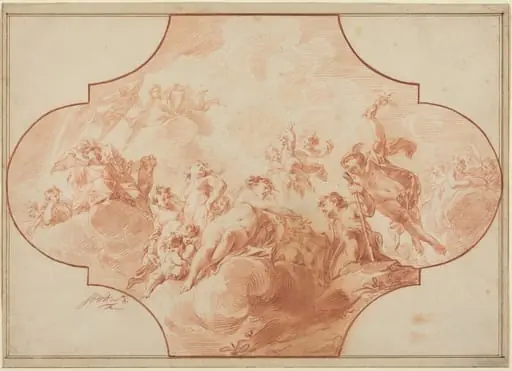 The Judgment of Paris
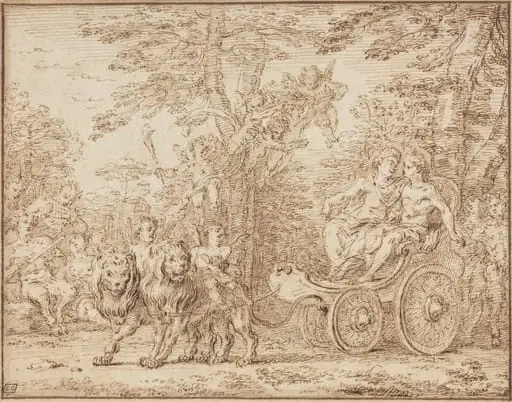 The Triumph of Marriage
 The Rape of Europa