Artwork
Boreas Abducting Oreithyia
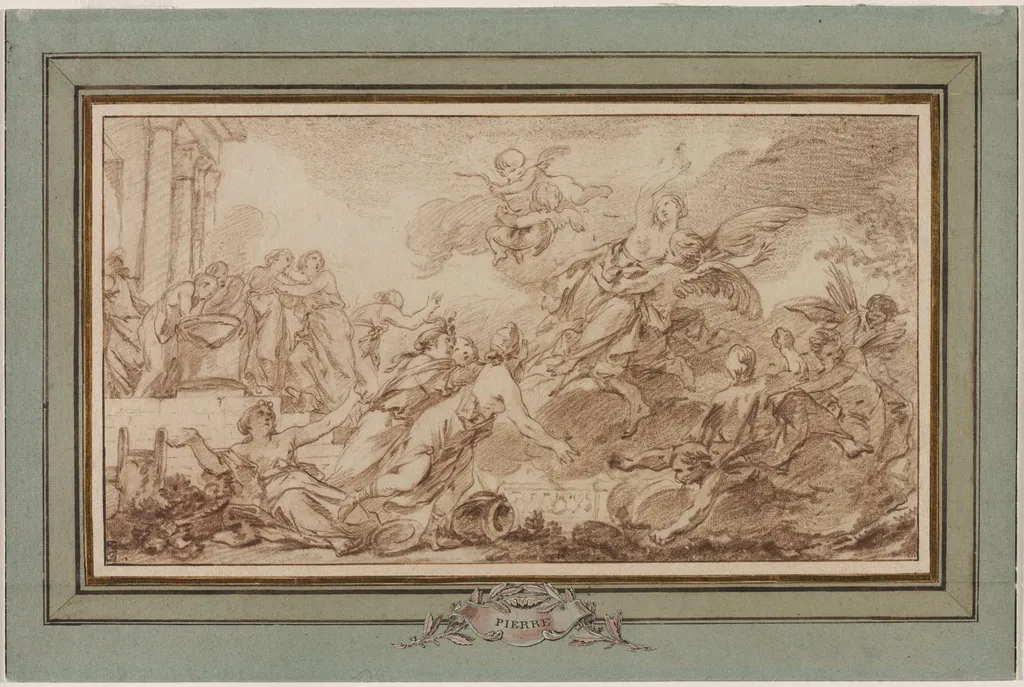
Boreas Abducting Oreithyia is a drawing by the Romanticist artist Jean-Baptiste Marie Pierre. It dates from 1758 and is held in the collection of the Cleveland Museum of Art.
About this work
Overview
This drawing depicts the mythological episode in which Boreas, the personification of the north wind, seizes Oreithyia, the Athenian princess, and carries her away. The composition captures the dramatic moment of abduction, emphasizing the contrast between the swift, gusty figure of the god and the startled maiden.
Subject & Meaning
The narrative derives from Ovid’s Metamorphoses, which recounts the loves and transformations of the ancient deities. Oreithyia, daughter of King Erechtheus of Athens, attracts Boreas’s desire, prompting the wind god to descend from the heavens and abduct her, a tale that explores themes of divine intervention and the vulnerability of mortals.
Technique & Style
Rendered in a drawing medium, the work reflects the 18th‑century French academic style, with clear outlines and a focus on graceful movement. The artist adopts a compositional arrangement reminiscent of tapestry designs, employing a balanced distribution of figures and a restrained palette that highlights the narrative action.
Legacy
The composition shows a direct reference to a tapestry design by François Boucher, which also illustrated Boreas’s seizure of Oreithyza. This borrowing indicates the artist’s engagement with contemporary decorative arts and the broader popularity of Ovidian subjects among painters of the period.
Context
During the 1700s, Ovid’s Metamorphoses served as a favored literary source for visual artists seeking classical themes. While the Boreas‑Oreithyia episode was less frequently depicted than other myths, its inclusion here reflects the era’s interest in lesser‑known stories that allowed for inventive treatment of mythic drama.
Artist & collection
Artist
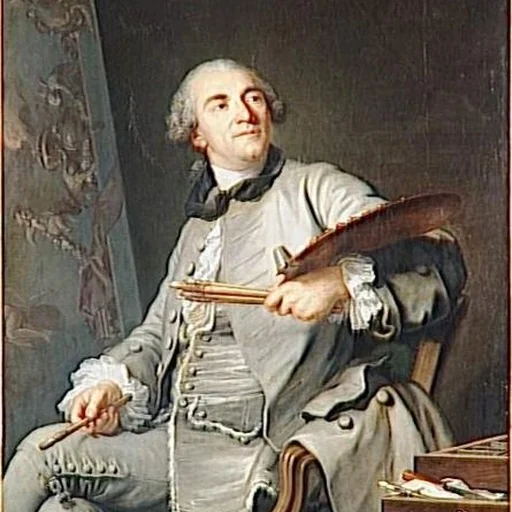
Jean-Baptiste Marie Pierre (1714–1789) was a French artist, born in Paris.

 The Judgment of Paris
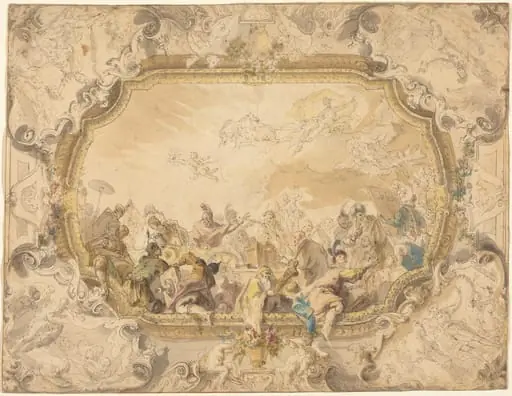 A Ceiling with Apollo Presiding over Military and Historical Learning
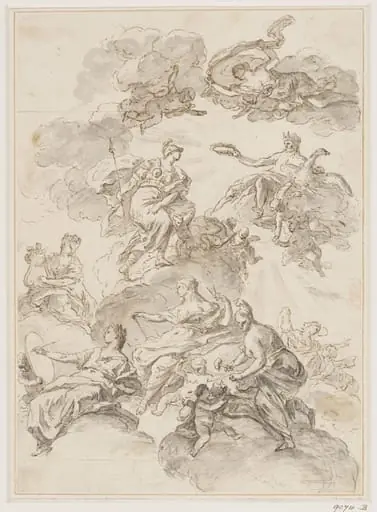 Minerva commending the arts of sculpture, architecture, painting and music to Jupiter
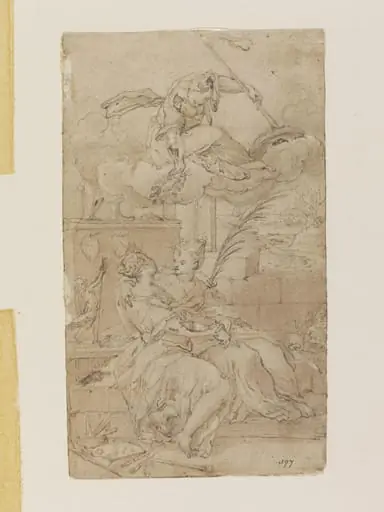 Allegory of the Union of Painting and Sculpture
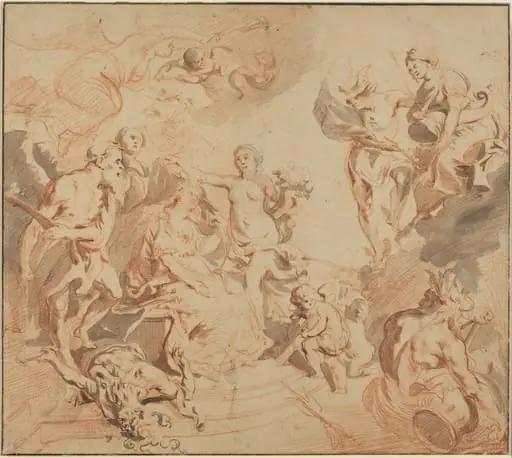 Antwerp Blessed with Abundance
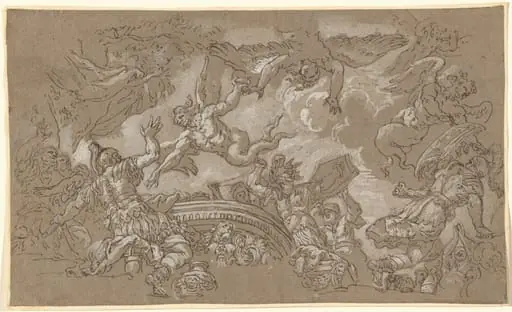 The Harpies Attacking Aeneas and His Companions
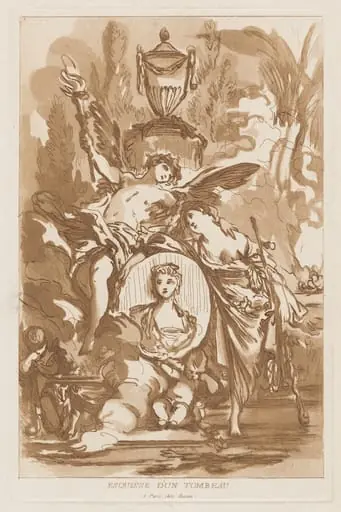 Esquisse d’un tombeau (Sketch for a Tomb)
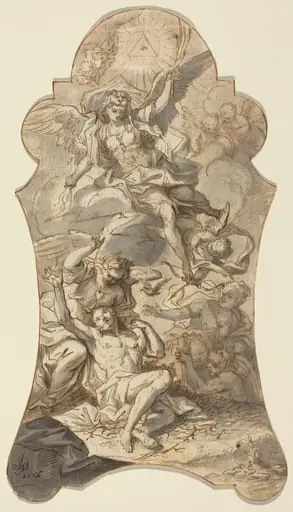 The Holy Angels Protecting a Hermit from Evils
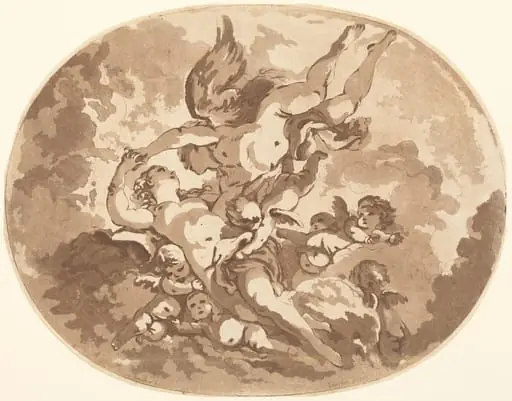 Eros and Psyche
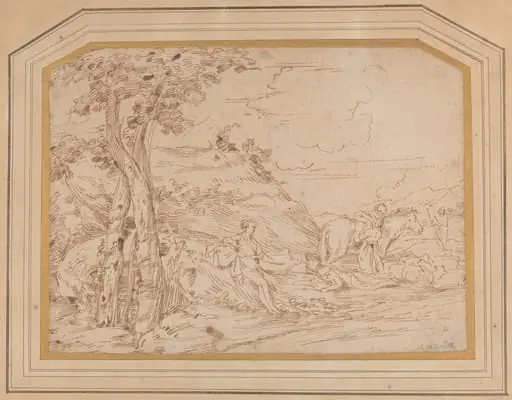 A Wooded Landscape with a Shepherd and His Family
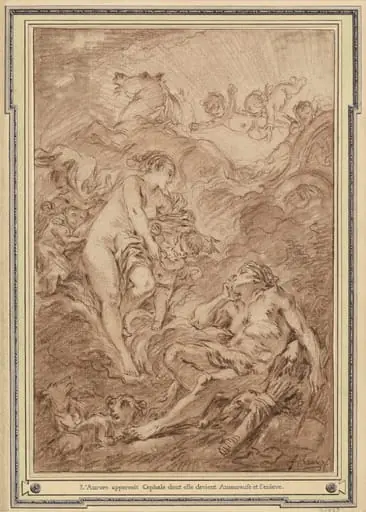 Aurora and Cephalus
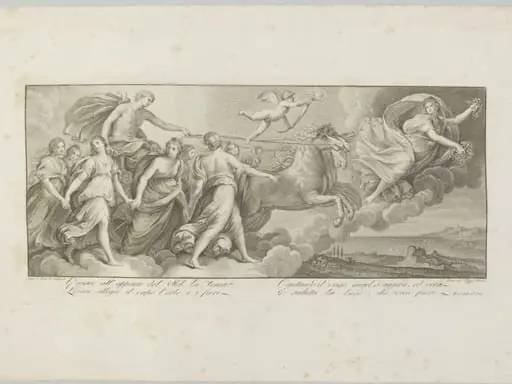 The Chariot of Aurora