Artwork
Étretat
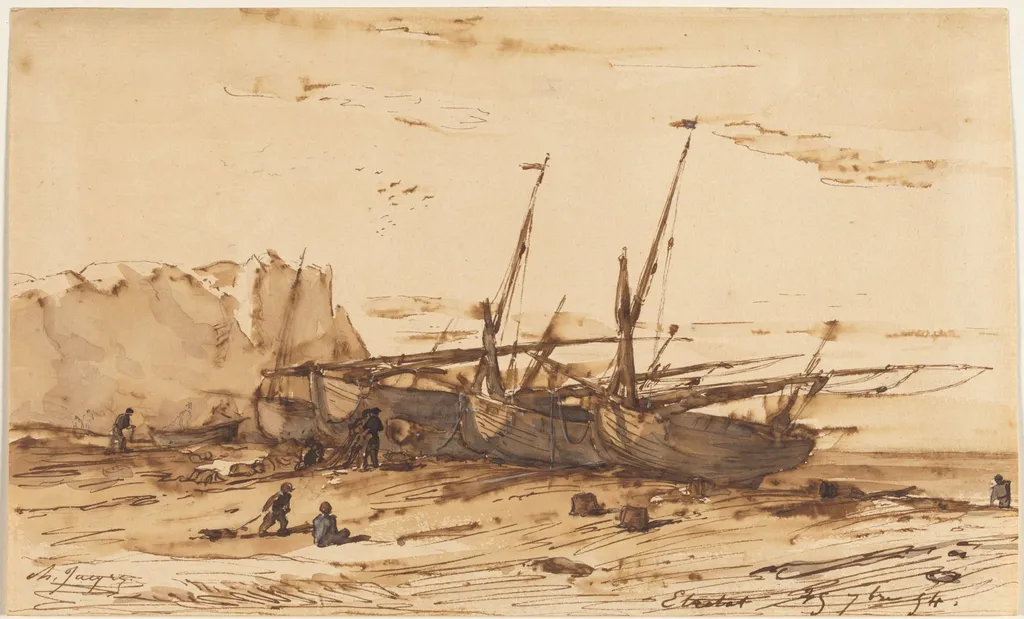
Étretat is a drawing by the Impressionist artist Charles Jacque. It dates from 1854 and is held in the collection of the Cleveland Museum of Art.
About this work
Overview
Charles-Émile Jacque produced this drawing in 1854 during a period when he was deeply engaged with the natural landscapes of northern France.
Charles-Émile Jacque produced this drawing in 1854 during a period when he was deeply engaged with the natural landscapes of northern France. Though trained as an engraver and having served in the French Army, he turned increasingly to landscape subjects. Étretat captures a quiet coastal moment, reflecting his shift from technical illustration to observational art. The work is now part of the Cleveland Museum of Art’s collection.
Subject & Meaning
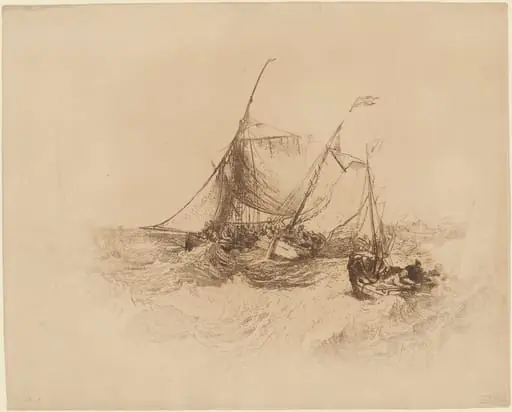
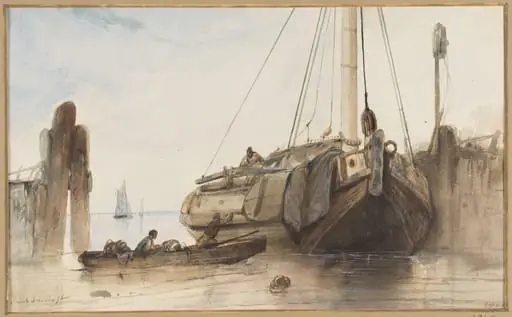
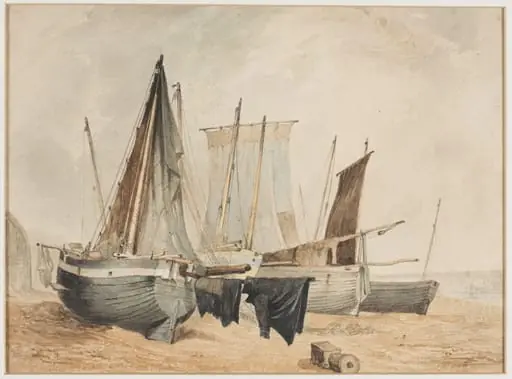
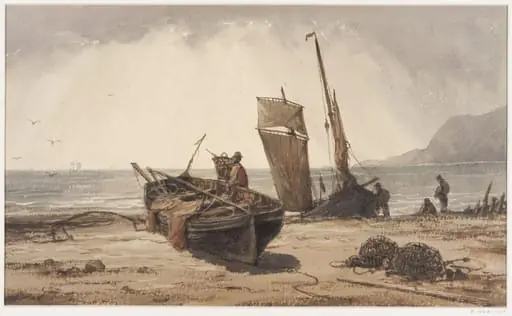
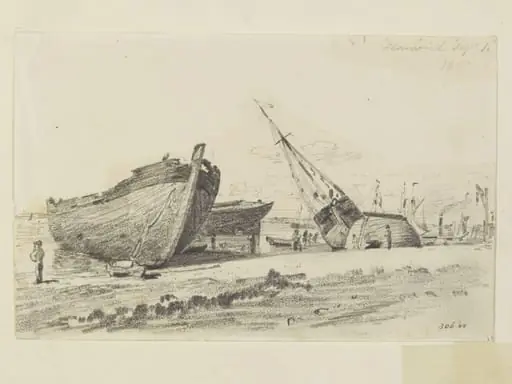
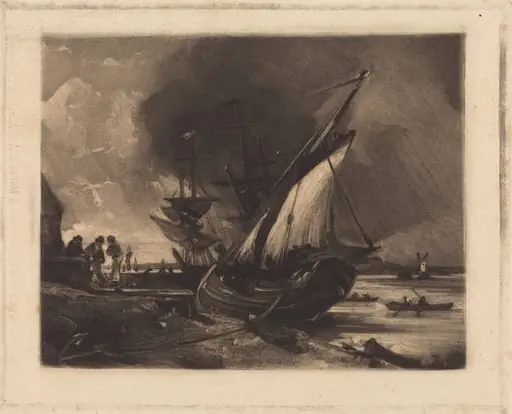
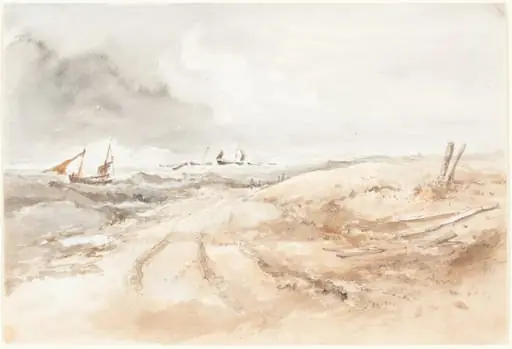
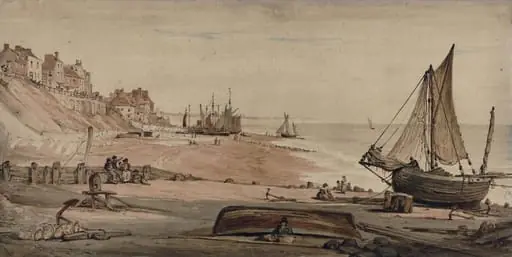
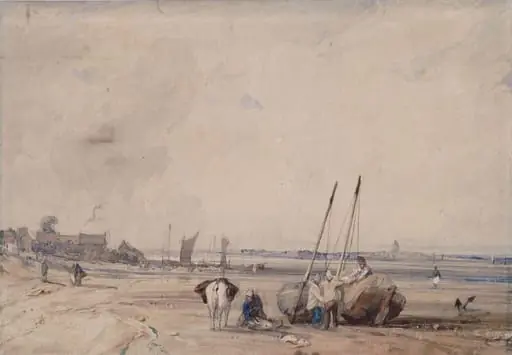
The scene portrays a desolate stretch of beach at Étretat, with two beached wooden vessels half-sunken in the sand, a few indistinct figures, and scattered driftwood. The absence of human activity and the muted tones suggest a contemplative stillness. Rather than idealizing nature, Jacque presents it as worn and transient, aligning with the Barbizon School’s interest in unembellished, everyday environments.
Technique & Style
Jacque employed loose, rapid brushwork to convey the texture of wind-tossed waves and the weathered surfaces of the ships. The palette is restrained—dominated by earthy browns and grays—with subtle variations in tone suggesting depth in the water and atmosphere. The pale sky and uneven shoreline are rendered with minimal detail, emphasizing immediacy over finish, characteristic of preparatory sketches from the period.
History & Provenance
Created in 1854, the drawing emerged during Jacque’s formative years as a landscape artist, following his military service and early work in engraving. It was likely made during one of his trips to the Normandy coast, a region favored by Barbizon artists for its rugged terrain. The work entered the Cleveland Museum of Art’s collection through documented acquisitions, preserving its connection to mid-19th-century French artistic practice.
Context
Jacque’s work aligns with the Barbizon School’s broader movement toward painting outdoors and depicting rural and coastal life without romantic embellishment. In the 1850s, artists increasingly rejected historical or mythological themes in favor of direct observation. Étretat reflects this shift, capturing a mundane coastal moment with sincerity, paralleling contemporaneous efforts by Corot and Daubigny.
Legacy
Though less widely known than his peers, Jacque’s drawings like Étretat contributed to the legitimization of landscape sketching as a serious artistic pursuit. His emphasis on naturalism and tactile detail influenced later generations of realist painters. The work remains a quiet example of how everyday scenes, rendered with honesty, could carry emotional and aesthetic weight.
Artist & collection
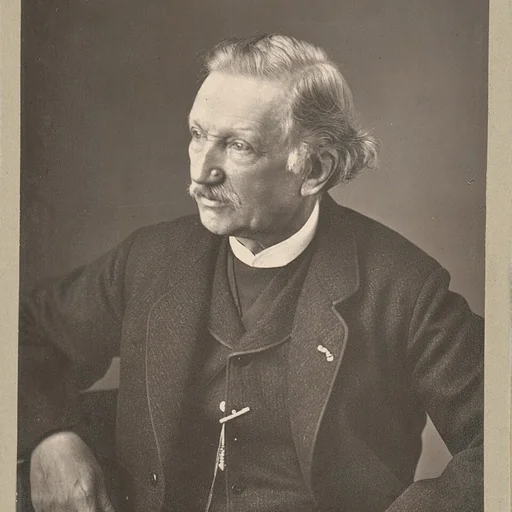
Artist
Charles-Émile Jacque (23 May 1813 – 7 May 1894) was a French painter of Pastoralism and engraver who was, with Jean-François Millet, part of the Barbizon School. He first learned to engrave maps when he spent seven years in the French Army.