Artwork
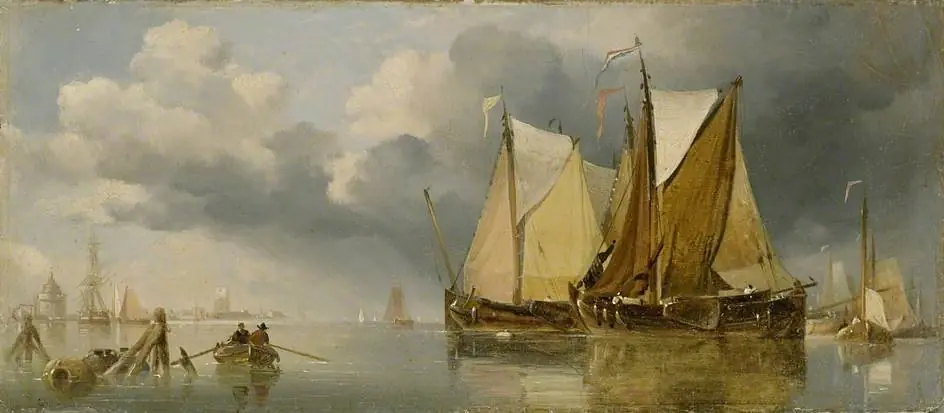
Sailing barges off shore
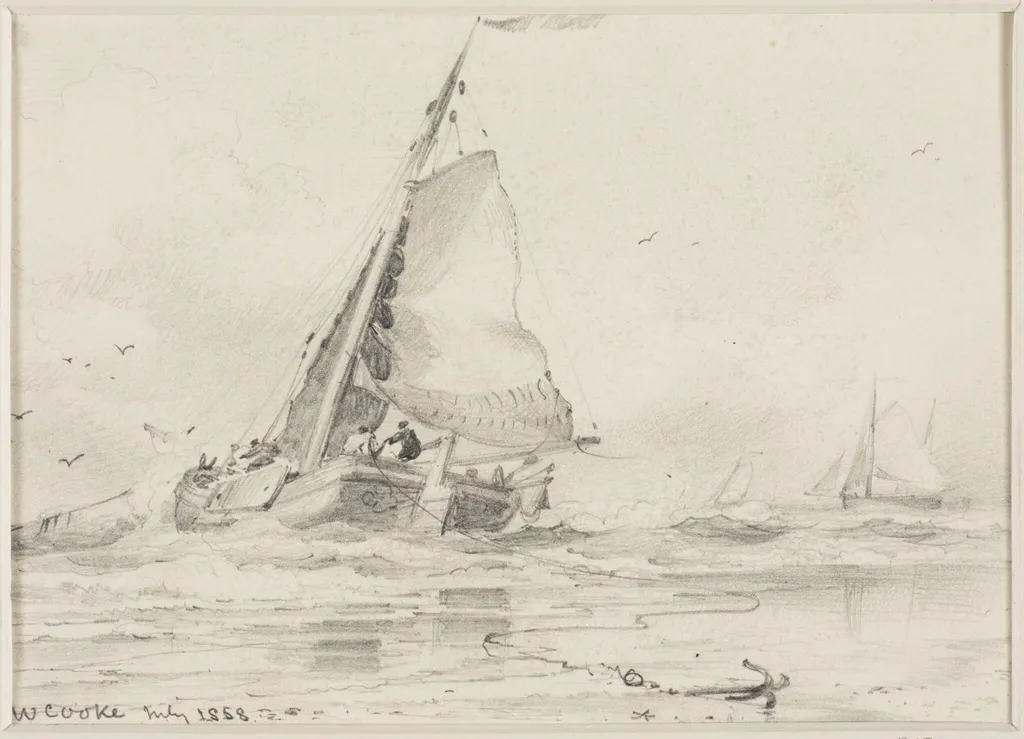
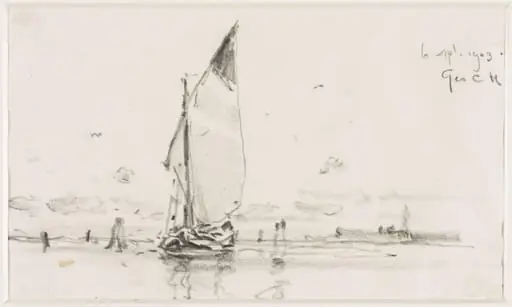
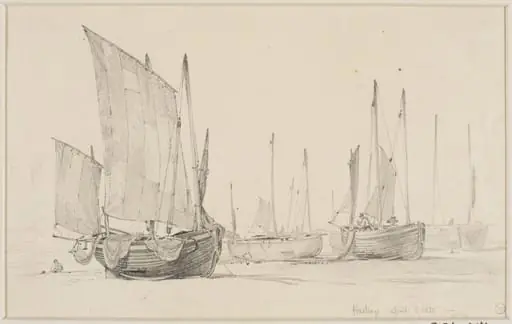
Sailing barges off shore is a drawing by the Impressionist artist Edward William Cooke. It dates from 1858 and is held in the collection of the Victoria and Albert Museum. A pencil sketch from July 1858 by Edward Cooke captures a group of sailing barges near the coastline.
About this work
The artist used quick, loose lines to capture the scene—no details are sharp, just rough strokes that feel alive.
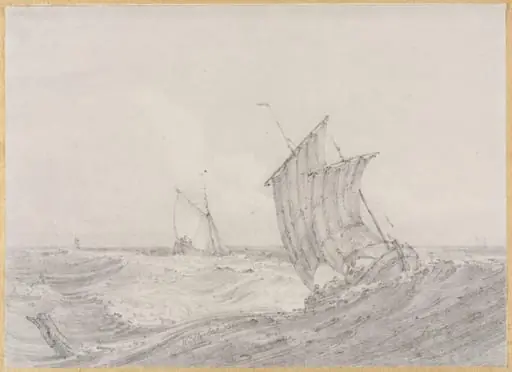
This sketch shows a small boat with a tall sail, drifting near the shore. The water is choppy, and in the distance, a few other ships dot the horizon. The artist used quick, loose lines to capture the scene—no details are sharp, just rough strokes that feel alive.
The date "July 1858" is scrawled in the corner, hinting this was drawn on the spot. The boats look simple but full of movement, like they’re caught mid-journey.
If you like this style, check out the Victoria and Albert Museum for more works like it.
Overview
A pencil sketch from July 1858 by Edward Cooke captures a group of sailing barges near the coastline. Executed with swift, unrefined strokes, the drawing conveys motion and atmosphere rather than precise detail. The artist signed and dated the work in the corner, suggesting it was made en plein air. The composition focuses on the relationship between vessel and sea, with minimal background elements drawing attention to the dynamic presence of the boats.
Subject & Meaning
The drawing portrays working sailing barges at sea, likely engaged in coastal trade. Their simple forms and scattered positioning imply a routine maritime scene rather than a ceremonial or dramatic event. The absence of land or human figures emphasizes the isolation and quiet labor of seafaring life. The sketch reflects an observer’s immediate impression, valuing movement and mood over narrative or symbolism.
Technique & Style
Cooke employed loose, energetic pencil lines to suggest form without definition. The water is rendered with jagged, overlapping strokes that evoke choppy waves, while the sails are indicated by minimal contours. Details like rigging or hull textures are omitted, favoring a sense of spontaneity. The technique aligns with observational sketching practices of the period, prioritizing rapid capture over finish.
History & Provenance
The drawing is attributed to Edward Cooke, a 19th-century British artist known for maritime subjects. Its date and signature suggest it was created during a coastal excursion in 1858. No documented ownership history is available prior to its inclusion in institutional collections, but its informal nature implies it was a personal study rather than a commissioned piece.
Context
In mid-19th century Britain, coastal trade relied heavily on sailing barges before steam power became dominant. Artists and draftsmen often recorded these vessels as part of a broader interest in industrial and maritime life. Cooke’s sketch fits within a tradition of observational drawings made by artists documenting everyday seascapes, distinct from grander naval paintings of the era.
Legacy
Though not widely exhibited, Cooke’s drawing contributes to a body of informal maritime sketches that preserve the visual culture of working ships before their decline. Its unpolished quality offers insight into how artists engaged with the sea as a lived environment. Similar works by contemporaries can be found in collections such as the Victoria and Albert Museum, where such studies are valued for their immediacy.
Artist & collection