Artwork
Landscape with a Mill
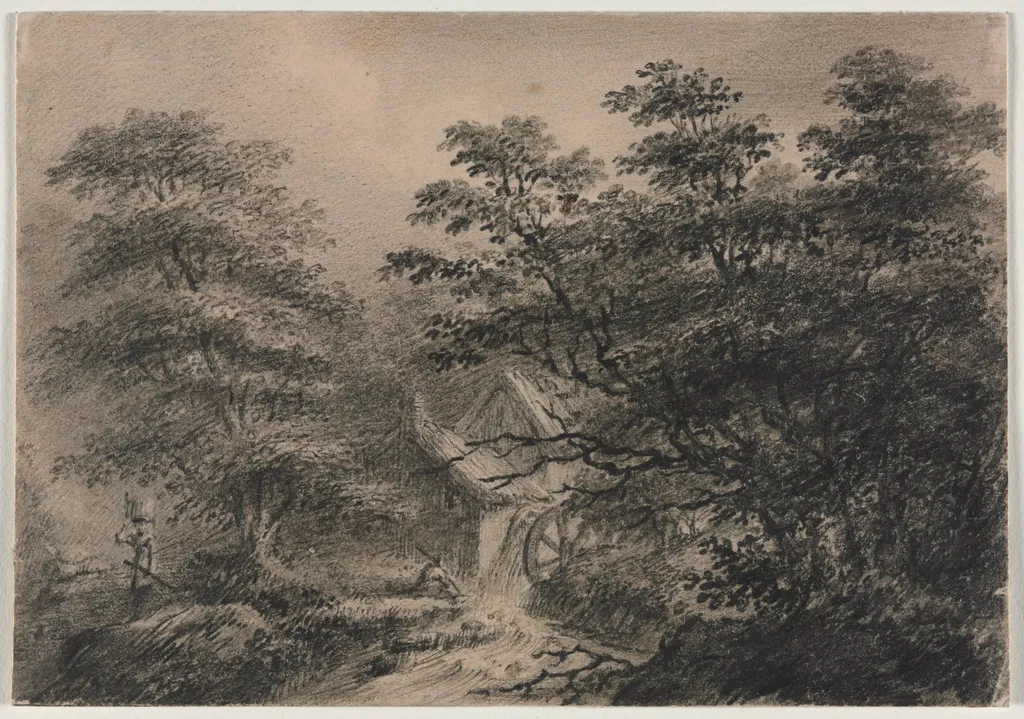
Landscape with a Mill is a drawing by the Romanticist artist Charles Norris. It dates from 1834 and is held in the collection of the Cleveland Museum of Art.
About this work
Overview
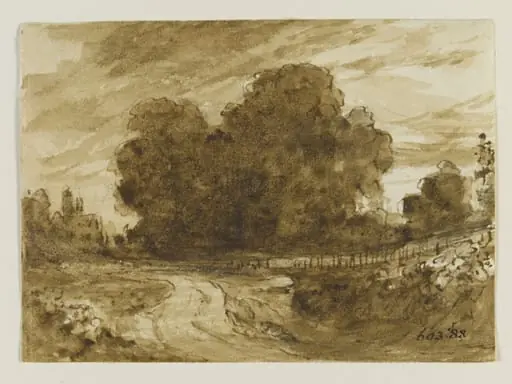
Charles Norris’s 1834 drawing titled Landscape with a Mill presents a tranquil rural vista. Executed in pencil, the work is part of the Cleveland Museum of Art’s collection. The composition centers on a modest water‑wheel mill nestled in a valley, surrounded by densely packed trees and a swiftly moving stream that cuts through stone and grass.
Subject & Meaning
The scene captures a solitary mill, almost concealed by foliage, suggesting a quiet, industrious presence within nature. The juxtaposition of human labor and the untamed landscape invites contemplation of humanity’s modest role amid the broader forces of the natural world, a theme often explored in early nineteenth‑century art.
Technique & Style
Norris employs loose, smudged pencil strokes that soften edges and blend shadows, creating a sense of atmospheric depth. The sketchy handling of foliage and water conveys movement, while the overall tonal restraint emphasizes mood over precise detail, aligning the work with the Romantic preference for evocative, emotive representation.
History & Provenance
Created in 1834, the drawing entered the Cleveland Museum of Art’s holdings through acquisition (specific acquisition details are not recorded in the source). Its preservation within a major American institution reflects the continued interest in Norris’s contributions to early American landscape drawing.
Context
During the early nineteenth century, Romantic artists frequently turned to natural scenery to express heightened emotions and philosophical ideas. Norris’s depiction of a secluded mill within a dynamic landscape mirrors this tendency, using the countryside as a vehicle for exploring themes of solitude, labor, and the sublime power of nature.
Artist & collection

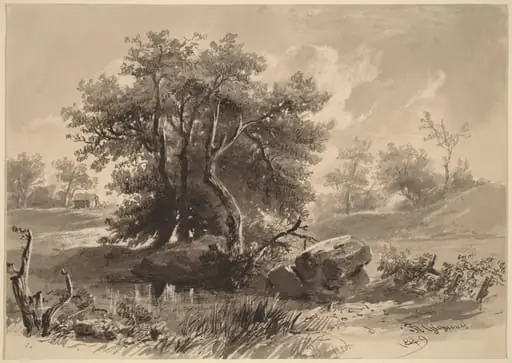 The Trees, Bedford, New York
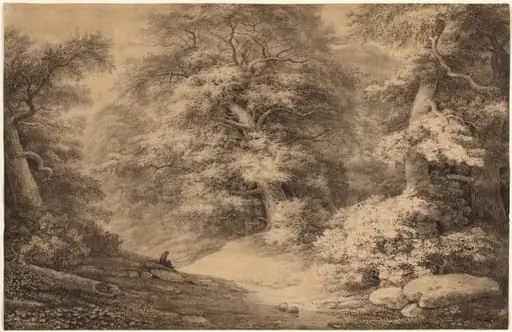 A Beech Wood with a Resting Traveler
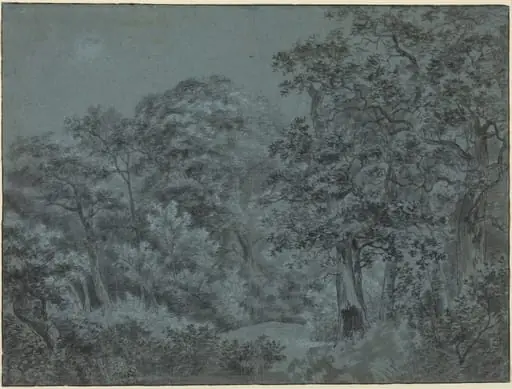 In the Hague Woods
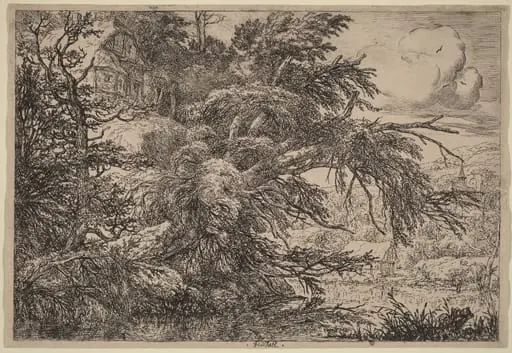 Cottage on a Hill
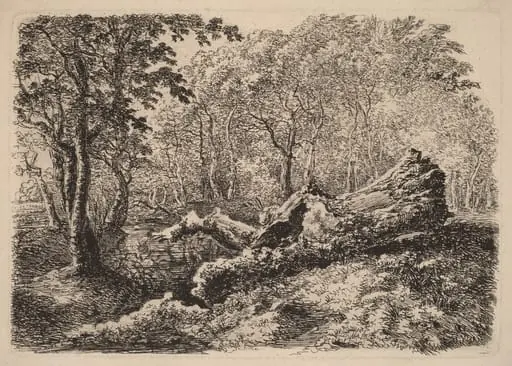 Mouldering Tree Trunk
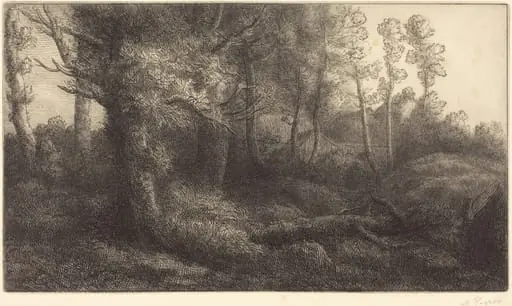 In the Forest (Lisiere de foret)
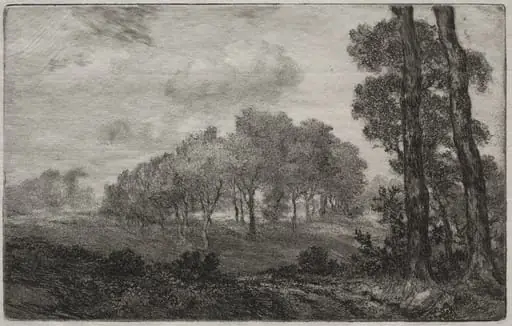 Landscape, after Français
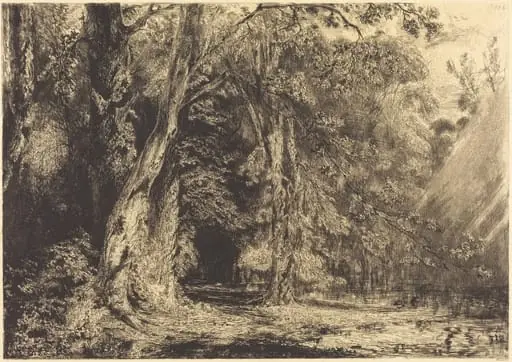 Flooding in the Forest of the Ile Séguin
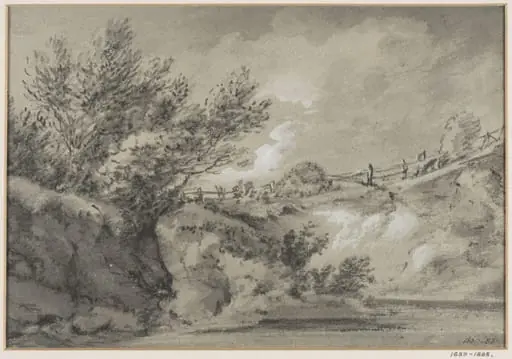 Landscape with high bank and railings
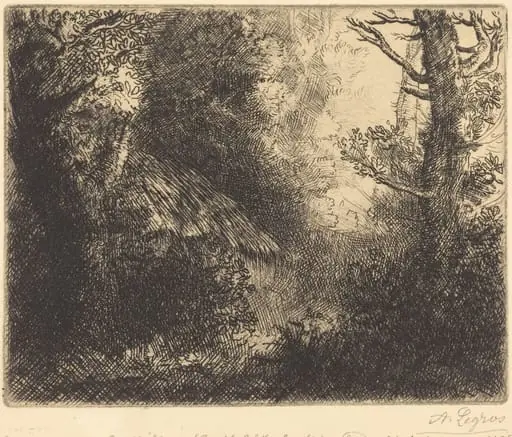 Landscape: Near Chailleux (Paysage: Pres Chailleux)
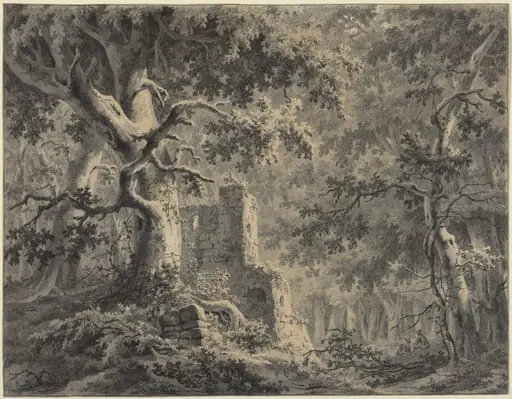 Ruins by a Woodland Stream
 A country road with elm trees