Artwork
Ruins by a Woodland Stream
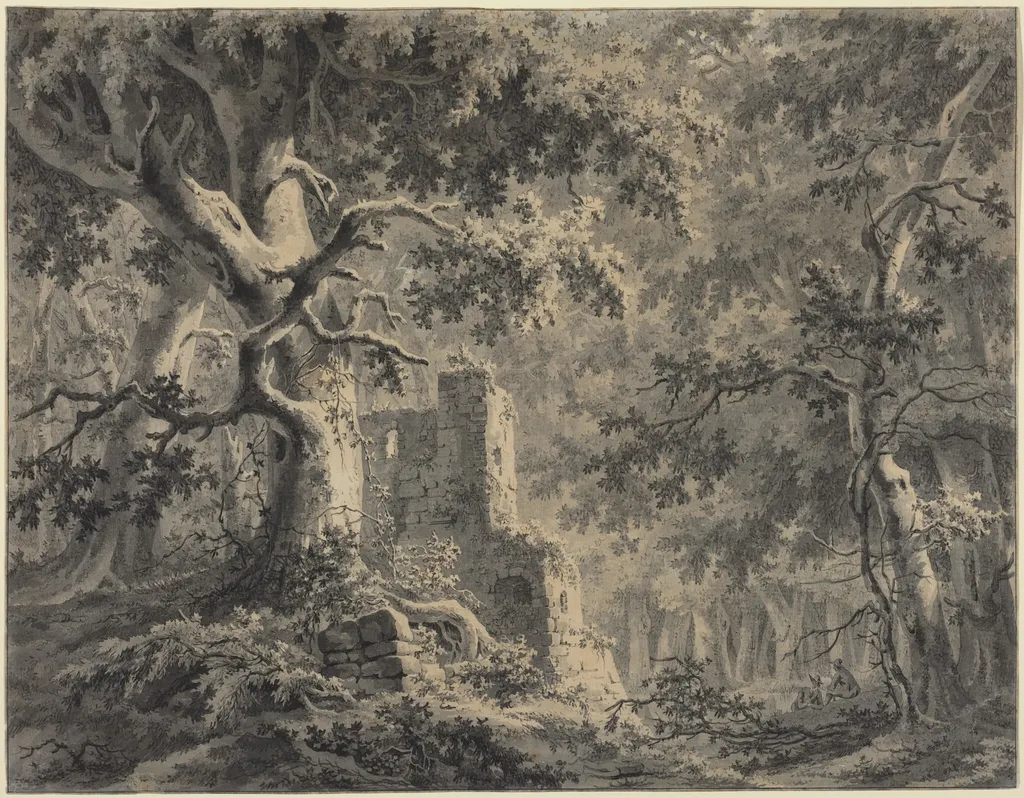
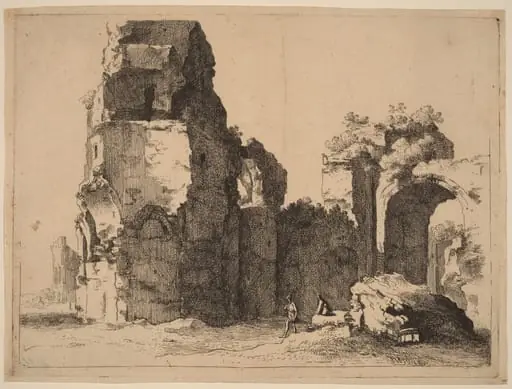
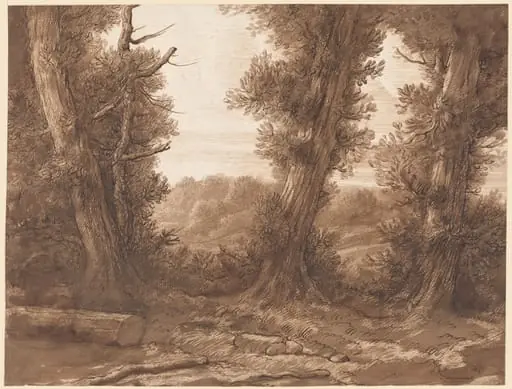
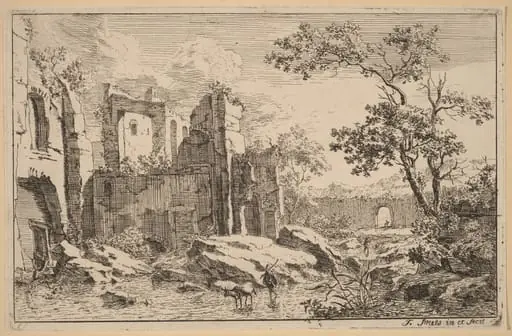
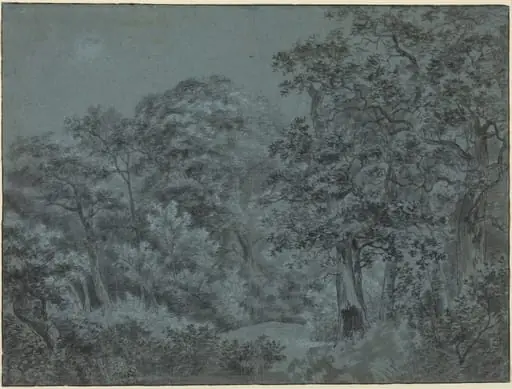
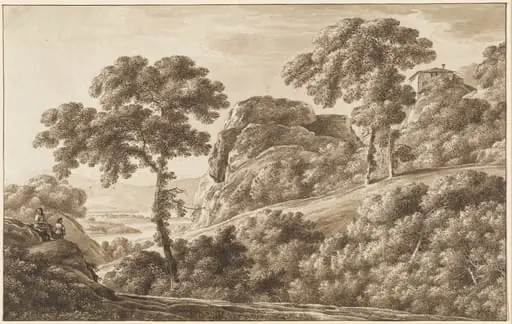
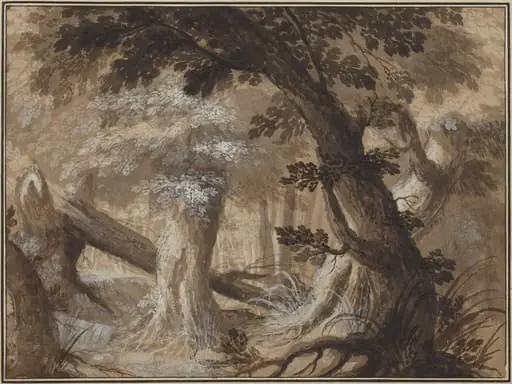
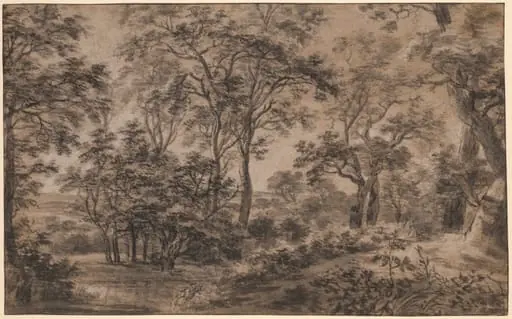
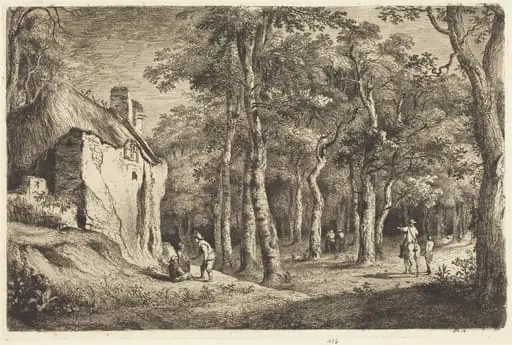
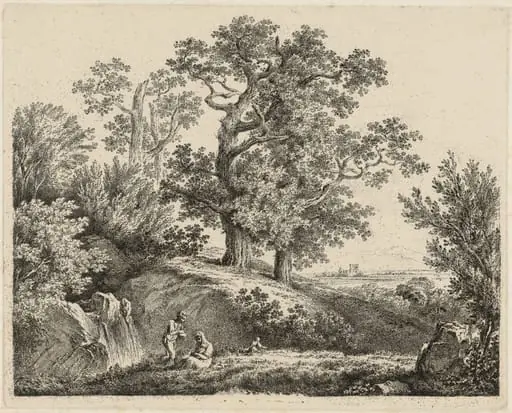
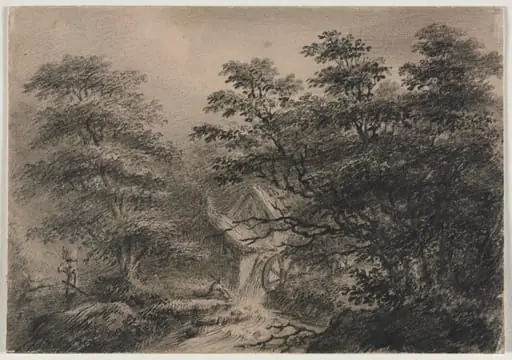
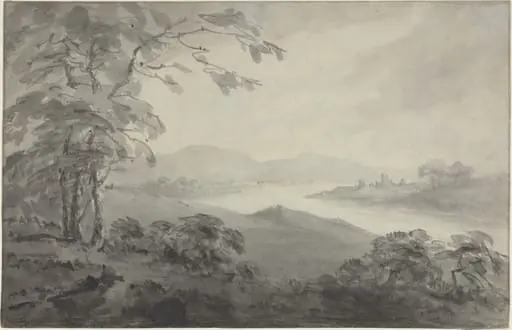
Ruins by a Woodland Stream is an ink drawing by the Baroque artist Paulus van Liender. It dates from 1764 and is held in the collection of the National Gallery of Art.
About this work
Overview
Paulus van Liender’s drawing *Ruins by a Woodland Stream* was executed in 1764 using pen and black ink complemented by a gray wash on laid paper. The work measures a modest size typical of the artist’s studies and presents a solitary, weathered structure beside a narrow watercourse within a densely forested setting.
Subject & Meaning
The composition depicts a decaying stone building, its cracked walls and moss‑covered roof partially concealed by deep shadows. A solitary beam of light penetrates the canopy, illuminating an archway and emphasizing the passage of time as nature gradually reclaims the man‑made edifice, a motif common in eighteenth‑century landscape art.
Technique & Style
Van Liender employs fine pen lines to render architectural detail, while the gray wash creates atmospheric depth and softens the surrounding foliage. The contrast between the crisp linear rendering of the ruin and the broader tonal washes of the forest conveys a balance between precise observation and poetic mood.
History & Provenance
Created in the mid‑eighteenth century, the drawing reflects the period’s fascination with picturesque ruins. It entered the collection of the National Gallery of Art in Washington, D.C., where it is displayed among other contemporaneous drawings that explore similar themes of decay and natural reclamation.
Context
During the Enlightenment, artists often used ruined structures as visual metaphors for the transience of human achievement. Van Liender’s work aligns with this intellectual climate, illustrating how the natural environment can both erode and preserve the remnants of past architecture.
Artist & collection