Artwork
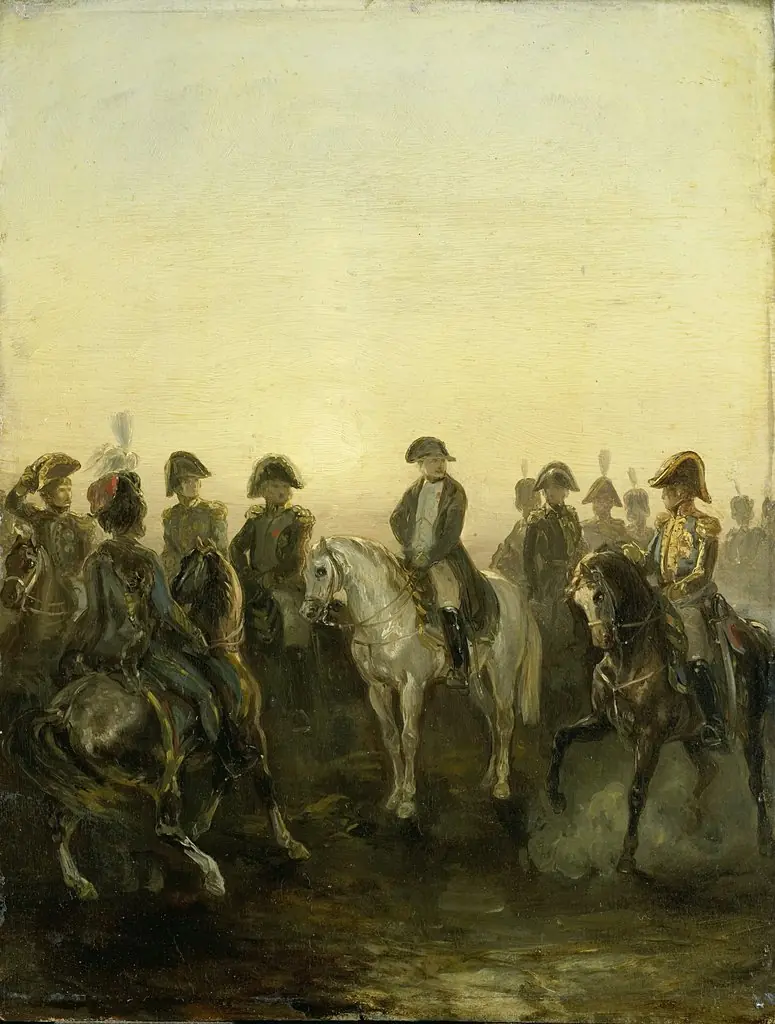
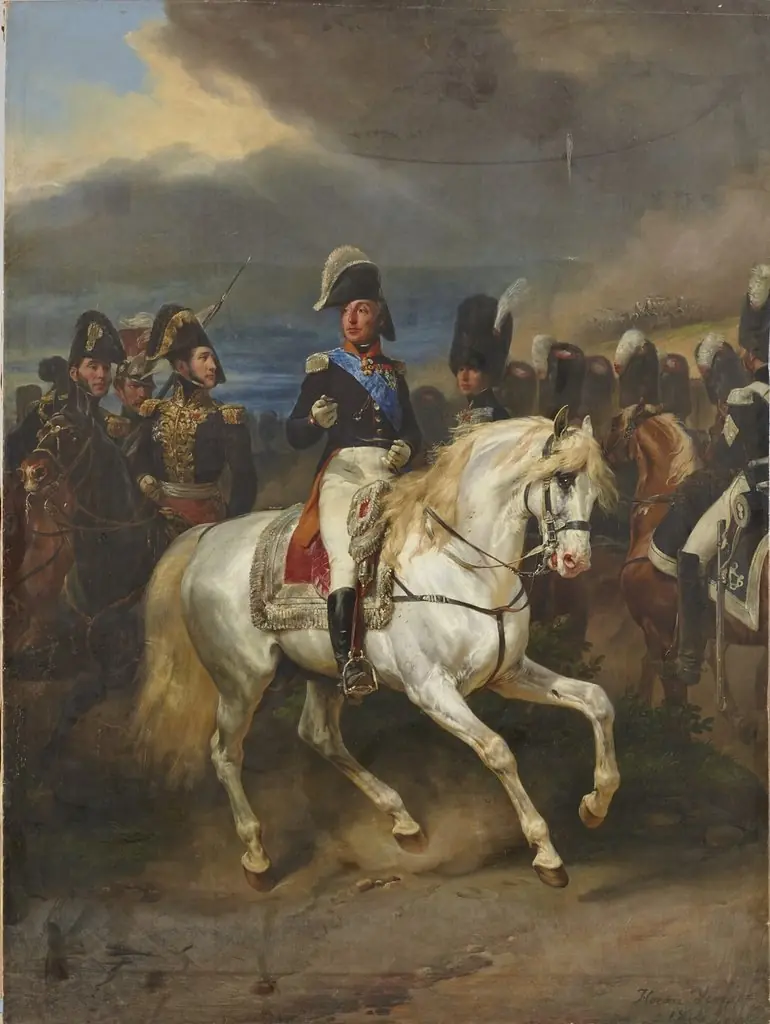
Napoleon with his Staff
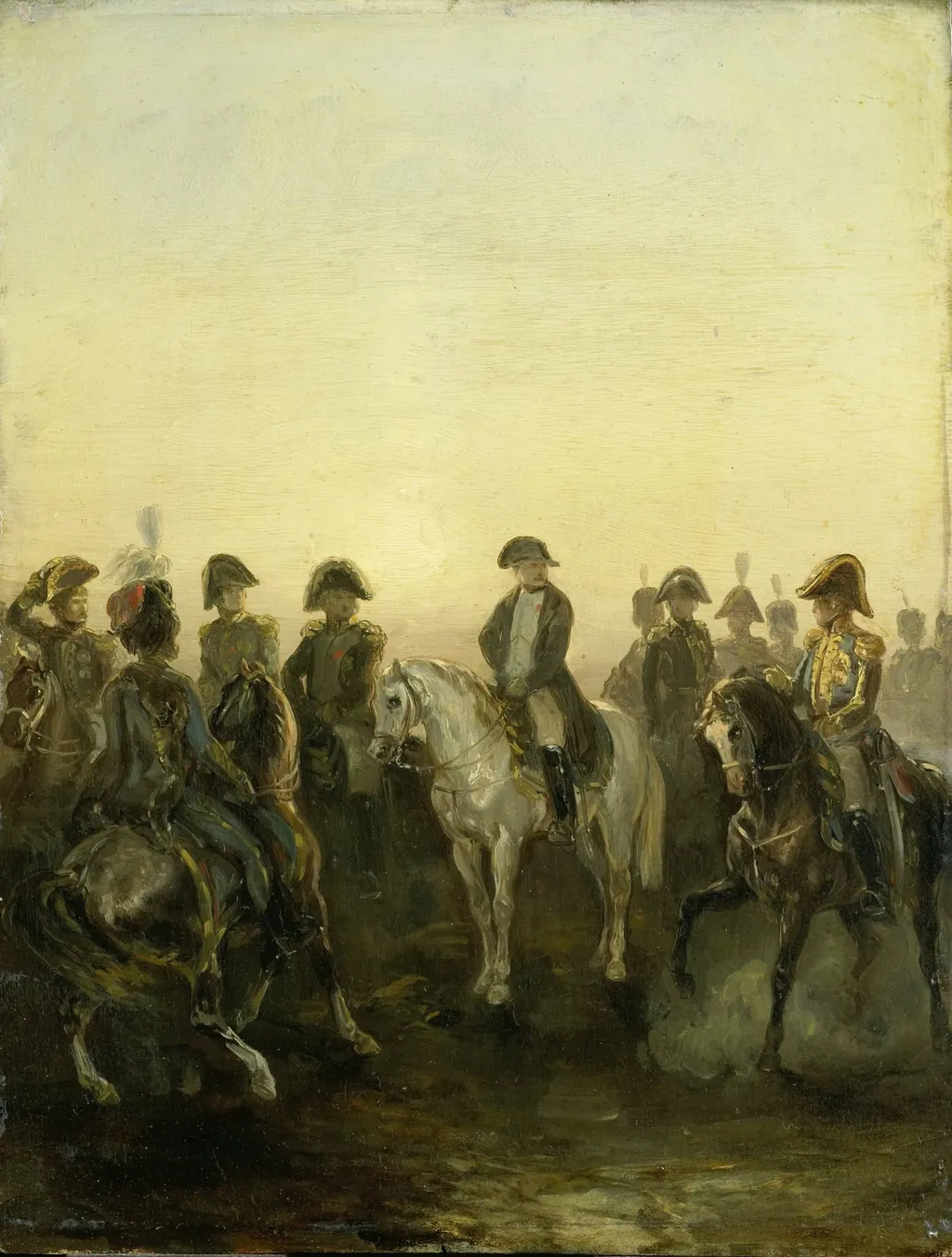
Napoleon with his Staff is an unspecified painting by the Biedermeier artist Charles Rochussen. It dates from 1845 and is held in the collection of the Rijksmuseum.
About this work
Overview
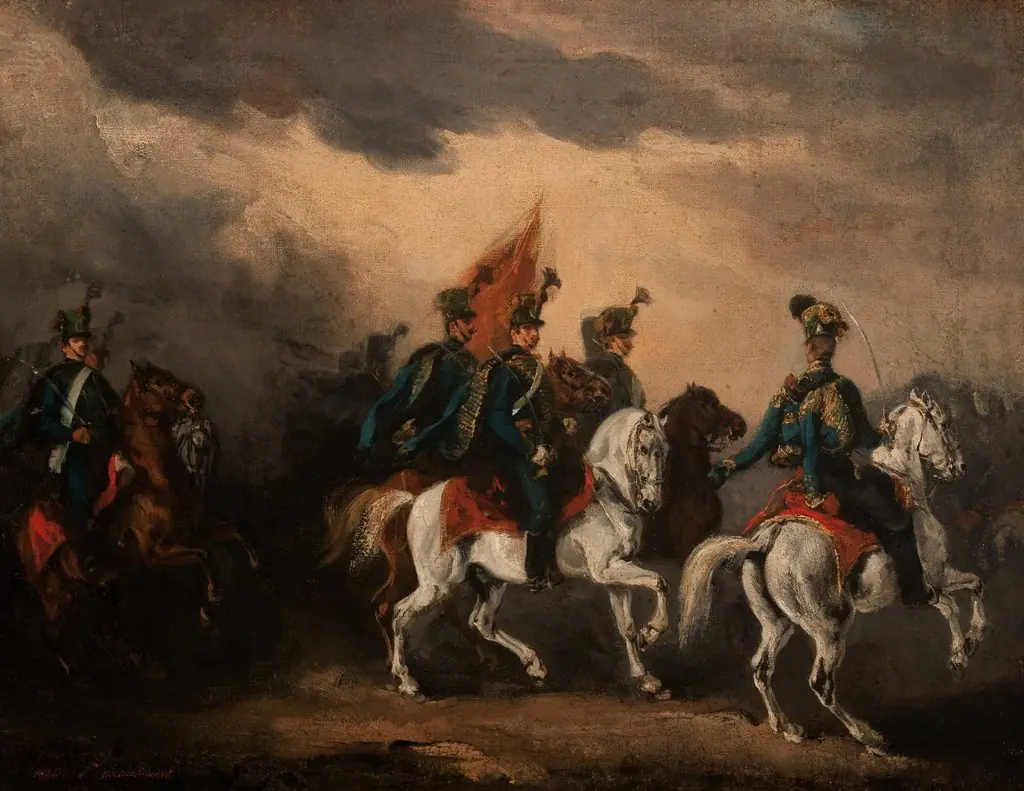
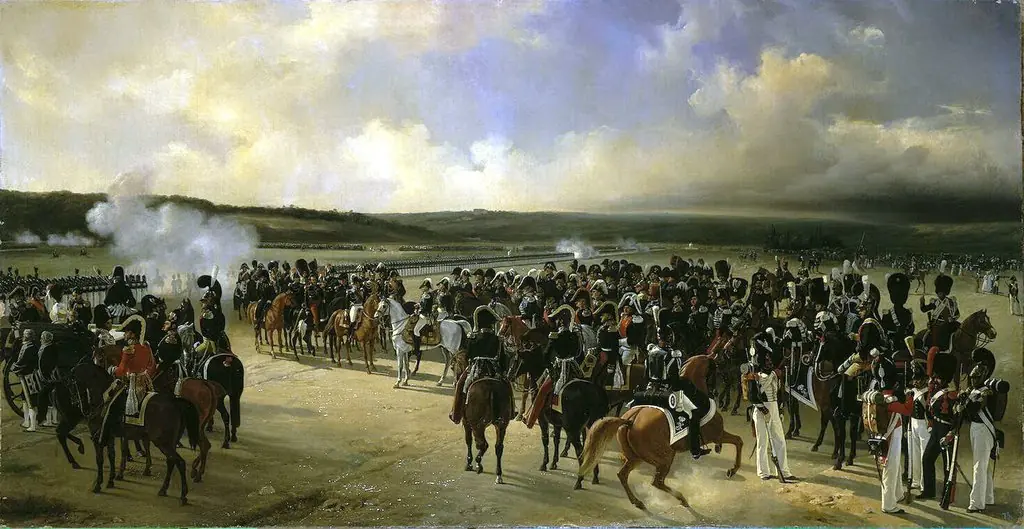
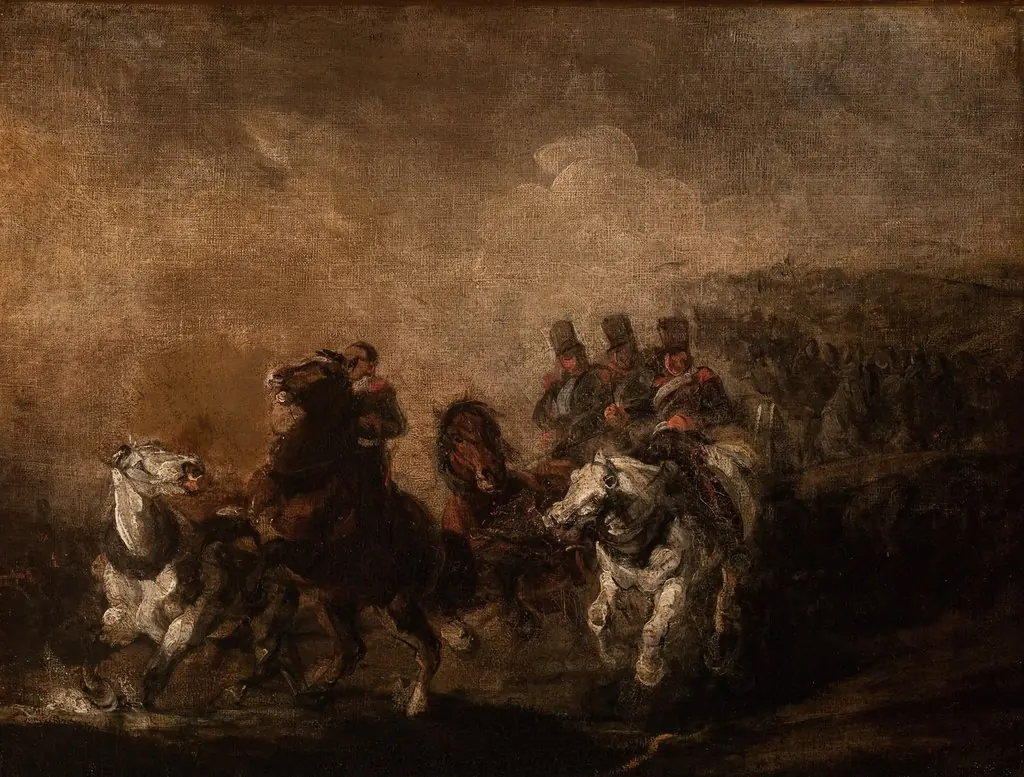
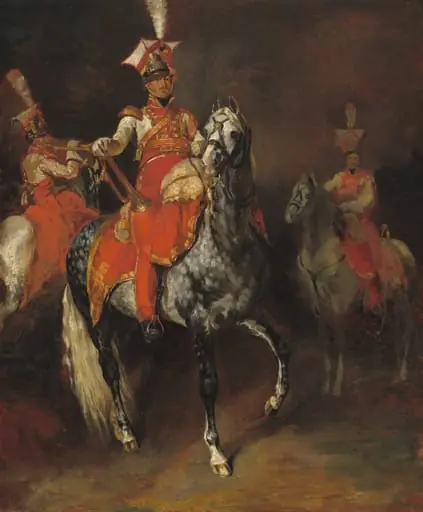
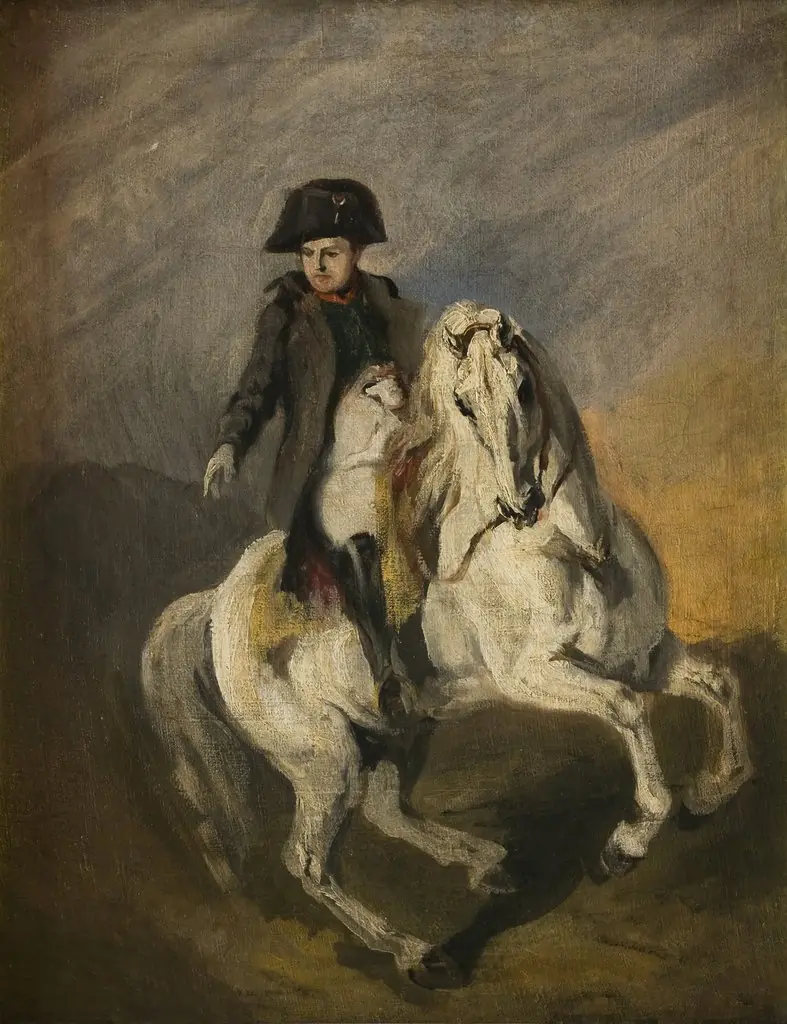
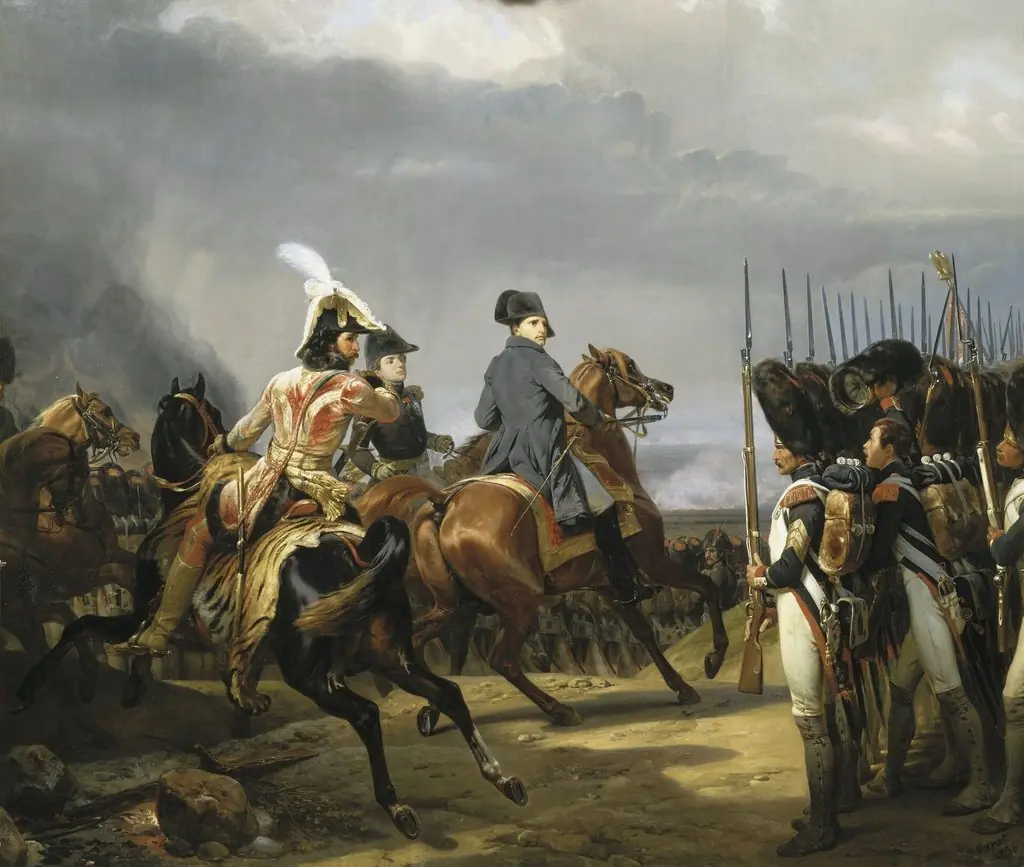
This painting depicts Napoleon Bonaparte mounted on a white horse, surrounded by his military staff, all on horseback beneath a turbulent sky. Created long after his death, the work is not a contemporary record but a retrospective tribute. The scene is staged with symbolic gravity rather than documentary precision, reflecting how Napoleon’s legacy was reshaped in memory.
Subject & Meaning
The stormy backdrop evokes the volatility of his career and the mythic weight of his historical impact.
Napoleon is centered as the commanding figure, elevated both physically and compositionally. His officers, arranged around him, suggest unity and hierarchy. The absence of identifiable facial features implies a deliberate move toward archetype rather than portraiture—emphasizing the idea of leadership itself, not the man. The stormy backdrop evokes the volatility of his career and the mythic weight of his historical impact.
Technique & Style
The artist employs a theatrical composition with strong verticals and a dark, moody sky to heighten drama. Brushwork is controlled but not overly detailed, particularly in the faces, which are rendered with generalized features. The white horse contrasts sharply with the somber tones of the uniforms and clouds, drawing the eye to Napoleon without relying on ornate detail or realism.
History & Provenance
Painted decades after Napoleon’s death, the work belongs to a 19th-century trend of romanticizing historical figures. It was likely commissioned to appeal to public fascination with the emperor’s legacy, not to document a specific event. The artist, never having witnessed Napoleon in person, relied on established iconography and written accounts to reconstruct the scene.
Context
In the decades following Napoleon’s exile, European art increasingly turned to his image as a symbol of ambition, power, and downfall. This painting aligns with a broader cultural impulse to visualize historical figures through emotional and symbolic lenses rather than factual accuracy. Such works served both national memory and the growing market for historical imagery.
Legacy
The painting contributes to the enduring visual language of Napoleonic myth, where grandeur and melancholy coexist. Its generic portrayal of leadership influenced later depictions of authority in military and political art. Though not historically precise, it remains a clear example of how collective memory transforms individuals into enduring symbols.
Artist & collection
Artist
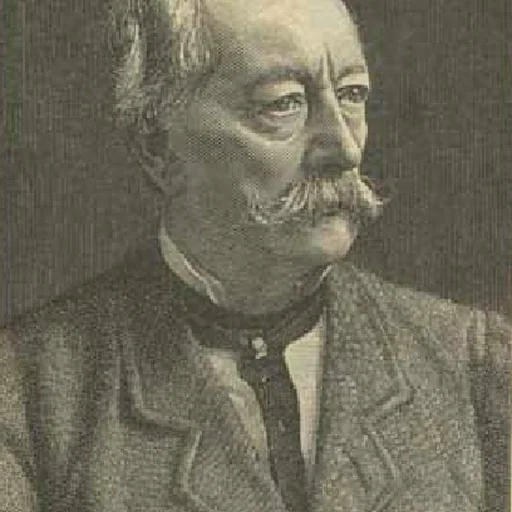
Charles Rochussen (1 August 1814 in Kralingen – 22 September 1894 in Rotterdam) was a Dutch illustrator and printmaker.