Artwork
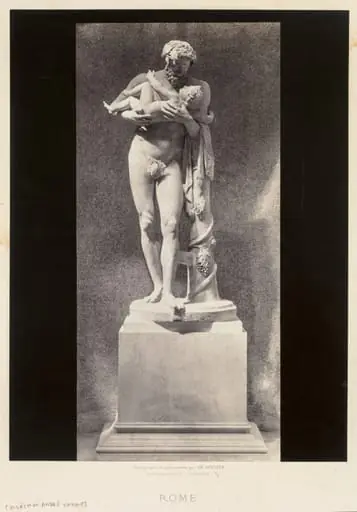
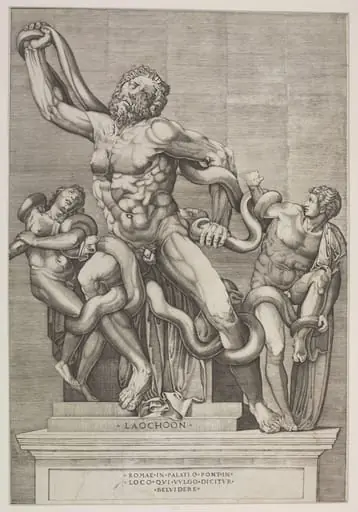
Rome: Groupe de Laocoon (Vatican)
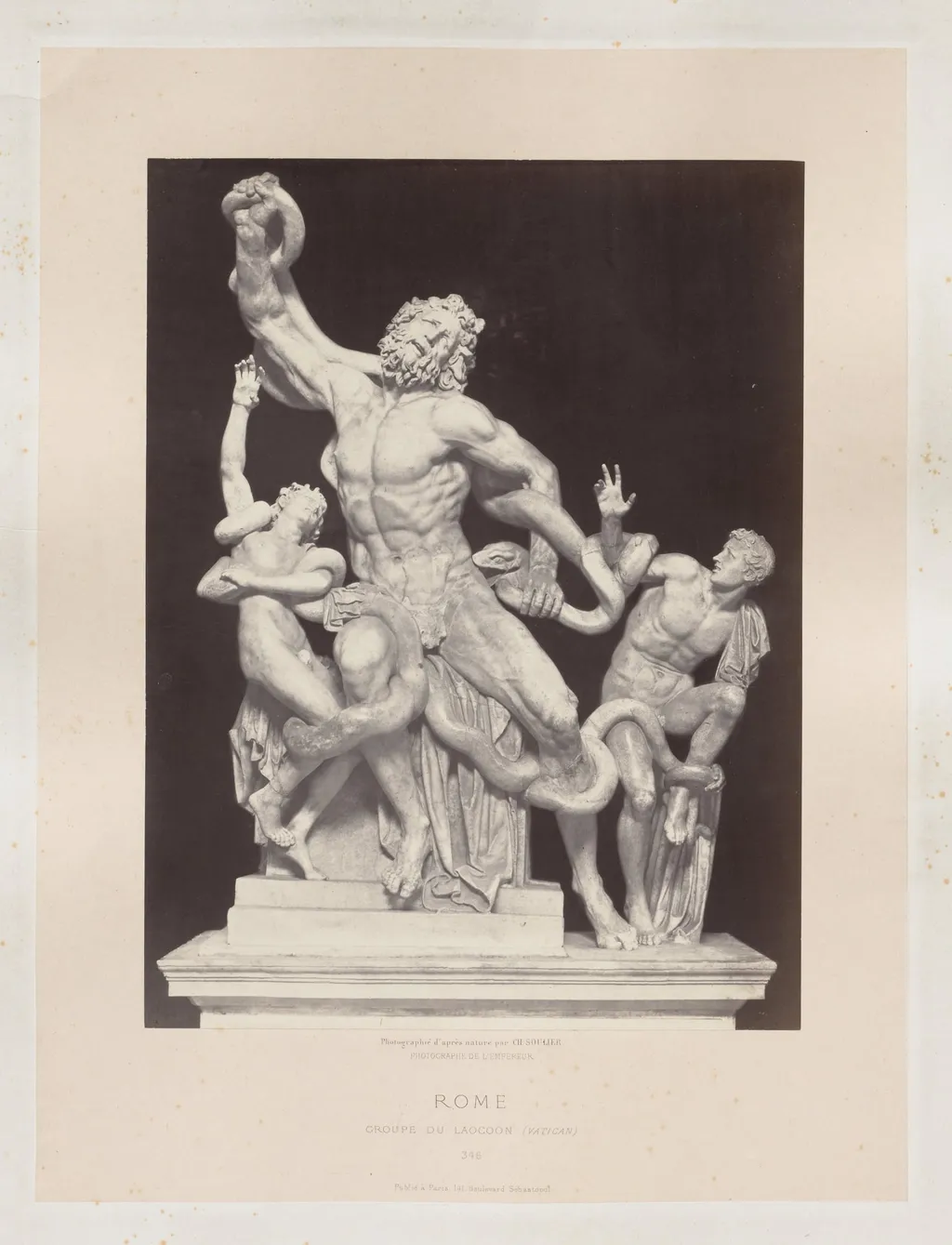
Rome: Groupe de Laocoon (Vatican) is a photography by the Impressionist artist Charles Soulier. It dates from 1860 and is held in the collection of the Cleveland Museum of Art.
About this work
Overview
This photograph, taken around 1860 by Charles Soulier, captures the famous Hellenistic sculpture known as the Laocoön Group, housed in the Vatican Museums.
This photograph, taken around 1860 by Charles Soulier, captures the famous Hellenistic sculpture known as the Laocoön Group, housed in the Vatican Museums. Soulier’s image documents the sculpture’s dramatic composition with careful attention to light and form, preserving its emotional intensity for a 19th-century audience. The photograph is now part of the collection at The Cleveland Museum of Art.
Subject & Meaning
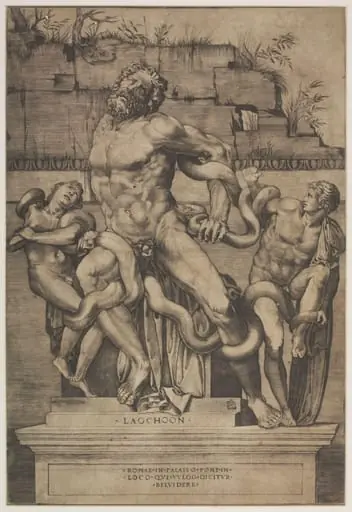
The sculpture depicts the Trojan priest Laocoön and his two sons attacked by sea serpents, a scene from Greek myth in which the gods punish Laocoön for warning against the Trojan Horse. The figures convey anguish and futility: Laocoön’s strained posture and contorted face contrast with the still, youthful faces of his sons, emphasizing the inevitability of divine retribution and human vulnerability.
Technique & Style
Soulier’s photograph renders the sculpture’s intricate carving with sharp tonal contrasts, highlighting the muscular tension in Laocoön’s body and the sinuous curves of the serpents. The smooth surfaces of the boys’ skin and the rougher textures of the snakes’ scales are rendered with precision, reflecting both the original marble’s detail and the photographic medium’s capacity for documentary clarity.
History & Provenance
The Laocoön Group was unearthed in Rome in 1506 and quickly became a celebrated antiquity, influencing Renaissance and Neoclassical art. Soulier’s photograph, made in the mid-19th century, was part of a broader effort to document classical sculptures for scholarly and public dissemination. It entered The Cleveland Museum of Art’s collection as part of its growing photographic archive of ancient art.
Context
In the 1860s, photography emerged as a vital tool for art historians and institutions seeking to catalog and study classical sculptures. Soulier’s image reflects this shift, offering a reproducible record of the Laocoön Group at a time when travel to Rome remained difficult. The photograph served both academic and aesthetic purposes, bridging ancient sculpture and modern visual culture.
Legacy
Soulier’s photograph preserves the Laocoön Group’s appearance in the 19th century, before later restorations and environmental changes altered its condition. It remains a key reference for understanding how the sculpture was perceived in the age of emerging photographic documentation, contributing to ongoing scholarly engagement with classical art and its modern reception.
Artist & collection