Artwork
Les Français croquès par eux-mêmes: Perruques a la Julienne, Chapeaux de satin au beurre d'anchois, robe au jus
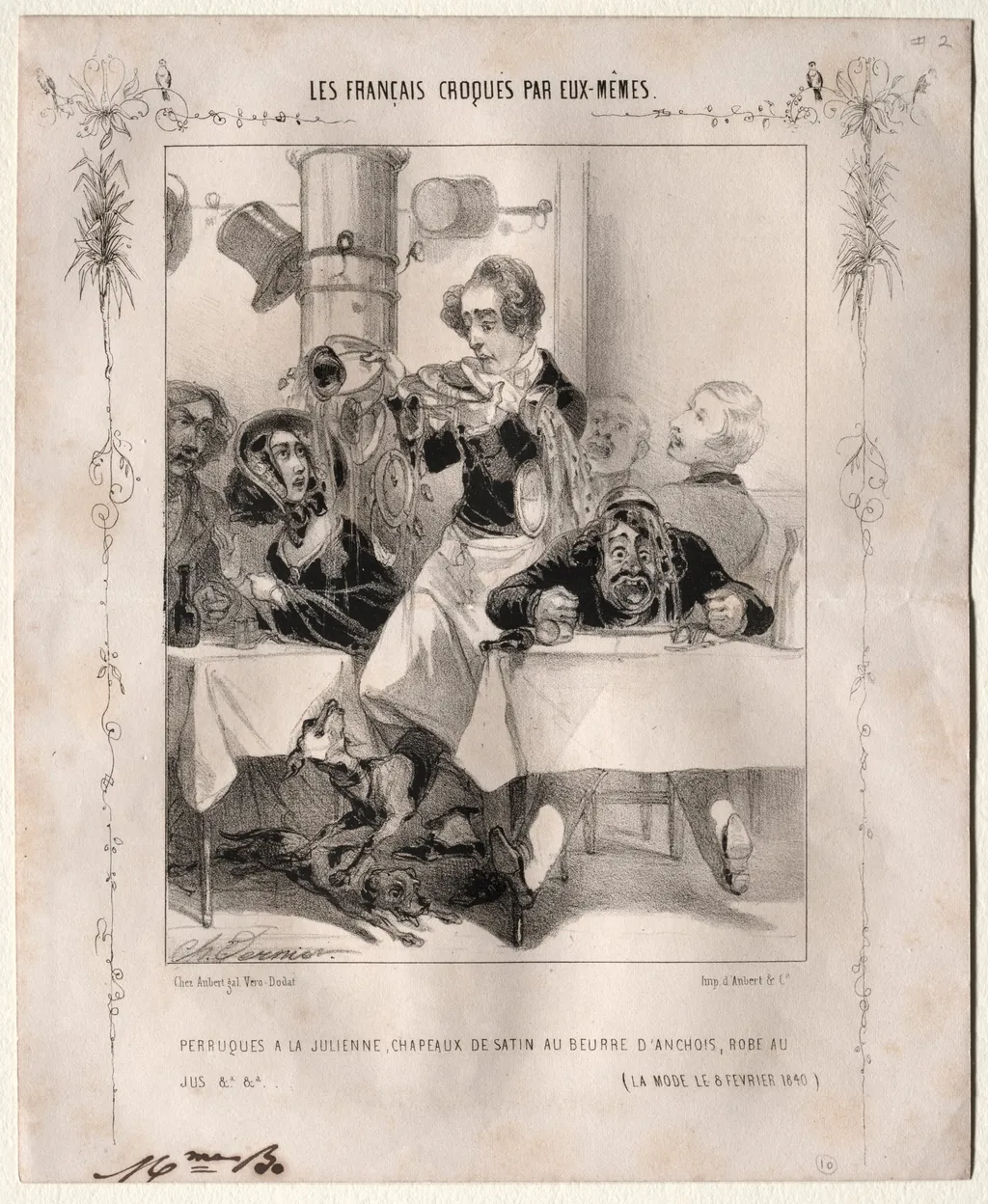
Les Français croquès par eux-mêmes: Perruques a la Julienne, Chapeaux de satin au beurre d'anchois, robe au jus is a print by the Romanticist artist Charles Vernier. It dates from 1840 and is held in the collection of the Cleveland Museum of Art.
About this work
Overview
Created in 1840 by Charles Vernier, this print is part of a series titled 'Les Français croqués par eux-mêmes,' translating to 'The French drawn by themselves.
Created in 1840 by Charles Vernier, this print is part of a series titled 'Les Français croqués par eux-mêmes,' translating to 'The French drawn by themselves.' Executed as a satirical sketch, it captures a moment of domestic absurdity with exaggerated figures and chaotic composition. The work resides in The Cleveland Museum of Art and reflects 19th-century French social commentary through visual humor.
Subject & Meaning
The scene depicts a woman in an oversized wig standing near a window, visibly startled, while a man lies disheveled on the floor amid tangled linens. Others in the room express shock or irritation. The title suggests self-critique by the French, targeting the excesses of contemporary fashion. The absurd juxtaposition of elaborate attire with disorder implies a critique of vanity and social pretense.
Technique & Style
Vernier employs loose, expressive ink lines to convey movement and emotion, emphasizing caricature over realism. Facial expressions are heightened, and clothing is distorted for comedic effect—wigs swell unnaturally, hats appear misshapen. The composition is deliberately cluttered, enhancing the sense of chaos. Text at the top anchors the satirical intent, framing the image as a self-directed mockery of French trends.
History & Provenance
The print was produced in 1840 during a period of growing public satire in French visual culture. It entered The Cleveland Museum of Art’s collection through documented acquisition, though its early ownership history remains unrecorded. As part of a broader series, it reflects the era’s interest in using print media to lampoon social norms, particularly among the urban middle and upper classes.
Context
Emerging in the aftermath of the July Monarchy, the work aligns with a wave of illustrated satire that mocked aristocratic and bourgeois fashions. Exaggerated wigs and ornate hats were common targets, symbolizing outdated elitism. Vernier’s depiction echoes broader cultural shifts toward democratized humor in print, where everyday people began to critique the very styles they once emulated.
Legacy
Though not widely exhibited today, the print contributes to the understanding of 19th-century French graphic satire. It exemplifies how visual humor was used to question social conformity and aesthetic excess. Its preservation in a major museum underscores its value as a historical document of public sentiment, rather than as a work of fine art in the traditional sense.
Artist & collection
Artist
Charles Henri Vernier was a French Polynesian religious leader, academic, and politician.

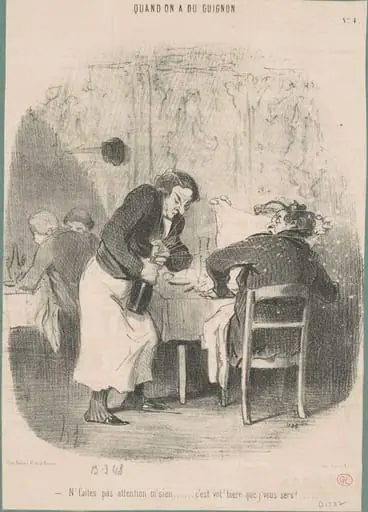 N'faites pas attention m'sieu ...
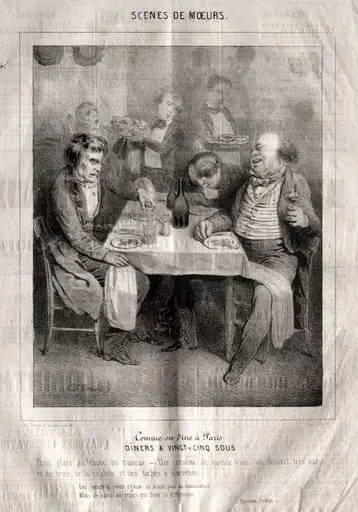 Scènes de moeurs: Comme ou dine à Paris. Diners a vingt-cing sous. Trois plates au choix du traiteur...
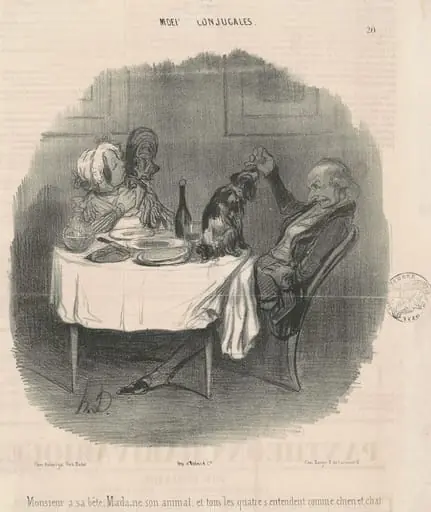 Monsieur a sa bête, Madame son animal...
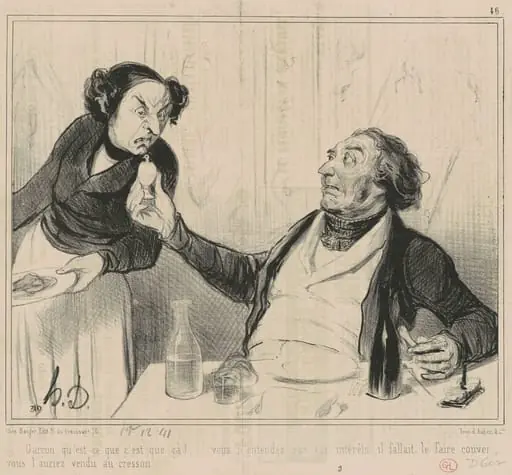 Garçon, qu'est-ce que c'est que ça?...
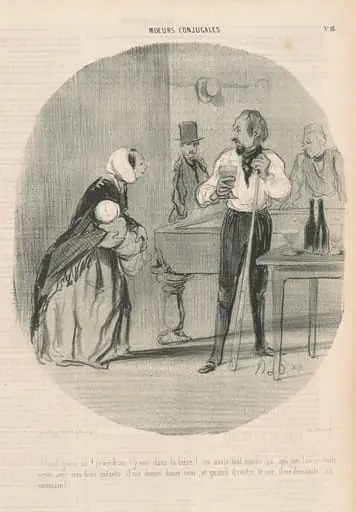 Grand Gueux va! je voudrais t'y voir
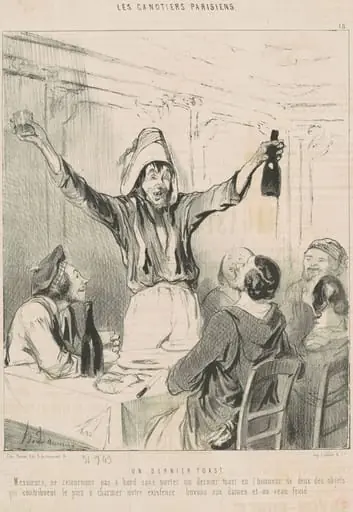 Un dernier toast
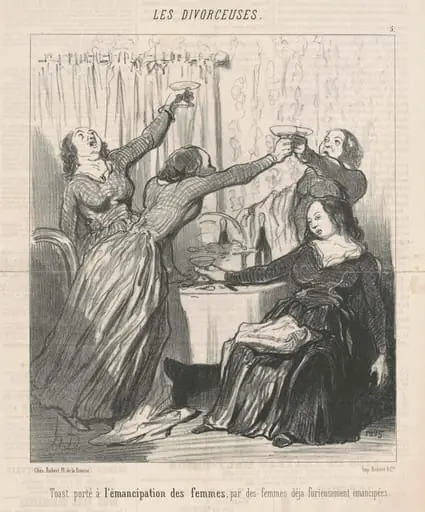 Toast porté a l'émancipation des femmes ...
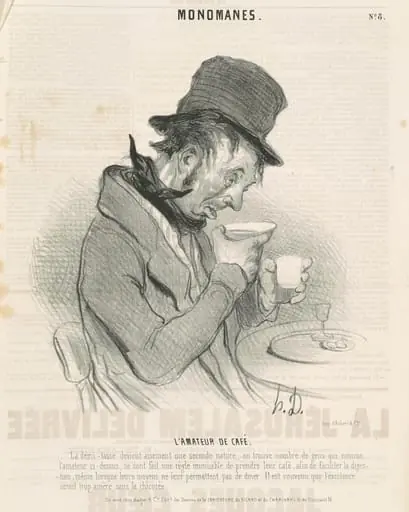 L'amateur de café