Artwork
Scènes de moeurs: Comme ou dine à Paris. Diners a vingt-cing sous. Trois plates au choix du traiteur...
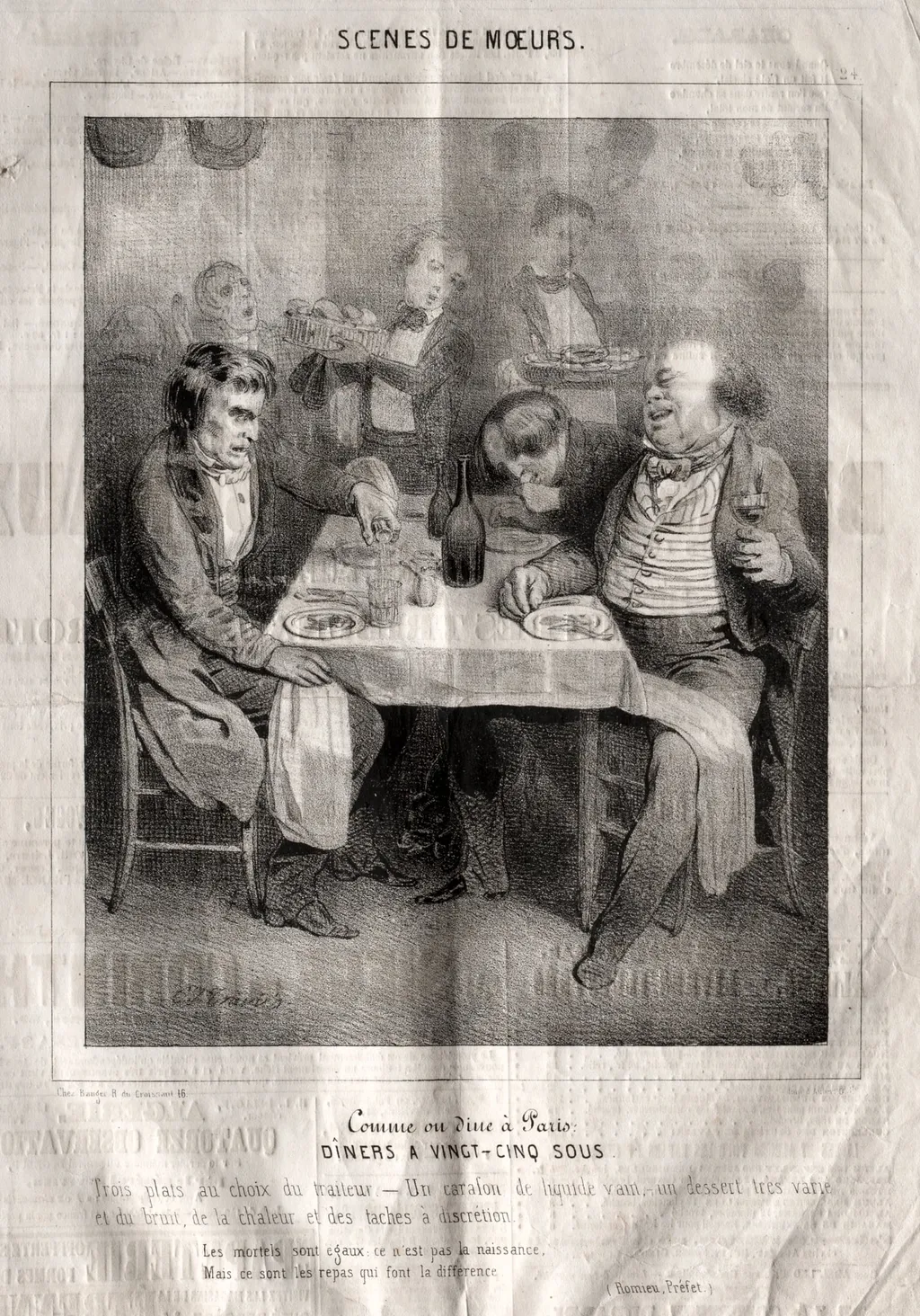
Scènes de moeurs: Comme ou dine à Paris. Diners a vingt-cing sous. Trois plates au choix du traiteur... is a print by the Romanticist artist Charles Joseph Traviès de Villers. It dates from 1838 and is held in the collection of the Cleveland Museum of Art.
About this work
Overview
Created around 1838 by Charles Joseph Traviès de Villers, this print captures a modest Parisian dining scene. It belongs to a series documenting everyday life in the city, focusing on working-class routines. The work is part of the collection at The Cleveland Museum of Art, where it is preserved as an example of 19th-century social observation through graphic art.
Subject & Meaning
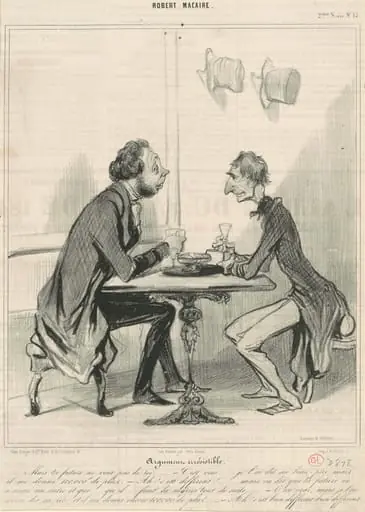
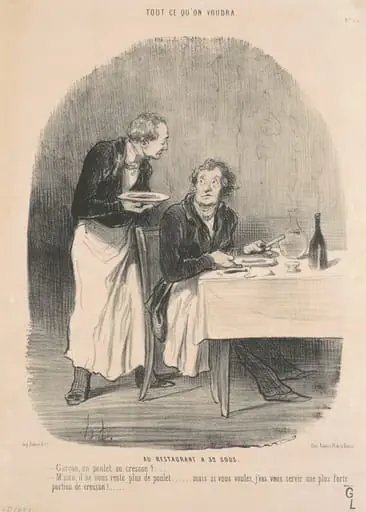
The image depicts a group of men sharing a simple meal at a low-cost eatery, paying twenty-five sous for three dish options selected from the caterer’s offerings. Their postures and interactions suggest camaraderie amid economic constraint. The scene reflects the realities of urban laborers, presenting dignity in ordinary ritual rather than idealizing leisure or wealth.
Technique & Style
Traviès employed fine line engraving and subtle tonal contrasts to render textures—fabric, ceramic, glass—with precision. Light falls naturally across the table, defining forms without theatricality. The composition avoids dramatic gestures, favoring quiet realism. While influenced by Romantic sensibilities, the work prioritizes observational detail over emotional exaggeration.
History & Provenance
The print was produced during a period of growing interest in urban social documentation in France. It circulated as part of a broader series on Parisian life, likely published in periodicals or albums aimed at middle-class audiences. The Cleveland Museum of Art acquired it as part of its 19th-century European graphic arts collection, preserving its historical context.
Context
In 1830s Paris, rising urbanization and economic disparity shaped public discourse. Works like this one responded to a public appetite for images of everyday life, particularly among those outside elite circles. Traviès’s focus on affordable dining reflects broader societal interest in class, consumption, and the rhythms of city existence.
Legacy
This print contributes to a tradition of social documentation in graphic art that influenced later realist and impressionist depictions of urban life. Though not widely known today, it remains a quiet testament to the dignity of ordinary moments, offering insight into how artists of the time observed and recorded the lives of common people.
Artist & collection

Artist
Charles Joseph Traviès de Villers
Charles-Joseph Traviès de Villers, also known simply as Traviès, was a Swiss-born French painter, lithographer, and caricaturist whose work appeared regularly in Le Charivari and La Caricature.

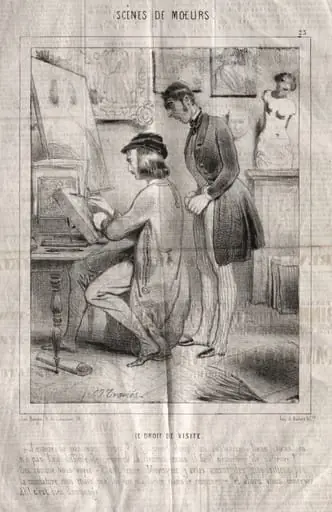 Scènes de moeurs: La Droit de visite. J'espère ne pas vous gener?...
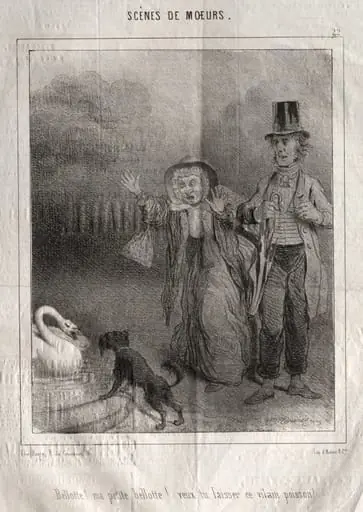 Scènes de moeurs: Bellotte! ma petite Bellote! veux-tu laisser ce vilain poisson!
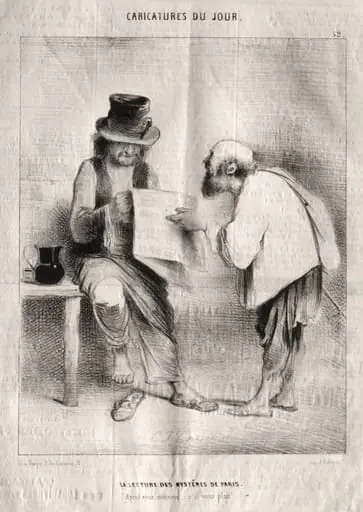 Caricatures du jour: La Lecture des mystères de Paris
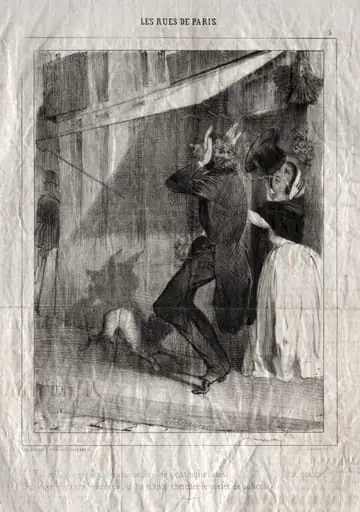 Les Rues de Paris: En voilà encore des mécaniques du cinq cent mille noms . . . c'est quelque chapelier qui aura invente ca. Ou 'on m'aille chercher le prefet de police!
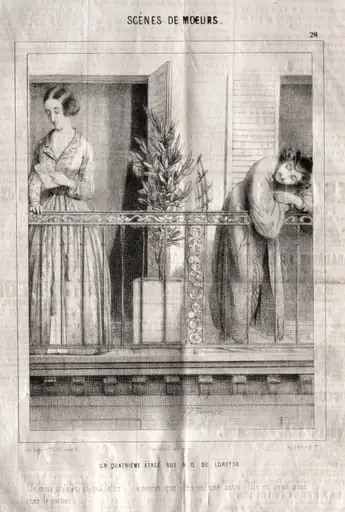 Scènes de moeurs: Un quatrieme étage rue N. D. de Lorette. Je crois qu'elle lit ma lettre...à moins que c'en soit une autre. Elle en avait neuf chez le portier
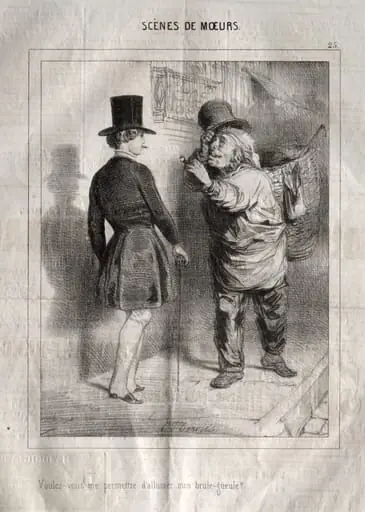 Scènes de Moeurs: Voulez-vous me permettre d'allumer mon brule-gueule?
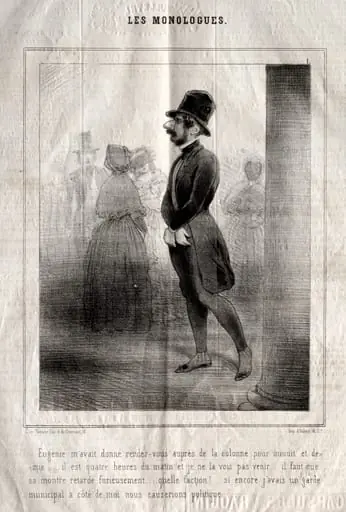 Les Monologues: Eugénie m'avait donné rendez-vous auprès de la colonne pour minuit et demie...
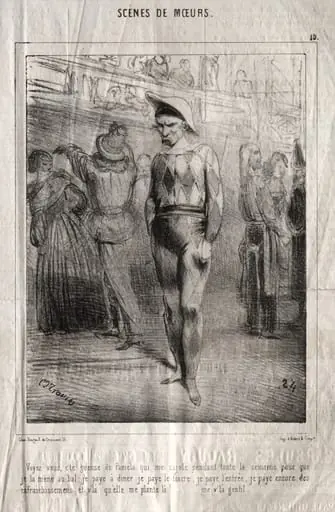 Scènes de moeurs: Voyez vous, c'te queuse de Pamela qui me cajole pendant toute la semaine pour que je la mene au bal...