Artwork
Toast porté a l'émancipation des femmes ...
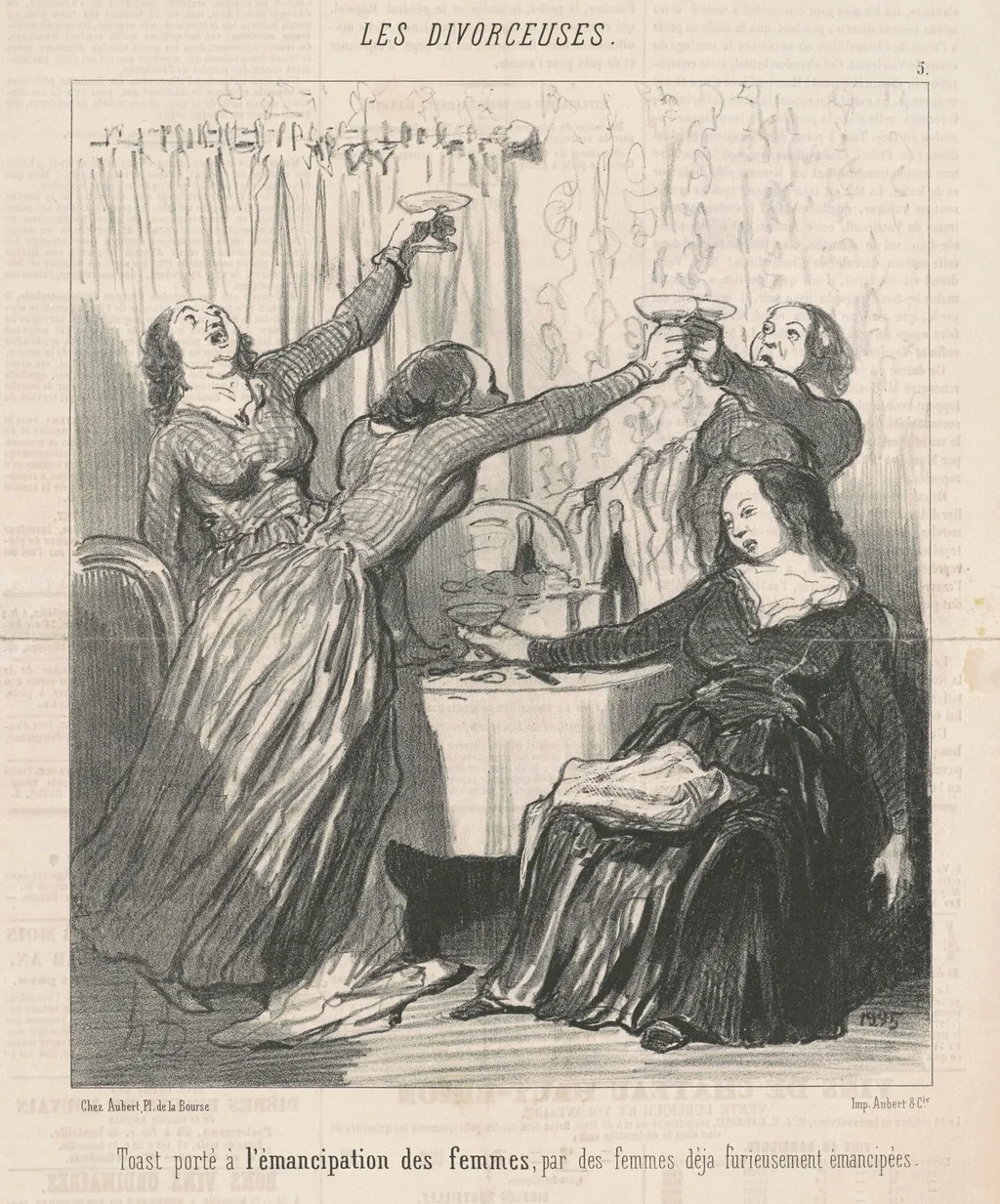
Toast porté a l'émancipation des femmes ... is an ink print by the Romanticist artist Honoré Daumier. It dates from 1848 and is held in the collection of the National Gallery of Art.
About this work
This lithograph shows four women toasting together. Their dresses and hairstyles look 1800s fancy. One holds a glass up high. Others smile or gaze at each other.
Daumier made this in 1848. It celebrates women pushing for rights. The women seem powerful and united.
This print uses a flat style, not deep shadows. See how the lines stay bold and clean.
Look up lithography next.
Overview
Honoré Daumier’s 1848 lithograph titled “Toast porté à l’émancipation des femmes” depicts a group of four women raising glasses in a collective toast. Rendered in a single‑plane composition, the image foregrounds their synchronized gesture, suggesting solidarity and shared purpose within a celebratory setting.
Subject & Meaning
The work foregrounds the emerging discourse on women’s rights in mid‑nineteenth‑century France. By presenting the women in confident, upward‑raised poses, Daumier underscores a sense of agency and collective empowerment, aligning the act of toasting with the broader aspiration for social and legal emancipation.
Technique & Style
Executed as a lithograph, the image relies on bold, unmodulated lines and a flat tonal field, avoiding the chiaroscuro typical of oil painting. The clear contours and uniform shading emphasize the figures’ silhouettes and the decorative details of their period dresses and coiffures.
History & Provenance
Created in 1848, a year marked by revolutionary upheaval across Europe, the print reflects contemporary political currents. It entered the public domain through Daumier’s prolific printmaking practice, circulating among reformist circles and later being acquired by several French municipal collections.
Context
The women’s attire—elegant gowns and elaborate hairstyles—mirrors fashionable Parisian dress of the 1840s, situating the scene within the urban middle class. Their unified gesture can be read against the backdrop of early feminist petitions and the 1848 Declaration of the Rights of Women, which sought legal recognition for women’s civic participation.
Artist & collection

Artist
Honoré-Victorin Daumier was a French painter, sculptor, and printmaker, whose many works offer commentary on the social and political life in France, from the Revolution of 1830 to the fall of the Second French Empire in 1870.









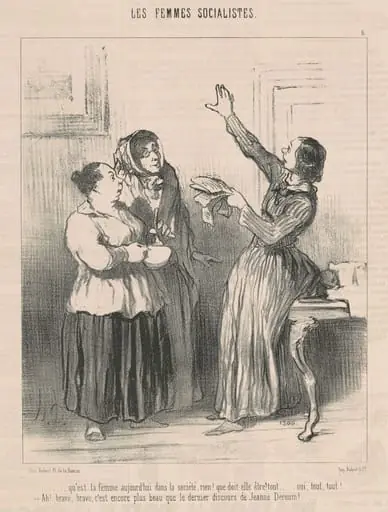 Qu'est la femme aujourd'hui dans la société ...
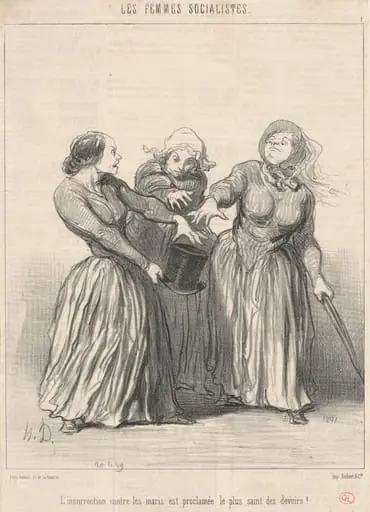 L'insurrection contre les maris ...
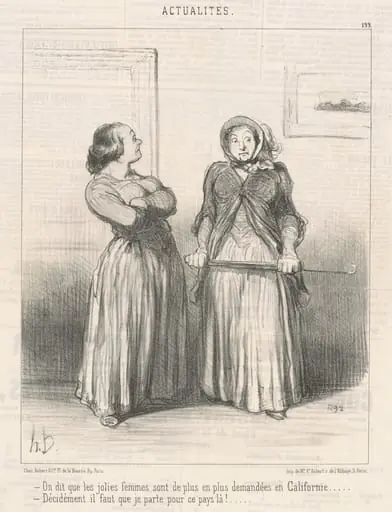 On dit que les jolies femmes sont ...
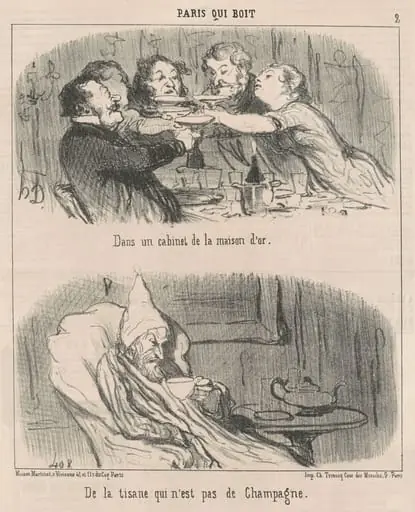 Dans un cabinet de la maison d'or
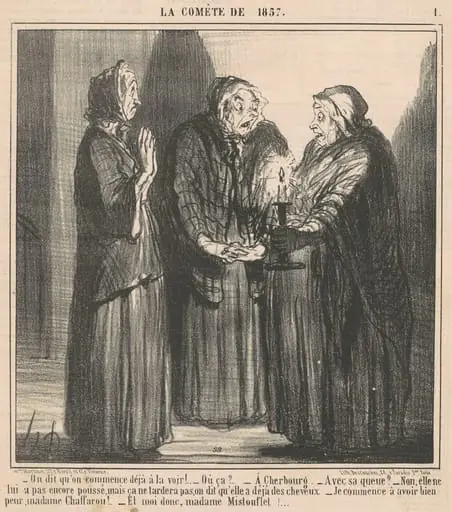 On dit qu'on commence déja a la voir ...
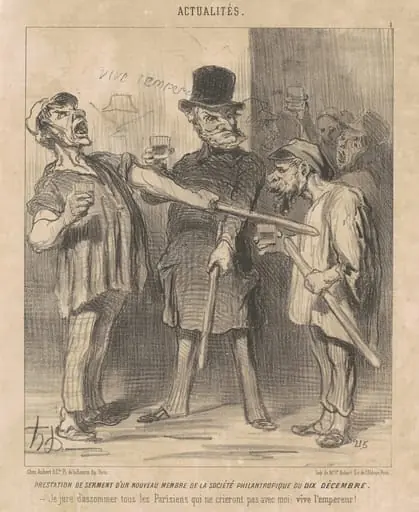 Prestation ... d'un ... membre ... du dix Décembre ...
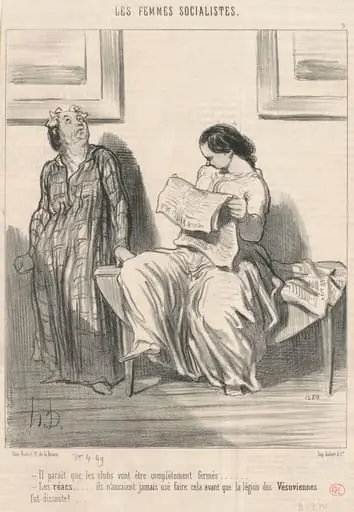 Il parait que les clubs vont être ... fermés ...
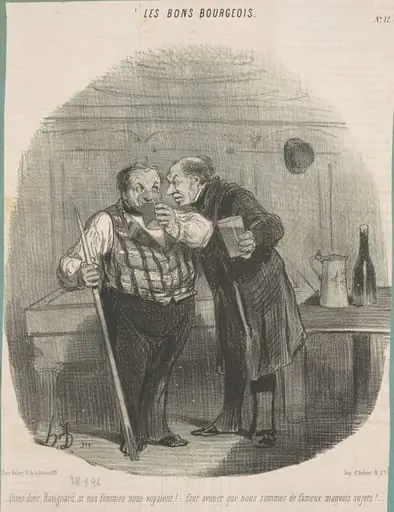 Dis donc, ravignard, si nos femmes nous voyaient! ...
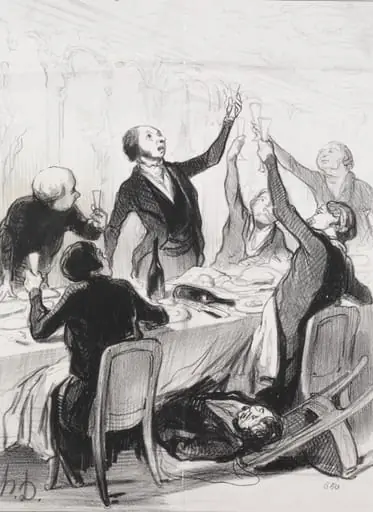 Gentlemen.... here goes a 43rd toast.... to the Temperance Society