Artwork
Chinese landscape with bridge
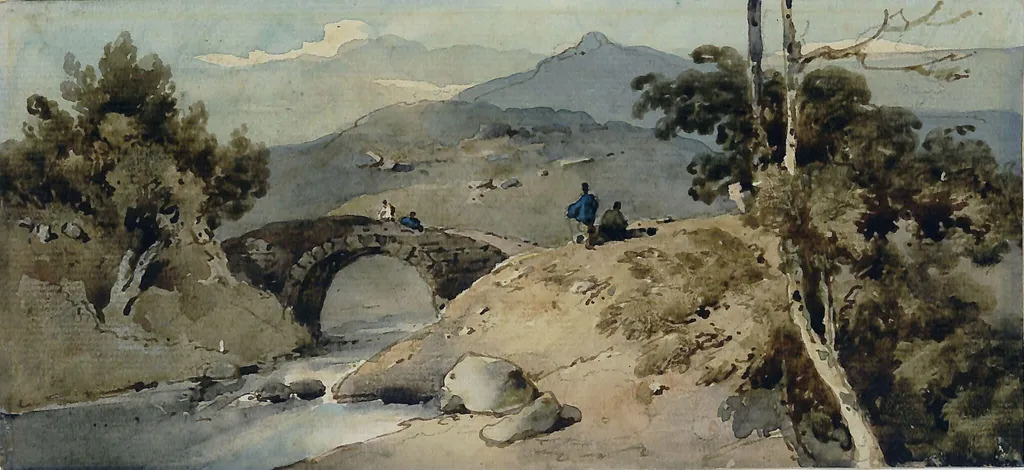
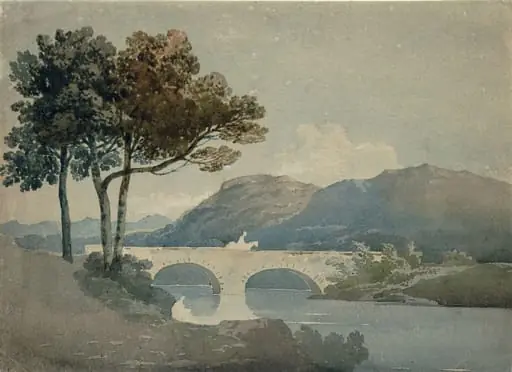
Chinese landscape with bridge is a watercolor work on paper by the Patna School of Painting artist George Chinnery. It dates from 1825 and is held in the collection of the Victoria and Albert Museum.
About this work
Overview
George Chinnery's *Chinese landscape with bridge* (1825) is a watercolour depicting a serene Asian-inspired scene, characterized by soft colors and loose brushstrokes, reflecting the artist's experience in Asia and adherence to contemporary watercolour conventions.
Subject & Meaning
The painting portrays a tranquil landscape with a stone bridge, figures, and natural elements, embodying Chinnery's fascination with Chinese visual traditions during his time in the region, and possibly evoking emotional resonance through its natural setting, aligning with Romantic-era sensibilities.
Technique & Style
Executed in soft greens, browns, and muted blues, the work features loose, sketchy brushstrokes suggestive of quick outdoor execution, consistent with early 19th-century watercolour practices.
History & Provenance
Part of a 1928 bequest by James Orange to the Victoria and Albert Museum, this watercolour accompanied other Chinnery works, including oils, miniatures, drawings, and sketchbooks.
Artist & collection

Artist
George Chinnery (Chinese: 錢納利; 5 January 1774 – 30 May 1852) was an English painter who spent most of his life in Asia, especially India and southern China.