Artwork
Mountain landscape with bridge
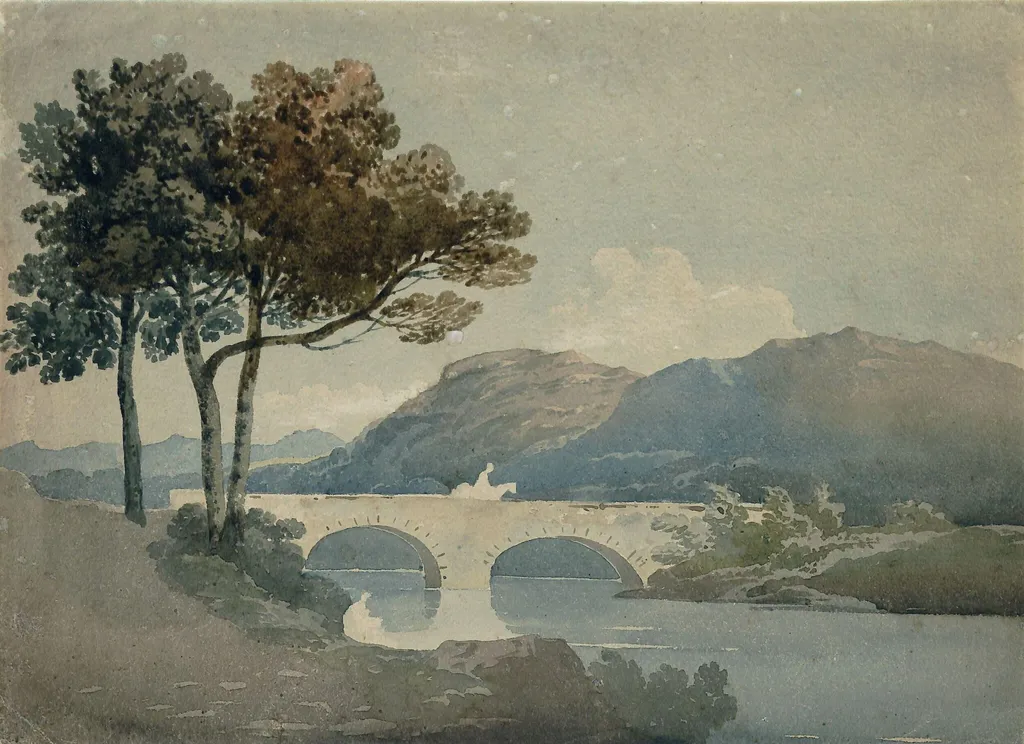
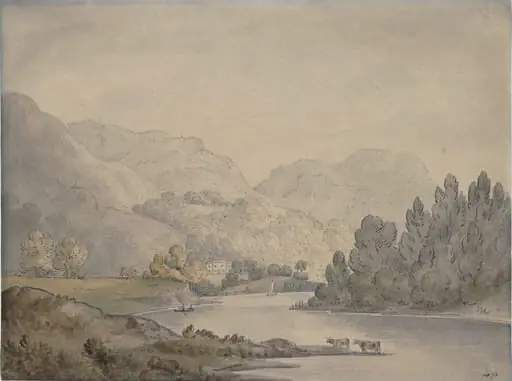
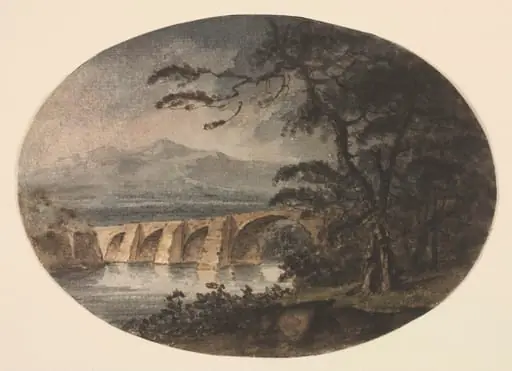
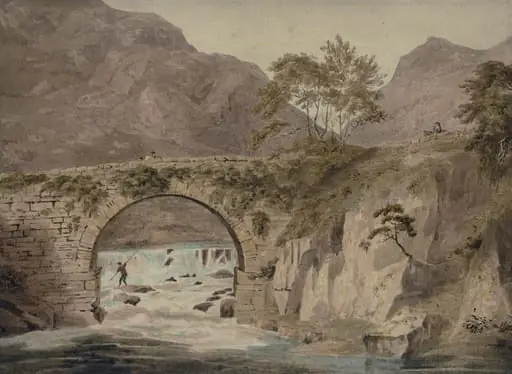
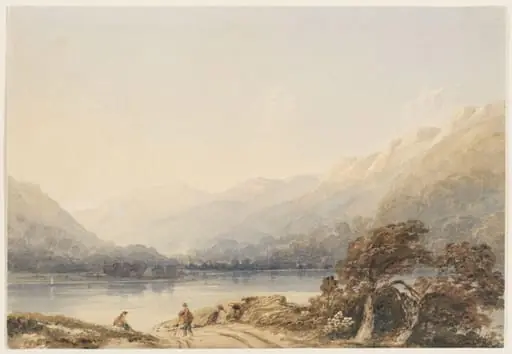
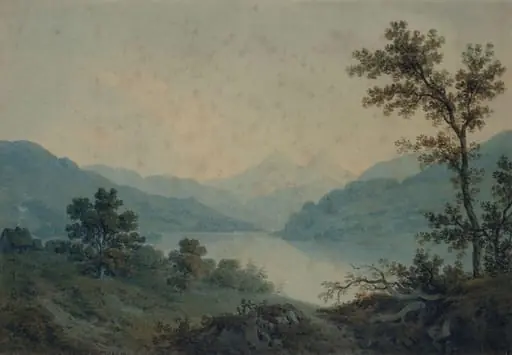
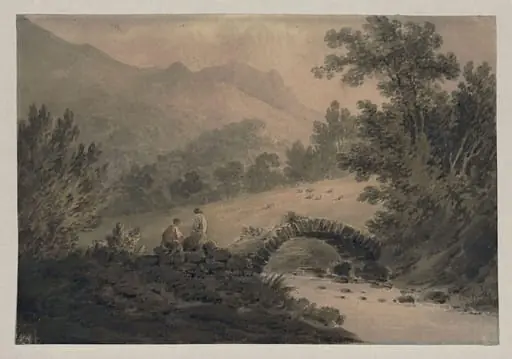
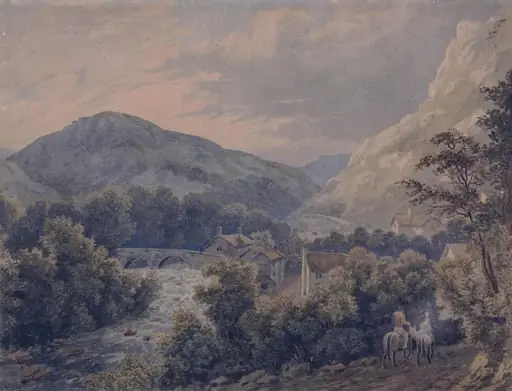
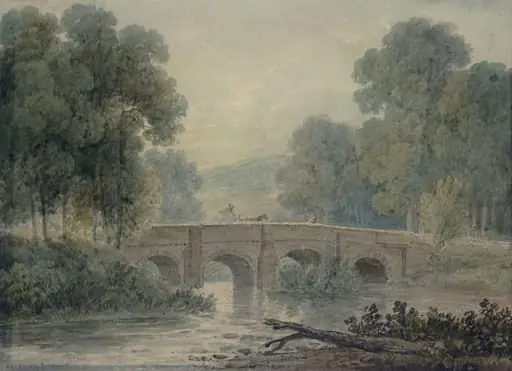
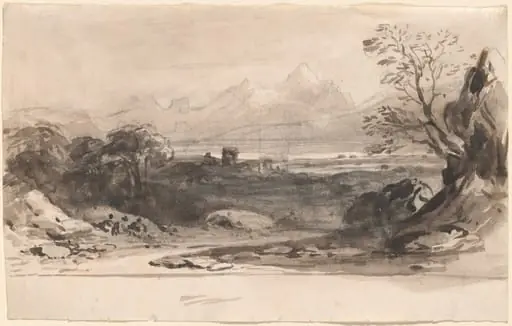
Mountain landscape with bridge is a watercolor work on paper by the Romanticist artist John Varley. It dates from 1800 and is held in the collection of the Victoria and Albert Museum.
About this work
Overview
Created in 1800, this watercolour by John Varley captures a tranquil mountainous scene with a stone bridge arching over a still river.
Created in 1800, this watercolour by John Varley captures a tranquil mountainous scene with a stone bridge arching over a still river. The composition is subdued, emphasizing quiet movement: horsemen cross the bridge, and a solitary figure near the water’s edge suggests quiet human presence amid nature. The medium’s transparency allows for a delicate interplay of washes, reinforcing the atmosphere of calm and distance.
Subject & Meaning
The scene portrays a modest, uneventful moment in a rural landscape, free from dramatic narrative. The bridge serves as a subtle connector between land and movement, while the lone walker and horsemen imply passage rather than arrival. The absence of grandeur or conflict invites contemplation, aligning with early 19th-century sensibilities that valued quiet observation over theatricality.
Technique & Style
Varley employed loose, fluid brushwork typical of watercolour’s expressive potential. Colours are applied thinly, allowing the paper’s white to suggest light and air. The blending of hues—soft greens, pale blues, and muted browns—creates a hazy depth, with distant hills dissolving into the sky. The technique prioritizes atmosphere over detail, enhancing the sense of stillness.
History & Provenance
The work is part of Varley’s broader output during a period when British artists were refining watercolour as a serious medium. It likely originated from his personal sketching trips in the countryside, though its specific provenance before entering the Victoria and Albert Museum’s collection remains undocumented. It reflects his role in elevating watercolour beyond preparatory studies.
Context
In early 1800s Britain, watercolour was gaining recognition as a legitimate art form, particularly among artists interested in landscape and topography. Varley, associated with the Watercolour Society, contributed to this shift by treating the medium with the same seriousness as oil. His work resonated with contemporary tastes for intimate, naturalistic scenes over idealized vistas.
Legacy
Varley’s approach influenced later generations of British watercolourists who valued spontaneity and atmospheric effect. This piece exemplifies his contribution to establishing watercolour as a medium capable of conveying mood and subtlety. Its quiet composition continues to be studied for its restraint and sensitivity to light, rather than for technical bravura.
Own this work as a print
Artist & collection
Artist
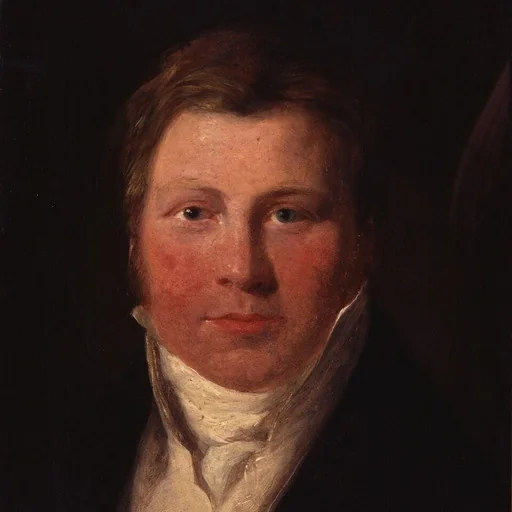
John Varley (17 August 1778 – 17 November 1842) was an English watercolour painter and astrologer, and a close friend of William Blake.

![Study of a Head in Profile [verso], by John Varley](https://artifactworldgallery.com/img/john-varley--study-of-a-head-in-profile-verso--3e16e84b6ceccae1-w320.webp)
![Two Studies of a Figure Holding a Basket [verso], by John Varley](https://artifactworldgallery.com/img/john-varley--two-studies-of-a-figure-holding-a-basket-verso--7e8aaeb3f643e9b3-w320.webp)