Artwork
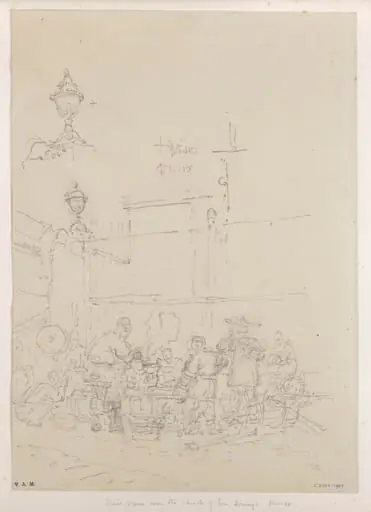
Market stalls by an entrance to a Chinese temple, Macau
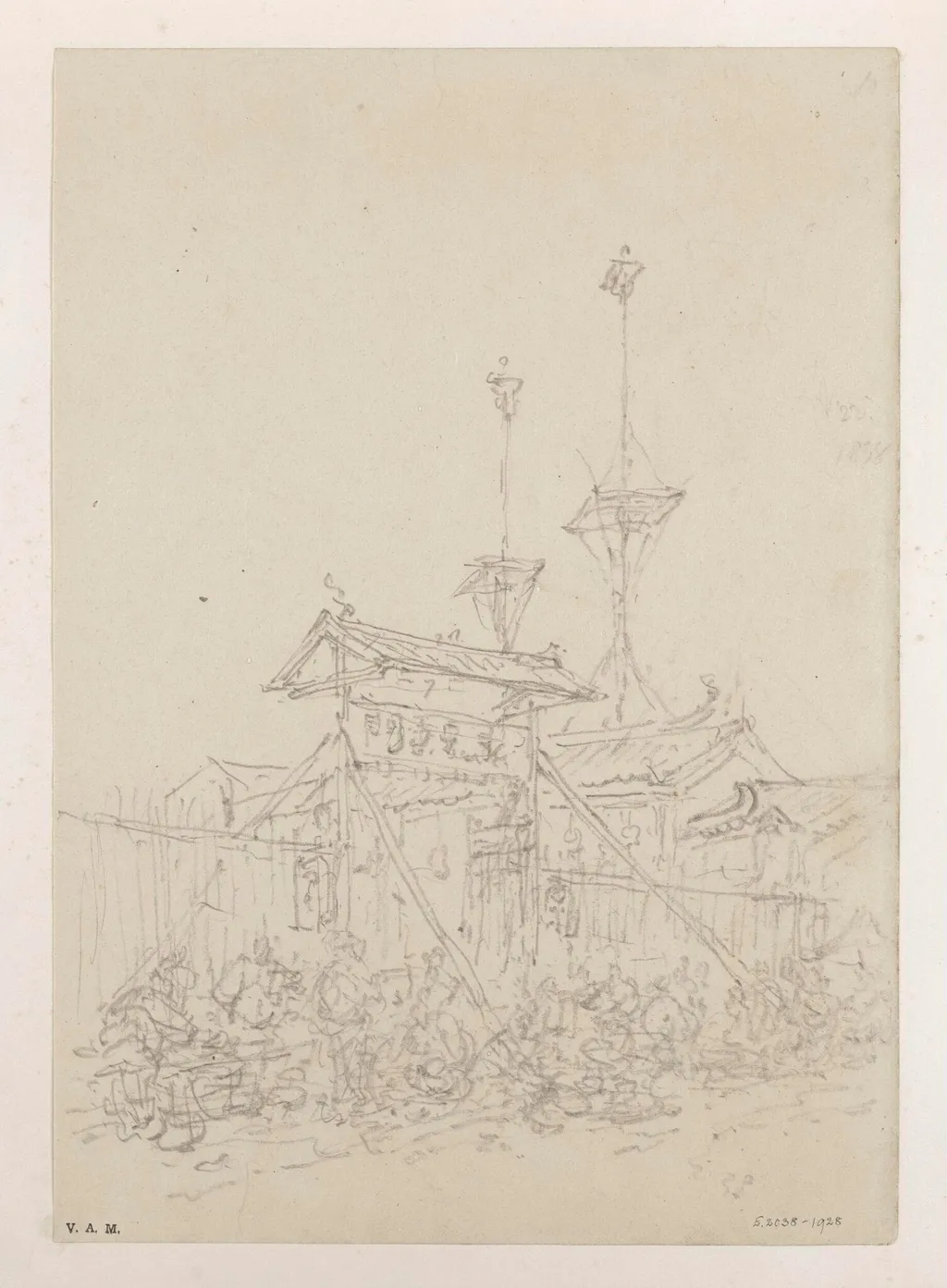
Market stalls by an entrance to a Chinese temple, Macau is a drawing by the Romanticist artist George Chinnery. It dates from 12 and is held in the collection of the Victoria and Albert Museum. This 1838 drawing depicts a bustling market scene adjacent to a temple entrance in Macau.
About this work
This drawing shows a busy market by a temple gate in old Macau. Carts and people crowd around railings. The gate opens to a roofed temple path beyond.
Chinnery sketched this in 1838. He lived in Macau for years and often drew daily life there. Notice how he uses lines to show shadows and depth.
Try his other works at the Victoria and Albert Museum.
Overview
This 1838 drawing depicts a bustling market scene adjacent to a temple entrance in Macau. Executed in line, the work captures the immediacy of daily life through a dense arrangement of figures, carts, and architectural elements. The composition balances the clamor of commerce with the quietude of the temple beyond, reflecting the artist’s sustained observation of the city’s urban fabric.
Subject & Meaning
The drawing records a moment of social interaction while hinting at the coexistence of secular and sacred spaces in nineteenth-century Macau.
The scene juxtaposes the transient energy of a market with the enduring presence of a temple gateway. Vendors, shoppers, and laborers fill the foreground, their activities framed by railings that guide the viewer’s eye toward the sheltered path leading to the temple. The drawing records a moment of social interaction while hinting at the coexistence of secular and sacred spaces in nineteenth-century Macau.
Technique & Style
Rendered in precise, economical lines, the drawing employs hatching and cross-hatching to suggest volume and shadow. The artist’s approach prioritizes clarity over detail, using overlapping forms to create depth without relying on tonal modulation. This linear style underscores the immediacy of the scene, capturing movement and spatial relationships with minimal embellishment.
History & Provenance
Created in 1838 by George Chinnery, the drawing stems from his prolonged residence in Macau, where he documented local life and architecture. Chinnery’s works from this period often circulated among European expatriates and collectors. The piece later entered the holdings of the Victoria and Albert Museum, where it remains part of a broader collection of his sketches from the region.
Context
During the early nineteenth century, Macau served as a critical port for trade between China and European powers. The city’s markets teemed with goods and people, while its temples retained cultural and religious significance. Chinnery’s drawings offer a visual record of this environment, reflecting both the commercial vitality and the architectural traditions of the period.
Artist & collection
Artist
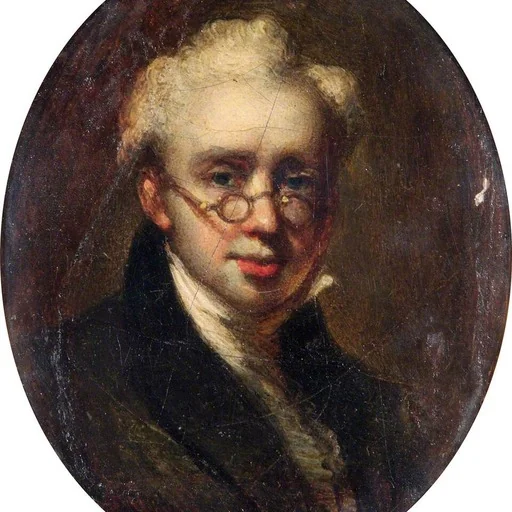
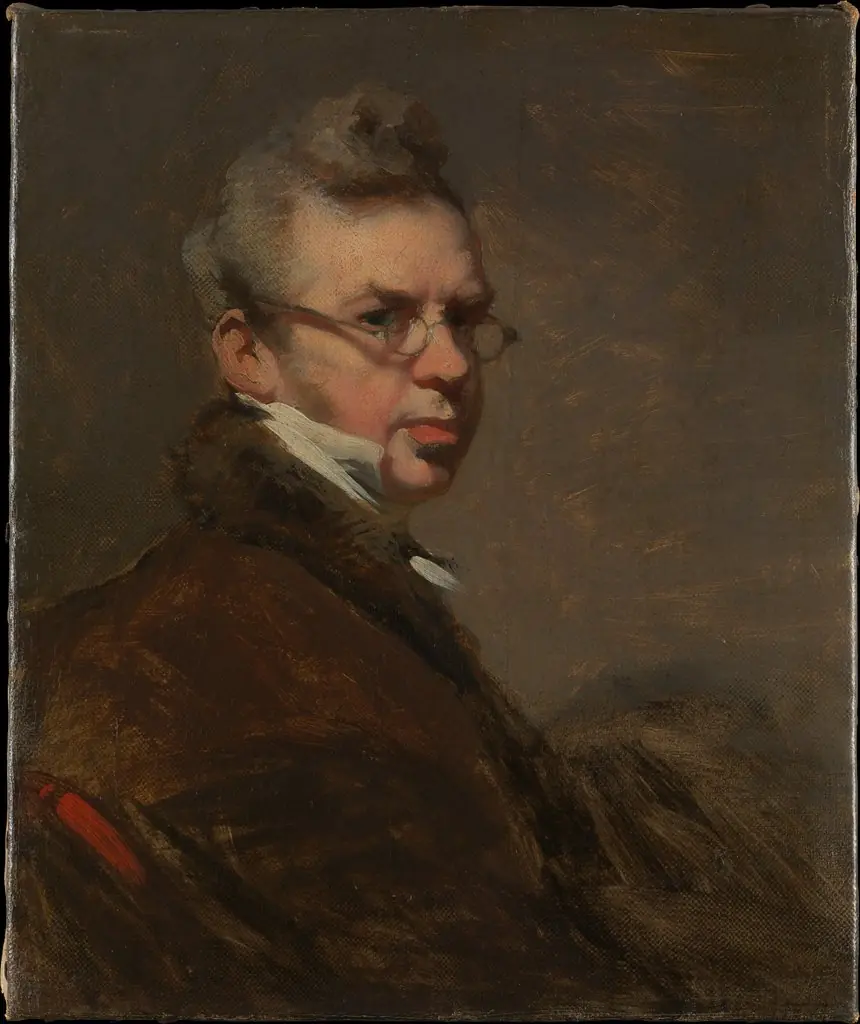
George Chinnery (Chinese: 錢納利; 5 January 1774 – 30 May 1852) was an English painter who spent most of his life in Asia, especially India and southern China.

 Market stalls outside S. Domingos Church, Macau
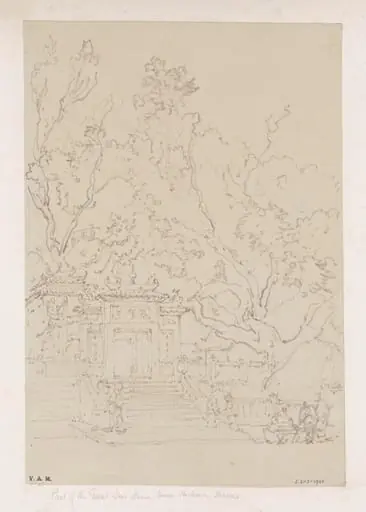 The A-Ma temple, Macau
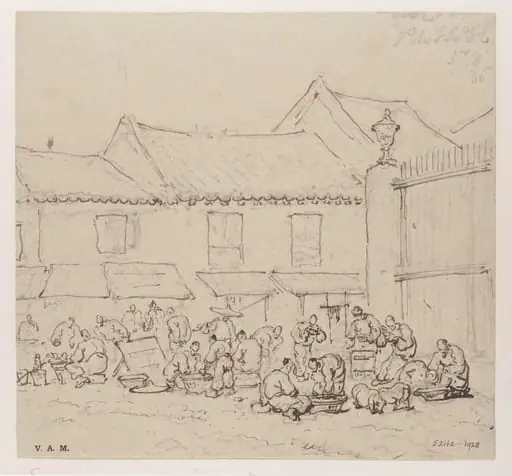 Vendors outside the Church of San Domingos, Macau
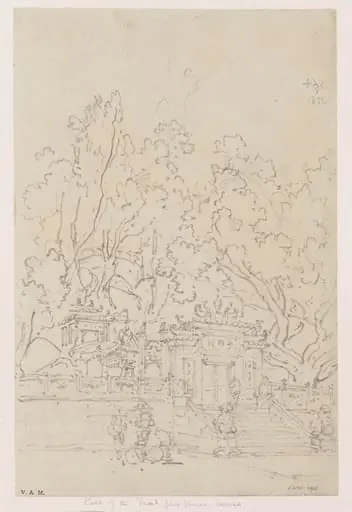 Part of the A-Ma Temple, Macau
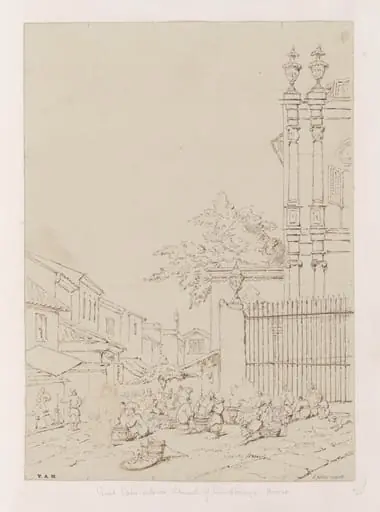 The market outside the church of S. Domingos, Macau
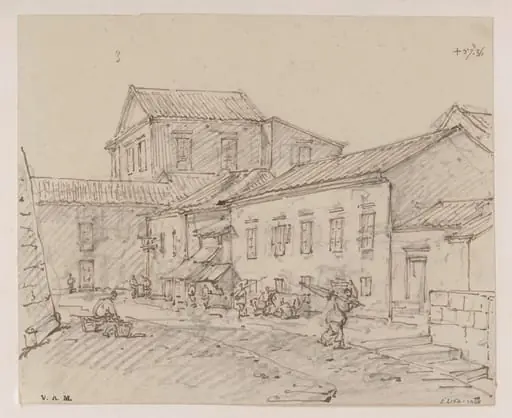 A street in Macau
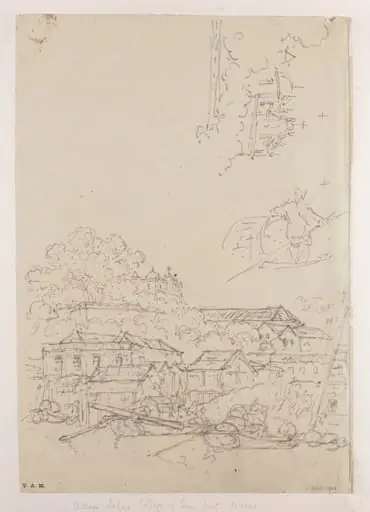 Buildings below the College of S. José, Macau
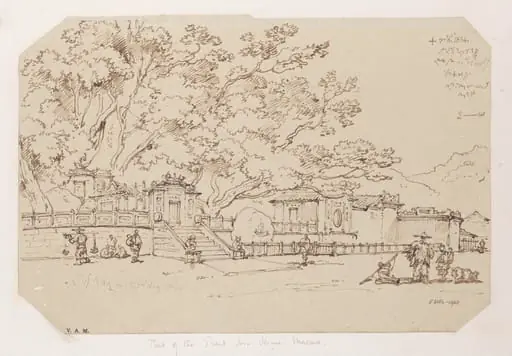 The A-Ma Temple, Macau
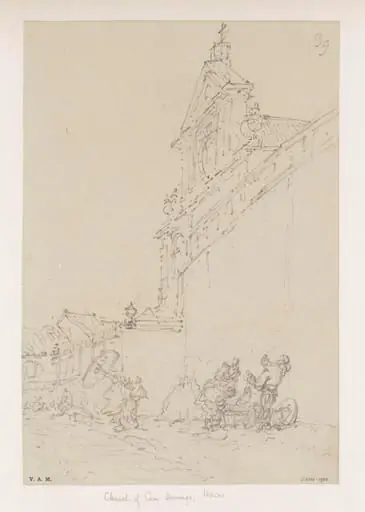 The church of San Domingos, Macau, seen from behind the precinct wall
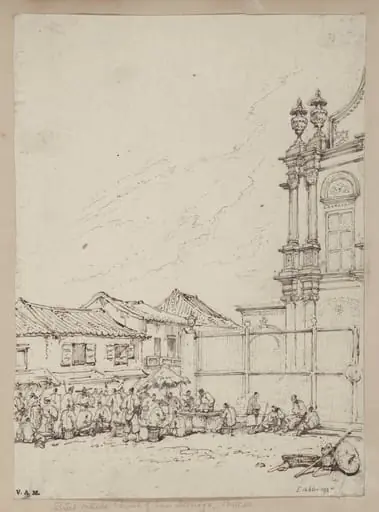 The street market outside the church of S. Domingos, Macau