Artwork
La chauve-souris, le buisson et le canard (The Bat, the Bush, and the Duck)
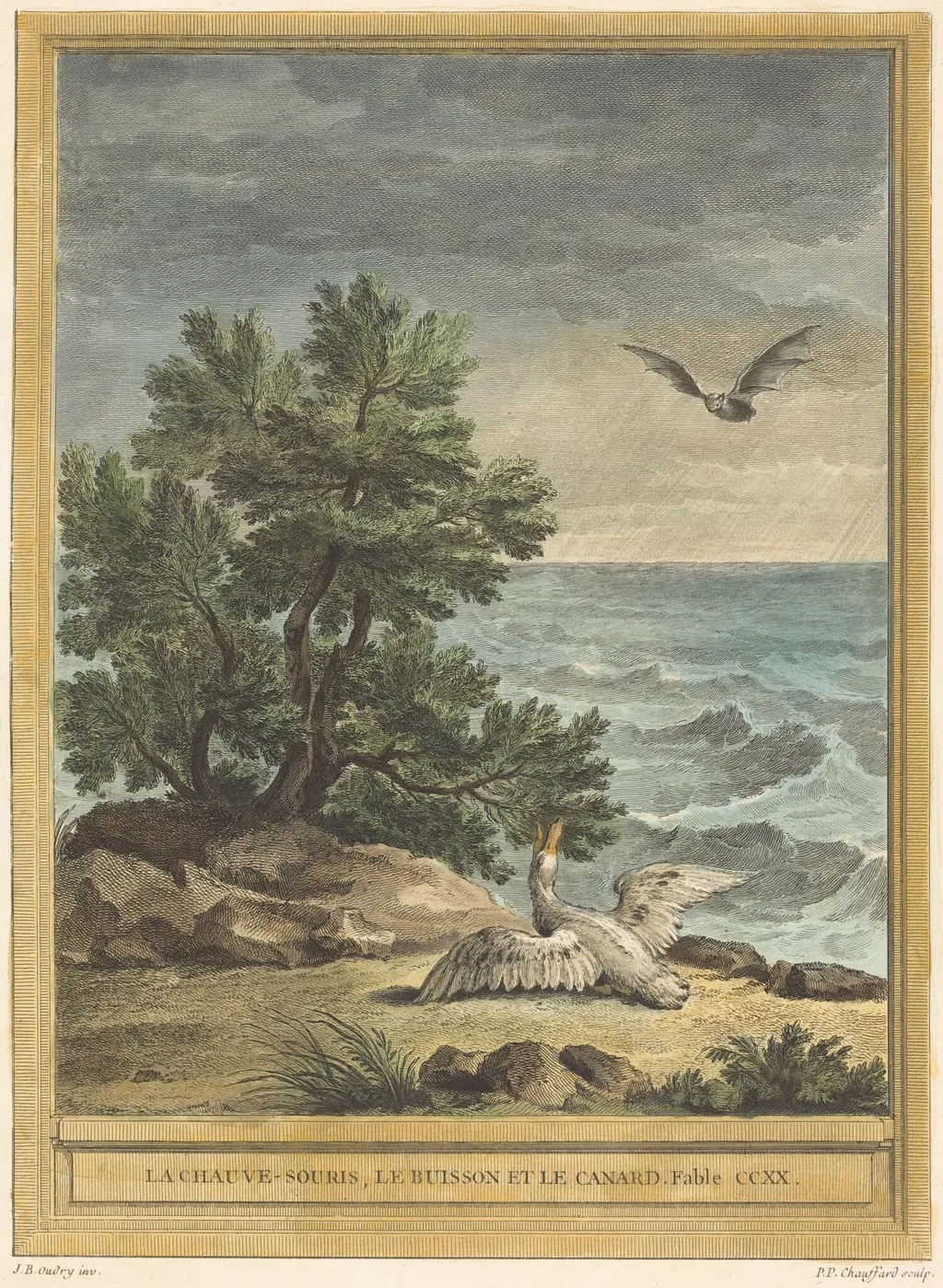
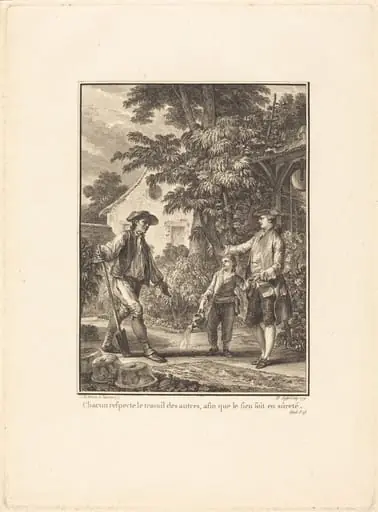
La chauve-souris, le buisson et le canard (The Bat, the Bush, and the Duck) is an ink print by the Romanticist artist Pierre-Philippe Choffard. It dates from 1759 and is held in the collection of the National Gallery of Art. Pierre‑Philippe Choffard’s hand‑colored etching *La chauve‑souris, le buisson et le canard* was executed in 1759.
About this work
Overview
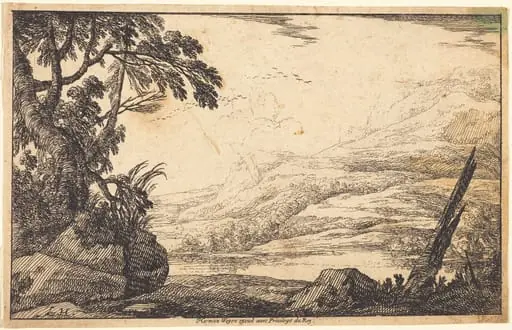
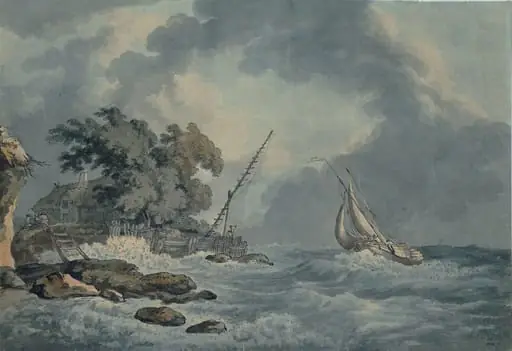
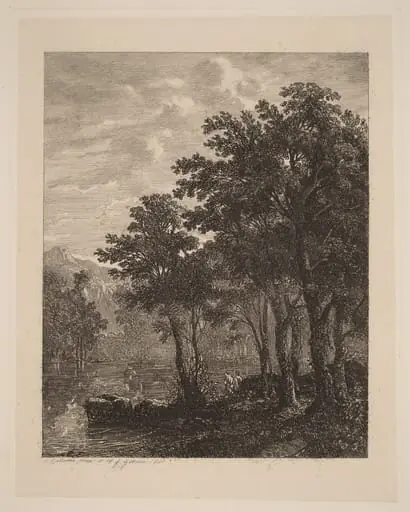
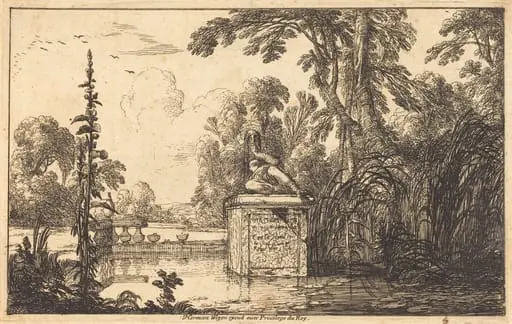
Pierre‑Philippe Choffard’s hand‑colored etching *La chauve‑souris, le buisson et le canard* was executed in 1759. The work presents a tranquil seaside tableau: a solitary duck stands beside a low shrub on a rocky strand, a lean pine leans toward the water, and a second bird slices the sky above. Gentle waves lap the shore beneath a pale horizon, while the title alludes to a missing bat.
Subject & Meaning
The composition foregrounds the duck and the bush, inviting the viewer to focus on ordinary coastal life rather than the dramatic. The absent bat, referenced only in the inscription, creates a subtle narrative tension, suggesting a story that remains unfinished or imagined. The airborne bird introduces a fleeting sense of movement, balancing stillness with transience.
Technique & Style
Executed as a hand‑colored etching, Choffard first incised the image onto a copper plate, then printed it in black ink before applying delicate watercolor washes. The coloration enhances the soft sky and sea tones while preserving the crisp line work characteristic of mid‑eighteenth‑century French printmaking, where precise draughtsmanship meets modest painterly touches.
History & Provenance
Created in 1759, the print belongs to Choffard’s later period, when he was known for book illustrations and ornamental designs. Though specific ownership records are scarce, the work has appeared in several nineteenth‑century collections of French prints, indicating its circulation among connoisseurs of decorative engraving.
Own this work as a print
Artist & collection