Artwork
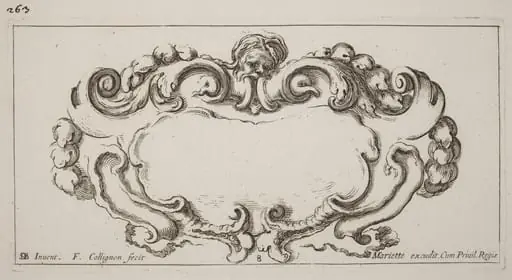
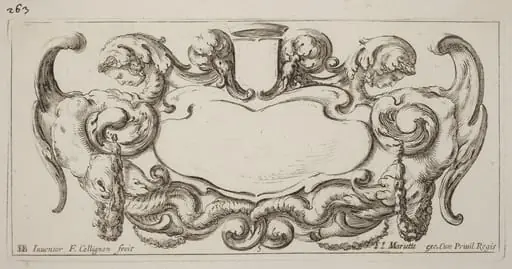
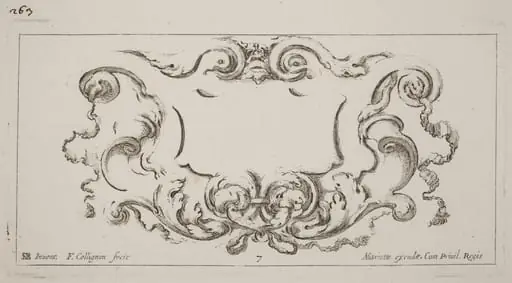
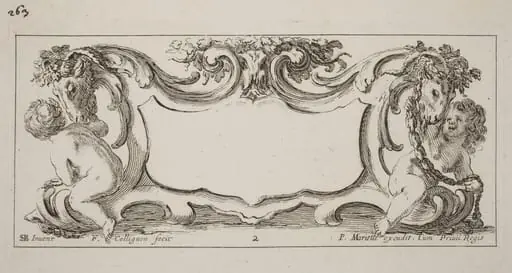
A Cartouche with Theater Masks
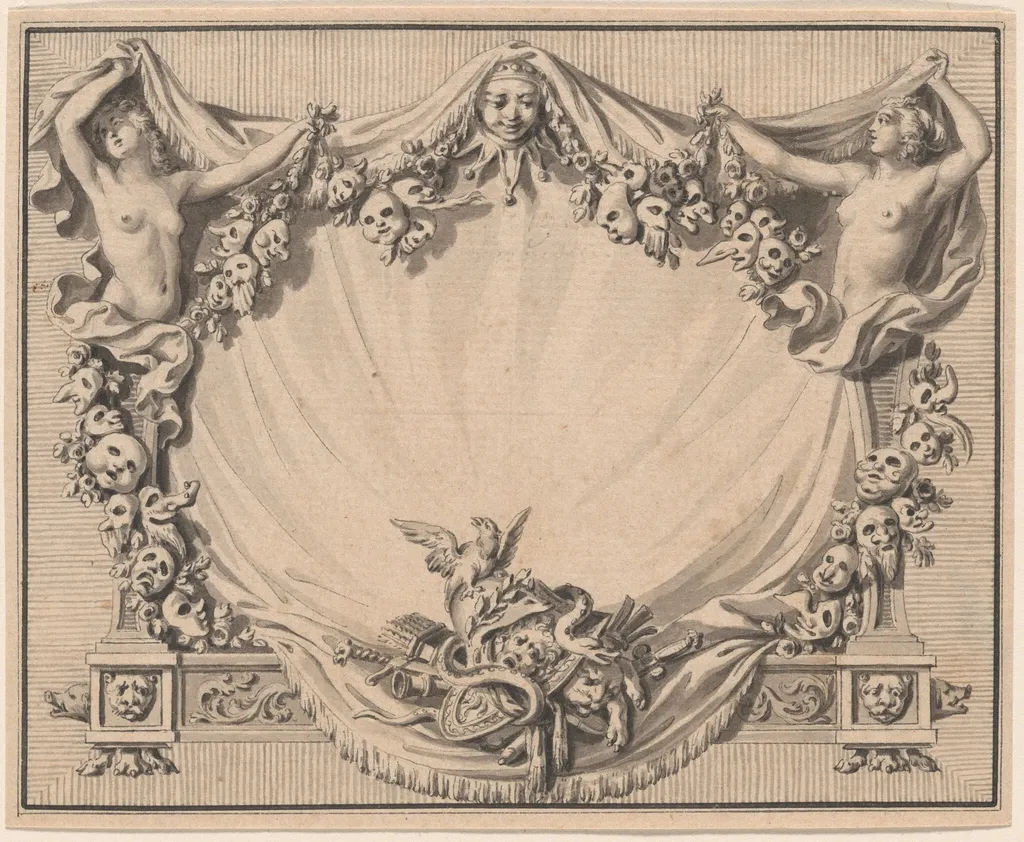
A Cartouche with Theater Masks is an ink drawing by the Baroque artist Pierre-Philippe Choffard. It dates from 1770 and is held in the collection of the National Gallery of Art.
About this work
Overview
Created around 1770 by Pierre-Philippe Choffard, this drawing is a finely detailed pen and ink composition with gray wash on laid paper.
Created around 1770 by Pierre-Philippe Choffard, this drawing is a finely detailed pen and ink composition with gray wash on laid paper. It presents a cartouche—a decorative frame traditionally used for inscriptions or heraldic elements—ornamented with theatrical symbols and elaborate embellishments. The work exemplifies the precision and decorative sensibility characteristic of late 18th-century French draftsmanship.
Subject & Meaning
The central cartouche is flanked by two female figures supporting its upper curve, evoking allegorical guardianship. Above and below, theater masks—tragic and comic—are interwoven with foliage and scrollwork, symbolizing the duality of dramatic performance. The composition reflects the cultural reverence for theater in Enlightenment-era France, where performance arts were both popular and intellectually esteemed.
Technique & Style
Choffard employed fine pen lines to define intricate textures, augmented by subtle gray washes to model form and depth. The laid paper’s subtle texture enhances the tactile quality of the rendering. His approach blends meticulous linearity with atmospheric shading, demonstrating a refined command of draftsmanship typical of French ornamental artists of the period.
History & Provenance
The drawing originates from Choffard’s prolific output as an engraver and designer for royal and aristocratic patrons. Though its early ownership is undocumented, it aligns with works produced for decorative arts commissions, likely intended as a model for bookplates, furniture inlays, or printed ornamentation. Its survival suggests it was valued as a standalone study.
Context
Working in the decades following the Baroque era, Choffard operated within a transitional aesthetic that retained ornamental richness while embracing classical restraint. His designs responded to the growing demand for refined decorative motifs in interiors and publications, bridging the ornate traditions of the 17th century with the emerging Neoclassical taste.
Legacy
Choffard’s drawings, including this one, influenced the dissemination of ornamental motifs in 18th-century Europe. His work was referenced in pattern books and used by craftsmen in metalwork, textiles, and bookbinding. Though less known today than his contemporaries, his precision helped standardize decorative vocabulary in print and applied arts.
Artist & collection


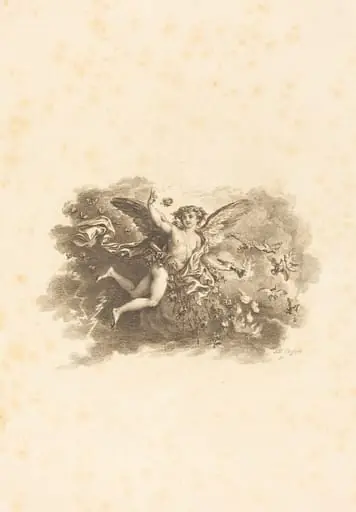 Fleuron for the Title Pages
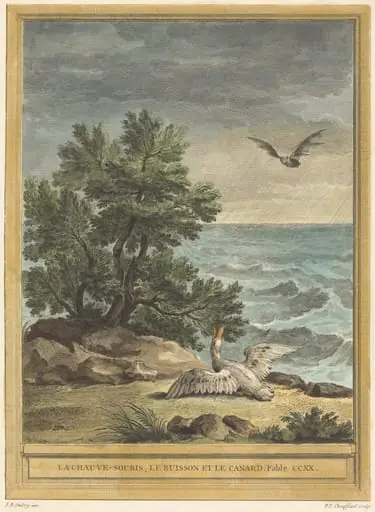 La chauve-souris, le buisson et le canard (The Bat, the Bush, and the Duck)
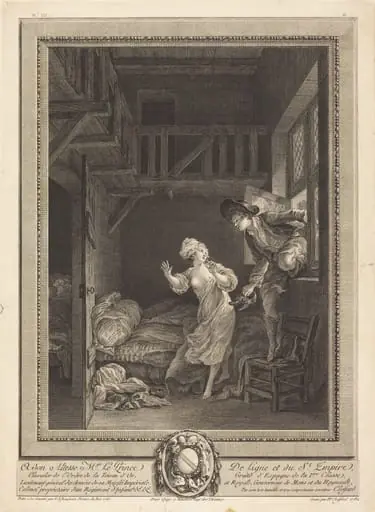 Marchez tout doux, parlez tout bas
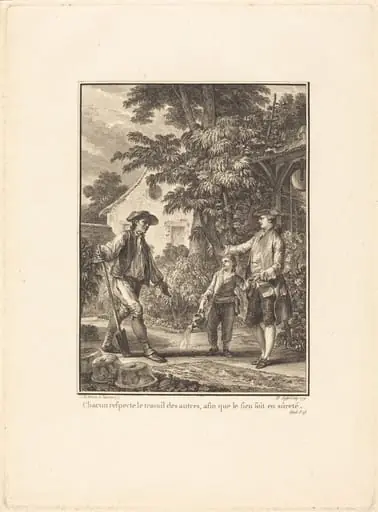 Chacun respecte le travail des autres, afin que le sein soit en sûreté
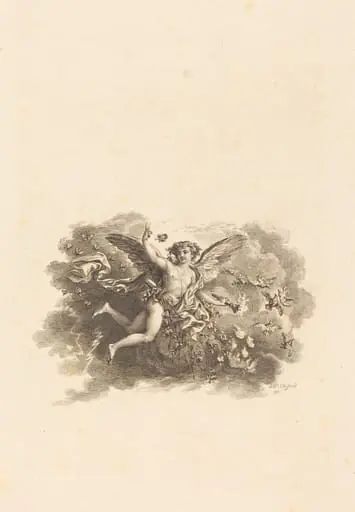 Fleuron for the Title Pages
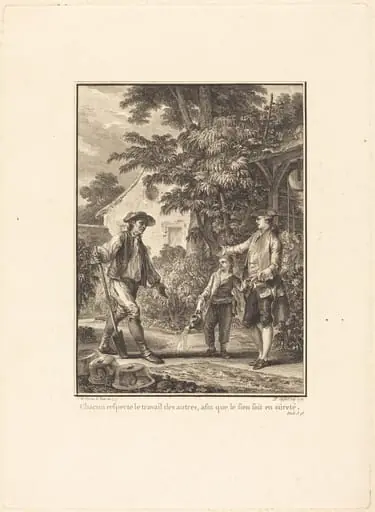 Chacun respecte le travail des autres, afin que le sien soit en sûreté