Artwork
Herring Gull
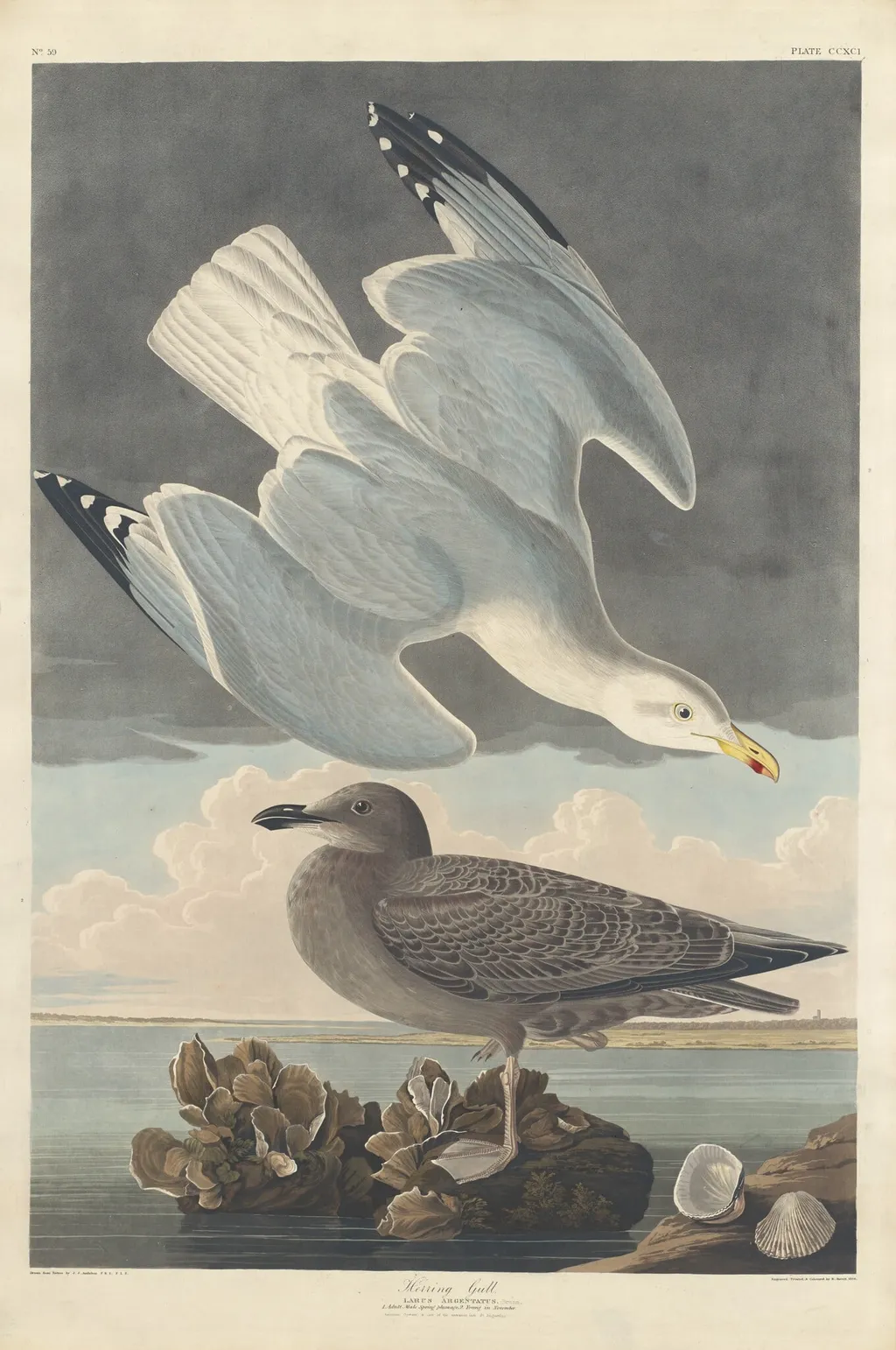
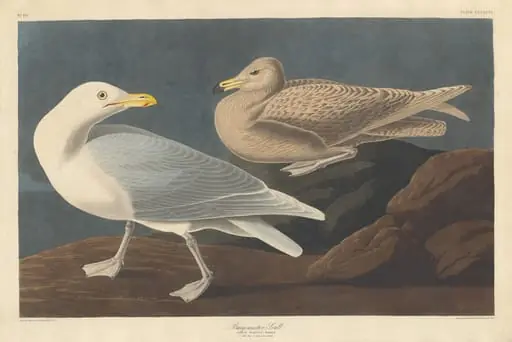
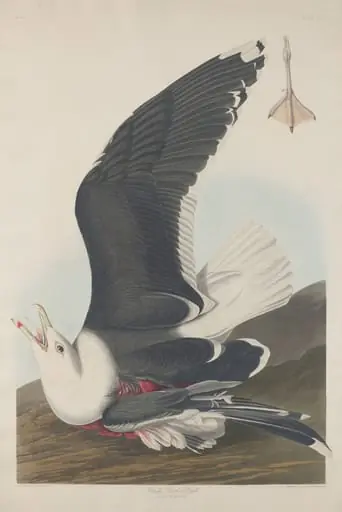
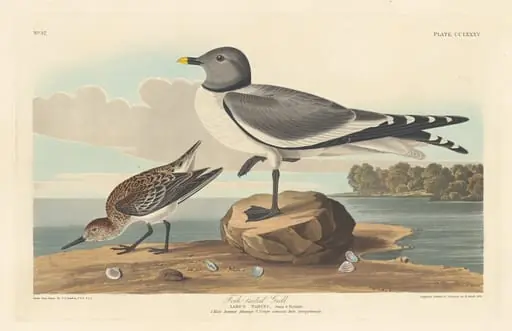
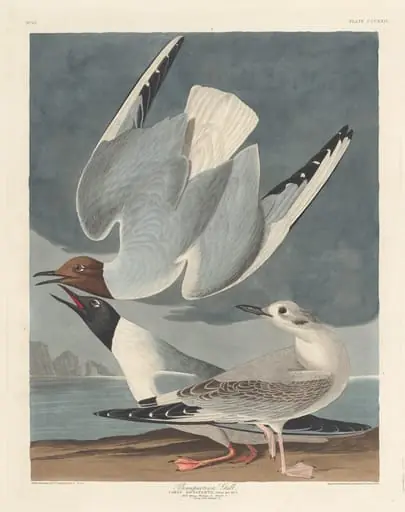
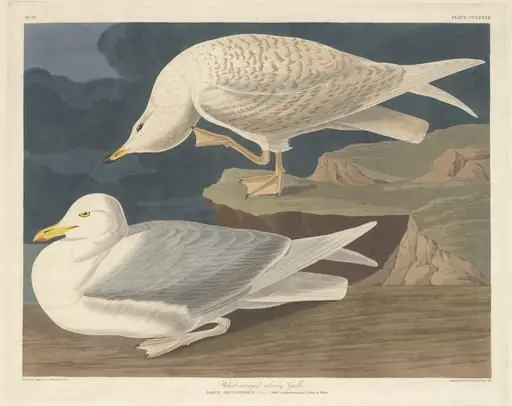
Herring Gull is an ink print by the Romanticist artist Robert Havell Jr.. It dates from 1836 and is held in the collection of the National Gallery of Art.
About this work
Overview
Herring Gull is a hand-colored engraving and aquatint print created by Robert Havell Jr. in 1836 on Whatman wove paper, showcasing the artist's skill in naturalist representation.
Subject & Meaning
Contrary to its singular title, Herring Gull depicts two herring gulls in flight over a rocky shoreline, accompanied by detailed renderings of seashells, seaweed, and a softly clouded sky, emphasizing observational accuracy characteristic of scientific illustrations of its time.
Technique & Style
The print exemplifies the Havell family’s renowned expertise in aquatint, achieving tonal subtlety. Fine lines, shading, and likely cross-hatching were employed to render realistic feather textures, highlighting the artist’s meticulous approach to detail.
History & Provenance
Robert Havell Jr., from a family of engravers, etchers, and painters in Reading, Berkshire, England, created this work. His family had notable ties to Indian art, though this piece reflects their parallel engagement with detailed naturalist prints of European subjects.
Context
Produced in 1836, Herring Gull aligns with the era’s emphasis on scientific illustration, where precise depiction of natural subjects was valued. The choice of a common bird species in its habitat reflects a broader interest in documenting the natural world.
Legacy
While specific legacy details of Herring Gull are not provided, it contributes to the broader recognition of the Havell family’s technical proficiency in aquatint and their contribution to 19th-century naturalist art and scientific illustration practices.
Artist & collection

Artist
The Havell family of Reading, Berkshire, England, included a number of notable engravers, etchers and painters, as well as writers, publishers, educators, and musicians.